7 Best Signs Your Brakes Need Attention
That slight squeal when you slow down at the school run is easy to ignore. So is a brake pedal that feels a bit softer than usual. But the best signs your brakes need attention usually start small, then turn into longer stopping distances, MOT failures, or a car that simply does not feel safe to drive.
We see this all the time with local drivers who rely on one car for work, shopping, and family trips. In most cases, brake problems do give you a warning. The issue is knowing which signs matter, what usually causes them, and when it has gone past something to keep an eye on.
Best signs your brakes need attention
Brakes do not normally fail without some sort of symptom first. The warning might be a noise, a smell, a dashboard light, or just a change in how the car feels. If anything feels different under braking, it is worth taking seriously.
1. Squealing or screeching when braking
A sharp squeal is one of the most common early signs. This usually happens because the brake pads are worn and the wear indicator is making contact with the disc. It can also be caused by glazing, dirt, or cheaper friction material, so it is not always a full brake job straight away.
The main point is this – if the noise keeps happening, get it checked. If it is only occasional, you may have a little time. If it is there every time you brake, the pads may be close to the limit.
2. Grinding noise from the wheels
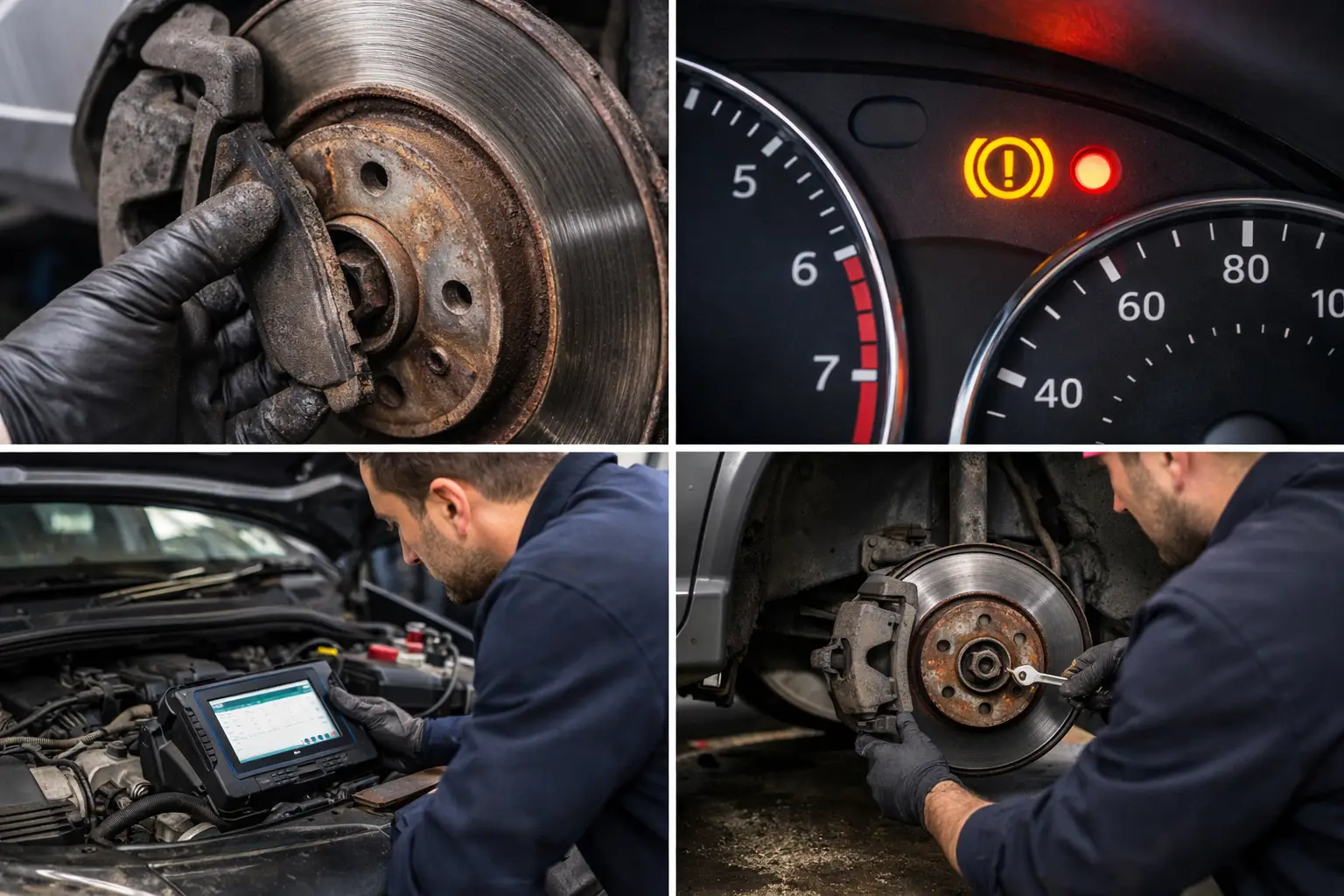
Grinding is more serious. We often see this when the brake pad material has worn right down and metal is contacting the disc. At that stage, what could have been a simple pad replacement often becomes pads and discs.
If your brakes are grinding, do not leave it for next week. The stopping performance can drop, the repair bill can climb, and the damage spreads quickly.
3. Brake pedal feels soft or goes lower than normal
A soft brake pedal usually means something is not right in the hydraulic side of the system. This can happen because of worn components, air in the system, old brake fluid, or a leak. In some cases, the pedal may feel normal at first and then sink when you keep pressure on it.
That is not something to monitor for long. If the pedal feels weak, spongy, or low, the car needs proper inspection before regular use.
4. The car pulls to one side when braking
If the car drifts left or right under braking, one side may not be working evenly. This usually happens because of a sticking caliper, uneven pad wear, contaminated pads, or a brake hose issue.
It can feel minor at first, especially at low speed. The problem is that uneven braking affects control, tyre wear, and stopping distance. It can also point to a fault that will get worse if left alone.
5. Steering wheel shake or vibration through the pedal
Vibration when braking often means the discs are worn unevenly or have developed hot spots. Many drivers describe it as a wobble through the steering wheel or a pulsing through the brake pedal.
This tends to show up more when slowing from higher speeds. Sometimes it is mild, sometimes quite obvious. Either way, it usually means the braking surfaces are no longer working smoothly and the system needs checking.
6. Brake warning light on the dashboard
If the brake warning light comes on, do not assume it is just a sensor fault. In some cars it can indicate low brake fluid, worn pads, or an issue with the braking system that needs attention. If it is the ABS light, that does not always mean you have no brakes, but it can mean reduced control in an emergency stop.
Warning lights need proper diagnostics, not guesswork. We often see drivers replace parts based on internet advice and still end up with the same fault. A clear diagnosis saves time and usually saves money as well.
7. Burning smell after driving
A hot, sharp burning smell near a wheel can mean a brake is binding. This usually happens because a caliper is sticking or a handbrake mechanism is not releasing properly. You might also notice the car feels sluggish or one wheel is hotter than the others.
This is one of those faults that can turn into a breakdown or a bigger repair if ignored. If there is heat and smell coming from a wheel area, it needs checking sooner rather than later.
What causes brake problems in the first place?
Brake wear is normal. Pads and discs are service items, and how long they last depends on your driving, the type of roads you use, and the weight you carry. A car doing stop-start local trips will usually wear brakes faster than one doing steady runs.
That said, not every brake issue is simple wear. We often find seized calipers, worn sliders, poor-quality fitted parts, old fluid, or damage that has been missed during a previous repair. This is why the cause matters. Fitting new pads to a sticking caliper does not fix the real problem.
Moisture and corrosion also play a part, especially on cars that do short runs and sit unused for periods. In coastal areas, braking components can suffer more from rust and sticking than drivers expect.
When it is safe to drive – and when it is not
This depends on the symptom. A light squeal with no drop in braking performance may give you enough time to book the car in over the next few days. A soft pedal, grinding noise, strong pull under braking, or warning light combined with poor stopping is different.
If the car feels unsafe, trust that. Brakes are not something to test your luck with. In most cases, if the pedal feels wrong, the noise is harsh, or the vehicle is not stopping cleanly in a straight line, it should be inspected before normal driving.
If you are unsure, ring the garage and explain exactly what the car is doing. A good workshop will tell you whether it sounds urgent or whether it can wait a short while.
Best signs your brakes need attention before an MOT
A lot of brake faults show themselves before test day. The trouble is many drivers put up with them for weeks, then get caught out at the MOT. Uneven braking, worn pads, warning lights, seized components, and poor handbrake performance are all common reasons for failure.
If you have noticed noise, pulling, vibration, or a change in pedal feel, it makes sense to get it looked at before the test rather than after a fail. That gives you more control over timing and avoids the stress of needing a quick repair at short notice.
What a proper brake check should include
A quick glance through the wheel is not enough. A proper inspection should check pad thickness, disc condition, caliper movement, brake fluid level and condition, hoses, and whether the wear is even across both sides.
On some cars, the handbrake setup also needs separate attention. Rear brakes can wear or seize without obvious symptoms until they start causing noise, binding, or an MOT issue. The right repair depends on what has actually failed, not just the part that looks most worn.
This is where a diagnostic-first approach makes a difference. You want the fault identified properly, explained in plain English, and fixed without replacing parts that do not need replacing.
What to do next if you spot a brake warning sign
If your car is making noise when braking, pulling to one side, showing a warning light, or not stopping like it should, get it checked before it turns into a bigger problem. For drivers around Lowestoft, Oulton Broad, Carlton Colville, Beccles and nearby areas, a local garage can usually tell quite quickly whether you need pads, discs, a hydraulic repair, or further diagnostics.
At AutoFix4u, we deal with these faults every week. The aim is simple – find the cause, explain it clearly, and get you back on the road safely with no surprise extras. If your brakes do not feel right, call now, ask for a quote, and book an inspection while the issue is still manageable.
Most brake problems are easier and cheaper to sort when caught early. If something feels off, it probably is.


13 thoughts on “7 Best Signs Your Brakes Need Attention”