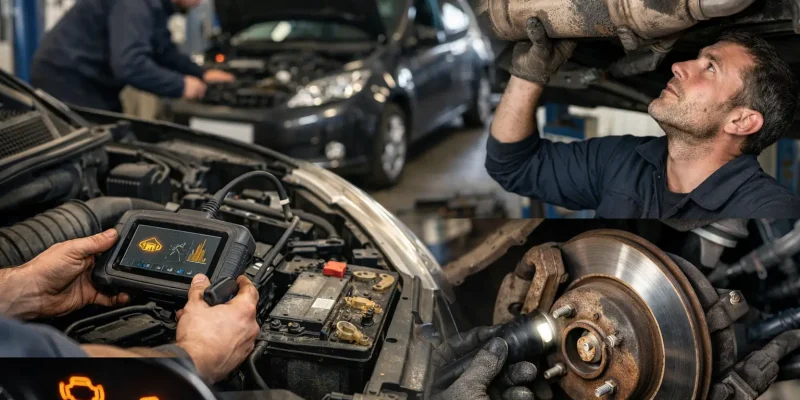

Common MOT Advisory Items and What They Mean
An MOT advisory can feel like bad news, especially when the certificate contains several lines of wording you have never seen before. But common MOT advisory items are not automatic failures. They are the tester’s way of recording wear, corrosion or a developing issue that is acceptable on the day, but may need attention before the next test.
The right response is not to panic or replace parts blindly. Read the exact wording, consider how you use the car, and have anything unclear checked properly. In most cases, an early repair is simpler and less disruptive than waiting for an advisory to become a failure, warning light or breakdown.
What does an MOT advisory actually mean?
An MOT checks whether your vehicle meets the minimum road safety and environmental standards at the time of the test. An advisory means the item did not meet the threshold for failure, but the tester has seen something worth keeping an eye on.
That can range from a tyre approaching its legal tread limit to brake discs beginning to corrode, a suspension bush showing wear, or an oil leak that is present but not serious enough to fail. The wording matters. “Slightly worn” and “excessively worn” are very different findings.
An advisory is also not a guarantee that the car will stay safe for another year. If you cover high mileage, commute daily, tow, carry a family, or regularly drive on rough roads, wear can move on quickly. A car that passed last week can still develop a genuine fault afterwards.
The most common MOT advisory items
Tyres close to the legal limit or wearing unevenly
Tyres are one of the advisories we see most often. The legal minimum tread depth is 1.6mm across the central three-quarters of the tyre, around its full circumference. By the time a tyre is at that point, wet-weather grip is already reduced, so it makes sense to plan replacement before it becomes a failure.
Uneven tyre wear needs a closer look. Wear on one edge can point to wheel alignment being out. Cupping or patches of wear can be linked to worn suspension parts, poor tyre pressures or a damaged tyre. Simply fitting new tyres without finding the cause can mean the same problem comes back.
Check your tyres regularly, including the inner edges where practical. If the steering wheel is off-centre, the car pulls to one side, or you feel vibration at speed, book an inspection rather than waiting for the next MOT.
Brake pads, discs and brake pipes
Advisories for brake wear are common because brakes gradually wear down in normal use. You may see comments about pads being worn, discs being pitted or corroded, or brake pipes showing surface corrosion.
Brake discs can look rough after a car has stood for a while, particularly during damp weather. Light surface corrosion may clean off with normal driving. Deep pitting, heavy corrosion or a lip around the disc is different. It can affect braking performance and often means pads and discs will need replacing together.
A brake pipe advisory should not be ignored. The metal pipes underneath the car can corrode over time, particularly where dirt and moisture collect. They may be safe at inspection, but corrosion can worsen. If your brake pedal feels soft, the car pulls under braking, you hear grinding, or the brake warning light appears, stop using the vehicle where safe to do so and arrange a check straight away.
Worn suspension bushes, ball joints and shock absorbers
Suspension advisories often mention play in a bush or ball joint, a corroded spring, or a shock absorber showing slight misting. These parts keep the wheels properly located and help the vehicle remain stable when braking and cornering.
You may not notice early suspension wear from the driver’s seat. As it progresses, the signs are usually a knocking sound over bumps, vague steering, uneven tyre wear, or the car dipping more than usual under braking. A broken spring can sometimes make itself known with a sudden clunk and a tyre that starts rubbing, but corrosion can often be spotted earlier during an inspection.
There is no fixed timescale for every advisory. A slightly worn bush may last a long time, while a joint that is already developing noticeable movement can deteriorate more quickly. A garage should check the actual condition rather than recommend replacement from the MOT wording alone.
Exhaust corrosion, leaks and emissions concerns
An exhaust advisory can refer to corrosion, a minor leak, a loose heat shield or a component that is becoming weak. Small issues may seem harmless, but exhausts are exposed to heat, water and road salt. A small crack or corroded section can become noisy, leak fumes, or fail without much warning.
If the car sounds louder than usual, rattles underneath, smells of exhaust fumes, or has lost power, get it looked at. On diesel vehicles, recurring short journeys can also contribute to DPF problems. A DPF warning light, limp mode or failed regeneration is not an MOT advisory to put off. It needs proper diagnostics to identify whether the cause is the filter itself, a sensor fault, an engine issue or the way the vehicle is being used.
Minor oil leaks and underbody corrosion
Older cars commonly receive advisories for dampness around the engine, gearbox or suspension components. A light oil seep is not always urgent. However, a leak can get worse, contaminate other parts, lower fluid levels and make it harder to spot a new fault.
Corrosion underneath the vehicle also needs context. Surface rust on non-structural parts is common. Corrosion close to safety-critical mounting points, brake lines or the vehicle structure is more serious and can turn into an MOT failure if left.
If you find oil on your driveway, need to top up oil between services, or smell burning oil after a journey, do not assume it is just an old-car problem. A visual inspection can establish where it is coming from and whether it needs repair now or monitoring.
Lights, wipers and visibility issues
Some visibility-related advisories are quick to sort, but they still matter. Wiper blades that smear the screen, ageing headlamp lenses, weak washers and number plate lamps can all cause problems at the next test or make driving harder in poor weather.
A misted lamp lens may be an advisory if light output remains acceptable. If water has entered the lamp, the bulb fails repeatedly, or the beam pattern is poor, it needs investigating. Likewise, worn wipers may not seem urgent until you are driving home in heavy rain with reduced visibility.
Which MOT advisories should be fixed first?
Start with anything linked to tyres, brakes, steering, suspension, lights or fluid leaks. These items can affect safety directly, and they can often become failures sooner than expected. Next, deal with faults that may leave you stranded, such as a weakening battery, exhaust issue, DPF concern or developing engine management problem.
Cosmetic corrosion or a minor seep may be suitable for monitoring, depending on its location and condition. The sensible approach is to ask for a clear explanation: what has been found, what could happen if it is left, and when it should be checked again. You should not be pressured into repairs that are not needed, but you should not be left guessing either.
Keep a copy of the MOT certificate and compare advisories year to year. If the same item appears repeatedly, or the description becomes more severe, it is time to arrange an inspection. A change from “slight play” to “excessive play”, for example, can be the difference between planning a repair and failing the test.
Get a proper check before the next MOT
Booking an MOT preparation check a few weeks before the test gives you time to make sensible decisions. It can pick up worn tyres, brakes, suspension play, lighting faults and leaks before they cause a failed test or a rushed repair.
At AutoFix4u, we check the fault properly, explain the finding in plain English and give you a clear repair plan. For drivers in Lowestoft and nearby areas, that means honest recommendations, quality repairs and no surprise extras. Same-day slots may be available for urgent brake, tyre, warning light or MOT repair concerns.
An advisory is best treated as useful notice, not a problem to hide in the glovebox. Deal with the safety-critical items early, monitor the minor ones properly, and your car is far more likely to stay dependable for the journeys you need to make.