Warning Light Scan vs Diagnostics Explained
A dashboard light comes on, someone plugs in a scanner for two minutes, and you get told it needs a part. That is usually where confusion starts. When people search for warning light scan vs diagnostics, they are often trying to work out why one garage can give a quick code read while another wants more time to test the car properly.
In most cases, a warning light scan and a full diagnostic are not the same thing. A scan reads fault codes stored in the vehicle’s system. A diagnostic is the process of finding out why that code appeared in the first place. One gives you a clue. The other gives you an answer.
Warning light scan vs diagnostics – what is the difference?
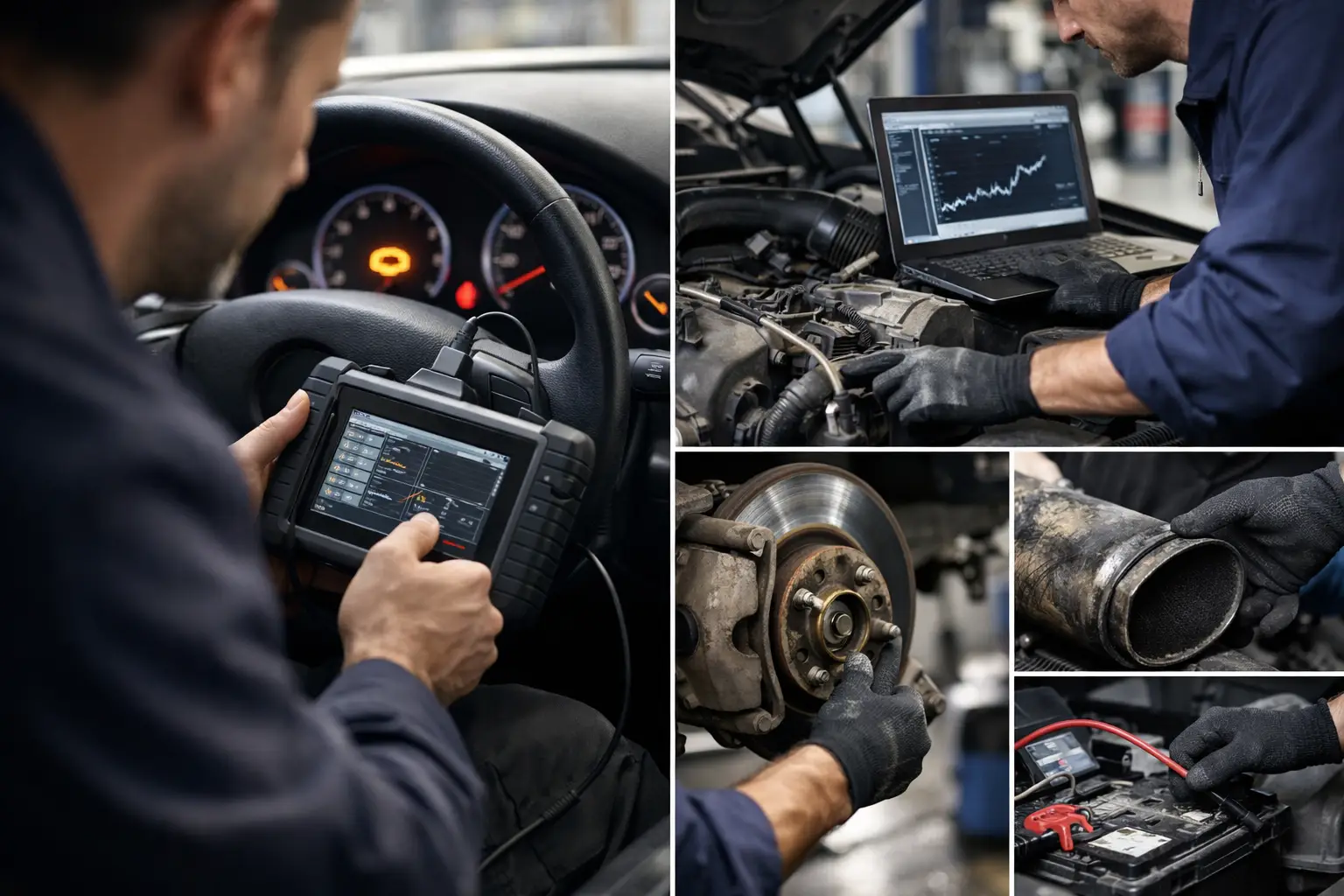
A warning light scan is the fast first step. A mechanic connects a scan tool to your car, reads the fault codes, and checks what system has flagged a problem. That could be the engine, emissions, ABS, airbag system or another control unit depending on the vehicle and the equipment being used.
This is useful because it points you in the right direction. If the engine warning light is on and the code shows a boost pressure fault, for example, you know the issue is linked to the turbo or intake system. If the ABS light is on and the code points to a wheel speed sensor circuit, you know where to start looking.
But a scan on its own does not confirm the failed part. It does not tell you whether the fault is caused by wiring, corrosion, a blocked component, low voltage, sensor readings out of range, or a problem that happened once and has now gone intermittent.
A full diagnostic goes further. It includes the code read, but it also includes testing, inspection, and experience. We often see this issue when a car has already had parts fitted elsewhere based only on fault codes, yet the warning light comes straight back on. That usually happens because the code described the symptom, not the root cause.
What a warning light scan can tell you
A scan can still be very helpful when used properly. It can show what control module logged the fault, whether the issue is current or stored from an earlier event, and in many cases what conditions were present when the fault appeared.
That matters when a customer calls and says, “The car has gone into limp mode,” or “The engine warning light came on after joining the dual carriageway.” A scan may show overboost, underboost, misfire detection, DPF pressure readings, or EGR performance faults. That gives a strong starting point.
For straightforward problems, a scan may even line up with an obvious fault. If the battery warning light is on and charging voltage is poor, or if a wheel speed sensor has no signal and the wiring is visibly damaged, the next step is often clear.
The problem is that not every fault is straightforward.
What a proper diagnostic does that a scan cannot
A proper diagnostic checks the whole story. The code is only one part of it. The mechanic then looks at live data, tests components, checks wiring and connectors, and compares what the car is doing against what it should be doing.
Take a common example. A code may suggest an EGR fault. That does not automatically mean the EGR valve needs replacing. It could be sticking because of carbon build-up. It could be a wiring issue. It could be a vacuum problem on older systems. It could even be a symptom of another fault affecting air flow readings.
The same goes for DPF faults. We often see cars with a DPF warning light where the first assumption is that the filter is blocked and needs cleaning. Sometimes it does. Sometimes the real cause is a failed pressure sensor, short journeys preventing regeneration, or another engine issue causing excess soot. Without proper testing, it is easy to treat the wrong problem.
That is why diagnostics take longer than a basic scan. You are paying for fault finding, not just for someone to plug a machine in.
Why fault codes get misunderstood
Fault codes are useful, but they are often read too literally. A code may say “sensor range/performance” or “circuit malfunction”. That sounds specific, but it still leaves plenty of room for testing.
A code linked to a sensor does not always mean the sensor has failed. It may be reporting bad data because something else is wrong. For example, an air flow fault could be caused by an intake leak. A fuel pressure code could come from wiring, pump issues, or a control problem. A misfire code could mean ignition, fuelling, compression, or timing trouble.
This is where experience matters. A technician who works on these faults every week will know the common patterns, the likely causes, and what to test first. That saves time and often saves money as well.
Warning light scan vs diagnostics for common car problems
If your engine warning light is on but the car still drives normally, a scan may be the right starting point. It can show whether the issue is likely to be minor, historic, or something that needs urgent attention.
If the car has lost power, gone into limp mode, is smoking, struggling to start, or failing to regenerate the DPF, it usually needs more than a quick code read. The same applies if the warning light keeps returning after being reset.
ABS and airbag lights are another good example. A scan can identify the affected circuit or sensor, but diagnostics are often needed to confirm whether the fault is the component itself, wiring damage, poor connections, or a control module issue.
With MOT failures, this difference matters too. If a vehicle has failed due to an emissions light, ABS warning, or airbag fault, a simple scan may tell you what system is involved. A proper diagnostic gives you a repair plan.
When a quick scan is enough – and when it is not
Sometimes a quick scan is enough as an initial check. If the warning light came on once, the car is driving fine, and there are no obvious symptoms, reading the codes can help decide whether the issue is urgent or whether further tests are needed.
But if any of the following apply, diagnostics are usually the better choice:
- the car is in limp mode
- the warning light came back after a reset
- parts have already been replaced with no fix
- the car is losing power, misfiring, smoking, or stalling
- there are multiple warning lights on at once
In those cases, guessing gets expensive quickly. Proper testing is the safer route.
Why proper diagnostics can save money
Some drivers hesitate when they hear the word diagnostics because they think it just means a larger bill before any repair is done. In reality, it often prevents wasted spend.
We regularly see vehicles that have had sensors, valves, batteries, or other parts fitted elsewhere without fixing the fault. The owner ends up paying twice – once for the guessed repair, and again for proper diagnosis afterwards.
A good diagnostic process reduces that risk. It gives you a clearer picture of the actual fault, what repair is needed, and whether there are any related issues to deal with at the same time. That means fewer surprises and less chance of the car coming back with the same problem a week later.
The best next step if your warning light is on
If a warning light has appeared, do not ignore it and do not assume the first code read is the full answer. Start by getting the vehicle checked properly. If the issue is minor, you will know where you stand. If it is something more serious, catching it early can prevent a breakdown or a more expensive repair.
For drivers around Lowestoft, especially if the car is losing power, showing DPF faults, or heading towards an MOT failure, the sensible next step is to book diagnostics rather than just ask for the light to be turned off. A proper check gives you plain-English answers, a clear repair plan, and a much better chance of fixing the issue first time.
If you need help, AutoFix4u can check the fault, explain what is causing it, and advise on the next step with clear pricing and no surprise extras. Same-day slots are often available.
A warning light is your car asking for attention. The quickest fix is not always the right one, but the right diagnosis usually gets you back on the road faster.


8 thoughts on “Warning Light Scan vs Diagnostics Explained”