How to Check Brake Pads Before They Become Unsafe
Your brakes may give you warning signs long before they become unsafe. You might hear a squealing noise when stopping at traffic lights, notice a grinding sound or receive an MOT advisory about worn pads.
Knowing how to check brake pads can help you spot wear early and avoid more expensive repairs.
At AutoFix4u Garage Lowestoft, we help drivers identify brake problems before they cause further damage. A simple visual check can reveal some warning signs. However, a professional inspection offers a clearer picture of your braking system.
This guide explains how to check your brake pads, recognise dangerous wear and decide when to book a repair.
What Do Brake Pads Do?
Brake pads help slow your vehicle whenever you press the brake pedal.
The brake caliper pushes the pads against the rotating brake disc. Friction between these surfaces slows the wheel.
Each stop gradually wears away some friction material.
This wear is normal, but the pads eventually become too thin to work reliably.
Several factors influence how quickly they wear:
- Frequent braking in town traffic.
- Daily short journeys.
- Vehicle weight and heavy loads.
- Driving habits.
- Brake caliper condition.
- The quality and type of brake components.
Front pads often wear faster than rear pads because the front brakes handle more braking force.
However, every vehicle wears differently. Regular inspections provide a better guide than mileage alone.
How to Check Brake Pads Without Removing the Wheels
You can sometimes see your brake pads through the openings in your alloy wheels.
Start by parking on level ground. Switch off the engine and secure the vehicle.
Allow the brakes to cool completely before inspecting them.
Step 1: Locate the brake disc and caliper
Look through the wheel spokes.
You should see a round metal brake disc and a caliper fitted around part of its edge.
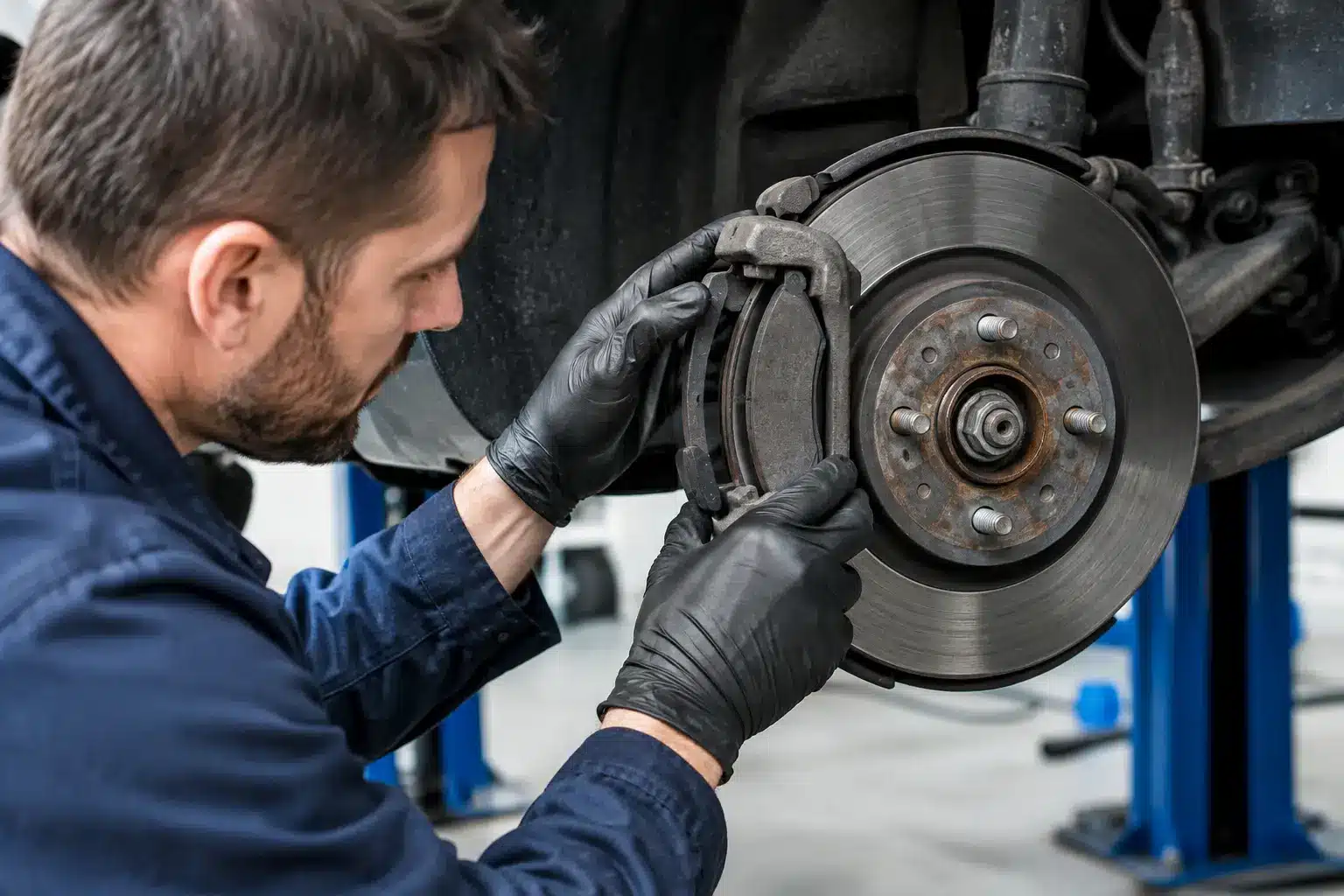
The brake pads sit inside the caliper, with their friction material facing the disc.
Some wheel designs make the pads difficult to see.
Never reach into hot brake components or attempt to remove parts without suitable equipment.
Step 2: Look at the brake pad thickness
Find the friction material between the metal backing plate and the disc.
The thicker this material remains, the more usable wear material the pad generally has.
As a practical guide, pads approaching 3mm of friction material usually deserve prompt professional attention.
At around 2mm, replacement becomes particularly urgent.
These figures are general guidance rather than universal manufacturer limits. The correct decision depends on the vehicle, pad condition and manufacturer’s requirements.
Do not confuse the metal backing plate with the friction material.
If you cannot clearly identify the pad, arrange a garage inspection.
Step 3: Check for uneven wear
Compare the visible brake pads on both sides of the vehicle.
One side should not show dramatically more wear than the other.
Uneven wear may indicate a sticking caliper, seized slider pins or pads that cannot move freely.
A technician should investigate the cause before fitting replacement pads.
Step 4: Examine the visible brake disc
Look for deep grooves, heavy corrosion, cracks or obvious damage.
Light surface rust can appear after the car sits overnight in damp weather.
However, persistent roughness or deep scoring may indicate a problem.
A professional can measure disc thickness and check the braking surface properly.
Read our Brake Pads Versus Discs guide to understand when each component needs replacement.
Warning Signs That Your Brake Pads Need Replacing
A visual inspection cannot reveal every brake problem.
Your vehicle may also show signs of excessive wear while driving.
Squealing when braking
A high-pitched squeal can indicate worn brake pads.
Some pads include a wear indicator that produces noise as the friction material becomes thin.
However, moisture, brake dust and pad vibration can also cause squealing.
A proper inspection identifies the reason.
Grinding or scraping noises
Grinding is more concerning than an occasional squeal.
The friction material may have worn away, allowing metal components to contact the disc.
This can damage the braking surface and increase repair costs.
If you hear harsh grinding, stop driving when safe and arrange professional assistance.
Brake warning lights
Some vehicles monitor brake pad wear electronically.
A warning light may appear when the pads reach a particular condition.
Other dashboard warnings may indicate fluid or braking-system problems.
Do not assume every brake warning light means the pads need replacing.
Our warning lights guide explains why professional checks matter.
Changes in braking performance
Pay attention if your car takes longer to stop or the brake pedal feels unusual.
The vehicle may also pull to one side during braking.
These symptoms can indicate worn pads, sticking calipers, hydraulic faults or other safety concerns.
Never ignore a clear change in braking performance.
Why Brake Pads Wear Unevenly
Brake pads should wear in a reasonably balanced way across each axle.
However, mechanical problems can cause one pad to wear faster.
Sticking brake calipers
The caliper must apply pressure when you brake and release it afterwards.
If it sticks, the pad may continue rubbing against the disc.
This creates extra friction and heat.
You might notice a burning smell, unusual brake dust or one wheel becoming excessively hot.
Do not touch a hot wheel or brake component.
Seized slider pins
Slider pins help certain caliper designs move correctly.
Corrosion and damaged protective boots can restrict their movement.
This may cause uneven pad wear.
Replacing the pads alone will not solve the problem if the caliper still cannot move properly.
Damaged or worn brake components
Worn components, corrosion or damaged fitting hardware may also affect pad movement.
At AutoFix4u Garage Lowestoft, we inspect the surrounding braking components to identify the cause.
This helps prevent the same problem from returning after a repair.
Do Brake Pads and Discs Need Replacing Together?
Not always.
You may only need new brake pads if the existing discs remain within specification and have suitable braking surfaces.
However, heavily worn or damaged discs may require replacement.
A technician should check the manufacturer’s minimum disc thickness and inspect the surface condition.
When replacing brake components, we consider the condition of the complete braking system.
Pads normally need replacement as a complete axle set to maintain balanced braking.
Disc replacement also takes place in axle pairs.
For more information, visit our Brake Repair Lowestoft service page.
How Often Should You Check Your Brake Pads?
There is no fixed mileage that applies to every car.
Brake pad life depends on how you drive, your vehicle and the conditions it faces.
A car travelling through busy Lowestoft traffic may experience different brake wear from a vehicle covering mostly motorway miles.
Ask your garage to inspect the brakes during routine servicing.
You should also arrange a check if:
- An MOT report mentions brake wear.
- You hear new braking noises.
- The pedal feels different.
- Your vehicle pulls during braking.
- A brake warning appears.
- You notice unusual vibration while slowing down.
Our MOT Advisory Versus Failure guide explains why some advisories deserve early attention.
A valid MOT certificate does not guarantee that brake pads will remain in good condition until the next test.
Can You Drive With Worn Brake Pads?
That depends on the condition of the pads and the braking system.
Mild wear may allow you to arrange a normal garage appointment.
However, serious wear can affect safety.
Do not continue driving if you notice:
- Metal-on-metal grinding.
- A soft or unusually long brake pedal.
- A major reduction in braking performance.
- Severe pulling when braking.
- Brake fluid leaking.
- Smoke or excessive heat from a wheel.
Move the vehicle to a safe location if necessary.
Then arrange recovery or professional assistance.
Driving with a serious brake fault can put you and other road users at risk.
If you need help transporting an unsafe vehicle, contact us for advice about vehicle recovery.
What Happens During a Professional Brake Inspection?
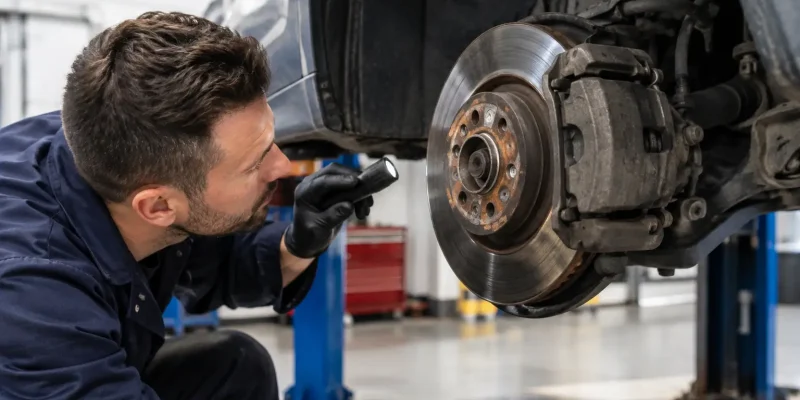
At AutoFix4u Garage Lowestoft, we begin by discussing the symptoms.
We may ask when the noise occurs, whether the pedal feels normal and whether the vehicle pulls under braking.
Next, we inspect the relevant brake components.
Depending on the problem, our checks may include:
- Measuring brake pad thickness.
- Checking inner and outer pads.
- Inspecting brake discs.
- Checking caliper movement.
- Inspecting slider pins and fitting hardware.
- Looking for leaks and visible damage.
- Investigating uneven wear.
We then explain what needs attention and why.
If your vehicle needs new pads, discs or further brake repairs, we discuss the options and provide an estimate before work begins.
Our aim is to identify the real problem rather than recommend unnecessary parts.
Book a Brake Inspection in Lowestoft
Learning how to check brake pads is useful, but a visual inspection cannot replace a professional brake assessment.
If your brakes squeal, grind, vibrate or feel different, do not wait until the problem gets worse.
At AutoFix4u Garage Lowestoft, we help drivers with brake inspections, brake pad replacement, disc replacement and fault diagnosis.
We provide clear explanations and practical repair advice for motorists in Lowestoft, Oulton Broad, Carlton Colville and surrounding areas.
Contact AutoFix4u Garage Lowestoft
Call: 07778 979802
WhatsApp: Message Us on WhatsApp
Free Estimate: Request a Repair Estimate
Contact Us: Contact AutoFix4u Garage Lowestoft
Book your brake inspection today and find out whether your brake pads need attention before a small issue becomes a serious safety problem.