Best Garage for Warning Lights in Lowestoft
A warning light can appear halfway through the school run, on the way to work or just before an MOT. It is rarely convenient. Finding the best garage for warning lights is not about having a code read and being sent away with a vague answer. It means finding the actual fault, explaining what it means and repairing it properly before a small issue becomes a breakdown.
At AutoFix4u, we see warning-light problems every week from drivers in Lowestoft and the surrounding area. Sometimes the repair is straightforward. Other times, the light is the first sign of a DPF issue, sensor fault, charging problem or loss-of-power fault that needs proper investigation. The key is not to guess.
What makes the best garage for warning lights?
A dashboard light is a message from one of the car’s control systems. It does not usually tell you which part needs replacing. For example, an engine warning light may be linked to an air leak, a failing sensor, an ignition problem, an emissions fault or several other causes.
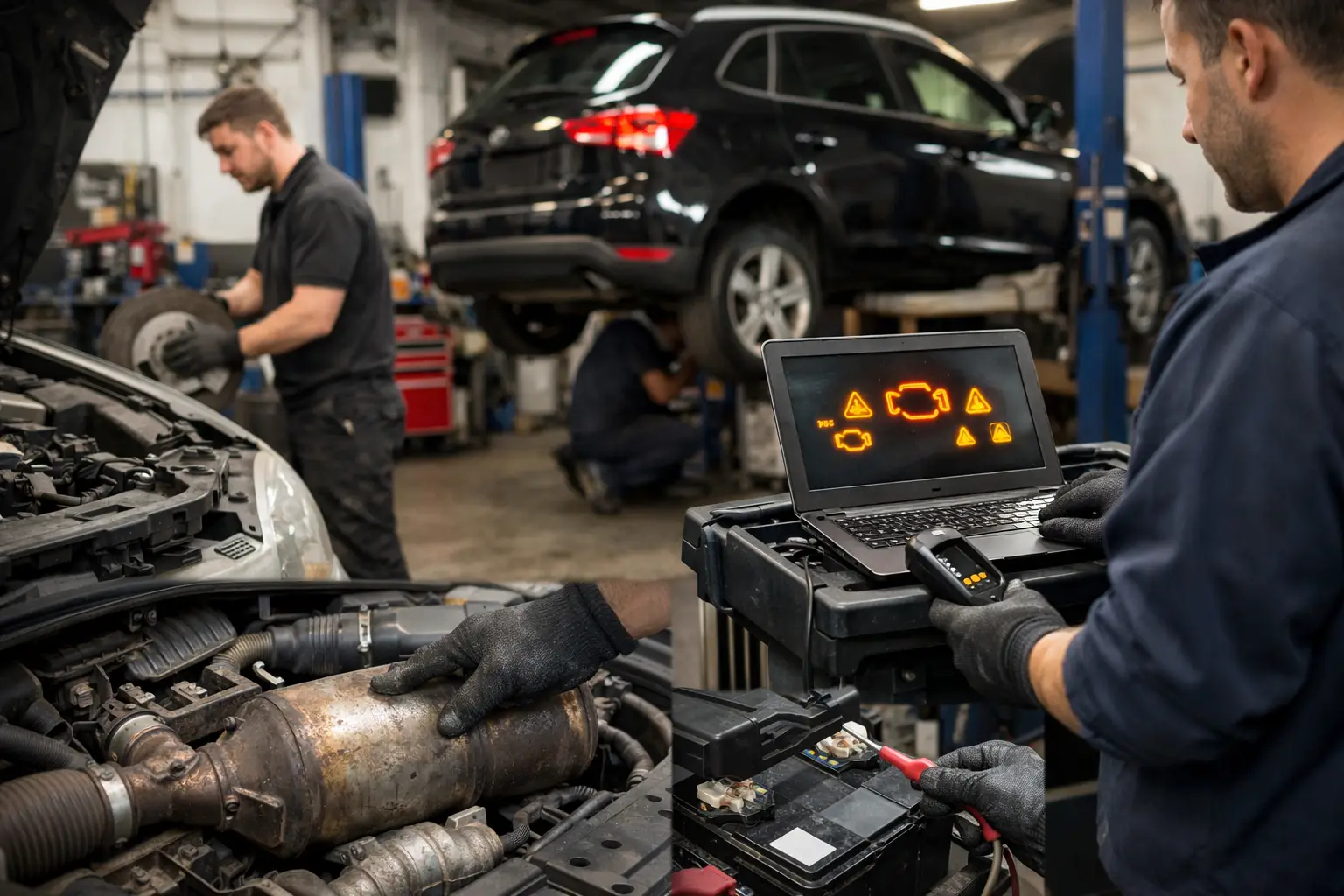
A decent garage should start with diagnostics, not parts swapping. That means connecting suitable diagnostic equipment, reading the stored fault codes and checking the live data from the vehicle. The fault codes point us in the right direction, but they are not the final answer. We then test the likely cause and inspect the affected system before recommending any work.
This approach matters because the cheapest-looking fix can become expensive if it does not solve the root problem. Replacing a sensor because a code mentions that sensor may not help if the real cause is damaged wiring, a blocked DPF or an air intake fault.
The best garage for warning lights should also explain the result in plain English. You should know what we found, whether the car is safe to drive, what needs doing now and what can reasonably wait. Clear pricing should follow before repairs begin, with no surprise extras.
Do not ignore the colour of the warning light
The colour gives a useful first indication of how urgently you need to act. It is not a complete diagnosis, but it helps you make a sensible decision.
A red warning light generally means stop as soon as it is safe to do so. Low oil pressure, overheating, brake system faults and a battery warning light that appears while driving can all cause serious damage or leave you stranded if ignored. Do not keep driving in the hope that it will clear. Turn off safely and call for advice or recovery support.
An amber engine warning light often means the vehicle can be driven carefully for a short distance, but it needs checking soon. If the engine warning light is flashing, however, stop driving where safe. A flashing light can indicate an active misfire, which may damage the catalytic converter.
A DPF warning light needs attention before the filter becomes heavily blocked. In some cases, a longer steady drive may allow regeneration, but that depends on why the light came on in the first place. If the car is already in limp mode, has lost power or the light keeps returning, a proper diagnostic check is the sensible next step.
Common warning-light problems we find
Engine warning light and poor performance
We often see this issue when a driver notices that the car feels flat, struggles uphill or will not accelerate normally. This usually happens because the engine management system has detected a fault and may have put the car into limp mode to protect it.
Possible causes include boost leaks, EGR faults, ignition issues, fuel system faults, sensor readings outside their normal range or DPF problems. The symptoms can feel similar, which is why guessing is rarely useful. Diagnostics allow us to narrow it down and recommend the repair that actually fits the fault.
DPF light, frequent regenerations or limp mode
Short journeys are hard on many diesel vehicles. The engine may not get hot enough or run long enough for the DPF to regenerate properly. Over time, soot builds up and the vehicle may show a warning light, use more fuel or lose power.
A forced regeneration is not always the answer. First, we need to find out why the DPF has become loaded. A faulty pressure sensor, temperature sensor, EGR issue or engine fault can prevent a successful regeneration. We check the condition of the system and deal with the cause before carrying out appropriate DPF cleaning or regeneration work.
Battery, charging and electrical warnings
If the battery light comes on while the engine is running, the battery itself may not be the only issue. The alternator, drive belt, wiring or battery connections may be at fault. The car may continue for a short time, but once the battery charge runs down, it can cut out and refuse to restart.
Electrical faults need careful testing. We check the charging system and battery condition rather than fitting parts on assumption. This gives you a clearer answer and helps prevent the same problem returning.
ABS, brake or tyre pressure warnings
Brake and ABS warning lights should never be treated as routine. It may be a sensor issue, but it can also relate to the braking system itself. If the brake pedal feels soft, the car pulls to one side, fluid is low or a red brake warning light is showing, stop driving and arrange help.
Tyre pressure warnings can be caused by a puncture, a slow leak or simply a tyre that needs setting to the correct pressure. Check all tyres when safe, including for visible damage. If the warning returns after pressures are corrected, bring the car in for inspection.
What happens during warning-light diagnostics?
A proper diagnostic appointment is more than plugging in a scanner for five minutes. We begin by asking what happened before the light appeared. Did the car lose power? Has it been difficult to start? Did the problem begin after a long journey, a short trip or recent repair work? These details are often useful.
We then carry out a diagnostic scan, assess stored codes and look at live readings where needed. Depending on the fault, we may inspect hoses, wiring, connectors, battery voltage, fluid levels or components around the affected system. If further testing is required, we will explain why before moving forward.
Once we have identified the likely cause, you get a clear repair plan. If a repair can be completed the same day, we will aim to do so. That depends on workshop availability, the fault found and parts availability, so we will always be honest about the timescale.
After the repair, we check that the fault has been resolved and clear the warning light only when the cause has been addressed. Clearing a light without repairing the problem is not a fix. In most cases, it will simply return.
When should you book your car in?
Book diagnostics promptly if an amber warning light stays on, returns after being cleared, or comes with changes in how the car drives. Loss of power, smoke, rough running, difficult starting, unusual noises and reduced fuel economy are all worth checking alongside a dashboard warning.
For drivers around Lowestoft, Oulton Broad, Carlton Colville, Beccles and nearby areas, a local garage can save time when you need a straightforward answer quickly. If the vehicle is not safe to drive, ask about recovery or transport assistance rather than risking further damage on the road.
You do not need to know what the fault code means before you call. Tell us the warning light, the make and model of the car, and any symptoms you have noticed. We will take it from there. Book diagnostics, get a clear explanation and get back on the road with a repair that deals with the real problem.

7 thoughts on “Best Garage for Warning Lights in Lowestoft”