How to Spot DPF Issues Before They Get Worse
Your diesel car suddenly feels sluggish on the way to work. Perhaps the engine warning light appears, fuel consumption increases, or the vehicle struggles to accelerate uphill. These symptoms can indicate a developing diesel particulate filter problem.
Knowing how to spot DPF issues early can help you avoid expensive repairs and unexpected breakdowns. However, not every warning light means the DPF itself has failed. Sometimes another engine fault prevents the filter from working correctly.
At AutoFix4u Garage Lowestoft, we help drivers investigate DPF warning lights, poor engine performance and regeneration problems. Our approach focuses on finding the cause before recommending repairs.
What Does a DPF Do?
A diesel particulate filter, or DPF, traps soot particles from the exhaust gases of modern diesel vehicles.
Over time, soot collects inside the filter. The vehicle then uses a process called regeneration to burn away much of this soot.
During regeneration, the exhaust system reaches higher temperatures. This allows the filter to reduce its soot load and maintain proper exhaust flow.
However, the process needs suitable operating conditions.
Frequent short journeys, engine problems or faulty sensors can interrupt regeneration. As a result, soot may build up faster than the system can remove it.
Eventually, the car may display a warning light or reduce engine power.
How to Spot DPF Issues From the Way Your Car Drives
Early DPF problems often affect normal driving before a serious fault develops.
Some symptoms appear gradually. Others develop suddenly when the engine management system detects a problem.
1. Reduced Engine Power
One of the most noticeable signs is poor acceleration.
For example, your car may struggle uphill or feel slower when joining a dual carriageway.
You might also notice hesitation when pressing the accelerator.
A restricted DPF can contribute to these symptoms because excessive exhaust back pressure affects engine operation.
However, turbo faults, boost leaks and fuel problems can produce similar behaviour.
Therefore, proper diagnostics should confirm the cause.
2. Increased Fuel Consumption
A diesel vehicle may use more fuel when it attempts frequent regenerations.
During active regeneration, the engine management system adjusts its operation to raise exhaust temperatures.
Consequently, you may notice a temporary increase in fuel consumption.
However, consistently high fuel use can also indicate other engine problems.
If your fuel economy changes unexpectedly, pay attention to any warning lights or performance issues.
3. Limp Mode
Limp mode limits engine performance when the vehicle detects certain faults.
You may notice poor acceleration, restricted engine speed or a significant loss of power.
A heavily loaded DPF can trigger this protective response.
Nevertheless, limp mode does not automatically confirm a blocked filter.
Faulty sensors, fuel pressure problems, turbo faults and other engine issues can also trigger it.
If your vehicle enters limp mode, avoid unnecessary journeys and arrange a diagnostic inspection.
4. Unusual Engine Behaviour
Some drivers notice changes in engine performance before a warning light appears.
For example, the engine may hesitate, idle differently or respond poorly during acceleration.
These symptoms provide useful diagnostic clues.
However, they do not identify the faulty component on their own.
An inspection helps determine whether the problem involves the DPF, engine management system or another mechanical issue.
Warning Lights That Can Indicate DPF Problems
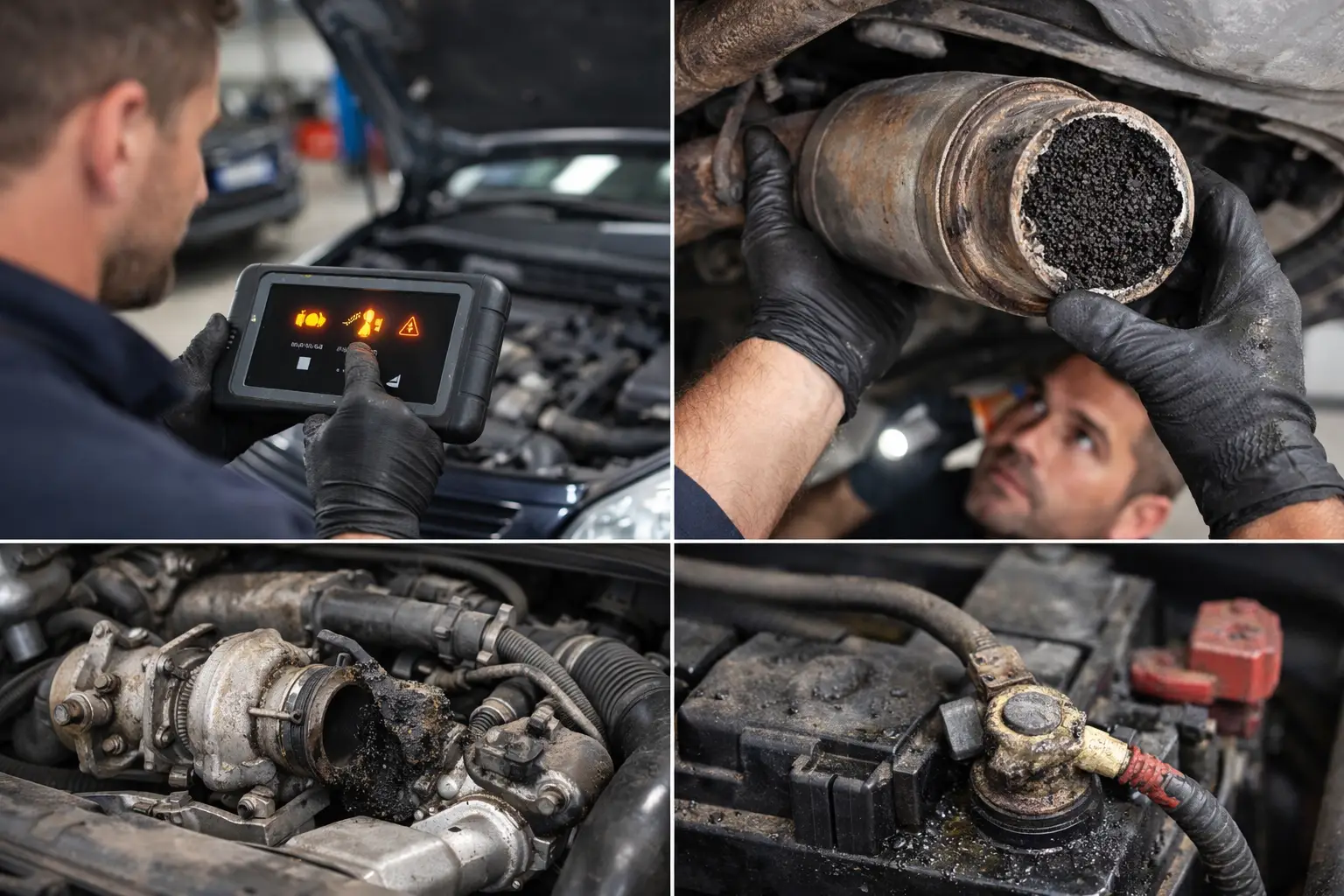
Dashboard warning lights often provide the first clear indication of trouble.
Some vehicles display a dedicated DPF symbol.
Others show an engine management warning or an exhaust filter message.
The exact warning depends on the manufacturer.
DPF Warning Light
A DPF warning light usually indicates that the vehicle needs attention to its particulate filter system.
Sometimes the vehicle can complete a normal regeneration if the driver follows the manufacturer’s instructions.
However, a warning that returns repeatedly needs investigation.
A faulty pressure sensor, interrupted regeneration or another engine fault may prevent the system from working correctly.
If your warning keeps appearing, read our Guide to a DPF Light That Keeps Returning.
Engine Management Warning Light
An engine warning light can appear alongside a DPF problem.
However, it may also point to an unrelated engine fault.
For example, the vehicle could have a faulty sensor, air leak or fuel-system issue.
A diagnostic scan can retrieve relevant fault information.
The technician must then investigate the likely cause before recommending repairs.
Multiple Warning Lights
Several warning lights appearing together can indicate a more complex problem.
For example, a DPF warning may appear alongside reduced engine power or another engine management message.
If the vehicle runs poorly, produces excessive smoke or displays serious warnings, stop somewhere safe and seek professional advice.
Do not continue driving simply to clear the dashboard lights.
Why Does the Cooling Fan Keep Running After Switching Off?
Some diesel vehicles continue running their cooling fan after the engine stops.
This can happen during or shortly after DPF regeneration.
The system uses the fan to manage heat around the engine and exhaust components.
You may also notice a higher idle speed, a hot smell or increased fuel consumption.
These symptoms do not always indicate a fault.
However, frequent fan activity combined with warning lights or poor performance deserves attention.
If regeneration repeatedly fails to complete, the DPF may gradually collect excessive soot.
A diagnostic check can help identify the reason.
Common Causes of DPF Problems
Understanding the cause matters because a blocked filter is sometimes the result of another fault.
Frequent Short Journeys
Short local trips can make regeneration difficult.
The engine may reach its destination before the exhaust system reaches suitable operating conditions.
Consequently, the vehicle may interrupt regeneration.
Repeated interruptions can allow soot levels to rise.
This is particularly relevant for diesel cars used mainly for school runs, shopping trips and short local journeys.
However, short journeys are not the only possible cause.
A healthy system should still manage soot according to its design and operating conditions.
Faulty DPF Pressure Sensors
The differential pressure sensor helps the engine control system monitor pressure across the DPF.
It uses information from the exhaust system to support filter monitoring.
However, damaged pressure pipes, faulty wiring or incorrect sensor readings can cause problems.
For example, a blocked pressure pipe may produce misleading readings.
The vehicle might then report a DPF fault even when the filter itself is not the main problem.
A technician should inspect the relevant components before replacing parts.
Engine Temperature Problems
Some vehicles need the engine to reach a suitable operating temperature before regeneration can begin.
A faulty thermostat may prevent the engine from warming up correctly.
As a result, the engine management system may delay or interrupt regeneration.
A coolant temperature sensor fault can also affect the process.
Therefore, checking engine temperature readings forms an important part of DPF investigation.
EGR and Air Intake Faults
The exhaust gas recirculation system helps control engine emissions.
However, a sticking EGR valve or an air intake problem can affect combustion.
This may increase soot production and place additional demand on the DPF.
Likewise, damaged boost hoses can affect the amount of air entering the engine.
The solution depends on finding the actual problem.
Cleaning the DPF alone may not prevent another blockage.
Injector and Fuel System Problems
Fuel injectors must deliver the correct amount of fuel at the right time.
If an injector develops a fault, the engine may produce more soot than normal.
Other fuel-system problems can also affect combustion and engine performance.
These faults need appropriate testing.
Replacing the DPF without investigating excessive soot production may leave the original problem unresolved.
Ash Build-Up in Older Filters
Regeneration removes soot, but it does not remove the ash that gradually accumulates inside the filter.
Over time, high ash levels can reduce the DPF’s remaining capacity.
A longer drive cannot burn away this ash.
Depending on the filter’s condition, specialist cleaning or replacement may become necessary.
Can You Keep Driving With a Blocked DPF?
The answer depends on the warning lights, the vehicle’s condition and the manufacturer’s guidance.
If the DPF warning has only just appeared and the car runs normally, consult the vehicle handbook.
Some manufacturers recommend specific driving conditions to help the vehicle complete regeneration.
However, do not attempt repeated high-speed journeys to force the warning light off.
A longer drive cannot repair a faulty sensor or an engine problem that prevents regeneration.
If the vehicle enters limp mode, loses significant power, overheats or produces excessive smoke, stop somewhere safe.
Arrange professional advice before continuing.
What Should You Do When a DPF Warning Appears?
First, check how the vehicle behaves.
Does it accelerate normally? Has fuel consumption increased? Are other warning lights showing?
Next, note when the warning first appeared.
For example, did it follow several short journeys or a period of poor engine performance?
These details help a technician investigate the problem.
Avoid clearing fault codes repeatedly.
A reset may temporarily remove the warning, but it will not repair the underlying fault.
Likewise, fuel additives cannot solve every DPF problem.
The appropriate repair depends on the filter’s condition and the cause of the warning.
How AutoFix4u Diagnoses DPF Problems
A proper DPF inspection involves more than reading a single fault code.
At AutoFix4u Garage Lowestoft, we investigate the available diagnostic information and relevant engine components.
Depending on the vehicle and symptoms, our checks may include:
- Reading engine and emissions fault codes
- Reviewing DPF soot-load information
- Checking differential pressure readings
- Assessing exhaust temperature data
- Checking regeneration status and history
- Inspecting sensors and pressure pipes
- Investigating air intake and EGR faults
- Reviewing relevant engine performance readings
These checks help determine whether the DPF itself needs attention.
They can also reveal faults that prevent normal regeneration.
For example, a vehicle may show a DPF warning because a pressure sensor provides incorrect data.
Replacing the filter would not repair that sensor fault.
Therefore, identifying the cause first can prevent unnecessary expense.
Learn more about our Engine Diagnostics Service in Lowestoft.
DPF Regeneration, Cleaning or Replacement?
Not every DPF problem requires the same repair.
A suitable solution depends on the vehicle, filter condition and diagnostic results.
Normal Regeneration
If the system works correctly, the vehicle may complete regeneration during suitable driving conditions.
Always follow the manufacturer’s instructions.
However, this approach will not fix an underlying engine or sensor fault.
Controlled Regeneration
In some cases, a technician may recommend a controlled regeneration.
First, the technician must check whether the procedure is suitable and safe.
Excessive soot loading or other engine faults can make this procedure inappropriate.
Professional DPF Cleaning
Some filters may require specialist cleaning when normal regeneration cannot restore acceptable performance.
However, cleaning will not repair damaged sensors, wiring or other engine faults.
The garage should investigate those problems before recommending further treatment.
DPF Replacement
A physically damaged filter or one that cannot recover adequate performance may require replacement.
However, replacement should follow proper assessment.
A new DPF can develop the same problem if the original cause remains.
For more information, visit our DPF Regeneration Lowestoft Service.
How to Reduce the Risk of DPF Problems
Good maintenance and suitable driving habits can help reduce DPF problems.
First, follow the manufacturer’s servicing schedule.
Use the correct engine oil specification, as unsuitable oil can increase ash accumulation.
Next, address engine warning lights promptly.
An unresolved EGR, turbo or injector fault may increase soot production.
Also, avoid repeatedly interrupting regeneration when it is safe and practical to complete your journey.
If your driving pattern mainly involves short trips, follow the vehicle manufacturer’s advice about DPF operation.
However, remember that motorway driving is not a substitute for repairing a faulty system.
Frequently Asked Questions About DPF Issues
What are the first signs of a blocked DPF?
Early signs may include a DPF warning light, reduced acceleration, increased fuel consumption or frequent regeneration attempts.
However, other engine faults can produce similar symptoms.
A diagnostic check helps identify the cause.
Can a DPF warning light disappear on its own?
Yes. Some vehicles may clear the warning after a successful regeneration.
However, a warning that repeatedly returns suggests the system needs further investigation.
Does a running cooling fan mean the DPF is blocked?
Not necessarily.
Some diesel vehicles run their cooling fan during or after regeneration.
However, frequent fan activity alongside warning lights or poor performance may justify a diagnostic inspection.
Will a long drive clean a blocked DPF?
A suitable drive may help a healthy system complete regeneration.
However, it cannot repair faulty sensors, damaged components or excessive ash accumulation.
Always follow the manufacturer’s instructions.
Can a faulty sensor cause a DPF warning?
Yes. Incorrect pressure or temperature readings can affect how the vehicle monitors and manages its DPF.
Therefore, sensor and wiring checks may form part of the diagnosis.
Book a DPF Diagnostic Check in Lowestoft
If your diesel car displays a DPF warning light, loses power or repeatedly attempts regeneration, arrange an inspection before the problem becomes more serious.
At AutoFix4u Garage Lowestoft, we help drivers from Lowestoft, Oulton Broad, Carlton Colville, Pakefield and nearby areas investigate DPF-related faults.
We aim to identify the cause, explain the available repair options and provide clear advice before work begins.
AutoFix4u Garage Lowestoft
Unit 4, 10 Battery Green Road
Lowestoft, NR32 1DE
Call: 07778 979802
WhatsApp: Message AutoFix4u
Contact: Request a Diagnostic Appointment
Spot DPF problems early. Contact AutoFix4u Garage Lowestoft for professional diagnostics and practical repair advice.