Can a Puncture Be Repaired? Clear Advice
A flat tyre on the way to work, the school run or an MOT appointment is never convenient. The first question most drivers ask is: can a puncture be repaired? In many cases, yes. But it depends on where the damage is, how big it is and whether the tyre has been driven while flat.
The safest approach is not to guess or rely on a can of sealant. A proper tyre inspection tells you whether a repair is safe, or whether replacement is the only sensible option. That matters because the tyre is the only part of your car in contact with the road.
Can a puncture be repaired safely?
A puncture can usually be repaired when it is in the central tread area, caused by a small nail or screw, and the tyre has not been run underinflated. This is the part of the tyre designed to make contact with the road, and it has enough structure for a professional repair when the damage is within the accepted repairable area.
We often see this issue when a screw has been picked up from a driveway, building site or roadside. The tyre may lose pressure slowly over several days, or it may go down overnight. If you spot the problem early and avoid driving on it, there is a good chance it can be repaired.
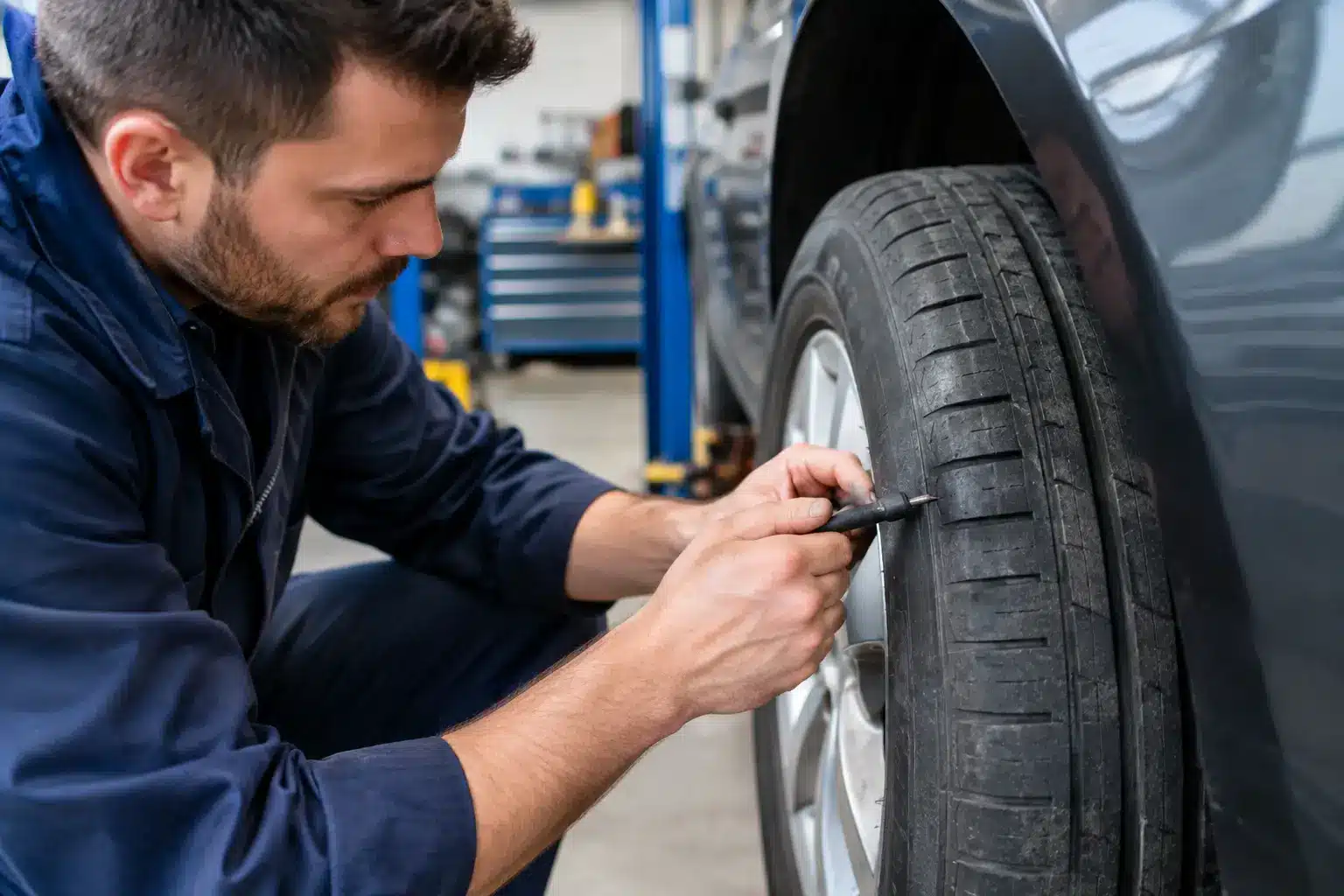
A garage should remove the wheel and inspect the tyre properly from the inside before agreeing to repair it. Looking at the outside alone is not enough. Internal damage can develop if the tyre has been driven with low pressure, even if it still looks reasonable from the outside.
A safe repair is not simply a plug pushed into the hole from the outside. The tyre needs to be checked, prepared and repaired using the correct materials. Once completed, it should be pressure-tested and refitted correctly.
When a puncture cannot be repaired
Not every flat tyre is repairable. The main issue is the tyre sidewall. This is the flexible section between the tread and the wheel rim. It bends constantly as you drive, so it cannot safely support a standard puncture repair.
Damage near the outer edge of the tread can also be too close to the sidewall to repair. Even a small screw in this area may mean the tyre has to be replaced.
A tyre will normally need replacing if:
- The puncture is in the sidewall or shoulder area.
- The hole is too large, irregular or caused by a split rather than a simple nail or screw.
- The tyre has been driven flat or very low on pressure.
- There is a bulge, cut, exposed cords or visible internal damage.
- The tread depth is already close to the legal minimum.
- A previous repair is too close to the new damage.
This can feel frustrating when the tyre looks almost new from the outside. But safety comes first. A tyre that has been run flat may have damaged internal layers that cannot be seen without removing it from the wheel. Repairing that tyre could lead to a sudden failure later.
The warning signs of a slow puncture
Not every puncture leaves you stranded. Slow punctures are common, particularly where a small screw remains lodged in the tread and partly seals the hole. You may notice the tyre pressure warning light, a tyre that looks lower than the others, or the car pulling slightly to one side.
You might also find yourself topping up one tyre every week or two. That is not normal and should be checked. The cause could be a puncture, but it could also be a leaking valve, corrosion around the wheel rim, or damage from hitting a pothole or kerb.
In most cases, we can identify the source of a pressure loss quickly. The solution may be a repair, a new valve or attention to the wheel sealing surface. The point is to fix the actual cause, rather than keep adding air and hoping it holds.
What to do when you find a nail or screw in your tyre
If you see a nail or screw in the tyre tread, leave it where it is. Pulling it out can turn a slow leak into a completely flat tyre within minutes.
Check the tyre pressure if you can do so safely. If it is holding air and the tyre is not visibly low, drive only as far as necessary to get it inspected. Keep your speed down, avoid heavy loads and do not make a long journey. If the pressure is low, fit your spare wheel if you have one and know it is roadworthy, or arrange recovery support.
Do not drive on a tyre that is flat. Even a short distance can damage the sidewall and turn a repairable puncture into a replacement tyre. It can also affect handling, damage the wheel rim and make the car unsafe to control.
Tyre sealant is useful in an emergency where there is no spare, but it is a temporary measure. It can make a proper repair more difficult and does not work on every type of damage. Tell the garage if sealant has been used so the tyre can be assessed safely.
Why the location of the puncture matters
The central tread has reinforced belts beneath the rubber. When a small object creates a clean hole there, a professional repair can restore the tyre’s air seal and maintain safe use.
The shoulder and sidewall work differently. They flex with every turn of the wheel and carry forces from steering, braking and cornering. A repair in this area is more likely to fail, which is why a responsible garage will not take the risk.
The same applies to larger damage. A small round hole from a screw is very different from a tear caused by debris, a pothole impact or a kerb strike. The tyre may lose air for the same reason, but the repair decision is not the same.
Can a puncture be repaired on run-flat tyres?
Run-flat tyres need extra care. They are designed to support the car for a limited distance after a loss of pressure, but that does not automatically mean they can be repaired.
Whether a run-flat tyre is repairable depends on the manufacturer’s guidance, the location of the puncture and how far it has been driven with little or no air. Damage inside the tyre is the concern. If the reinforced sidewall has been overloaded, replacement is usually the right answer.
Some cars do not have a spare wheel because they were supplied with run-flat tyres or a tyre repair kit. If you are unsure what your car has, check the handbook before you need it. It is better to know your options before you are stuck at the roadside.
Do not ignore tyre pressure warning lights
The tyre pressure warning light may come on after a genuine puncture, but it can also appear after a pressure change or tyre work. If it stays on after you have checked and adjusted the pressures, the car may need its tyre pressure monitoring system reset.
Treat the warning as a reason to inspect the tyres, not as something to clear and forget. Check all four tyres for visible damage, and do not overlook the spare if your vehicle has one. A tyre can lose pressure gradually enough that the car still feels mostly normal until the problem becomes serious.
Get the right answer before replacing a tyre
Replacing a tyre that could have been safely repaired is unnecessary. Equally, repairing one that has sidewall or internal damage is not worth the risk. The answer comes from a proper inspection, not a quick look in a car park.
At AutoFix4u, we inspect punctures honestly and explain what we find in plain English. If the tyre can be repaired safely, we will tell you. If it needs replacing, we will show you why and give you clear pricing before work starts. Same-day help may be available for drivers in and around Lowestoft, depending on tyre availability and workshop space.
If you have found a screw in your tyre, your pressure warning light is on, or one tyre keeps going down, get it checked before your next longer journey. A quick inspection now can save you a roadside breakdown later.