
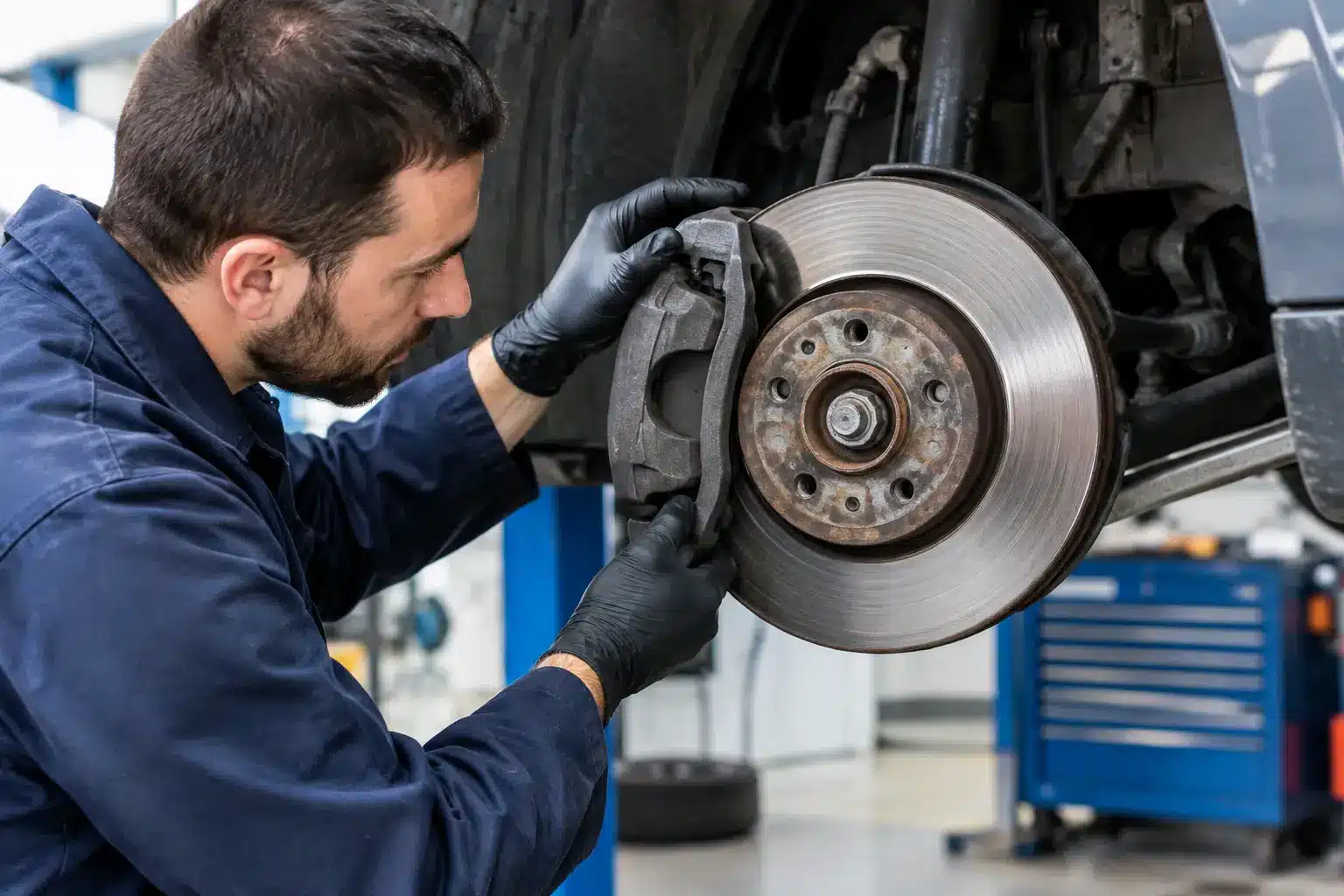
How to Fix Squealing Brakes Before They Get Worse
That sharp squeal as you pull up outside the school, supermarket or work is not a noise most drivers can ignore for long. You may be able to fix squealing brakes with a simple clean-up or replacement of worn parts, but the sound can also be an early warning that your braking system needs attention. The key is working out when it is harmless surface noise and when it is telling you to stop driving.
At AutoFix4u, we often see this issue when a customer has put off a small noise until it becomes grinding, vibration or an MOT failure. Brakes are a safety item. A proper inspection finds the cause before a straightforward repair turns into damaged discs, calipers or a longer time off the road.
Why do brakes squeal?
A squeal happens when the brake pad and disc vibrate against each other. That does not automatically mean the brakes are worn out. Brake components work in heat, rain, road dirt and changing temperatures, so occasional noise is possible. What matters is when it happens, how often it happens, and whether anything else has changed.
In most cases, the cause is one of a few familiar faults. Worn brake pads are high on the list. Many pads have a small wear indicator that makes a high-pitched noise when the friction material is getting low. It is designed to get your attention before the pad wears down to metal.
Pads can also become glazed. This means the braking surface has become smooth and hard, usually after repeated heavy braking or overheating. Glazed pads do not grip as well as they should and can squeal, particularly at low speed.
Dust, grit or corrosion around the pads and discs can create noise too. Cars that sit for a few days, are used mainly for short trips, or are driven near the coast can develop a light layer of rust on the discs. A brief squeal on the first few applications of the brakes may clear once the discs are cleaned by normal driving. If it continues, it needs checking.
Other causes include worn or scored brake discs, missing anti-rattle clips, dry pad contact points, sticking calipers and poor-quality or incorrectly fitted brake parts. This is why fitting pads alone without checking the rest of the system can leave the original problem behind.
When squealing brakes need urgent attention
A light squeal that lasts for one brake application after the car has been parked is different from a constant noise every time you slow down. If the brakes feel normal and the noise disappears quickly, it may be surface moisture or light corrosion. Keep an eye on it, but do not assume repeated noise will sort itself out.
Book a brake inspection promptly if the squeal is happening regularly, becomes louder, or appears alongside reduced braking performance. You should not keep driving if you notice a grinding or scraping sound, a brake pedal that feels soft or unusually low, the vehicle pulling to one side, steering-wheel vibration under braking, a burning smell, or a brake warning light.
Grinding usually means metal is contacting metal. At that point, the pads may be fully worn and the discs can be damaged quickly. Continuing to drive can increase the repair needed and, more importantly, reduce your ability to stop safely.
If you are unsure whether the car is safe, do not guess. Call the garage and explain exactly what you can hear and feel. We can advise the sensible next step and arrange a fast inspection where possible.
How to fix squealing brakes properly
The right repair depends on the cause. There is no honest one-size-fits-all answer, and this is where a diagnostic-first check saves money. We inspect the pads, discs, calipers, hoses, mounting hardware and brake fluid condition rather than treating the noise as just a pad problem.
If the pads are worn or glazed
Worn pads are replaced with quality parts suited to the vehicle. We also check the discs at the same time. If the discs are below their minimum thickness, heavily lipped, scored or heat-marked, they should be replaced as an axle pair with the pads. New pads on poor discs can be noisy, wear unevenly and give less consistent braking.
Where pads are glazed, replacement is often the dependable answer. In some limited cases, light surface glazing can be addressed during a brake service, but it depends on pad condition and whether the discs have also overheated. The aim is long-term reliability, not a quick fix that leaves the squeal returning next week.
If dirt, corrosion or seized parts are causing the noise
Brake pads need to move freely in their carriers. Dirt and corrosion can build up where they sit, causing a pad to bind. A sticking pad may squeal, wear much faster on one side and make the wheel unusually hot after a journey.
The repair may involve removing the pads, cleaning corrosion from the contact areas, fitting the correct shims or clips, and applying the right brake lubricant only where it belongs. Lubricant must never go on the pad friction surface or disc. If a caliper or slider is seized, cleaning alone may not be enough. The faulty part needs repairing or replacing so the brakes release and apply correctly.
If the discs are damaged
A disc with deep grooves, heavy corrosion or heat spots can create noise and judder. Discs do wear over time, especially on cars used for frequent town driving. Moisture and road salt can also cause corrosion on the inner face of the disc, which drivers cannot easily see through the wheel.
If discs need replacement, they are changed in pairs across the same axle. This keeps braking balanced from left to right. We then road-test the vehicle where appropriate and make sure the pedal feel and braking response are right before handover.
Can you fix squealing brakes at home?
Some drivers are tempted to spray cleaner through the wheel or apply grease to stop the noise. Brake cleaner can remove loose dust during correct maintenance, but it will not repair worn pads, damaged discs or a sticking caliper. Grease in the wrong place can seriously reduce braking performance.
Changing brake parts is not a good job to learn by trial and error on the driveway. The vehicle must be supported safely, parts must be fitted correctly, bolts tightened to specification, and the brake pedal checked before the car moves. On modern vehicles, electronic parking brakes and brake wear sensors add another layer of work.
If you have experience and the proper tools, you can carry out routine checks such as looking through the wheel at visible pad thickness or spotting obvious disc corrosion. But if there is any doubt, let a qualified technician inspect it. A brake check is quicker and safer than replacing parts you may not need.
How to prevent brake squeal returning
You cannot prevent every occasional squeak, particularly after wet weather or a car sitting overnight. You can reduce recurring problems by having brakes checked during servicing and before an MOT, rather than waiting for noise or poor performance.
Avoid resting your left foot on the brake pedal while driving. On automatic cars, avoid holding the car on the accelerator against the brakes on hills. Both habits create unnecessary heat. If you have driven through deep water, use gentle braking when safe to help dry the discs.
Short local journeys are hard on brakes because they do not always warm up fully. That is common for family cars and commuter vehicles around Lowestoft. It does not mean you need to change how you use your car, but it does mean small noises and uneven wear are worth dealing with early.
Get your brakes checked before the noise becomes damage
Squealing brakes are often repairable without drama when caught early. But a noise alone cannot confirm whether you need pads, discs, a caliper repair or simply a proper clean and inspection. The sensible route is to have the braking system checked and receive a clear explanation before work starts.
If your brakes are squealing, grinding, pulling or making the car feel less confident to drive, contact AutoFix4u for a brake inspection in Lowestoft. We will identify the fault, explain the repair in plain English and provide clear pricing with no surprise extras. Same-day slots may be available. Do not wait for an MOT failure or a small squeal to become a safety issue.


