Warning Light Diagnostics Near Me Explained
A warning light never seems to come on at a good time. It is usually when you need the car for work, school runs or a weekend trip, and suddenly you are left wondering if it is safe to keep driving. If you are searching for warning light diagnostics near me, you probably do not want a long theory lesson. You want to know what the light means, what might be causing it, and what to do next.
In most cases, a dashboard warning light is the car telling you a fault has been picked up by one of its systems. Sometimes the issue is minor. Sometimes it points to a problem that can lead to poor running, loss of power or a breakdown if it is ignored. The key thing is not to guess.
What warning light diagnostics near me actually involves
A lot of drivers assume diagnostics just means plugging in a machine and reading a fault code. That is only part of it. A proper diagnostic check starts with the code, but it should not end there.
We often see this issue when a customer has already been told what part to replace based on a code alone, only to find the light comes back. That usually happens because the code points to the area of the fault, not always the exact failed part.
For example, an engine warning light could be linked to a sensor fault, an air leak, ignition trouble, emissions issues or a blocked DPF. The code gives a clue. The real job is working out why that code appeared in the first place.
That is why proper warning light diagnostics should follow a clear process. Identify the fault properly, explain it in plain English, then recommend the repair that actually solves the issue.
The most common warning lights we see
The engine warning light is one of the most common. This usually happens because the engine management system has detected something outside normal range. The car may still drive normally, or it may feel rough, sluggish or go into limp mode.
ABS and brake warning lights are also common. These can be linked to wheel speed sensors, wiring faults, low brake fluid or more serious braking system problems. If a brake warning light appears, it is worth taking seriously from the start.
Airbag lights often point to a stored fault in the restraint system. Sometimes it is caused by a wiring issue under a seat. Sometimes it is a sensor or control unit fault. Either way, it means the system may not work properly in an accident.
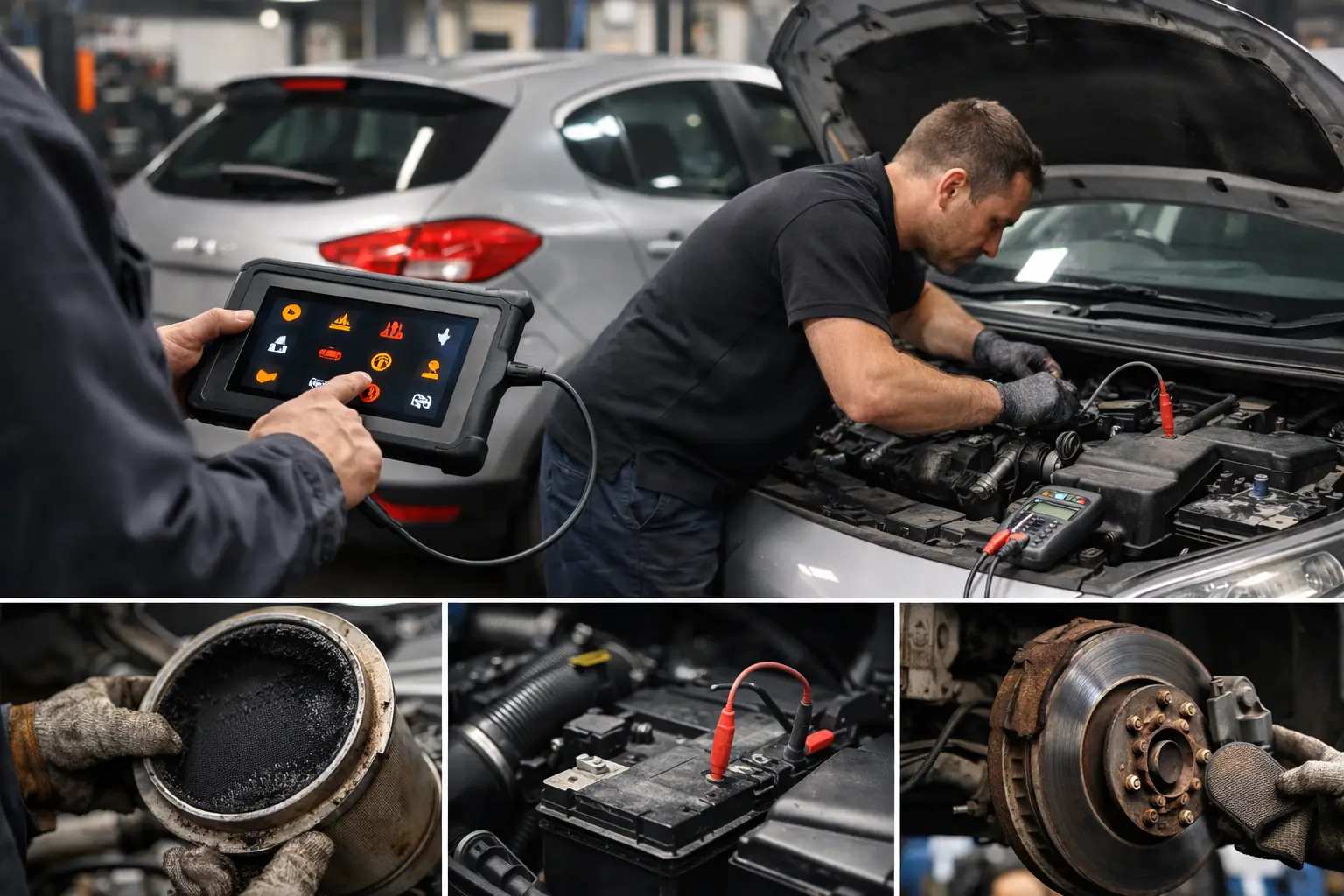
DPF and emissions lights are another regular issue, especially on diesel vehicles used for short local trips. We often see this when the filter has not had a proper chance to regenerate and starts to block.
Battery and charging lights can mean the battery is weak, but not always. In many cases, the alternator, wiring or charging circuit is the real cause.
Why warning lights come on in the first place
Cars now rely on sensors, control units and electrical systems to monitor how everything is working. When one reading falls out of expected range, the car stores a fault and often turns a light on. That sounds simple, but the cause behind it can vary.
A warning light might come on because a part has failed. It might also be caused by damaged wiring, poor battery voltage, carbon build-up, a blocked filter or even a fault that happened once but needs checking before it can be cleared safely.
This is why guessing can get expensive. Replacing parts without testing them properly often wastes time and money. We see it more than most people realise.
Can you keep driving with a warning light on?
It depends on the light, how the car is behaving and whether the warning is red, amber or flashing.
If the light is amber and the car feels normal, you may still be able to drive short distances, but it is still best to get it checked as soon as possible. An issue that starts small can become more serious if left.
If the car has lost power, is misfiring, smoking, struggling to start or showing a flashing warning light, stop using it if you can. These signs often point to a fault that could damage other components or leave you stranded.
Red warning lights should never be ignored. Those usually relate to safety-critical systems or faults that need immediate attention.
If you are unsure, ask before driving further. A quick phone call can stop a small issue becoming a bigger repair.
What happens during a proper diagnostic appointment
A good diagnostic appointment should not feel vague or rushed. The first step is listening to what the car has been doing. Has the light just appeared? Has there been loss of power? Does it only happen when the engine is cold? Those details matter.
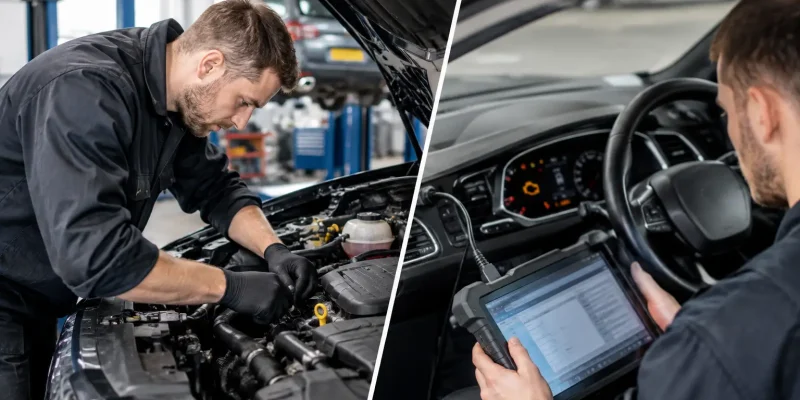
After that, the vehicle is scanned for fault codes and live data. This helps show what the systems are seeing in real time. If needed, the technician will carry out further checks on the affected area, such as testing sensors, wiring, battery condition, pressure readings or regeneration status.
Once the cause is confirmed, you should get a clear explanation of the fault, the repair needed and what happens next. That is the difference between a quick code read and an actual diagnosis.
Warning light diagnostics near me for local driving problems
Around Lowestoft and the surrounding areas, we often see cars used for short journeys, stop-start driving and everyday local use. That type of driving is hard on some systems, especially diesel engines with DPFs, batteries that do not get fully charged and components that rely on the engine reaching proper temperature.
That is why warning light diagnostics near me should be more than a generic service. Local driving patterns matter. A diesel used mostly for school runs may develop a very different fault from a car doing regular motorway miles.
In practical terms, that means the symptoms need to be looked at alongside how the vehicle is used. The same warning light on two cars can have two very different causes.
Why speed matters with diagnostics
The longer a fault is left, the more chance there is of it affecting something else. A minor sensor issue can turn into poor running. A DPF warning can lead to full blockage. A charging problem can end with a non-start.
Busy drivers usually need a quick answer, not days of waiting around. In most cases, early diagnostics save time because the issue is caught before it spreads or causes extra damage.
It also helps with planning. Even if the repair cannot be done on the spot, you know exactly what is wrong and what it will take to sort it. That is a lot better than driving around hoping the light goes away on its own.
Choosing the right garage for warning light diagnostics
If you are looking for warning light diagnostics near me, it is worth finding a garage that does not jump straight to parts fitting. The best approach is diagnostic first, repair second.
Look for clear communication, honest advice and a workshop that explains faults in plain English. You should know whether the issue is urgent, whether the car is safe to use, and what the next step is. No guesswork. No surprise extras.
A local independent garage can often be the better option here because accountability is personal. You are not just another job on a national booking system. You are speaking to people who know that if they get it wrong, they will see you again next week.
That matters when your car is your only way to get to work, pick up the kids or keep daily life moving.
When to book diagnostics straight away
Book the car in as soon as you can if the engine warning light is flashing, the car has gone into limp mode, it is struggling to start, there is a strong smell of fuel, the brakes feel different, or multiple warning lights have appeared together.
It is also worth booking in if a light keeps coming and going. Intermittent faults are still faults. In some cases they are easier to trace early, before the problem becomes constant.
If you are in Lowestoft, Oulton Broad, Carlton Colville, Kessingland, Beccles or nearby, a local garage such as AutoFix4u can usually tell you quickly whether the issue needs immediate attention or a booked diagnostic slot. Same-day availability is often the difference between a manageable repair and a missed week of driving.
A warning light is not something to panic about, but it is not something to ignore either. Get it checked properly, get a clear answer, and you give yourself the best chance of fixing the fault before it turns into a bigger problem.


2 thoughts on “Warning Light Diagnostics Near Me Explained”