
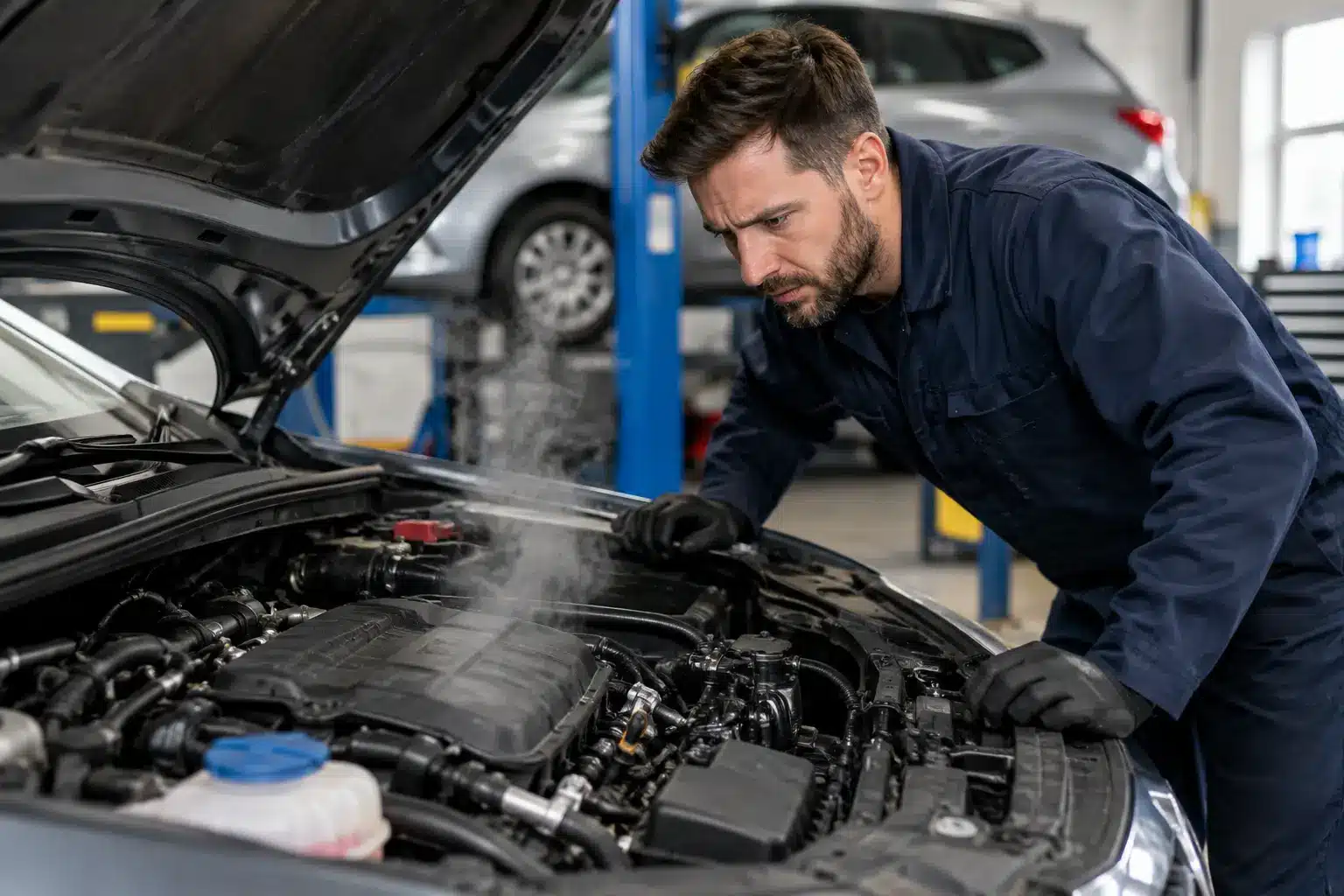
Burning Smell Car? What It Means and What to Do
You are driving home, pull up at the shops, and notice a sharp burning smell around the car. It may disappear after a few minutes, but that does not always mean the problem has gone away. A burning smell car issue can be something minor, such as debris caught near a hot exhaust, or it can be an early warning of overheated brakes, a slipping clutch, leaking oil or an electrical fault.
The key is not to guess. Notice when the smell appears, whether there is smoke or a warning light, and whether the car feels any different. That gives a garage a much better starting point and helps prevent a smaller repair becoming a breakdown.
First: when should you stop driving?
Pull over safely and switch the engine off if you see smoke coming from the bonnet or wheels, the smell is strong and getting worse, a warning light comes on, or the car loses power. Do not keep driving to see if it clears. If you can see flames, move away from the vehicle and call the emergency services.
If there is no smoke and the car drives normally, you may be able to make a short journey to a garage. But avoid unnecessary trips until the cause is checked. Heat, friction and leaking fluids are not faults that improve with use.
What type of burning smell is it?
Different smells often point us in different directions. It is not an exact diagnosis on its own, but it is useful information when you book the car in.
Burning rubber smell
A hot rubber smell can happen when a belt is slipping under the bonnet. The auxiliary belt runs items such as the alternator and air conditioning compressor. If it is worn, loose or seized against a pulley, it can overheat quickly.
We also see this smell where a tyre has been rubbing against an arch liner or suspension part. This can happen after hitting a pothole, fitting tyres of the wrong size, or if a damaged suspension component has altered the wheel position. Look for visible rubbing marks, but do not put your hands near moving engine parts.
A burning rubber smell after a hard drive may also come from an overheated clutch. That is particularly common in manual cars that have been held on the biting point in traffic or on a hill.
Burning smell from the brakes
A sharp, acrid smell from one wheel is often a brake issue. A sticking brake caliper can keep the brake pad pressed against the disc even when your foot is off the pedal. The brake then gets extremely hot, wears the pad and disc quickly, and may start pulling the car to one side.
Sometimes the cause is simpler. After a long descent, repeated heavy braking can create a temporary hot brake smell. Even then, it is worth paying attention if it happens regularly. Your brakes may be working harder than they should, or your driving route may be exposing a weakness.
Do not touch the wheel or brake area after stopping. It can be hot enough to burn. If one wheel looks unusually dirty, gives off smoke, or the car feels sluggish, arrange recovery rather than carrying on.
Burning clutch smell
A slipping clutch usually smells like burnt paper or hot rubber. You might notice it after manoeuvring, towing, hill starts or sitting in slow-moving traffic. The smell itself may fade, but repeated overheating damages the clutch friction material.
Other signs include the engine revs rising without the car accelerating properly, difficulty selecting gears, or a biting point that feels unusually high. In most cases, a clutch does not fail without warning, so getting it checked early can help you plan the repair rather than being left unable to drive.
Burning oil smell from under the bonnet
Engine oil can leak on to a hot exhaust or other hot engine parts and produce a strong burnt-oil smell. You may notice a little smoke from under the bonnet after parking, especially when the engine is warm.
A leaking rocker cover gasket is one possible cause, but there are several places oil can escape. The important part is finding where the leak starts, not simply topping up the oil and hoping for the best. Low oil can damage the engine, while oil on hot exhaust components creates smoke and a fire risk.
Check the oil level once the engine has cooled and the car is on level ground. If the level is below minimum, do not ignore it. Add the correct oil only if you are confident which grade your vehicle needs, then arrange an inspection promptly.
Burning plastic or electrical smell
A burning plastic smell needs quick attention. It can be caused by overheating wiring, a failing electrical component, a loose connection, or a short circuit. You may also notice flickering lights, battery problems, blown fuses, warning lights or electrical items working intermittently.
Do not keep resetting fuses or use a higher-rated fuse to stop one blowing. Fuses are there to protect the wiring. If the smell persists, switch off safely and avoid driving the car until it has been inspected.
Why a burning smell can be hard to trace
The smell often appears only when the engine is hot, when the brakes are under load, or after the car has been driven for a while. By the time you reach the garage, it may have disappeared. That does not make it imaginary or unimportant.
This is why proper diagnostics matter. At AutoFix4u, we start with the symptoms you have noticed, inspect the likely areas and check for the actual source of heat, friction or leakage. A fault code can help where an engine warning light is involved, but a visual inspection and road test may be just as important.
For example, a smell near the front wheel could be a seized caliper, but it could also be a damaged wheel bearing, tyre rubbing, or something caught underneath the vehicle. Replacing parts without checking is how people end up paying for work that did not solve the problem.
What to tell your garage
A few details can speed up the diagnosis. Let the garage know whether the smell comes from the bonnet, inside the cabin, near a wheel, or underneath the car. Mention if it happens after braking, using the clutch, switching on the air conditioning, driving at speed, or sitting in traffic.
Also mention any dashboard warnings, loss of power, unusual noises, smoke, fluid leaks or changes in the way the car steers and brakes. If it is safe to do so, a photo of smoke or a warning light can be helpful. Do not take risks trying to investigate a hot engine or wheel yourself.
Can you prevent burning smells?
Not every fault is avoidable, but regular servicing gives you a better chance of spotting worn belts, fluid leaks, brake wear and damaged components before they become urgent. If your car is manual, avoid holding it on the clutch at traffic lights or on hills. Use the handbrake instead.
After any work near the wheels, suspension or exhaust, listen and smell for anything unusual on the first few journeys. A new smell is worth checking, particularly if it comes with a noise or warning light.
If you have noticed a burning smell from your car in Lowestoft or nearby, do not wait for it to turn into a bigger problem. Book a diagnostic check, get a clear explanation of the fault and make an informed decision before the next essential journey.


