7 Best Signs of Gearbox Trouble
You notice it at a roundabout first. The car hesitates, then jolts into gear, and suddenly a normal drive feels like something you can no longer trust. That is usually how the best signs of gearbox trouble show up – not all at once, but as small changes in how the car pulls away, shifts, or responds.
In most cases, drivers put it down to a one-off issue. Maybe the engine was cold. Maybe the road was wet. Maybe it just felt a bit off that day. The problem is that gearbox faults rarely fix themselves. If the signs are there and the car keeps being used every day, a minor repair can turn into a much bigger one.
The best signs of gearbox trouble to watch for
A gearbox fault can feel different depending on whether your car is manual or automatic, but the warning signs are often similar. The key thing is change. If the car is no longer shifting smoothly, selecting gears properly, or driving the way it used to, there is usually a reason.
1. Difficulty getting into gear
If a manual car feels stiff going into first or reverse, or an automatic delays when shifting from park into drive, that is one of the clearest early signs. We often see this issue when parts are wearing, fluid is low, or the clutch is also starting to cause problems.
On a manual, the cause might not be the gearbox itself. It could be clutch wear, linkage issues, or hydraulic faults. On an automatic, delayed engagement often points to fluid pressure problems or internal wear. That is why proper diagnostics matter. Guessing can waste time and money.
2. Slipping while driving
Gear slipping is when the car changes gear unexpectedly, struggles to stay in gear, or the revs rise without the speed increasing properly. Drivers often describe it as the engine sounding busy but the car not moving as it should.
This usually happens because the gearbox is not holding drive properly. On an automatic, worn internal components or old transmission fluid are common causes. On a manual, it can sometimes feel similar but be linked to a worn clutch instead. Either way, if the car is slipping, it needs checking quickly. Left too long, it can become unsafe in traffic or when pulling out at junctions.
3. Jerking, banging or harsh gear changes
A healthy gearbox should feel smooth. You might notice the shift, but it should not slam into gear or jolt the whole car. If it starts banging into gear, shuddering on take-off, or jerking between changes, something is wrong.
In some cases, this comes down to contaminated or low gearbox fluid. In others, it is an electrical fault, a sensor issue, or internal wear. Modern gearboxes rely on more than just mechanical parts. If the control side of the system is not reading things properly, the shifts can become harsh even before a major failure happens.
4. Unusual noises when changing gear
Whining, grinding, humming or clunking noises should never be ignored. The sound matters, but so does when it happens. A grinding noise when selecting gear on a manual car might point to clutch or synchromesh wear. A whining noise that rises with speed can suggest bearing wear or fluid issues.
Drivers sometimes say, “It only does it now and then.” That can still be enough to show a fault is developing. Gearbox noises tend to get louder and more consistent over time. Catching it early gives you more options.
What causes these gearbox problems?
There is no single answer. Some faults are caused by wear over time, especially on higher mileage vehicles. Others come from poor maintenance, fluid leaks, overheating, or electrical faults. We also see gearbox issues after a car has been driven for a while with another problem, such as a clutch fault or engine issue affecting performance.
That is why gearbox problems should always be looked at properly rather than treated as just a fluid top-up or a quick fix. Sometimes the gearbox is the problem. Sometimes it is a related part making the car behave like the gearbox is failing.
More best signs of gearbox trouble drivers miss
Some warning signs are obvious. Others are easier to brush off because the car still drives. These are often the ones that get ignored until the vehicle ends up off the road.
5. Burning smell or overheating
A hot, burnt smell after driving can be a warning that the gearbox is overheating. This is more common on automatic vehicles, especially if the transmission fluid is old, low, or breaking down.
Gearbox fluid does more than lubricate. It also helps with cooling and pressure. If it is not doing its job, heat builds up quickly. That can damage seals and internal parts. If you notice a burning smell along with poor shifting, do not keep driving it for days hoping it will settle down.
6. Fluid leaks under the car
If you find red, brown or dark oily fluid where the car has been parked, it is worth having it checked. Not every leak is gearbox fluid, but some are, and low fluid levels can quickly lead to poor shifting and internal damage.
The trouble with leaks is that drivers often top up and carry on. That may help for a short time, but it does not deal with the cause. Seals, pipes, sumps and cooler lines can all leak. The right repair depends on where the loss is coming from.
7. Warning lights or limp mode
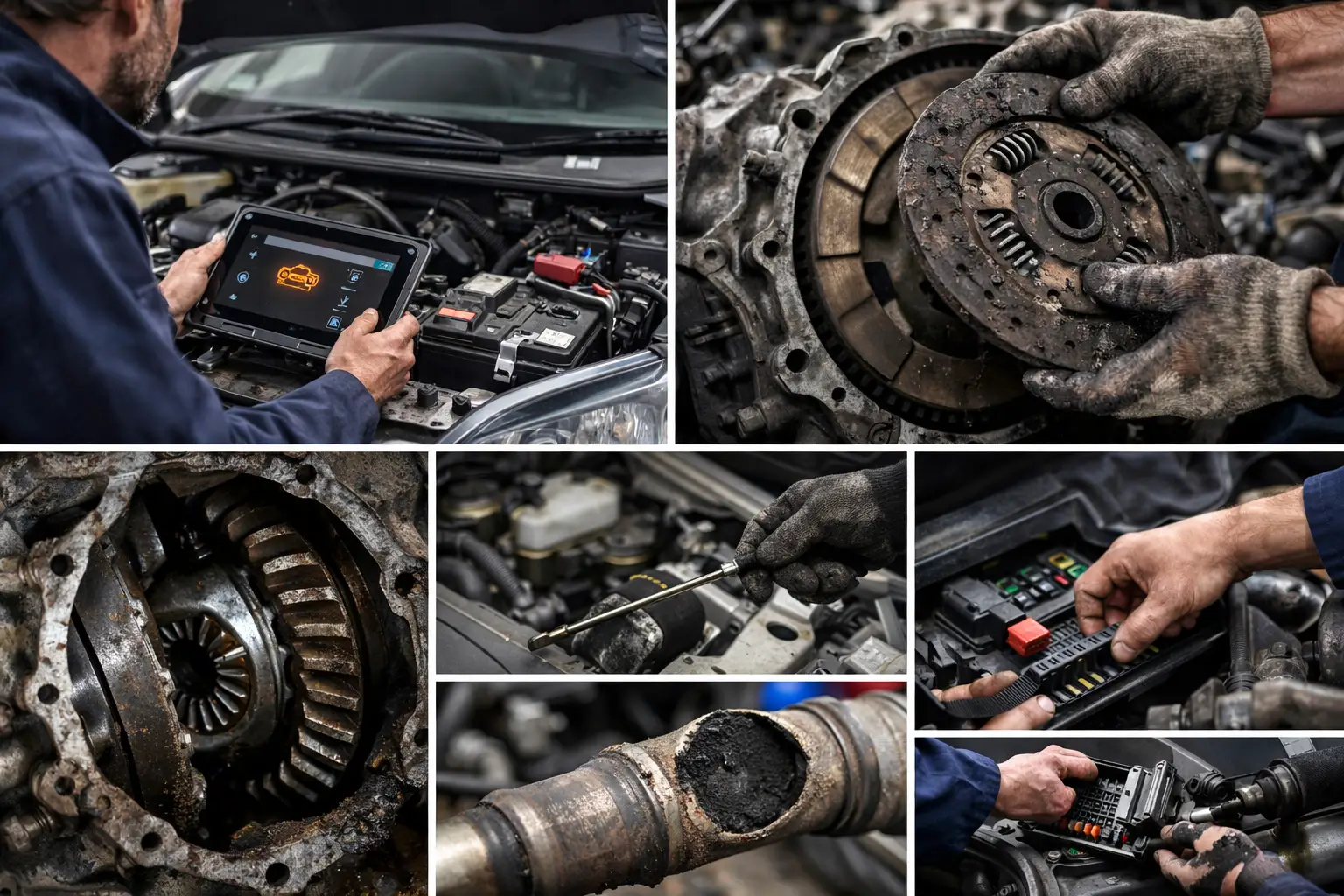
On newer vehicles, the engine warning light or gearbox-related warning message may come on before the problem becomes severe. Some cars will also go into limp mode, limiting power or locking the gearbox into a single gear to protect itself.
This can feel like an engine issue at first because the car becomes sluggish and slow to respond. In reality, the fault may be in the gearbox system, a sensor, or the control unit. A scan tool can point you in the right direction, but the fault codes still need interpreting properly. Replacing parts based on a code alone is rarely the best route.
Manual or automatic – does it make a difference?
Yes, but not in the way most drivers think. Automatic gearboxes often show faults through delayed changes, jerking, slipping, or warning lights. Manual gearboxes are more likely to show grinding, difficulty selecting gears, or jumping out of gear.
The overlap is where it gets confusing. A failing clutch can mimic gearbox trouble. An engine fault can affect how an automatic shifts. A driveshaft issue can feel like transmission shudder. That is why a proper inspection matters before any repair decision is made.
When should you stop driving the car?
If the car is just slightly less smooth than normal, you may be able to drive it a short distance for inspection. But if it is slipping badly, refusing gears, making loud grinding noises, leaking heavily, or going into limp mode, it is better not to keep using it.
In most cases, continuing to drive with gearbox trouble adds damage. What starts as a sensor fault, fluid leak or minor wear can turn into major internal failure. It can also leave you stranded without warning, which is the last thing you want if you rely on the car every day.
What happens during a gearbox diagnosis?
A proper gearbox check should start with the symptoms you have noticed. When does it happen, is it worse when cold, does it affect all gears, has any warning light come on, and has the fluid level or condition been checked before. Those details help narrow things down faster.
From there, the car may need a road test, diagnostic scan, fluid inspection and checks for leaks, mount wear, clutch operation or electrical faults. That is the sensible route because gearbox repairs can vary a lot. Some issues are relatively straightforward. Others need more involved work. The aim is to identify the actual cause first, then explain the repair in plain English.
If your car is showing any of these signs, do not wait for a complete failure. For drivers in Lowestoft and nearby areas, the best next step is to book a proper diagnostic check, get a clear answer, and deal with it before the repair becomes more serious. Same-day slots may be available, with clear pricing and no surprise extras.


4 thoughts on “7 Best Signs of Gearbox Trouble”