Car Diagnostics Oulton Broad Drivers Can Trust
A dashboard warning light can appear at the worst possible time. Perhaps your car loses power on the way to work. Alternatively, it might struggle to start before the school run.
If you need car diagnostics Oulton Broad drivers can rely on, accurate fault finding matters. A proper diagnostic check helps identify the cause before a small problem develops into an expensive repair.
At AutoFix4u Garage Lowestoft, we help drivers from Oulton Broad and nearby areas investigate vehicle faults. Our approach combines professional diagnostic equipment with practical mechanical checks.
Rather than replacing parts on guesswork, we investigate the problem and explain the next steps.
Why Proper Car Diagnostics in Oulton Broad Matter
Modern vehicles use sensors and electronic control units to monitor engine performance, emissions, braking and other systems.
When a system detects a problem, the vehicle may store a fault code. Sometimes, it also displays a dashboard warning light.
However, a fault code does not always identify the defective component.
For example, an engine fault code might mention an airflow sensor. Yet the actual cause could be a damaged hose, wiring fault or air leak.
Replacing the sensor without checking the system could waste money.
Therefore, a proper diagnostic process goes beyond simply reading fault codes.
Fault Code Reading vs Professional Diagnostics
A basic code reader retrieves information from the vehicle’s electronic systems.
This information provides a useful starting point.
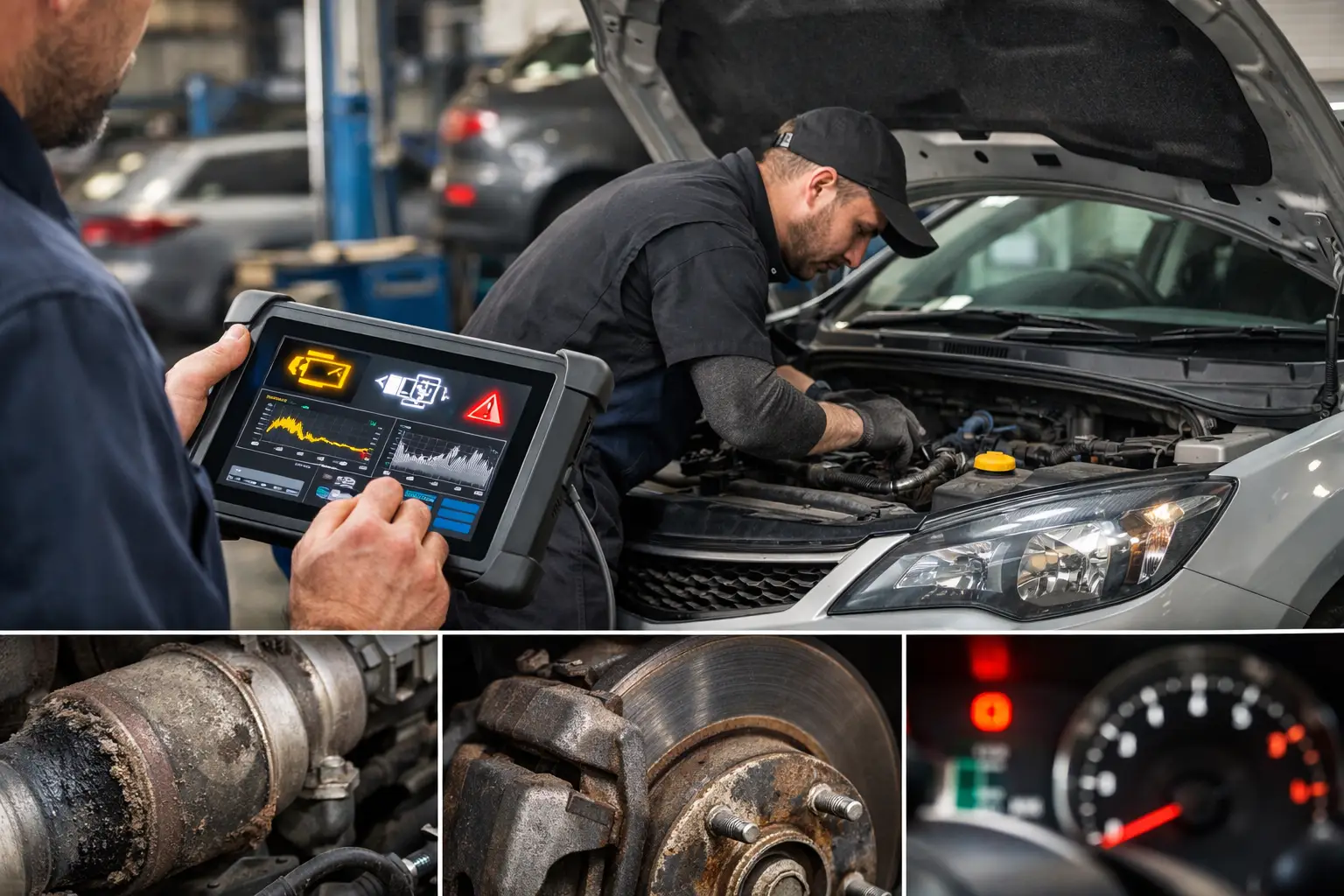
However, professional diagnostics can involve additional checks, including:
- Reading stored and pending fault codes
- Reviewing live engine data
- Checking sensor readings
- Inspecting electrical connections
- Testing battery and charging performance
- Investigating air and boost leaks
- Checking fuel system readings
- Inspecting relevant mechanical components
The technician then compares the results with the vehicle’s symptoms.
This method helps identify the likely cause before repair work begins.
Common Problems We Diagnose
Drivers contact our garage for many different reasons.
Some vehicles display warning lights. Others develop starting problems, unusual noises or reduced performance.
The following faults often require diagnostic investigation.
Engine Warning Lights
An engine warning light can indicate several different problems.
For example, the cause may involve an ignition fault, emissions issue, air leak or sensor reading.
Sometimes the engine still runs normally.
However, other vehicles develop rough idling, hesitation or increased fuel consumption.
A steady amber engine warning light usually requires prompt investigation.
If the light flashes, stop somewhere safe and seek professional advice. A serious misfire can damage the catalytic converter.
At AutoFix4u, we investigate warning lights before recommending replacement parts.
Learn more about our Engine Diagnostics Service in Lowestoft.
Loss of Power and Limp Mode
A car that suddenly feels sluggish may have entered limp mode.
This protective strategy can limit engine performance when the control system detects certain faults.
Common causes include:
- Turbo boost leaks
- Faulty pressure sensors
- EGR system problems
- DPF restrictions
- Fuel pressure faults
- Air intake problems
- Engine management issues
For example, a split turbo hose can prevent the engine from reaching the expected boost pressure.
The vehicle may then struggle during acceleration.
However, a turbo-related fault code does not automatically mean the turbocharger has failed.
A technician should inspect the relevant components and compare actual readings with expected values.
Starting Problems and Flat Batteries
A car that refuses to start does not always need a replacement battery.
The fault might involve the starter motor, alternator, wiring or battery connections.
For example, a weak alternator may fail to recharge the battery during normal driving.
The driver then notices repeated starting problems.
In another situation, an electrical component may continue drawing power while the vehicle remains parked.
This can gradually discharge the battery.
A proper diagnostic check helps distinguish these problems.
Where appropriate, we examine the battery condition, charging performance and starting system.
DPF Warning Lights and Diesel Problems
Diesel particulate filters collect soot from exhaust gases.
The vehicle normally manages soot through regeneration.
However, repeated short journeys or engine faults can interfere with this process.
As a result, the DPF warning light may appear.
Some drivers also notice reduced power or frequent regeneration attempts.
Possible causes include blocked pressure pipes, faulty sensors, excessive soot production or incomplete regeneration.
A mechanic should identify the reason before recommending cleaning or replacement.
For additional advice, read our Guide to Returning DPF Warning Lights.
Electrical and Sensor Faults
Electrical faults can create confusing symptoms.
For example, a driver might notice flickering lights, intermittent starting problems or unexpected dashboard warnings.
Other vehicles develop faults involving parking sensors, electric windows or electronic control systems.
Common causes include damaged wiring, corroded connectors, water ingress and poor electrical connections.
However, replacing a sensor without testing its circuit may not solve the fault.
Therefore, we investigate the relevant electrical system before recommending repairs.
Our Auto Electrical Repairs Service explains how electrical fault finding can help.
What Happens During a Car Diagnostic Check?
A useful diagnostic appointment starts with understanding the symptoms.
The technician needs to know what the vehicle does and when the problem occurs.
This information often helps narrow the investigation.
Step 1: Understanding the Symptoms
First, we ask about the problem.
For example:
- Does the warning light remain on?
- Does the engine lose power?
- Is the problem worse when cold?
- Does the vehicle struggle to start?
- Does the fault appear during acceleration?
- Has another garage recently carried out repairs?
These details provide useful clues.
They also help us choose the most relevant checks.
Step 2: Reading Fault Codes
Next, we connect suitable diagnostic equipment.
We check the vehicle’s electronic systems for relevant fault information.
A stored code may point towards a sensor, circuit or performance issue.
However, we do not automatically assume the named component has failed.
Instead, we use the information to guide further investigation.
Step 3: Checking Live Vehicle Data
Live data shows how supported vehicle systems behave during operation.
For example, a technician may review airflow, boost pressure, engine temperature or battery voltage.
The available readings depend on the vehicle and its diagnostic capabilities.
These checks can reveal differences between expected and actual operating conditions.
Therefore, they help narrow down the likely cause.
Step 4: Inspecting the Relevant Components
Diagnostic equipment cannot identify every mechanical problem on its own.
Consequently, physical inspection remains important.
Depending on the symptoms, we may check wiring, hoses, connectors, fluid levels or mechanical components.
We may also perform further electrical or pressure tests where necessary.
Step 5: Explaining the Findings
After testing, we explain what the results indicate.
If we identify the cause, we can discuss the repair options.
Sometimes the fault needs additional investigation before we can confirm the right repair.
In either case, we aim to explain the next step clearly.
You should understand the findings and expected costs before authorising further work.
Why Guessing at Repairs Can Become Expensive
Many vehicle faults produce similar symptoms.
For example, poor acceleration could result from a boost leak, fuel problem or DPF restriction.
Likewise, a flat battery might indicate battery wear or a charging fault.
Replacing parts without testing can lead to unnecessary expense.
A new sensor will not repair damaged wiring.
Similarly, fitting a new battery will not fix an alternator that fails to charge.
Professional diagnostics reduce the risk of these mistakes.
Although some faults require extra investigation, accurate testing helps create a more reliable repair plan.
Read our Garage Diagnostics vs Guesswork Repairs Guide for more information.
Car Diagnostics Oulton Broad Drivers May Need Urgently
Some vehicle faults need quick attention.
For example, a driver might notice a sudden loss of power while joining a busy road.
Another vehicle may display several warning lights before an MOT.
In these situations, a prompt diagnostic appointment can help establish the next step.
Warning Signs That Need Immediate Attention
Stop somewhere safe and seek assistance if you notice:
- A flashing engine warning light with poor running
- Severe engine overheating
- A red oil pressure warning
- A serious braking problem
- Heavy smoke or a burning smell
- Sudden loss of steering assistance
- Severe engine vibration or unusual mechanical noises
Do not continue driving a vehicle that appears unsafe.
Where necessary, arrange recovery instead of risking further damage.
When You Can Book a Routine Diagnostic Appointment
Some problems allow more time for investigation.
For example, an occasional warning light or a minor starting hesitation may not require immediate recovery.
However, these symptoms still deserve attention.
Book a diagnostic check before the problem develops into a breakdown.
The sooner we identify the issue, the sooner you can decide how to proceed.
Diagnostics Before an MOT Test
Dashboard warning lights can create problems during an MOT.
For example, faults involving the engine management, ABS or airbag systems may affect the test result.
Emissions problems can also lead to an MOT failure.
Therefore, it makes sense to investigate warning lights before your appointment.
However, not every MOT failure requires electronic diagnostics.
Some problems involve visible wear, damaged tyres or mechanical components.
A proper inspection helps determine which checks the vehicle needs.
Why Choose AutoFix4u Garage Lowestoft?
Drivers from Oulton Broad can visit AutoFix4u Garage Lowestoft for vehicle diagnostics and repair advice.
We focus on practical testing and clear communication.
Our approach includes:
- Investigating warning lights and performance problems
- Using diagnostic information alongside physical checks
- Explaining likely causes in plain English
- Discussing repair options before further work
- Avoiding unnecessary parts replacement
- Offering same-day appointments where workshop availability allows
We aim to identify the underlying fault rather than simply clear warning lights.
Most importantly, we want drivers to understand the problem before spending money on repairs.
Frequently Asked Questions
How much does a car diagnostic check cost?
The cost depends on the vehicle and the investigation required.
A straightforward fault code scan may take less time than tracing an intermittent electrical problem.
Contact AutoFix4u for information about diagnostic charges and available appointments.
Can diagnostics identify every car fault?
Diagnostic equipment provides valuable information, but it cannot confirm every fault automatically.
Some problems require mechanical inspection, electrical testing or further investigation.
Therefore, a proper diagnostic process combines equipment with practical checks.
Can I drive with an engine warning light?
It depends on the warning and the vehicle’s symptoms.
A steady amber light may allow a cautious trip to a garage if the car runs normally.
However, a flashing engine warning light, overheating or serious power loss requires urgent attention.
Why does my warning light return after someone clears it?
Clearing a fault code does not repair the underlying problem.
If the original fault remains, the vehicle may detect it again.
A proper diagnostic investigation helps establish why the warning returns.
Do you offer car diagnostics for Oulton Broad drivers?
Yes. AutoFix4u Garage Lowestoft welcomes drivers from Oulton Broad and surrounding areas.
Contact the garage to discuss your vehicle’s symptoms and arrange an appointment.
Book Car Diagnostics Near Oulton Broad
If your car has an engine warning light, starting problem or unexplained loss of power, arrange a diagnostic check.
Early investigation can help prevent additional damage and unnecessary repairs.
At AutoFix4u Garage Lowestoft, we help drivers from Oulton Broad, Carlton Colville, Pakefield and nearby areas.
We aim to find the cause, explain the results and recommend the next step.
AutoFix4u Garage Lowestoft
Unit 4, 10 Battery Green Road
Lowestoft, NR32 1DE
Call: 07778 979802
WhatsApp: Message AutoFix4u
Contact: Request a Quote
Need reliable car diagnostics near Oulton Broad? Contact AutoFix4u Garage Lowestoft and arrange a professional fault investigation.


