Air Con Regas Review for UK Summer Driving
A warm day should not mean arriving at work or picking the children up feeling overheated and frustrated. If you are searching for an air con regas review, the main question is whether your car simply needs refrigerant topped up or whether there is a fault causing the system to stop cooling properly. Those are two very different jobs.
At AutoFix4u, we see plenty of cars around Lowestoft where the air conditioning has gradually become weaker. In some cases, a regas is the right answer. In others, the gas has escaped because of a leak, the compressor is not operating, or there is an electrical problem. Checking the system first saves paying for a regas that will not last.
What does an air con regas actually do?
Your car’s air conditioning system uses refrigerant gas and oil to remove heat from the cabin air. Over time, a small amount of refrigerant can naturally reduce, even when there is no major fault. Once the level is too low, the system cannot cool the air efficiently. You may notice that it still blows air, but it is only mildly cool rather than properly cold.
An air con regas removes the remaining refrigerant, checks how much was recovered, and refills the system with the correct type and amount of refrigerant for your vehicle. The oil level is also considered, as the compressor needs lubrication to work reliably.
A regas can restore cold air quickly when the system is otherwise healthy. It is not, however, a cure for every air conditioning problem. If the gas level was very low or the system has stopped working suddenly, we would want to find out why before assuming it only needs a refill.
Signs your air conditioning may need attention
Most drivers notice the problem when the weather changes. The system may have seemed acceptable through winter, then fail to cope when the sun comes out. We often see this issue when a car has not had its air conditioning used regularly for several months.
Common signs include:
- Air that is not as cold as it used to be, even on the lowest temperature setting
- Cooling that works for a few minutes, then becomes warm
- A bad or damp smell from the vents when the air conditioning is switched on
- Unusual clicking, rattling or squealing when the air conditioning engages
- A misted windscreen that takes longer than normal to clear
The last point catches many people out. Air conditioning is useful all year, not just in hot weather. It dries the air inside the car and helps clear condensation from the windscreen. If your windows are steaming up regularly, an air con fault can make everyday driving more difficult as well as less comfortable.
When an air con regas is likely to help
A regas is usually a sensible option when cooling has faded gradually and the system still operates normally. The fan works, the controls respond, there are no strange noises, and there is no obvious damage around the air conditioning components.
It can also help after a vehicle has gone unused for a long period. Refrigerant levels can drop over time, and seals are less likely to stay in good condition when the system is never run. Using air conditioning for a short time every week, including in winter, helps circulate the oil and keeps the system moving.
Before carrying out a regas, a proper garage should recover and measure the old refrigerant rather than just add more gas. Modern systems have a precise capacity. Overfilling can affect performance and may put unnecessary strain on components. The refrigerant type also matters, as different vehicles use different gases and they must not be mixed.
When a regas is not the full answer
If your air conditioning went from working perfectly to blowing warm air overnight, a leak or component fault is more likely. The same applies if the gas has been refilled recently but the cold air has disappeared again. Refrigerant does not get used up like fuel. A small reduction over years can be normal, but a fast loss needs investigating.
This usually happens because of a leaking pipe, corroded condenser, damaged seal, faulty pressure sensor or compressor issue. The condenser sits at the front of the car, close to the radiator, so it is exposed to road debris, moisture and salt. On older vehicles, corrosion in this area is a common cause of air conditioning trouble.
Electrical faults can also prevent the system from engaging. A blown fuse, faulty control panel, wiring issue or pressure reading outside the correct range can stop the compressor operating. In that situation, adding refrigerant may make no difference at all.
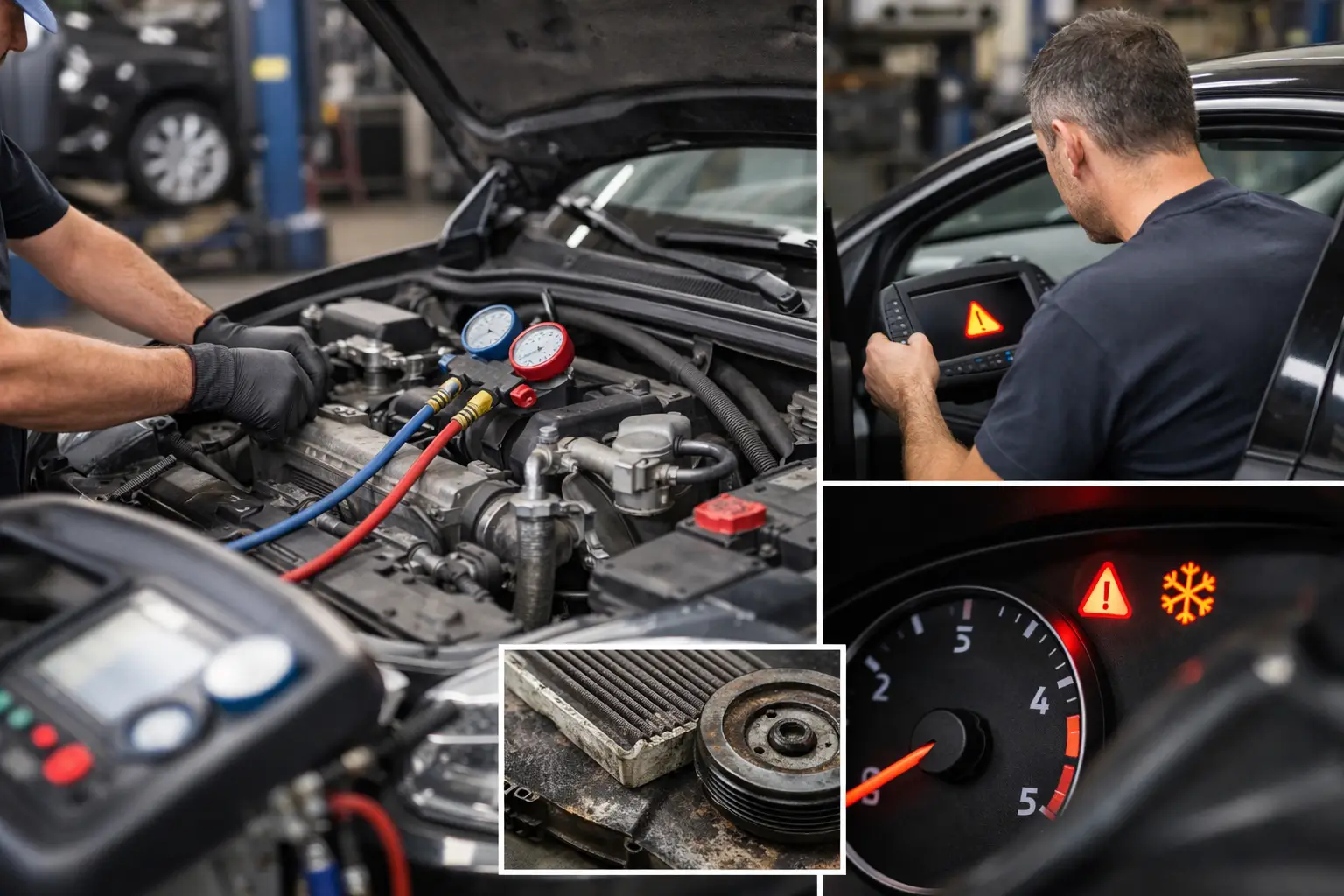
A diagnostic-first approach is the sensible route. We check the basic operation, look for obvious leaks or damage, and assess whether the system can hold pressure before recommending the next step. You get a clear explanation of what we have found, rather than being sold work that may not solve the problem.
Air con regas review: what should a good service include?
When comparing an air con regas service, do not focus only on the headline price. The cheapest-looking option is not always good value if no checks are carried out and the gas escapes again a week later.
A worthwhile service should include recovery of the existing refrigerant, a vacuum stage to remove moisture and air from the system, and a check that the system holds vacuum before it is refilled. The technician should use the correct refrigerant quantity for your specific vehicle, then test the vent temperature and operation afterwards.
There are limits to a vacuum test. It can identify some issues but may not reveal every small leak. If there are signs of a leak, further leak detection and repair may be needed before regassing. That is not unnecessary upselling. It is the difference between addressing the root cause and temporarily masking it.
Ask what has been found, what is included, and whether any repair is genuinely required before authorising extra work. A good local garage will explain this in plain English and give you clear pricing before moving ahead.
Why air conditioning faults should not be ignored
You can still drive a car without cold air, but putting the problem off can sometimes make the repair bigger. The compressor depends on the refrigerant oil circulating through the system. If the refrigerant level is very low and the air conditioning is repeatedly run, the compressor may not receive the lubrication it needs.
There is also the comfort and visibility side of it. A hot cabin can make longer journeys tiring, especially with children or pets in the car. In cooler, wet weather, poor demisting can affect your view through the windscreen. Neither problem is worth accepting if a straightforward inspection can identify the cause.
That said, not every weak air conditioning system needs an urgent repair. If it has faded gradually and there are no noises or warning signs, booking a regas check before the next hot spell is usually enough. If there is a burning smell, loud noise, visible damage or a sudden failure, arrange diagnostics sooner rather than continuing to run the system.
A practical next step for Lowestoft drivers
If your air conditioning is blowing warm, smells unpleasant or takes too long to clear the windscreen, book an inspection rather than guessing. AutoFix4u can assess whether your car needs a straightforward regas or whether a leak or component fault needs attention first.
You will get honest recommendations, clear pricing and no surprise extras. Same-day availability may be possible, so call now or get a quote if you need your car comfortable and ready for the next journey. A quick check today can save you from discovering the problem on the hottest day of the year.