Book Urgent Vehicle Diagnostics Fast
When a warning light comes on halfway through the school run or your car suddenly drops into limp mode on the way to work, you do not need guesswork. You need to book urgent vehicle diagnostics and find out what has actually gone wrong before it turns into a bigger repair.
In most cases, the first problem is not the biggest problem. The light on the dash, the poor starting, the lack of power or the strange electrical fault is usually a symptom. The real issue could be a failing sensor, a blocked DPF, a battery charging fault, a brake wear problem or something deeper in the engine management system. That is why proper diagnostics matter.
When to book urgent vehicle diagnostics
Some faults can wait a day or two. Others should be checked as soon as possible. If your engine warning light is flashing, the car is struggling to accelerate, it keeps cutting out, or it will not start at all, it makes sense to act quickly.
We often see drivers wait because the car still moves. That can be the expensive mistake. A vehicle in limp mode may still get you home, but it is doing that to protect itself. If you keep driving without checking the cause, you can turn a manageable repair into a more serious one.
Urgent diagnostics are usually the right step if you notice loss of power, heavy smoke, repeated battery drain, rough idling, hard starting, poor gear changes, brake warning lights, ABS lights, airbag lights or an MOT failure where the fault is not clear. The same applies if the car has broken down and restarted, but you do not trust it to do the next journey.
What urgent diagnostics actually tell you
A lot of drivers assume diagnostics just means plugging in a machine and reading a code. That is only part of the job. Fault codes point us in a direction, but they do not always tell the full story.
For example, a fault code might suggest an EGR problem. That does not always mean the EGR valve itself has failed. It could be carbon build-up, a wiring fault, a pressure issue, or another engine problem causing the same reading. The same goes for DPF faults, glow plug faults, oxygen sensor issues and misfires.
This is where experience matters. A proper diagnostic process looks at the code, checks live data, tests likely causes and works out what is fault and what is symptom. That helps avoid replacing parts that were never the real issue in the first place.
Common problems we see in urgent bookings
A lot of urgent jobs come in with the same few warning signs. One of the most common is the engine warning light with no obvious change in how the car drives. Sometimes that turns out to be minor. Sometimes it is the early sign of a bigger issue, such as a fuel system fault or emissions problem.
Loss of power is another regular one. This usually happens because the car has detected a fault and reduced performance to prevent damage. It may be linked to turbo pressure, airflow readings, fuel delivery, DPF blockage or an electrical issue.
Non-start faults are also common, especially when the battery seems fine but the car still refuses to fire up. In most cases, that points to a deeper issue than a flat battery. It could be crank sensor failure, immobiliser trouble, fuel pressure loss or an alternator problem that has left the system unstable.
We also see a lot of customers after an MOT failure who have been told there is an emissions issue, warning light problem or braking fault but have not been given a clear reason. Diagnostics help narrow that down properly so the repair plan is based on facts.
Why quick diagnosis saves time and money
Most people book diagnostics because they want the car fixed quickly. That makes sense. But the main benefit is not just speed. It is accuracy.
If you skip the diagnostic stage and go straight to replacing parts, you can easily spend more than you need to. We often see cars that have already had a sensor, battery or valve fitted elsewhere, only for the original fault to remain because the root cause was never confirmed.
A good diagnostic check helps you make the right decision early. If the problem is minor, you can get it sorted before it affects other parts. If the repair is more involved, you know exactly what you are dealing with and what the next step should be. Clear pricing starts with a clear diagnosis.
Book urgent vehicle diagnostics for warning lights and limp mode
Warning lights are one of the main reasons people book urgent vehicle diagnostics, and with good reason. Not every dashboard light means stop immediately, but none of them should be ignored for long.
An engine warning light might relate to emissions, fuel mixture, ignition faults or sensor readings. An ABS light could mean a wheel speed sensor issue, but it could also affect braking safety systems. A battery light may point to charging trouble rather than the battery itself. Airbag lights need checking properly because they can mean the restraint system is not working as it should.
Limp mode is more urgent. If the car has reduced power and will not rev properly, it is usually protecting the engine or gearbox from further harm. You may be able to drive a short distance, but it is not something to leave and hope for the best.
What to expect when you bring the car in
The first step is simple. Explain what the car is doing, when the issue started, and whether any lights have appeared. Even small details help. If the fault happens only when the engine is cold, only on longer runs, or only under acceleration, that can point us in the right direction much faster.
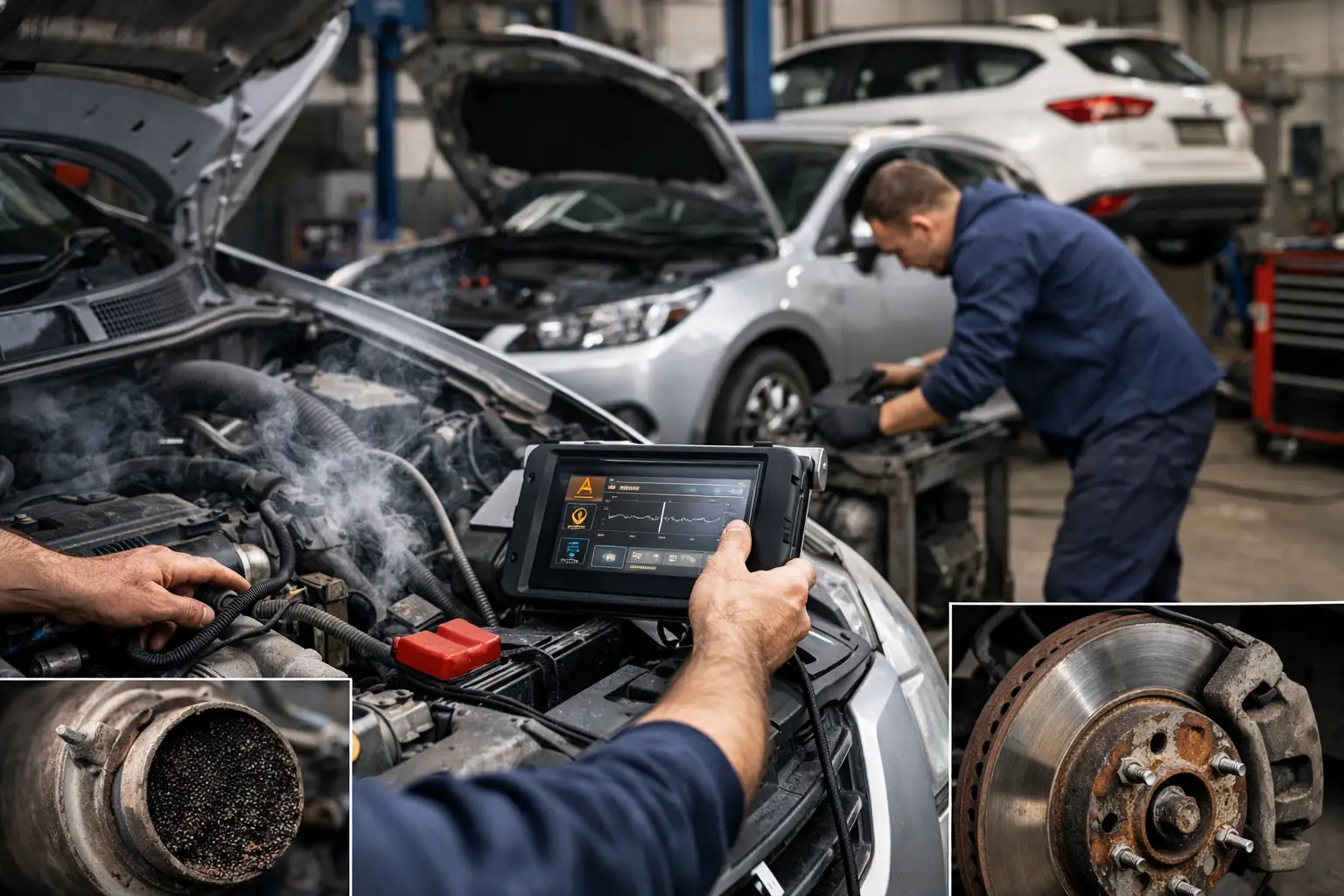
From there, the vehicle is checked properly. That may include a diagnostic scan, battery and charging tests, live data readings, visual inspections, road testing or specific checks based on the symptoms. The aim is to identify the fault clearly, not just produce a list of possible codes.
Once the cause is confirmed, the next step should be straightforward. You should know what has failed, what needs doing, whether it is safe to drive, and whether a same-day repair is realistic. In some cases the fix is quick. In others, parts or more time may be needed. Honest advice matters here. There is no point pretending every job is instant when some faults need a bit more work to put right properly.
Local help when the car cannot wait
If you rely on one car for work, school runs or family travel, even a small fault can throw the whole week off. That is why a local garage matters. You want somewhere close enough to act quickly, explain things clearly and take responsibility for the repair.
For drivers in and around Lowestoft, that often means booking diagnostics as soon as the symptoms start rather than waiting for a breakdown. Many faults give a warning before the car stops completely. Catching them early usually gives you more options and less disruption.
The best time to act is when the problem first appears, not after the second or third failed journey. If the vehicle is showing warning lights, lacking power, struggling to start or behaving in a way that does not feel right, get it checked. A proper diagnosis gives you a clear answer, a sensible repair plan and one less thing hanging over your day.
If your car has started playing up and you need answers quickly, book the diagnostic check now and deal with the fault before it deals with your plans.



One thought on “Book Urgent Vehicle Diagnostics Fast”