
Tyre Repair Versus Replacement – Which Is Safer?
A tyre warning light comes on, the steering starts pulling, or you find a screw in the tread before the school run. The question is usually simple: tyre repair versus replacement – which one do you actually need? In most cases, the answer depends on where the damage is, how long the tyre was driven while flat, and the tyre’s overall condition.
A puncture does not automatically mean buying a new tyre. Equally, a quick repair is not always safe. At AutoFix4u, we inspect the tyre properly before recommending either option, then explain the reason in plain English. That means clear pricing, no surprise extras and no fitting a tyre that should not be back on the road.
When a tyre repair is a safe option
A professional repair can be the right answer when the puncture is small, located in the central tread area and the tyre has not been damaged by being driven flat. This is the part of the tyre designed to meet the road, rather than flex heavily as you corner.
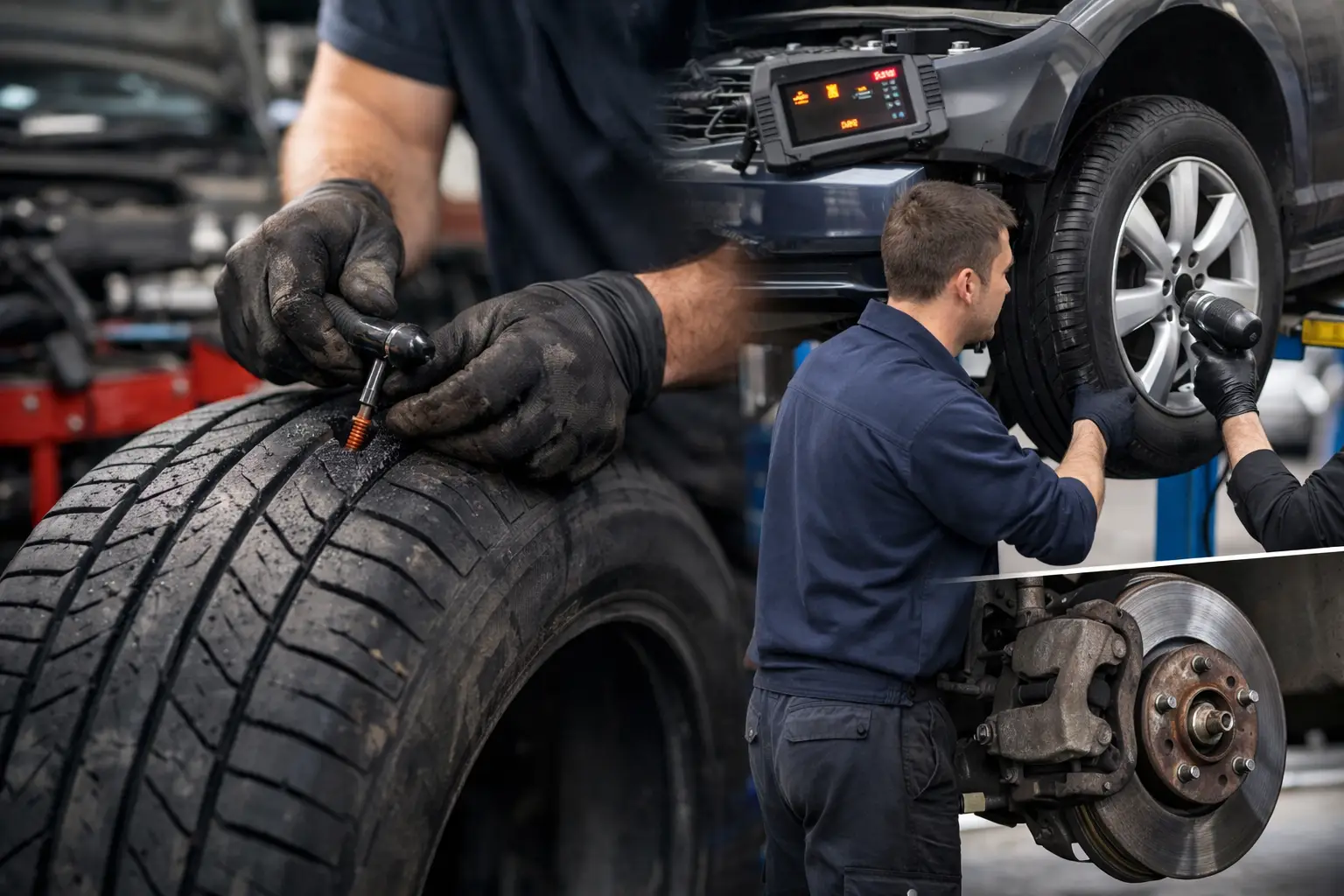
We often see a nail or screw picked up on local roads, car parks and building sites. If it has gone straight through a sound section of tread, the tyre still has legal tread depth and there is no damage inside, it may be repairable. The tyre is removed from the wheel so the inside can be checked properly. A repair is not just a plug pushed into the hole from the outside.
A proper puncture repair involves finding the cause of the leak, checking the inner lining, preparing the damaged area and fitting an approved repair from inside the tyre. The wheel is then refitted and balanced where needed. Done correctly, this can get you safely back to normal driving without replacing a perfectly usable tyre.
Tyre age and wear still matter. A tyre close to the legal limit, with cracking around the sidewall or uneven wear from poor alignment, may technically have a repairable puncture but still be poor value to repair. In that situation, replacement is often the more sensible long-term fix.
Tyre repair versus replacement: when replacement is necessary
The main reason we recommend replacement is sidewall damage. The sidewall flexes constantly while you drive and supports the weight of the car. A puncture, split, bulge or deep scrape in this area cannot usually be repaired safely.
Replacement is also needed if the hole is too large, there is more than one unsuitable puncture, or the tyre has been driven for any distance with very low pressure. Even if the outside looks fine afterwards, running flat can crush and overheat the tyre internally. That weakens its structure and can lead to a sudden failure later.
This usually happens when a driver notices a flat only after travelling a few miles. Modern cars can feel fairly normal at lower speeds, especially with stiff sidewalls, so it is easy to keep going. If you suspect a puncture, stop somewhere safe as soon as you can. Do not assume topping it up with air has solved the problem.
A replacement is also the right call where tread depth is low or wear is uneven. The legal minimum across the main grooves is 1.6mm, but waiting until the limit leaves little margin for wet-weather grip. If the inner or outer edge is worn more heavily than the rest, fitting a new tyre without checking alignment or suspension may simply lead to the same problem again.
What a bulge, crack or repeated pressure loss means
Not every tyre issue is caused by a nail. A bulge in the sidewall often appears after hitting a pothole or kerb. It means the internal cords may have been damaged. The tyre can fail without much warning, so do not keep using it for commuting or motorway driving. It needs replacing.
Cracks can develop as tyres age, particularly if the car does low mileage, sits outside for long periods or has spent time underinflated. Small surface marks need assessing, but deeper cracking around the sidewall or tread is a clear warning that the rubber is deteriorating.
If a tyre keeps losing pressure but there is no obvious puncture, the cause may be a leaking valve, corrosion around the wheel rim or a slow puncture. This is worth checking promptly. Driving for weeks while repeatedly inflating a tyre can turn a straightforward repair into a replacement if the tyre eventually runs too low.
Do not ignore uneven tyre wear
Uneven tyre wear tells you something about the car, not just the tyre. Wear on both outer shoulders can point to underinflation. Excessive wear through the centre is often caused by overinflation. One-sided wear may suggest wheel alignment is out, while cupping or patchy wear can be linked to worn suspension parts or an out-of-balance wheel.
The immediate problem may look like a worn tyre, but the root cause matters. Replacing the tyre alone will not correct a tracking issue, a worn shock absorber or damaged suspension component. We check what has caused the wear and give you a clear repair plan, rather than treating the symptom and sending you away to wear out another tyre early.
Can you repair a run-flat tyre?
Run-flat tyres are designed to be driven for a limited distance after losing pressure, but that does not mean every puncture can be repaired. Whether repair is possible depends on the tyre manufacturer’s guidance, the condition of the tyre and how far it was driven while deflated.
If your car has run-flats and a pressure warning appears, reduce speed, avoid sharp manoeuvres and arrange an inspection as soon as practical. Do not rely on the tyre simply because it has not visibly gone flat. A garage needs to inspect it off the wheel before confirming whether it is safe to repair.
What to do when you find a puncture
If the tyre is holding some air and you can see a screw or nail, leave it in place. Pulling it out can make the air escape much faster. Check the pressure, avoid a long journey and get the tyre inspected.
If the tyre is flat, the car is pulling badly, or you can see sidewall damage, do not continue driving on it. Fit the spare only if it is safe to do so and you know it is roadworthy. Many cars now have a space-saver spare or tyre repair kit instead, and these are temporary measures rather than a permanent fix.
Do not use sealant as a reason to delay an inspection. It can help in an emergency, but it does not repair sidewall damage, and it can make later inspection and repair more difficult. Tell the garage if sealant has been used.
Choosing the right option without guessing
A repair is usually the best value where the puncture is small, central and the tyre remains structurally sound. Replacement is the safer option when the sidewall is damaged, the tyre has run flat, the tread is worn, or there are signs of ageing and internal damage.
The key point is that you cannot reliably judge this from the outside alone. A tyre may look repairable until it is removed and checked inside. If you have a warning light, a slow leak, a visible screw or tyres wearing unevenly, book an inspection with AutoFix4u in Lowestoft. We will identify the cause, tell you whether repair is safe and get you moving again with an honest recommendation.
Your tyres are the only part of the car in contact with the road. A quick check now is far better than discovering the real problem during a wet stop, a busy commute or an MOT.


