
How Much Is Car Service in Lowestoft?
If your car is due a service just as the bills pile up, the first question is usually simple – how much is car service in Lowestoft? The honest answer is that it depends on the type of service, the car you drive, and whether there is an underlying fault hiding behind what looks like routine maintenance. In most cases, a basic interim service costs less than a full or major service, but the cheapest option is not always the right one.
How much is car service in Lowestoft for most drivers?
For most everyday cars in and around Lowestoft, you can expect an interim service to sit at the lower end of the scale, a full service somewhere in the middle, and a major service at the top end. As a rough guide, many drivers see prices starting from around £120 to £180 for an interim service, roughly £180 to £280 for a full service, and around £250 to £400 or more for a major service.
That range can move up or down depending on the engine size, the oil grade, the amount of parts needed, and whether your vehicle uses premium filters or specialist components. A small petrol hatchback is usually cheaper to service than a larger diesel SUV or a high-mileage van. Hybrid and prestige vehicles can also cost more because access, parts, and fluids are often different.
If a price sounds unusually low, it is worth asking what is actually included. We often see drivers come in after a budget service elsewhere only to find that key checks were skipped, poor-quality parts were used, or a warning sign was missed. That can end up costing more a few weeks later.
What changes the cost of a car service?
The biggest factor is the level of service your car actually needs. An interim service is usually a lighter check for cars that cover a lot of miles or need extra attention between annual services. A full service is more thorough and suits most vehicles once a year. A major service goes further and often includes items that are replaced less often, such as spark plugs, fuel filters, or air filters depending on the manufacturer schedule.
The second factor is the car itself. Some vehicles take more labour because parts are awkward to reach. Others need long-life synthetic oil, larger quantities of oil, or brand-specific filters. Diesels can also bring added issues. If your service visit uncovers early signs of DPF trouble, poor combustion, or an engine warning light history, that is no longer just a service job.
Mileage and age matter too. A newer car with a clean history is usually straightforward. An older car with patchy servicing, worn brakes, fluid leaks, or unusual noises may need extra checks. That does not mean the garage is adding work for the sake of it. It usually means the car has gone beyond routine maintenance and now needs fault-finding.
Interim, full, or major service – what are you paying for?
An interim service is generally about keeping the basics in order. That usually includes an oil and filter change, fluid top-ups, tyre and brake checks, and a general inspection of the car’s main safety items. It is useful if you do a lot of stop-start driving, regular commuting, or longer mileage through the year.
A full service goes further. Along with the core oil and filter work, it usually includes more detailed checks across the engine bay, suspension, steering, braking system, exhaust, battery, lights, and other wear points. For many drivers, this is the standard yearly service that makes the most sense.
A major service is more comprehensive again. This is often the right choice when the manufacturer schedule calls for extra replacement parts, or when the car has gone a long time without proper attention. If your vehicle is starting to feel sluggish, uses more fuel than normal, or has become rougher to drive, a major service can help – but only if the problem is actually service-related.
When a service is not enough
This is where many drivers get caught out. They book a service because the car feels wrong, hoping it will sort itself out with fresh oil and filters. Sometimes that works. Sometimes it does not.
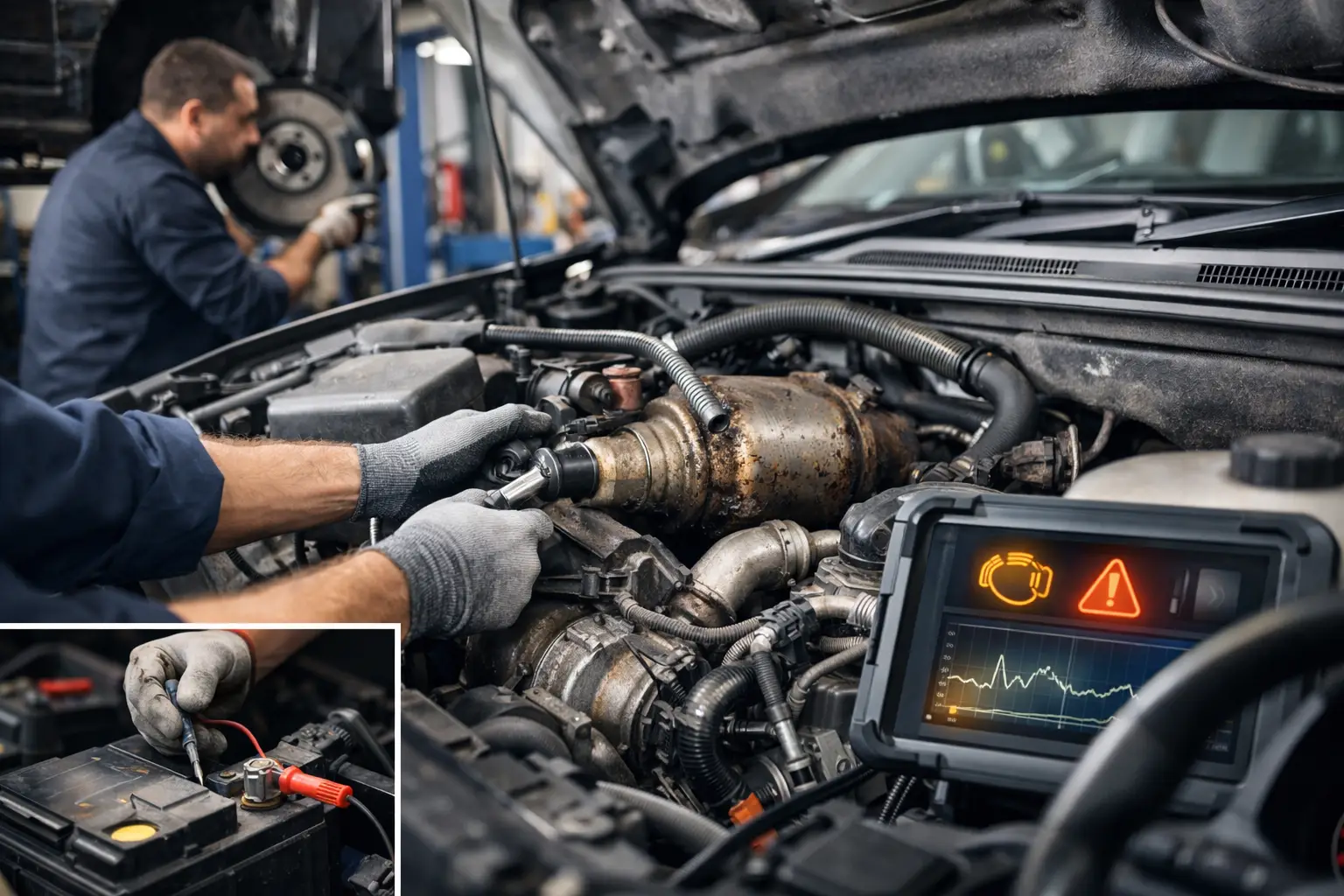
If you have an engine warning light on, the car is in limp mode, it struggles to start, there is a loss of power, or it keeps cutting out, the issue often needs diagnostics first. A service may still be due, but servicing alone will not fix a failed sensor, electrical fault, blocked DPF, coil pack problem, air leak, or fuel system issue.
We often see this issue when a customer says the car “just needs a service” but the real cause is something deeper. In that situation, proper diagnostics can save money because it stops you paying for routine work while the actual fault remains. A good garage should explain that clearly in plain English, not just hand you a bigger bill.
Is a dealership service worth the extra cost?
For most out-of-warranty vehicles, an independent local garage is usually the more sensible option. You still get proper servicing, clear advice, and the chance to speak directly to the people working on the car. The difference is that you are not paying main dealer labour rates for the badge on the wall.
That said, not all garages are the same. Price matters, but so does how the work is carried out. You want the correct service level, quality parts, the right oil, and someone who will tell you if there is a separate fault developing. A rushed service with no real inspection is poor value, even if the headline price looks attractive.
How often should you service your car?
Most cars should be serviced once a year or every 12,000 miles, but it depends on the vehicle and how you use it. If you mainly do short journeys around town, school runs, or stop-start traffic, your car may benefit from more frequent servicing. This usually happens because oil degrades faster and components work harder when the engine rarely gets a proper run.
Diesel cars used for short local trips are especially prone to problems. A missed service can contribute to oil contamination, poor running, and DPF trouble. If your vehicle has already shown warning lights or gone into reduced power, delaying the service or the diagnostic check usually makes things harder, not cheaper.
How to get a fair service price in Lowestoft
The best approach is to ask what is included, not just what it costs. A fair quote should make it clear whether you are booking an interim, full, or major service, what parts are being replaced, what oil is being used, and whether disposal charges or VAT are included.
It also helps to mention any symptoms when you book. If the brakes are squealing, the clutch feels high, the car is hesitating, or there is a warning light on, say so from the start. That gives the garage a chance to tell you whether a service is enough or whether a diagnostic appointment is the better first step.
For local drivers in Lowestoft, Oulton Broad, Carlton Colville, Kessingland, Beccles, and nearby areas, convenience matters as much as price. If you rely on one car for work, family life, or getting around day-to-day, you need clear answers quickly. Same-day slots, straightforward communication, and no surprise extras often matter more than saving a small amount on the initial booking.
What should you do next?
If your car is simply due its annual maintenance, ask for a clear quote based on your registration and mileage. That gives you a more accurate idea of service cost than any generic online estimate. If the car has a warning light, poor performance, or a problem that started suddenly, book diagnostics first. In most cases, that is the fastest route to the right repair.
At AutoFix4u, we take a practical approach. We check the fault properly, explain what is going on in plain English, and tell you whether you need a service, a repair, or both. That means no guessing, no unnecessary work, and a clearer path to getting your car back on the road.
If you are wondering how much is car service in Lowestoft, the real question is what your car needs right now – routine maintenance, fault-finding, or a bit of both. A quick call with your registration, mileage, and symptoms is usually the simplest place to start.


