
Puncture Repair Lowestoft: What to Do Fast
A flat tyre never happens at a good time. It is usually when you are heading to work, doing the school run, or trying to get home before dark. If you need puncture repair Lowestoft drivers can rely on, the first thing is not to keep driving and hope it sorts itself out. In most cases, that only turns a repairable tyre into one that needs replacing.
At the garage, we see this all the time. A driver notices the car feels heavy through the steering, or a tyre pressure warning comes on, but they carry on for another few miles. Sometimes you get away with it. Often, the sidewall gets damaged, the tyre overheats, and what should have been a straightforward repair becomes a full tyre replacement.
When a puncture can be repaired
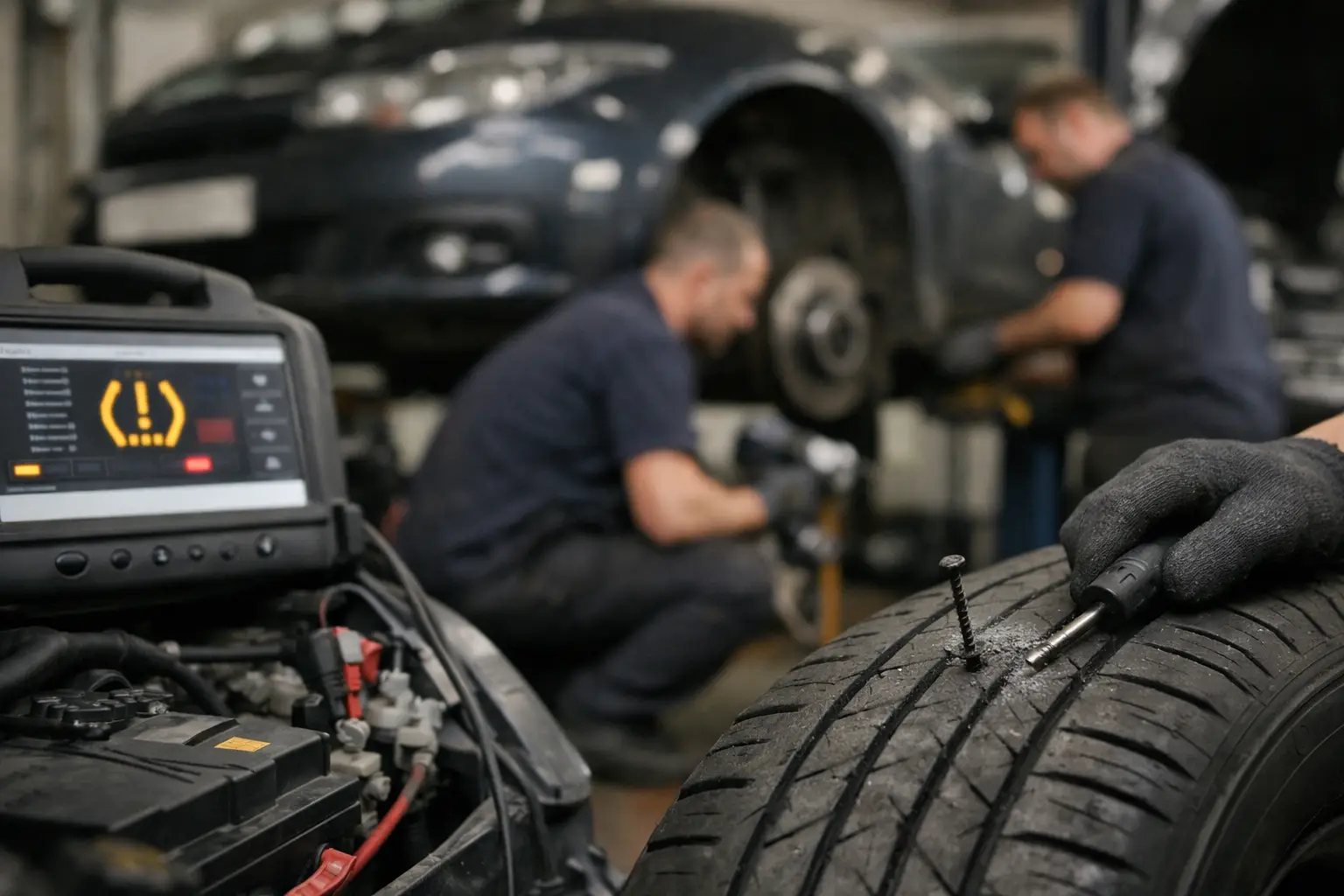
Not every puncture means a new tyre. That depends on where the damage is, how severe it is, and whether the tyre has been driven on while flat. We often see punctures caused by nails, screws, sharp debris, or slow leaks around the valve.
A repair is usually possible if the damage is in the central tread area and the tyre structure is still sound. If the hole is small and clean, and the inside of the tyre has not been damaged, a proper internal repair can often get you safely back on the road.
This is why inspection matters. From the outside, a tyre can look repairable, but once removed from the wheel, there may be hidden damage inside. If the sidewall has been crushed from driving with low pressure, the tyre is no longer safe to repair.
When puncture repair in Lowestoft is not the safe option
There are times when the honest answer is that a repair should not be done. That usually happens because the puncture is too close to the sidewall, the cut is too large, or the tyre has been run flat. We also see tyres with exposed cords, bulges, or previous poor-quality repairs. In those cases, replacing the tyre is the only sensible option.
It can be frustrating when you were hoping for a quick repair, but safety comes first. Your tyres are the only part of the car touching the road. A weak repair or damaged tyre can lead to poor handling, longer braking distances, or a blowout later on.
That is why a proper garage will tell you straight. If it can be repaired safely, we will say so. If it cannot, we will explain why in plain English and talk you through the next step.
Common signs you may need puncture repair Lowestoft drivers should not ignore
Sometimes the tyre goes down suddenly. Other times, it is a slow leak that keeps catching you out every few days. We often see this issue when a screw is stuck in the tread and the tyre loses pressure gradually rather than all at once.
You may notice the steering pulling to one side, the car feeling unsettled in corners, or the tyre pressure warning light coming on. In some cases, there is a visible object in the tyre. In others, there is no obvious damage at all, and the leak turns out to be from the valve or wheel rim rather than a puncture in the tread.
This is where a proper check helps. The problem is not always what it first appears to be. A tyre that keeps going flat may have corrosion around the wheel bead, a damaged valve, or a crack in the alloy. The solution depends on finding the actual cause, not just pumping it back up.
Why driving on a puncture makes things worse
It is tempting to try and get a bit further, especially if you are close to home or work. The trouble is, even a short distance on a deflated tyre can damage the internal structure. Once that happens, the tyre may look fine on the outside but be unsafe to use.
This usually happens because the tyre sidewall flexes far more than it should with low pressure. That creates heat and can break down the internal cords. By the time the wheel comes off for inspection, the tyre is no longer suitable for repair.
If you suspect a puncture, stop when it is safe, check the tyre, and avoid driving any further than necessary. If your car has a spare wheel, that may get you moving again. If it has a tyre inflation kit, follow the instructions carefully, but bear in mind that sealant is only a temporary measure and not suitable for every type of puncture.
How a proper puncture repair should be done
A proper repair is more than plugging a hole from the outside. The tyre should be removed from the wheel, inspected internally, and repaired using the correct method if it meets safety guidelines. That allows the technician to confirm the tyre casing is still sound and that the damage sits in a repairable area.
We take a practical view on this. The goal is not just to get air back in the tyre. The goal is to make sure the tyre is safe, reliable, and not going to let you down again next week.
Once repaired, the tyre should be refitted, inflated correctly, and checked for balance if needed. If there is uneven wear, that is worth mentioning as well. Sometimes a puncture visit also highlights another issue, such as worn suspension parts or incorrect tyre pressures across the rest of the car.
What to do if you get a puncture on the road
First, do not panic. Slow down gently and avoid harsh braking or sharp steering. Pull over somewhere safe as soon as you can. If the tyre is completely flat, do not keep driving on it unless there is no safer option.
If you are confident changing a wheel and the ground is safe and level, fit the spare. If not, get help. Many drivers now have no spare wheel at all, just a repair kit, and those kits do not always solve the problem.
Once the car is safe, the next step is to get the tyre checked properly. If you are in or around Lowestoft, Oulton Broad, Carlton Colville, Kessingland or nearby, using a local garage makes the process quicker and simpler. At https://autofix4u.co.uk/, we deal with urgent tyre issues as they come in and offer same-day help where possible.
The difference between a quick fix and a proper solution
A lot of tyre problems come back because the original cause was never confirmed. Air gets added, the warning light goes off, and a few days later the tyre is low again. We often see this with slow punctures, leaking valves, and wheel sealing problems.
The better approach is straightforward. Check the tyre properly, confirm where the leak is, then decide whether a safe repair can be done or whether replacement is the smarter option. That saves time, avoids repeat visits, and gives you a clear answer.
It also helps with MOT concerns. A damaged or underinflated tyre can lead to a failure, and if the wear is uneven, there may be another issue behind it. Catching that early is usually cheaper and less stressful than leaving it until the test date.
Choosing a local garage for puncture repair
When you need a tyre looked at quickly, clear communication matters as much as the repair itself. Most drivers are not interested in technical detail. They want to know if the tyre can be saved, how long it will take, and what the safest option is.
That is exactly how we handle it. We inspect the tyre, explain the problem clearly, and give you a practical plan. No guessing, no vague answers, and no pushing work that is not needed.
For a local driver, that makes a difference. If your car is your only way to get to work, pick up the kids, or manage daily life, you need a fast answer and a repair you can trust.
If your tyre is losing pressure, do not leave it until it is completely flat. Get it checked while there is still a chance it can be repaired safely. A quick inspection now is often the difference between a simple fix and a bigger bill later.


One thought on “Puncture Repair Lowestoft: What to Do Fast”