Brake Discs and Pads Lowestoft: What to Check
If your brakes have started squeaking on the school run, grinding in traffic, or feeling weak when you slow down, it is not something to leave for next week. When people search for brake discs and pads Lowestoft, it is usually because the car has already started showing signs that something is wrong. In most cases, those signs start small, then get worse quickly if the car keeps being driven.
Brakes are one of those parts you do not think about until they change. The pedal feels different. The car takes longer to stop. You hear a noise that was not there before. We often see drivers come in after an MOT advisory, but just as often it is because the car no longer feels safe or predictable. That is usually the point where a proper check makes sense.
Brake discs and pads Lowestoft drivers should not ignore
Brake pads wear down over time. That is normal. Brake discs also wear, although more slowly. The problem starts when one wears too far, wears unevenly, or another fault causes the braking system to work harder than it should.
This usually happens because of everyday use. Stop-start driving, short journeys, heavy braking, carrying extra weight, and poor-quality parts can all shorten the life of your brakes. Sometimes the issue is not just wear. A sticking caliper, seized slider, corroded disc, or poor previous fitting can all lead to noise, vibration, or uneven braking.
The reason it matters is simple. Once the pads are too low, they stop protecting the disc properly. Then the disc starts taking damage. What could have been a straightforward pad replacement can turn into discs, pads, and extra labour if it is left too long.
Common signs your brake discs or pads need attention
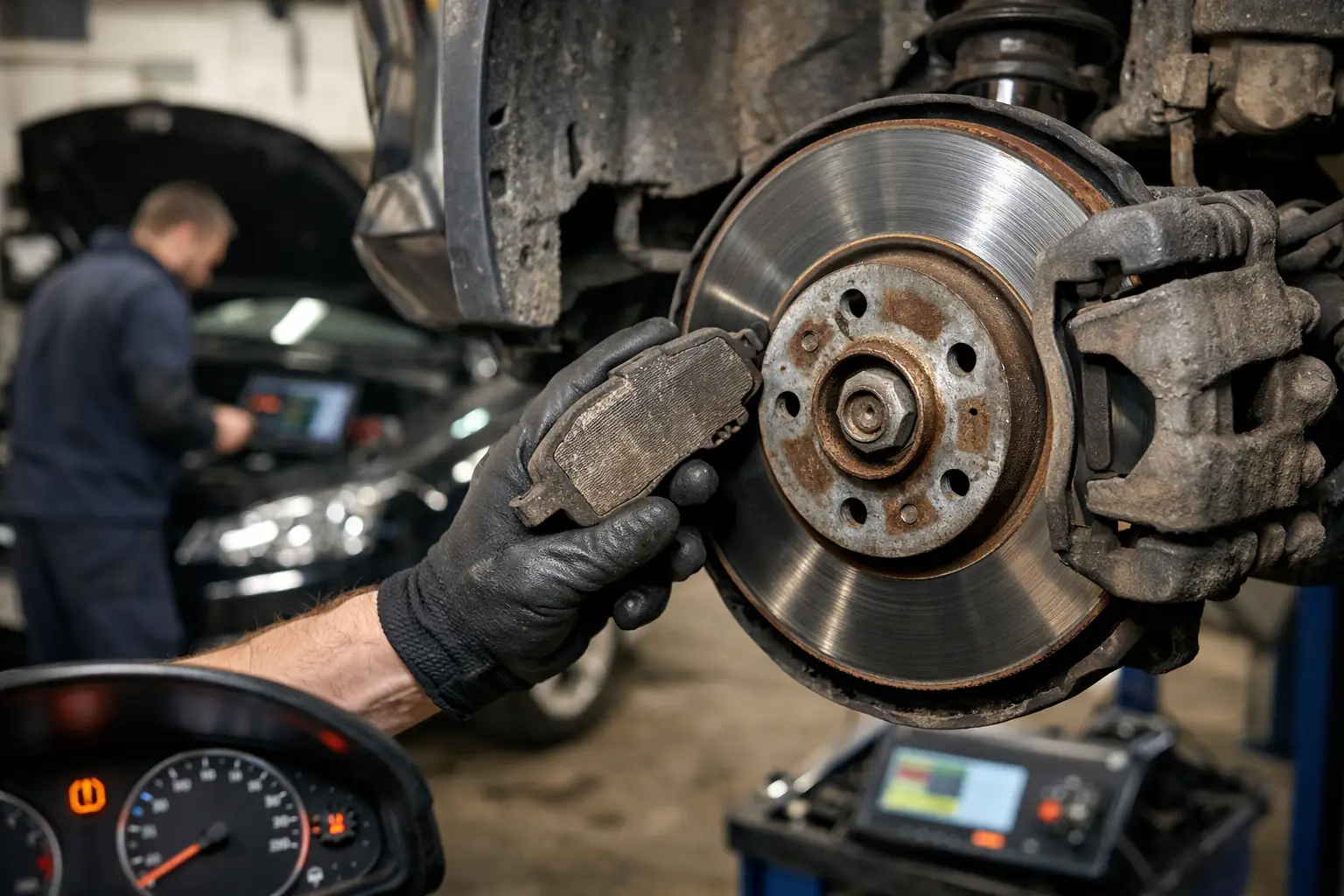
The first warning is often noise. A light squeak can mean the pads are getting low, especially if it happens when braking gently. A grinding sound is more serious. That usually means the friction material has worn away and metal is contacting the disc.
Another common sign is vibration through the pedal or steering wheel when braking. In most cases, that points to worn or uneven brake discs. If the car pulls to one side, it can mean one side is braking harder than the other. We often see this when a caliper is sticking or one set of pads has worn much faster than the other.
You might also notice the brake pedal feels softer than usual, or the car takes longer to stop. That can be down to worn components, but it can also point to another fault in the braking system. That is why a proper inspection matters rather than guessing and fitting parts blindly.
A warning light can also appear on some vehicles, although not all cars will tell you directly that the pads are low. Many drivers assume no warning light means the brakes are fine. That is not always the case.
Squeaking does not always mean immediate failure
Not every squeak means the brakes are about to fail. Some pads make light noise in damp weather or after the car has been sitting overnight. Surface rust can build up on the discs and clear after a short drive. But if the noise keeps coming back, gets worse, or is joined by poor braking or vibration, it needs checking.
Grinding usually means stop using the car if you can
Grinding is different. If your brakes are grinding, the car should be checked as soon as possible. Continued driving can damage the discs badly and reduce braking performance. If the car does not feel safe, do not keep pushing on with it.
What causes brake discs and pads to wear out early?
Driving style is part of it, but not the whole story. We often see brakes wear out early because the pads were poor quality, the discs were already near the limit, or the caliper was not moving freely. In those cases, replacing just the pads may not solve the real problem.
Uneven wear is especially important. If the inner pad is far thinner than the outer pad, there is usually a reason. If one front disc looks far more worn than the other, there is usually a reason for that too. A good brake repair is not just about fitting new parts. It is about finding out why the old ones failed the way they did.
That is where a hands-on garage approach matters. The right fix depends on what has caused the wear, not just what part looks finished.
Should you replace pads only, or discs and pads together?
It depends on the condition of the discs. If the discs are within limits, flat, and in good condition, pads alone may be fine. But if the discs are heavily lipped, scored, cracked, corroded, or below the minimum thickness, they should be replaced with the pads.
In most cases, fitting new pads onto badly worn discs is false economy. The new pads will not bed in properly, braking can feel poor, and the new parts may wear out faster. That is why we explain what we find in plain English before any work is done.
This is also why two cars with the same mileage can need different repairs. One may need a straightforward pad replacement. Another may need discs and pads, plus caliper work if something has seized.
What happens during a brake check?
A proper brake inspection is not just a quick glance through the wheel. The wheels should come off so the pads, discs, calipers and general condition can be checked properly. Pad thickness, disc wear, heat marks, uneven contact, corrosion and movement of the braking parts all need looking at.
If there is a complaint about noise or vibration, the road behaviour matters too. A brake issue can sometimes feel similar to a suspension problem or wheel issue, especially if the steering shakes under braking. That is why diagnosis comes first.
At a local garage, the useful part is not just being told something is worn. It is understanding what needs doing now, what can wait, and what has caused it.
Brake discs and pads Lowestoft motorists often ask about MOT failures
Brakes are one of the most common MOT failure areas because they are safety-critical. Pads worn too thin, discs excessively worn or damaged, binding brakes, poor braking balance, and leaks in the system can all lead to failure.
Sometimes the driver has noticed symptoms beforehand. Sometimes they have not. We often see cars come in with an MOT advisory from the last test that was left too long. A note about low pads or worn discs can turn into a fail the following year if it is ignored.
If your MOT is due and the brakes are already noisy or rough, it makes sense to get them checked first. That can save time and avoid the hassle of a fail followed by urgent repairs.
How long do brake discs and pads last?
There is no fixed answer because use makes a big difference. Some pads can last well over 20,000 miles. Others wear much sooner, especially on heavier vehicles or cars used mainly for town driving. Discs can last through more than one set of pads, but not always.
The better question is whether they are safe and wearing evenly now. Mileage helps, but condition matters more. We often see cars with relatively low mileage that still need brake work because of corrosion, sticking components, or long periods standing unused.
When to book in
If the brakes are making noise, the pedal feels different, the car pulls under braking, or you have had an MOT advisory, book it in sooner rather than later. Most brake problems are easier and cheaper to deal with early. Once metal starts scraping on metal, the repair usually grows.
For drivers in and around Lowestoft, Oulton Broad, Carlton Colville, Kessingland and nearby areas, a local check is often the quickest way to get a clear answer. At https://autofix4u.co.uk/, the focus is on finding the fault properly, explaining it clearly, and sorting it without wasting your time or money on parts you do not need.
If you are not sure whether your brake discs or pads are actually worn out, that is the point of having them checked. Better to ask while it is still a straightforward repair than wait until the car tells you in a more expensive way.


One thought on “Brake Discs and Pads Lowestoft: What to Check”