Garage Diagnostics vs Guesswork Car Repairs
A warning light comes on during the school run. The car loses power on the way to work. Or it fails its MOT with a fault that does not make much sense. In these situations, garage diagnostics vs guesswork repairs can be the difference between one proper repair and a string of parts changed with no real result.
At AutoFix4u, we see this regularly. A customer has already replaced a battery, sensor or component because somebody suggested it was the likely cause. Sometimes they get lucky. Often, the warning light returns, the starting problem remains, or the bill grows without fixing the reason the car came in.
A car is not something most people can leave off the road for days. You need a clear answer, a repair plan and a realistic timescale. That starts with finding the actual fault.
What guesswork repairs look like in real life
Guesswork is not always careless. A mechanic may recognise a common fault on a particular model, or a driver may act on advice from a friend. But a common fault is not the same thing as a confirmed fault.
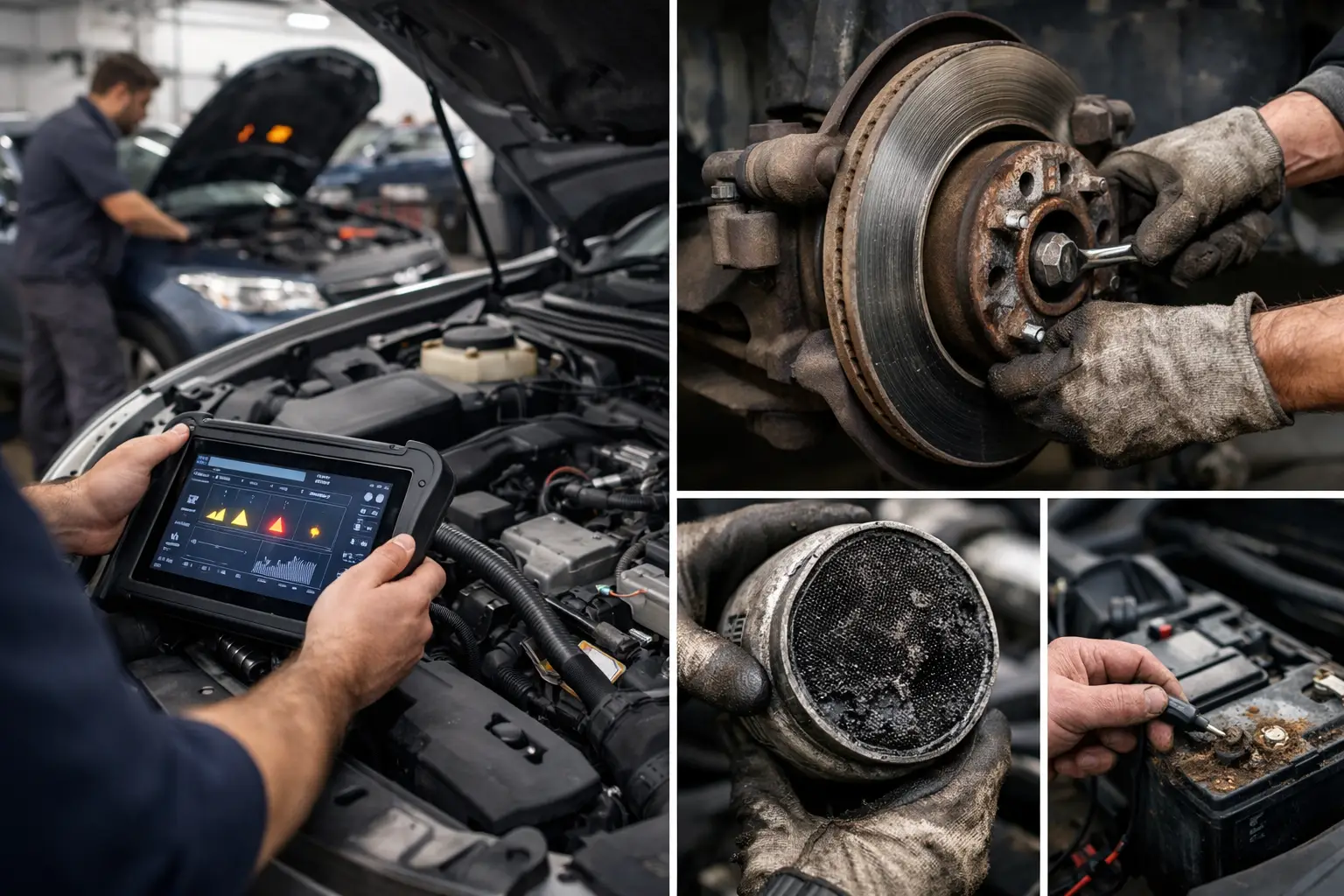
Take an engine warning light. It may be linked to an oxygen sensor, but that does not automatically mean the sensor has failed. A split air hose, exhaust leak, wiring problem, fuel issue or poor engine combustion can create a similar fault reading. Fitting a new sensor before checking the system can leave you with the same warning light and an unnecessary part on the invoice.
We often see this issue with batteries too. A car that will not start may have a weak battery, but it could also have loose terminals, a charging fault, a poor earth connection, a starter motor problem or an electrical drain while parked. Replacing the battery may get the car moving for a short time, but it will not cure an alternator that is not charging it properly.
The same applies to brakes, clutches and suspension. A knock does not always mean a worn shock absorber. Difficult gear changes are not always a failed clutch. Symptoms point us in the right direction, but they are only the start of the job.
Why proper garage diagnostics save time and money
Good diagnostics are not just plugging in a code reader. Modern cars store fault codes, but the code is a clue, not a final diagnosis. It tells us where the car’s control system has noticed a problem. It does not always tell us which component needs replacing.
A proper diagnostic process combines the vehicle’s fault codes with live data, wiring checks, visual inspection and hands-on testing. We also listen to what has happened: when the issue began, whether it occurs cold or warm, if it happens under load, and whether any warning lights come and go. Those details matter.
For example, a diesel car in limp mode may show a DPF-related code. The filter may be blocked, but the reason for the blockage could be repeated short journeys, a sensor fault, an EGR issue, poor regeneration conditions or another engine fault. Cleaning or regenerating the DPF without addressing the cause can mean the same problem returns.
This is why the lowest first quote is not always the lowest overall cost. Changing parts until something works can quickly become expensive. A diagnostic-first repair may take a little more investigation at the beginning, but it reduces the risk of paying for parts your car did not need.
The problem, cause and solution approach
When a vehicle arrives with a fault, the first job is to understand the problem clearly. Is the engine warning light steady or flashing? Does the car start slowly, cut out, smoke, pull to one side or make a noise only over bumps? Has it recently had work done, been left standing, or failed an MOT?
Next, we test for the cause. In most cases, this means checking the basics as well as reading the vehicle’s systems. A fault code may lead us to a circuit, sensor or performance reading. We then check whether that part is receiving the correct power, signal and air or fuel supply before recommending replacement.
Only then do we set out the solution. We explain what we have found in plain English, what repair is needed and whether there is any sensible choice to make. If a repair is urgent for safety or likely to cause further damage, we will say so. If it can wait, we will be honest about that too.
That clarity matters when you depend on one car for commuting, family trips and everyday errands around Lowestoft.
When a quick repair is the right call
Diagnostics do not mean every job becomes lengthy or complicated. Some faults are clear from a basic inspection. A visibly worn brake pad, leaking tyre valve, broken exhaust hanger or loose battery terminal can often be identified quickly.
There are also occasions when a known issue and a confirmed symptom make a direct repair sensible. If a clutch is slipping under load and the inspection confirms wear, there is no benefit in pretending the answer is uncertain. The point is not to add unnecessary testing. The point is to test enough to be confident the repair matches the problem.
It depends on the fault. A straightforward service item needs a straightforward solution. An intermittent electrical fault, recurring warning light or loss-of-power problem needs more methodical investigation. A good garage should tell you which situation you are dealing with before work begins.
Warning signs that need diagnostics before parts are fitted
If the same warning light has returned after a repair, do not keep replacing the same type of part. The original cause may not have been found. This is especially common with engine management faults, DPF issues and electrical problems.
Book diagnostics if your car goes into limp mode, loses power when accelerating, struggles to start, cuts out unexpectedly or has a flashing engine warning light. A flashing light can indicate a fault that may damage other components if the car continues to be driven. It is best to stop when safe and ask for advice rather than push on.
Diagnostics are also worthwhile before an MOT retest if the failure reason is unclear. A warning light, emissions failure, ABS issue or electronic parking brake fault can have several possible causes. Repairing the first visible item without testing may not get the car through the retest.
For safety concerns such as grinding brakes, a pulling steering wheel, severe vibration or a clutch that barely engages, arrange an inspection as soon as possible. These faults are not always suitable for continued driving.
What you should expect from a local garage
You should not be left with vague phrases such as “it could be anything” after paying for fault-finding. Some problems do take time to trace, particularly intermittent wiring or electrical faults, but you should still receive a clear explanation of what has been tested, what has been found and what happens next.
You should also know before major work is carried out. A transparent garage will contact you with the repair recommendation and clear pricing, rather than adding work without discussion. Quality parts and proper fitting matter because a quick fix that fails again is not a solution.
At AutoFix4u, the aim is simple: identify the fault properly, explain it without jargon and repair what is actually wrong. Where parts and workshop time allow, we work towards same-day solutions, but we will not rush a diagnosis simply to give an answer that sounds convenient.
Do not let a small symptom become a bigger repair
A warning light may feel easy to ignore when the car still drives. A slight loss of power may only show up on a hill. A slow start may happen once and then disappear. These are often the early signs that give us the best chance of finding a fault before it leaves you stranded or causes damage elsewhere.
Make a note of when the issue occurs and any messages shown on the dashboard. Then book a diagnostic check rather than buying parts on a hunch. If you are in Lowestoft or nearby and your car has a warning light, starting issue, DPF problem or loss of power, contact AutoFix4u for clear advice and a practical repair plan.


3 thoughts on “Garage Diagnostics vs Guesswork Car Repairs”