How to Reset Your Engine Warning Light Safely
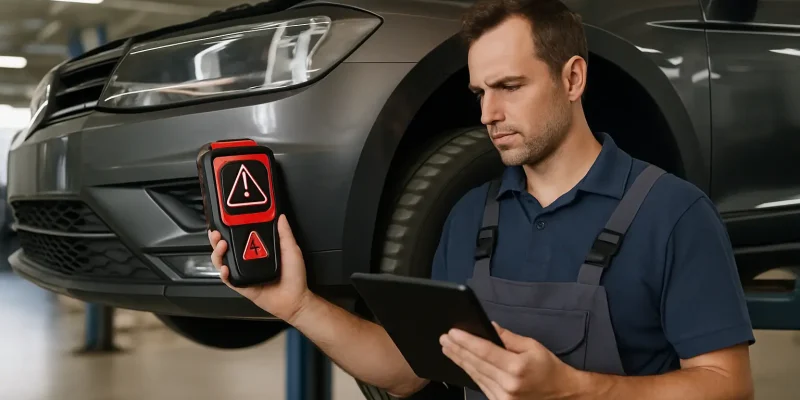
That amber engine warning light can appear on the school run, on the way to work or just before an MOT. It is tempting to search for how to reset an engine warning light, clear it, and hope it stays off. But the light is there because the car’s computer has recorded a fault. Resetting it without finding the cause may only hide a problem that returns at the worst possible time.
In most cases, the right approach is simple: check whether the car is safe to drive, read the stored fault code, fix the cause, then clear the light properly. That gives you a better chance of a reliable repair rather than a dashboard light that keeps coming back.
First, check whether you should keep driving
An amber engine warning light does not always mean you need to stop immediately. It can be triggered by something minor, such as a loose fuel cap, but it can also point to an engine, emissions or sensor fault that needs attention.
If the light is flashing, reduce speed and stop driving when it is safe to do so. A flashing light can mean an engine misfire severe enough to damage the catalytic converter. The car may shake, run roughly or lose power. Continuing to drive can turn a straightforward repair into a more expensive one.
You should also avoid driving any further than necessary if the warning light is on with loss of power, limp mode, smoke, a strong fuel smell, overheating, strange noises or poor running. These symptoms give us more to work with when diagnosing the fault, so make a note of exactly what the car is doing.
If the light is steady and the car feels normal, it is often safe to make a short journey to a garage. It still needs checking soon. Leaving it for weeks can allow a small fault to affect fuel economy, emissions or other components.
How to reset an engine warning light properly
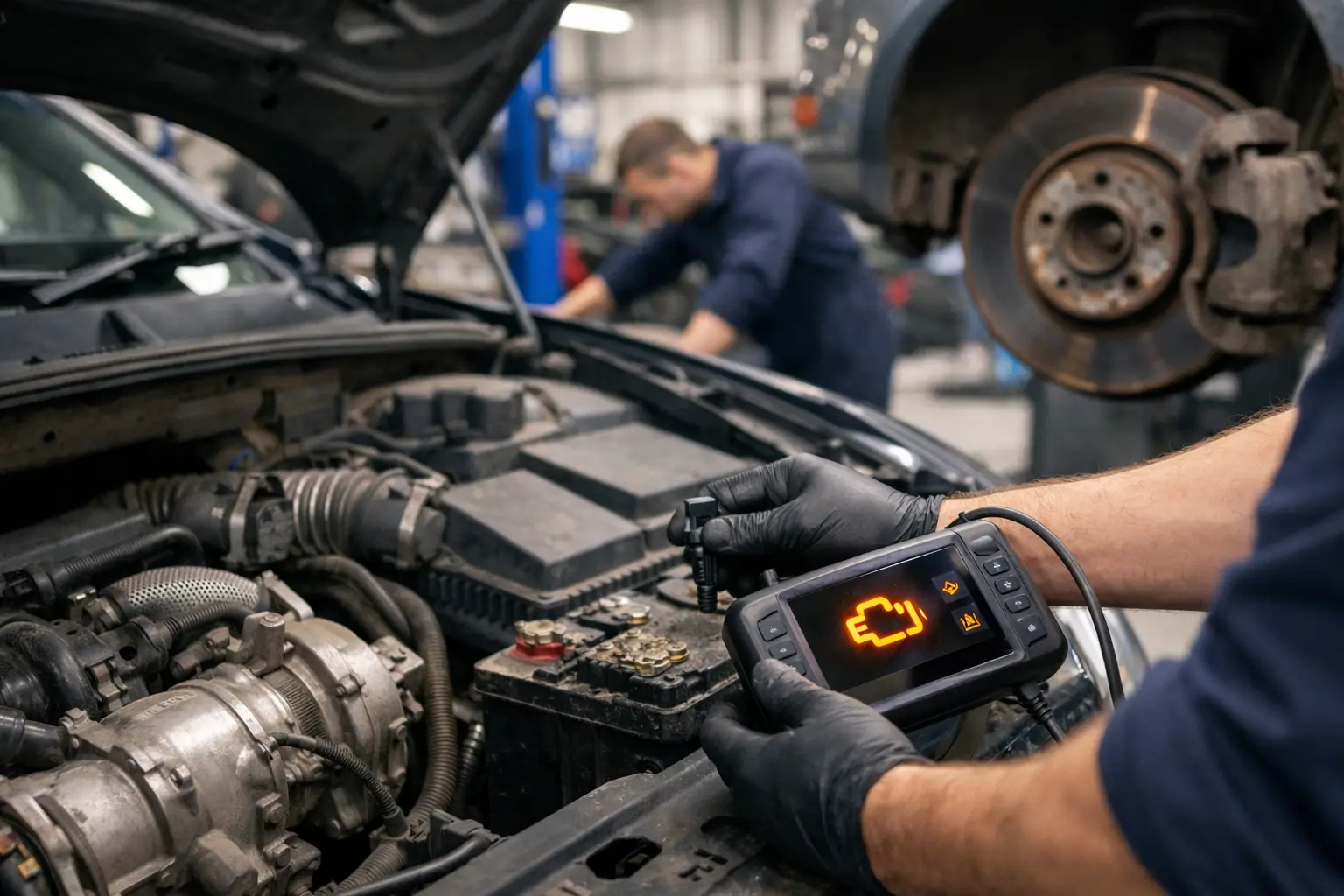
The most reliable way to reset the light is with a suitable diagnostic scanner. The scanner plugs into the vehicle’s diagnostic port and communicates with the engine control unit, often called the ECU. It reads the fault codes stored when the light came on, helping identify the system that has reported a problem.
At a garage, the process should not stop at reading a code. A code gives a direction, not always a final diagnosis. For example, a code relating to an oxygen sensor might be caused by the sensor itself, damaged wiring, an air leak or an exhaust issue. Fitting a part based on the code alone can waste money and leave the warning light on.
Once the underlying fault has been confirmed and repaired, the codes can be cleared using the diagnostic equipment. The warning light should then go out. The vehicle may need a drive before its self-checks complete, particularly if the issue involved emissions equipment.
Some faults clear automatically after several successful journeys. This happens when the ECU sees that the fault is no longer present. It is not a guarantee that the issue has fixed itself, though. Intermittent faults can disappear briefly, then return when the same conditions occur again.
Can you use a code reader at home?
A basic code reader can be useful for getting an initial idea of why the light is on. It may show a general fault description and allow you to clear the code. This can help if you are checking whether a known issue has returned after a repair.
The limitation is that many low-cost readers cannot access all vehicle systems or show the live data needed to diagnose the cause accurately. They may tell you there is a misfire, for instance, but not whether it is linked to an ignition coil, spark plug, injector, air leak or a mechanical issue.
Clearing the code at home is not a repair. If the fault is active, the light will usually return quickly. If it does not return straight away, the ECU may still need time and several driving conditions to run its checks.
Why disconnecting the battery is not the best reset method
You may hear that disconnecting the battery for a few minutes will reset an engine warning light. On some older cars, it can clear stored codes temporarily. On modern vehicles, it is not a dependable fix and can create extra problems.
Disconnecting the battery can reset the clock, radio settings, electric window calibration and other learned settings. Some vehicles need a radio code afterwards. It can also erase useful diagnostic information that helps identify an intermittent fault.
More importantly, the car may still detect the original problem as soon as you start it or drive it. The light returns, but the evidence that would have helped find the cause may be less clear. For that reason, we would not recommend battery disconnection as your first response to an engine warning light.
Common reasons the warning light comes back
We often see this issue when a driver has cleared the light before the root cause has been repaired. Some of the most common causes include sensor faults, ignition problems, air leaks, fuel system issues and emissions faults.
A failing ignition coil or worn spark plug can cause misfires. You may notice a rough idle, hesitation when accelerating or reduced power. A faulty sensor can send incorrect readings to the ECU, affecting how the engine manages fuel and air. Split intake hoses and vacuum leaks can cause similar symptoms.
For diesel vehicles, DPF-related faults are another common reason for an engine warning light. Repeated short trips may prevent the diesel particulate filter from completing a proper regeneration. The car may go into limp mode or feel flat under acceleration. A forced regeneration is not always the answer – the cause of the blockage, such as a sensor fault or an engine issue, needs checking first.
On petrol and diesel cars alike, exhaust leaks, EGR faults and problems with emissions-control components can trigger the light. These faults can also lead to an MOT failure if they are left unresolved.
What to do before booking diagnostics
You do not need to be a mechanic to give useful information. Before you call, take note of whether the light is steady or flashing, when it first appeared and whether the vehicle has changed in any way.
Think about whether it struggles to start, misfires, uses more fuel, feels down on power or has recently had work carried out. If you have used a code reader, keep the code rather than just clearing it. That information can save time, although it should always be checked properly.
Avoid repeatedly clearing the light to get through an MOT. The emissions readiness checks may not have completed after codes have been erased, which can cause its own problems at test time. More importantly, a warning light is a sign the vehicle needs attention, not something to cover up.
A proper reset starts with the right repair
The goal is not simply a clear dashboard. It is a car that starts, drives and performs as it should without a hidden fault waiting to return. A proper diagnostic checks the fault codes alongside live vehicle data and physical inspection, then identifies a repair plan in plain English.
At AutoFix4u, we see warning-light faults every week, from straightforward sensor issues to DPF, electrical and loss-of-power problems. We will explain what the test results mean, what needs doing now and what can wait. You get clear pricing and no surprise extras before repair work begins.
If your engine warning light is on in Lowestoft or nearby, do not gamble on a quick reset. Book vehicle diagnostics, especially if the light is flashing, the car is in limp mode or it is due for an MOT. A fast check now can prevent a breakdown and give you confidence for the next journey.