Brake Disc Replacement: Signs You Should Act
A grinding noise during the school run can quickly make you worry about your brakes. Perhaps the steering wheel vibrates when you slow down, or an MOT advisory mentions worn brake discs.
These problems may indicate that your vehicle needs brake disc replacement. However, not every noise or vibration means the discs have failed.
At AutoFix4u Garage Lowestoft, we inspect braking components before recommending repairs. Sometimes, worn pads cause the problem. In other cases, a sticking caliper, damaged disc or suspension fault may explain the symptoms.
This guide explains the warning signs, inspection process and when to arrange professional help.
What do brake discs do?
Brake discs form an essential part of your vehicle’s braking system.
When you press the brake pedal, hydraulic pressure moves the brake calipers. The calipers then press the brake pads against the rotating discs.
This friction slows the wheels and helps stop the car.
However, the process also creates heat and gradually wears the components.
Why do brake discs wear out?
Every braking action removes a small amount of material from the disc surface.
Consequently, the discs become thinner over time.
Several factors can increase wear:
- Frequent stop-start driving.
- Heavy braking.
- Carrying additional vehicle weight.
- Towing.
- Worn brake pads.
- Sticking brake calipers.
- Corrosion and prolonged vehicle storage.
For example, regular short journeys around Lowestoft may place different demands on the brakes than steady motorway driving.
What is the minimum brake disc thickness?
Vehicle manufacturers specify a minimum thickness for each disc.
A mechanic can measure the disc with suitable equipment.
If the measurement falls below the manufacturer’s minimum, the disc needs replacement.
However, thickness is not the only factor.
Deep scoring, cracks, severe corrosion or other damage can also make replacement necessary.
Brake disc replacement: warning signs
Brake problems often develop gradually.
However, some symptoms need immediate attention.
1. Grinding noises when braking
A harsh grinding sound may indicate severely worn brake pads.
As the friction material disappears, the metal backing can contact the disc.
Consequently, the disc surface may suffer damage.
However, trapped debris or other faults can also create scraping noises.
Therefore, arrange a brake inspection rather than guessing.
2. Steering wheel vibration
You may feel the steering wheel shake when braking from higher speeds.
Uneven disc thickness, excessive run-out or irregular friction deposits can cause this symptom.
However, wheel and suspension faults may produce similar vibrations.
A mechanic should identify the cause before replacing the discs.
3. Pulsing through the brake pedal
Some drivers notice repeated movement through the pedal during braking.
This can indicate uneven braking forces.
However, ABS operation during hard braking on a slippery surface can also create pedal pulsation.
The timing and driving conditions matter.
If pulsation occurs during normal braking, arrange an inspection.
4. Squealing or scraping noises
Worn pads, glazing or surface contamination may cause squealing.
In addition, corroded components can produce scraping sounds.
However, a noise alone cannot confirm that the discs need replacing.
A proper inspection can identify the affected components.
5. Car pulling to one side
A vehicle may pull left or right when you brake.
For example, a sticking caliper can create uneven braking force.
However, tyre and suspension problems can also affect vehicle behaviour.
Therefore, check the wider braking system before approving replacement parts.
6. Visible scoring or corrosion
You may notice grooves, rust or rough patches on the discs.
Light surface rust after rain is common.
Normal braking often removes this temporary coating.
However, deep corrosion, heavy pitting and pronounced scoring need attention.
If the braking surface has suffered significant damage, disc replacement may be necessary.
Why do brake discs develop uneven wear?
Several problems can cause uneven wear.
However, identifying the underlying cause helps prevent repeat repairs.
Sticking brake calipers
A brake caliper should release properly when you lift your foot from the pedal.
However, a sticking piston or slider may keep the brake pad in contact with the disc.
As a result, the affected brake can overheat.
The vehicle may also pull to one side.
You might notice a burning smell or unusually hot wheel area.
Never touch a hot brake disc or wheel immediately after driving.
Worn brake pads
Brake pads contain friction material.
As this material wears down, braking performance may change.
If the pad wears too far, its backing plate can damage the disc.
Therefore, replacing worn pads promptly can help protect the discs.
Corrosion
Moisture and road salt can affect brake components.
Vehicles that remain parked for long periods may develop more corrosion.
For example, discs can rust while a car stands outside in damp conditions.
Light rust often clears during normal use.
However, severe corrosion may damage the braking surface.
Incorrect installation or damaged components
Dirt and corrosion around the wheel hub can affect how a disc sits.
Consequently, poor installation may contribute to brake vibration.
Wheel bearing problems or damaged components can create similar symptoms.
Therefore, the mechanic should inspect related parts where appropriate.
Should you replace brake pads and discs together?
Brake pads and discs work as a pair.
When the discs require replacement, fitting new pads at the same time is generally recommended.
New pads provide a suitable contact surface against the replacement discs.
However, not every worn brake pad requires new discs.
If the existing discs meet the manufacturer’s specifications, a pad-only replacement may be appropriate.
Why replace discs in axle pairs?
Most brake disc replacements involve both wheels on the same axle.
For example, a front brake disc replacement normally includes both front discs.
This approach helps maintain consistent braking performance.
However, the mechanic should still inspect each component and confirm the repair requirements.
Our Brake Repair Lowestoft service covers brake pads, discs, calipers and related braking faults.
What happens during brake disc replacement?
A professional repair involves several important checks.
First, the mechanic inspects the braking system.
Next, they confirm which parts need replacement.
Step 1: Inspect the discs and pads
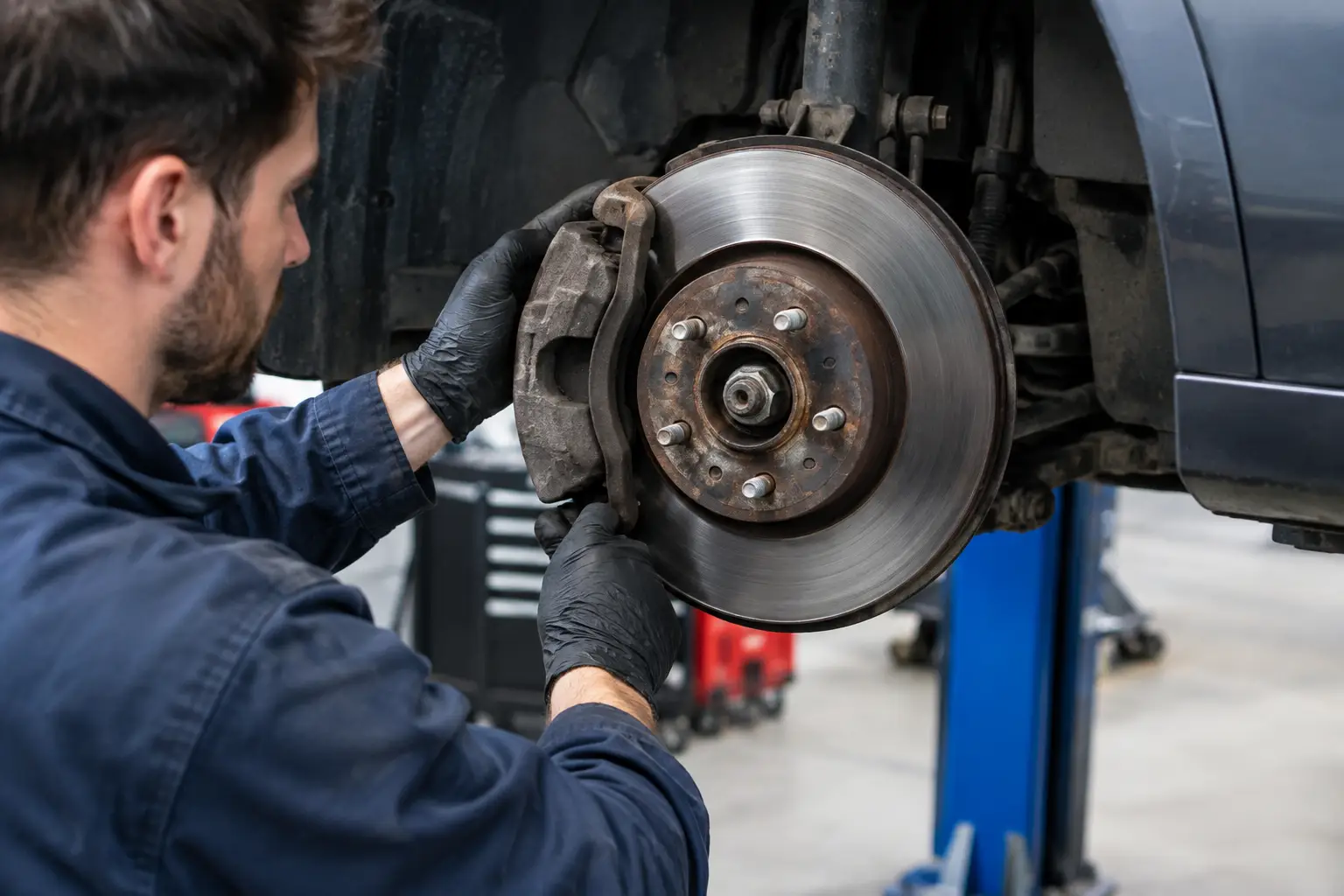
The technician checks disc thickness and surface condition.
They also inspect pad wear.
In addition, they look for unusual corrosion, heat damage and uneven wear.
These checks help establish whether replacement is necessary.
Step 2: Check the brake calipers
The mechanic examines accessible caliper components.
For example, sticking slider pins or a seized piston may cause uneven braking.
Replacing discs without repairing a sticking caliper could allow the problem to return.
Therefore, any underlying fault needs attention.
Step 3: Remove the old components
The technician removes the necessary brake components.
They then inspect and clean the disc mounting surface.
This step helps the replacement disc sit correctly against the hub.
Step 4: Fit the replacement parts
The mechanic installs suitable replacement discs and pads.
They also fit or renew the appropriate hardware where required.
Next, they tighten components to the manufacturer’s specifications.
Step 5: Check brake operation
After reassembly, the technician checks the brake pedal and relevant components.
They then assess braking performance.
A controlled road test may follow when appropriate.
The aim is to confirm that the repair has addressed the original symptoms.
How long does brake disc replacement take?
The duration depends on the vehicle and the work required.
Some cars allow straightforward access to brake components.
However, seized fasteners, corrosion or additional faults can increase repair time.
For example, a sticking caliper may require further work.
Therefore, the garage should confirm the expected time after assessing the vehicle.
At AutoFix4u Garage Lowestoft, we explain any additional work before proceeding.
How long should new brake discs last?
Brake disc lifespan varies considerably.
Driving conditions, vehicle weight and maintenance all affect wear.
For example, a vehicle that regularly stops in town traffic may wear its brakes faster.
Meanwhile, a car covering steady motorway mileage may experience different levels of wear.
There is no reliable replacement interval that suits every vehicle.
Instead, regular inspections help identify when replacement becomes necessary.
How can you protect your new brake discs?
Several driving habits can help.
First, avoid unnecessary heavy braking.
Also, leave sufficient distance from the vehicle ahead.
This allows smoother braking.
In addition, address sticking brakes or unusual noises promptly.
After replacement, follow the garage’s bedding-in advice.
New discs and pads may need a settling-in period to achieve consistent contact.
Can you drive with worn brake discs?
The answer depends on the condition of the braking system.
Minor surface corrosion may not create an immediate safety concern.
However, serious vibration, grinding or reduced braking performance needs prompt attention.
When should you stop driving?
Do not continue driving if:
- The brake pedal becomes unusually soft.
- Braking performance drops significantly.
- The car pulls sharply under braking.
- A strong metal-on-metal grinding noise develops.
- You notice smoke or a strong burning smell.
- A red brake warning appears alongside braking problems.
Find a safe place to stop and arrange professional help.
If the vehicle cannot brake safely, arrange recovery rather than driving to the garage.
Why early inspection matters
Small braking faults can become more serious.
For example, a worn pad may damage an otherwise serviceable disc.
A sticking caliper can also overheat the brake assembly.
Consequently, early inspection may prevent further damage.
Read our Brake Repair Lowestoft guide for more information about common warning signs.
Brake disc replacement after an MOT advisory
An MOT advisory may highlight wear, scoring or corrosion.
However, an advisory does not always mean immediate replacement is necessary.
The wording and actual condition matter.
What should you do with an advisory?
First, review the wording on your MOT report.
Next, arrange an inspection of the affected components.
A mechanic can then measure the discs and assess their condition.
If the discs remain serviceable, the technician can explain the findings.
However, severely worn or damaged components need appropriate repair.
AutoFix4u Garage Lowestoft carries out brake-related MOT repairs.
We do not carry out MOT tests.
Do not wait for the next MOT
An MOT confirms vehicle condition at the time of testing.
However, brake components continue wearing afterwards.
Therefore, do not ignore new braking symptoms simply because your car recently passed.
What else can feel like a brake disc problem?
Not every vibration or noise comes from the brake discs.
For example, worn suspension bushes may affect vehicle stability.
Wheel balance problems can also cause vibration.
In addition, tyre damage may change how the car handles.
A mechanic should inspect the relevant systems when the symptoms suggest a wider fault.
Our Vehicle Health Check Lowestoft service can help identify general safety concerns.
However, specific brake faults may require a more detailed inspection.
Book brake disc replacement in Lowestoft
Brake disc replacement helps restore safe braking when discs become excessively worn or damaged.
However, accurate diagnosis matters.
Replacing the wrong parts may leave the original problem unresolved.
At AutoFix4u Garage Lowestoft, we inspect brake discs, pads, calipers and related components before recommending repairs.
We explain the findings and provide clear pricing before additional work.
Whether your car has grinding brakes, vibration or an MOT advisory, contact us for advice.
Brake repairs: Brake Repair Lowestoft
Call: 07778 979802
WhatsApp: Message AutoFix4u Garage Lowestoft
Request an estimate: Get a Free Estimate
Address: Unit 4, 10 Battery Green Road, Lowestoft, NR32 1DE.
Book a brake inspection before a small problem becomes a more expensive repair or safety concern.