
Air Con Regas vs Repair: What Do You Need?
When your car’s air conditioning starts blowing warm air, the first question is usually simple – does it just need a regas, or is something actually broken? That is where air con regas vs repair matters. We see plenty of cars come in with weak cooling, bad smells or air con that cuts in and out, and in most cases the right answer comes down to proper checks first, not guesswork.
A lot of drivers assume a regas will sort everything. Sometimes it does. Sometimes it will not. If the system has simply lost efficiency over time, a regas may be all that is needed. But if there is a leak, a failed condenser, a faulty compressor or an electrical issue, topping it up is only masking the problem for a short time.
Air con regas vs repair – what is the difference?
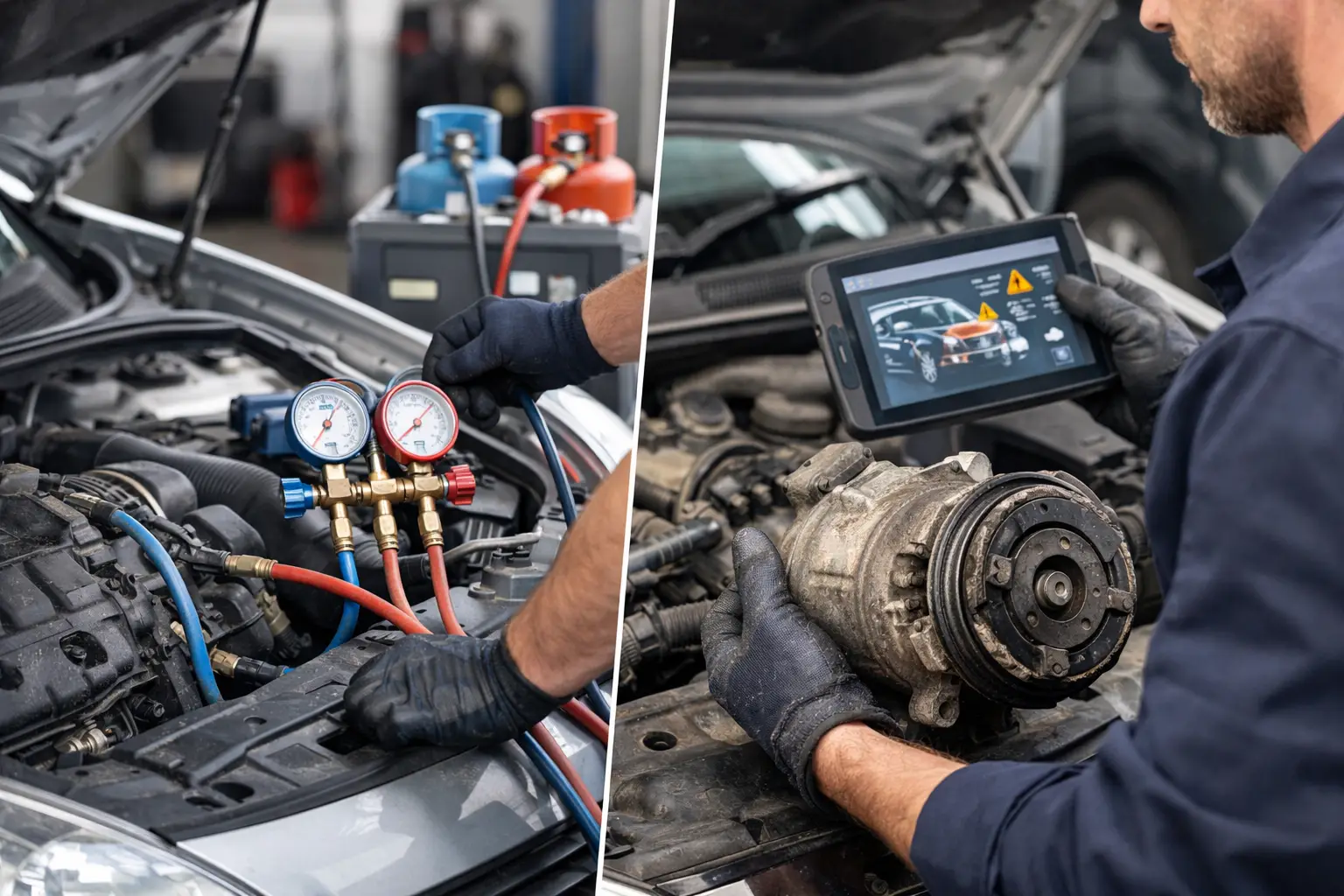
A regas is routine air conditioning maintenance. Your system uses refrigerant petrol to cool the air, and over time a small amount can be lost naturally. When the level drops too low, the air con cannot work properly. A regas removes the old refrigerant, vacuum tests the system, and refills it to the correct level.
A repair is different. That means a part of the system is faulty, damaged or leaking. The petrol has not just reduced with age – it is escaping, or the system cannot operate as it should. In those cases, a regas on its own is not a proper fix.
The reason this matters is simple. If you regas a system with a leak, the cold air may come back for a few days or a few weeks, then disappear again. You end up paying twice and still have the same fault.
Signs it may only need a regas
If the air con still works but is not as cold as it used to be, that often points to low refrigerant rather than a major fault. We often see this on older vehicles where the system has slowly lost performance over a few years.
You might notice the cabin takes longer to cool down, especially in traffic or on warmer days. The air may feel cool rather than properly cold. In some cases, the system still switches on normally and there are no unusual noises.
That is the sort of situation where a regas can make sense. If the system passes the basic checks and there is no sign of a leak or component failure, restoring the refrigerant to the correct level usually brings the performance back.
Signs you are more likely looking at a repair
If the air con has stopped working completely, there is a stronger chance something has failed. Warm air all the time, no matter what setting you use, is often more than just low petrol.
We also look out for clicking noises, the compressor not engaging, visible damage to the condenser, oily residue around pipe joints, or the air con working one day and failing the next. That usually happens because there is a leak or a part is beginning to fail.
A bad smell is another one people ignore. Sometimes that is just bacteria in the system and can be treated, but sometimes it comes alongside poor cooling and points to a wider air conditioning fault. If your windows mist up more than usual when using the ventilation, that can also suggest the system is not doing its job properly.
Why air con systems fail
In most cases, faults come from wear, corrosion or leaks. The condenser sits at the front of the car and takes a lot of road dirt, moisture and stone impact. It is one of the most common failures we see because it is exposed and can corrode over time.
Pipes and seals can also leak as the car gets older. If the refrigerant escapes too far, the compressor may stop engaging to protect itself. Electrical faults can cause similar symptoms, which is why proper testing matters.
This is also why a car can seem fine one summer, then fail badly the next. The system may have had a small leak for months, but you only notice it when you need proper cold air again.
Why guessing usually costs more
A lot of people book an air con regas because it sounds like the quickest fix. Fair enough – if the system is just low, that is the right route. The problem is when nobody checks why the refrigerant has dropped.
If there is a leak, the new petrol will escape again. If the compressor has failed, the system may not cool at all even after refill. If there is a pressure sensor fault, the air con may still refuse to run.
That is why a diagnostic-first approach saves time. You want to know whether the system is undercharged, leaking or mechanically faulty before spending money. Clear answers first, then the right job.
What happens during proper air con checks
A decent air con check should do more than just connect the machine and refill it. The system needs to be assessed for pressure, refrigerant recovery amount, vacuum hold and visible signs of leakage or damage.
If the recovered petrol amount is only slightly low and the system holds vacuum properly, a regas may be enough. If the machine shows a bigger issue, or there are signs of a failed part, then a repair should be discussed before anything else.
In some cases, dye or leak detection testing is needed to find where the petrol is escaping. That is especially useful when the loss is slow and there is no obvious damage from a quick visual inspection.
Common repairs after air con failure
The most common repair is condenser replacement. This usually happens because the condenser has corroded or been damaged from road use. Once it starts leaking, the system cannot hold refrigerant properly.
Compressors are a more expensive repair, but they do fail, especially if the system has been run low on petrol for too long. Pressure switches, pipe seals and air con pipes can also cause trouble. Sometimes the fault is electrical rather than mechanical, which is why testing is important before parts are fitted.
That honest step matters. There is no point replacing parts on guesswork when the real fault could be elsewhere.
Which option is better value?
It depends on the actual fault. If your system is simply low on refrigerant and otherwise healthy, a regas is the better value option by a mile. It is straightforward, restores performance and gets you back to normal quickly.
If there is a leak or failed component, repair is better value even if the cost is higher at the start. That is because you are fixing the cause rather than paying for repeat regassing that will not last.
This is where clear advice matters. Most drivers are not trying to understand the whole air con system. They just want cold air back, without being sold the wrong job. That is exactly how it should be handled.
When to get it checked
If the air con has become weaker, do not leave it until the hottest week of the year. A system that is low on refrigerant or starting to leak can often be dealt with more simply if caught early.
It is also worth getting checked if you have just bought a used car and the air con feels poor, or if the system has not been serviced in years. A lot of people only think about it when it stops completely.
For drivers around Lowestoft and nearby areas, this usually comes up before summer, before a long journey, or when the car is being prepared for everyday family use again. If the cabin is not cooling properly now, it will not improve on its own.
The right next step
If you are weighing up air con regas vs repair, the best next step is not to guess. Get the system checked properly so you know whether it needs a simple recharge or a real repair.
At AutoFix4u, the focus is on finding the fault first, explaining it in plain English, and giving you a clear plan with no surprise extras. If it only needs a regas, we will say so. If it needs a repair, you will know why before any work is done. Call now or get in touch to book an inspection.
Cold air is not just about comfort. When your windscreen clears properly, your cabin stays comfortable, and you are not distracted by a fault that keeps coming back, the car is simply easier to live with every day.


3 thoughts on “Air Con Regas vs Repair: What Do You Need?”