Same Day Brake Inspection: What to Expect
You notice it at the first roundabout. The brake pedal feels softer than usual, or the car makes a grinding noise when you slow down. That is usually the point where drivers start searching for a same day brake inspection, and for good reason. Brake problems rarely fix themselves, and waiting too long can turn a simple repair into a bigger and more expensive one.
In most cases, the first sign is not a complete brake failure. It is something smaller – a squeal, a vibration, a warning light, or a feeling that the car is taking longer to stop. Those symptoms matter because your braking system wears gradually. If you catch the issue early, the repair is often quicker, safer and more straightforward.
When a same day brake inspection makes sense
Some brake issues can wait a day or two if the car is not being used. Others need checking as soon as possible. We often see drivers book in the same day because they rely on one car for work, school runs or essential travel and cannot afford to guess whether it is safe.
A same day brake inspection is usually the right move if you notice squeaking that has suddenly got worse, grinding from the wheels, a brake warning light, the pedal going low, the car pulling to one side, or strong vibration through the pedal or steering wheel while braking. If the car feels unsafe to drive, do not keep testing it on the road. Call for advice first.
This usually happens because one part of the system is worn or sticking. Brake pads wear down. Discs can become scored or warped. A caliper can seize. Brake fluid can drop because of a leak or because the pads have worn low. The point of an inspection is to find the actual cause, not just guess from the symptom.
What a garage checks during a same day brake inspection
A proper brake inspection should be practical and focused. It is not about throwing parts at the car. It starts with the complaint. What noise is it making, when does it happen, and has anything changed recently?
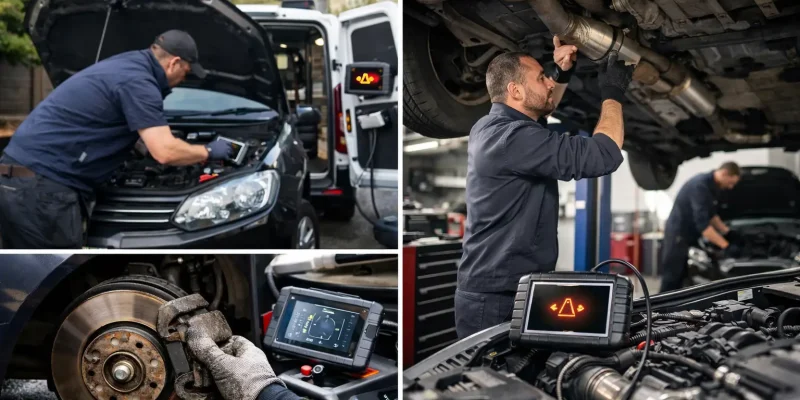
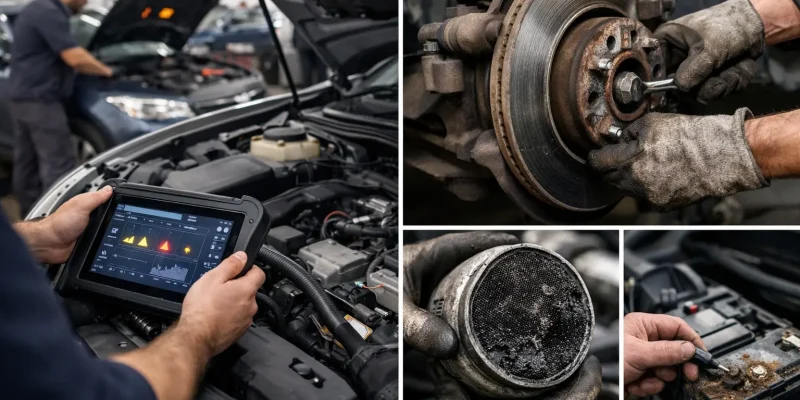
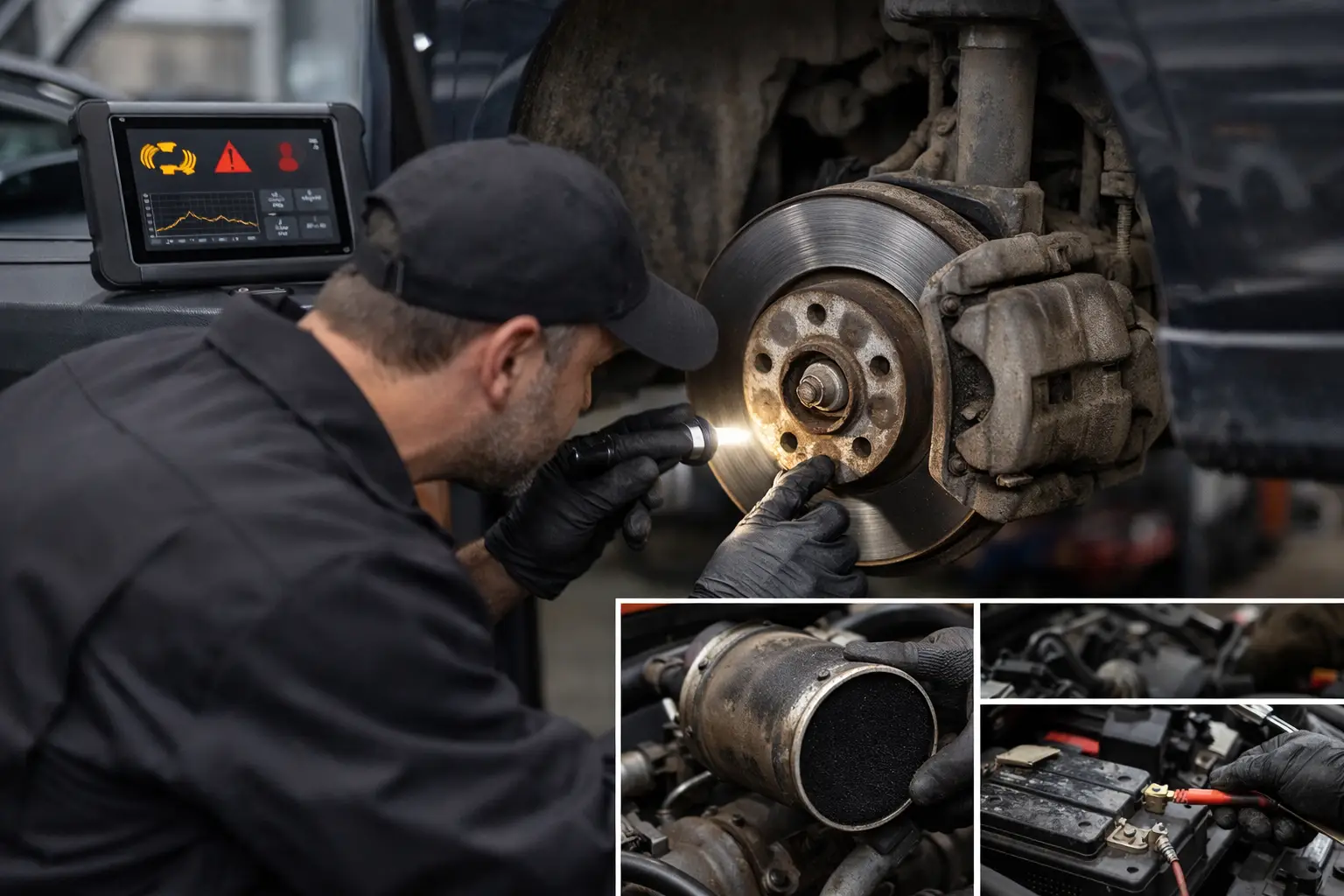
From there, the garage should check the condition of the brake pads and discs, inspect the calipers and carriers, look at brake lines and hoses, and check the brake fluid level and condition. If there is a warning light on, that may also mean checking the sensor or scanning the system for fault codes, depending on the vehicle.
The handbrake or electronic parking brake may need checking too, especially if the issue is linked to an MOT failure or the vehicle rolls more than it should when parked. On some cars, rear brake problems show up first through poor handbrake performance rather than obvious noise.
Road testing can also help, but only if the car is still safe to drive. A good technician is listening for noise, feeling for vibration, checking brake response and seeing whether the car stays straight under braking. That real-world check often confirms whether the fault is at one wheel or affecting the system more widely.
Common brake problems we see
Brake pads are the most common issue, simply because they are designed to wear out. If they are left too long, they can damage the discs. That is when a job that could have been pads only turns into pads and discs together.
Discs are another regular problem. They can wear thin over time, become heavily lipped, or develop hot spots that cause vibration when braking. Some drivers describe this as a wobble through the steering wheel. Others say the car shudders when slowing down from higher speeds.
Seized calipers are also common, especially on cars that do lots of short trips or sit for long periods. One brake may bind, causing uneven wear, poor fuel economy, a hot wheel, or the car pulling to one side. In some cases, the problem is not the caliper itself but the slider pins or mounting hardware.
Brake fluid issues are less common, but they matter. If the fluid is low, there may be a leak or the pads may be worn significantly. If the pedal feels spongy, air or moisture in the system could be part of the problem. Either way, it needs checking properly.
Can it be repaired the same day?
Sometimes yes, sometimes no. It depends on what the inspection finds and whether the right parts are available. Pads and discs are often straightforward if caught early. A seized caliper, damaged brake pipe or ABS-related fault may take longer.
That is why a same day brake inspection is so useful. Even if the full repair cannot be completed that afternoon, you still get a clear answer quickly. You know what is wrong, whether the car is safe to drive, and what needs doing next. That is far better than carrying on and hoping the noise goes away.
For busy drivers around Lowestoft, that speed matters. If you need the car for work or family use, knowing the fault on the same day helps you make a sensible decision rather than losing more time later.
Warning signs you should not ignore
Some symptoms are more urgent than others. Grinding is one of them because it often means the friction material on the pad has worn away and metal is contacting the disc. At that point, damage can happen quickly.
A low brake pedal is another red flag. If the pedal suddenly feels soft, travels further than normal, or needs pumping, the car should be checked straight away. The same goes for a brake warning light, a burning smell from one wheel, or the vehicle pulling sharply under braking.
We often see this issue when drivers have noticed a squeak for weeks but kept putting it off because the car still stopped. Then the noise changes, the wheel gets hot, or the brakes start feeling uneven. By then, the repair can be larger than it needed to be.
Why brake faults get worse quickly
Brakes work under heat and pressure. Once one part starts wearing abnormally, it tends to affect the rest of the system. Worn pads damage discs. A sticking caliper overheats one side. A fluid leak reduces braking performance and can affect pedal feel.
That is why an early inspection usually saves hassle. Not every brake noise means a major repair, but it is worth checking before it turns into one. The aim is not to alarm you. It is simply that brakes are not a system where wait and see is a good plan.
MOT failures and brake inspections
A lot of drivers first hear about brake issues at MOT time. The test may flag worn pads, poor brake balance, a binding brake, corroded pipes or a handbrake problem. If that happens, the next step should be a proper inspection so the cause is confirmed and the repair is explained clearly.
This matters because the failure item is not always the full story. Uneven braking, for example, might be caused by a seized caliper, contaminated pads or a rear brake adjustment issue. Treating only the symptom can mean the problem comes back.
A diagnostic-first approach works better. Find the fault, explain it in plain English, then carry out the repair that actually solves it.
What to do if your brakes feel wrong today
If the car is making noise, pulling, vibrating or showing a warning light, get it checked sooner rather than later. In many cases, a same day brake inspection can tell you quickly whether it is safe to keep driving or whether the car needs repair before going back on the road.
When you call, explain exactly what the car is doing. Say whether the issue is a squeal, grind, low pedal, vibration, or warning light, and when it started. That helps the garage judge urgency and plan the inspection properly.
If you are in Lowestoft or nearby and need a fast, clear answer, AutoFix4u can inspect the brakes, explain the fault without jargon, and advise on the next step. Same-day slots may be available. Call now, get a quote, and do not leave brake problems to chance.
A small brake issue caught early is usually manageable. Left too long, it rarely stays small.