Clutch Repair Lowestoft – Signs and Fixes
If your car suddenly feels different when you change gear, do not ignore it. A clutch problem usually starts with small signs, then gets worse fast. We handle clutch repair Lowestoft drivers rely on when the pedal feels wrong, gears become hard to select, or the car starts slipping under load.
For most people, this is not just an inconvenience. It means trouble getting to work, the school run, appointments, or simply getting home without the worry of breaking down. In most cases, the earlier the fault is checked, the simpler the repair plan tends to be.
Common signs you may need clutch repair in Lowestoft
A worn or failing clutch rarely fails without warning. We often see the same handful of symptoms come in again and again.
One of the clearest signs is clutch slip. This is when the engine revs rise but the car does not pick up speed properly, especially when pulling away, overtaking, or going uphill. It usually happens because the clutch plate is worn and no longer gripping as it should.
Another common issue is difficulty selecting gears. First and reverse are often the earliest to become awkward. If the gear lever feels stiff, baulks, or refuses to go in cleanly, the problem may be with the clutch itself, the hydraulic system, or sometimes the gearbox. That is why proper diagnosis matters.
You may also notice the clutch pedal feels different. A very high biting point often points to wear. A soft pedal can suggest a hydraulic fault. A heavy pedal may mean pressure plate wear or a problem in the linkage. If the pedal stays down or feels inconsistent, get it checked before it leaves you stuck.
Noises matter too. A rattling, squealing, or grinding sound when pressing or releasing the clutch can point to release bearing wear. Drivers sometimes assume it is harmless because the car still moves, but these faults tend to get worse rather than better.
What usually causes clutch failure?
The simple answer is wear. Clutches are service items, and over time they wear out through normal use. Town driving, stop-start traffic, hill starts, and towing all speed that process up.
That said, not every clutch fault means the full clutch kit has failed. We often see issues caused by a leaking slave cylinder, worn master cylinder, damaged release bearing, or contamination from an oil leak. In those cases, the symptoms can feel very similar to a worn clutch.
This is where many drivers get frustrated. They search for a clutch replacement, but the real fault is slightly different. Or they are told they need more work than they actually do. A proper inspection helps separate what is worn out from what is still serviceable.
Why clutch problems should not be left
A lot of people try to drive around a clutch issue for a few weeks. Sometimes they can. Sometimes they cannot.
If the clutch is slipping, you can reach a point where the car will no longer transfer power properly. If the hydraulic system is failing, the pedal can suddenly lose pressure and leave you unable to select gear. If a release bearing breaks up, it can cause further damage and increase the repair needed.
There is also the safety side. Pulling out at a roundabout with a clutch that slips or a gear that will not engage cleanly is not something to gamble on. Calm urgency is the right approach here – not panic, but not delay either.
Our approach to clutch repair Lowestoft drivers can trust
At AutoFix4u, the first step is diagnosis, not guesswork. That matters because clutch faults can overlap with gearbox faults, driveshaft issues, engine mounting problems, or hydraulic leaks.
We start by listening to what the car is doing. Is it slipping under acceleration? Is reverse crunching? Has the pedal changed? Did the problem come on gradually or all at once? Those details help narrow it down before any parts are removed.
From there, we inspect the system properly. In most cases, that means checking clutch operation, pedal feel, hydraulic components, visible leaks, and road behaviour. If the gearbox has to come out, we explain why before work starts. You get a clear repair plan, plain English advice, and no surprise extras.
Sometimes the fix is a full clutch kit. Sometimes it is one failed component causing the issue. It depends on wear, vehicle type, mileage, and what we find during inspection. The point is to fix the root cause, not just the symptom.
What is included in a clutch repair?
A lot of drivers ask if clutch repair means a full replacement every time. Not always, but often.
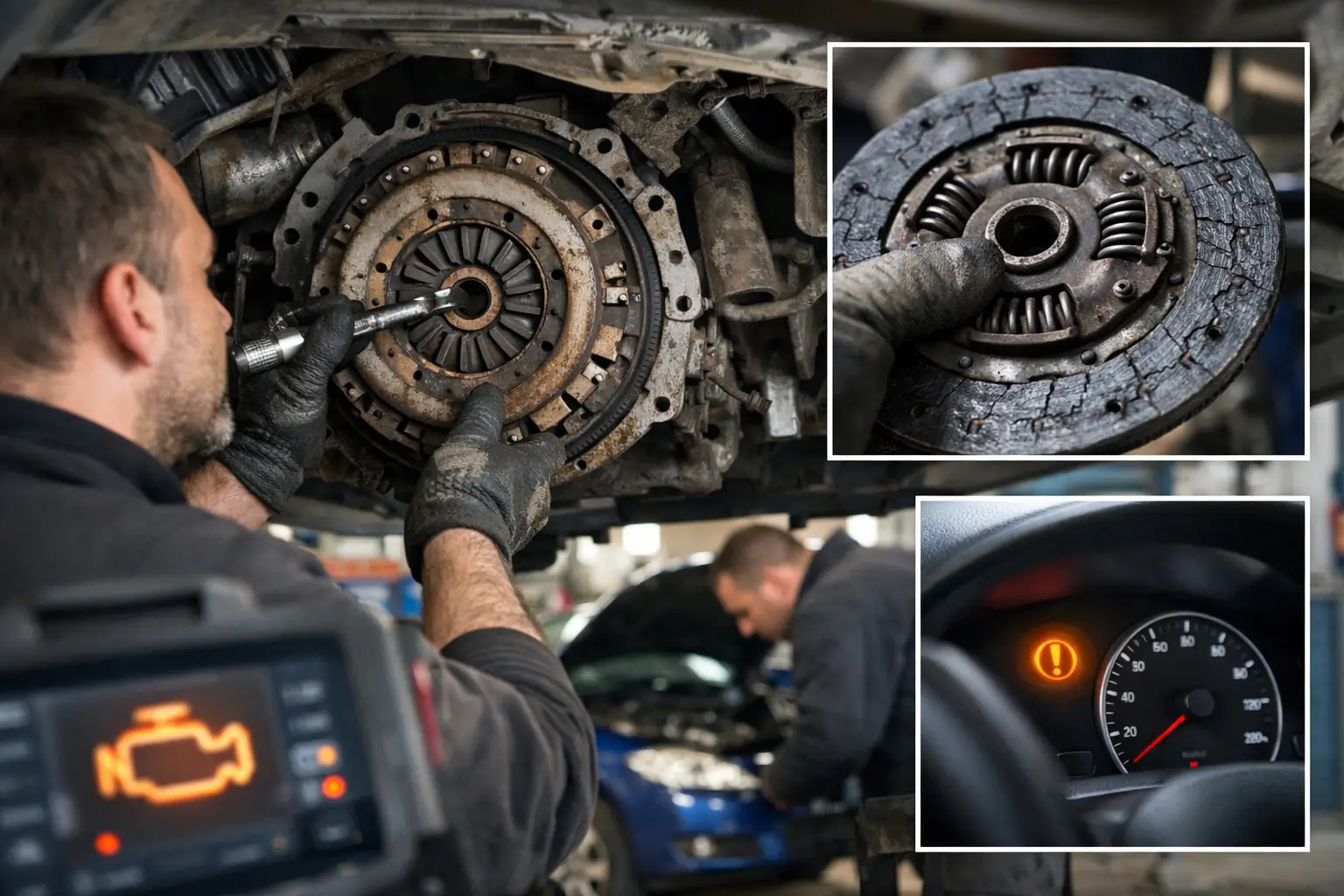
If the clutch plate is worn, the normal repair is to replace the clutch kit, which usually includes the friction plate, pressure plate, and release bearing. On some vehicles, it also makes sense to inspect or replace the flywheel if there is excessive wear, heat damage, or movement.
If the fault is hydraulic, the repair may involve the master cylinder, slave cylinder, or fluid-related issues. Some vehicles have internal slave cylinders, which means similar labour to a clutch replacement. That is why proper diagnosis at the start saves time and confusion later.
The best repair depends on what has actually failed. We explain the options clearly so you can make the right call for the car and your budget.
How long can you drive with a slipping or worn clutch?
There is no honest one-size-fits-all answer. Some clutches deteriorate slowly over months. Others go from manageable to undriveable in a matter of days.
If the car is only just starting to slip under heavy load, you may still be able to use it short term. But if the pedal feels wrong, gears are hard to select, or the slip is getting worse, it is better to stop pushing it. Continued driving can turn a straightforward job into a bigger one.
We often tell customers the same thing – if your car is your main transport, do not wait for the complete failure. Book it in while the problem is still manageable.
Local clutch repairs for busy drivers
Most people looking for clutch help are not browsing out of curiosity. They have a real problem and need a straight answer.
That is why the process should be simple. If you are in Lowestoft, Oulton Broad, Carlton Colville, Kessingland, Beccles, Worlingham, Hopton-on-Sea or nearby, the main thing is getting the fault confirmed quickly. Once you know whether it is clutch wear, a hydraulic issue, or something else, you can plan the repair properly.
Where possible, we aim for fast turnaround and same-day solutions on suitable jobs. That depends on the vehicle, the parts required, and how far the fault has progressed. We will always be clear about timescales rather than overpromising.
What to do if your clutch starts failing
If the symptoms are mild, avoid heavy acceleration, towing, or unnecessary driving until it is checked. If the car struggles to go into gear, the pedal feels abnormal, or you can smell burning after moving off, stop using it if you can. That usually means the fault is developing quickly.
If you are not sure whether it is the clutch or gearbox, that is normal. Many drivers cannot tell the difference, and they should not be expected to. The next step is a proper inspection so you know exactly what is wrong and what needs doing.
Clear pricing matters here as much as the repair itself. Nobody wants to book a clutch job and then find half a dozen unexpected add-ons appearing later. A good local garage should explain what has failed, what is recommended, and what can wait if appropriate.
If your car is slipping, difficult to drive, or becoming unreliable, get it looked at now. Call for advice, book a diagnostic check, and get a clear repair plan before it turns into a breakdown. A clutch fault rarely fixes itself, but dealt with early, it is usually far easier to manage.