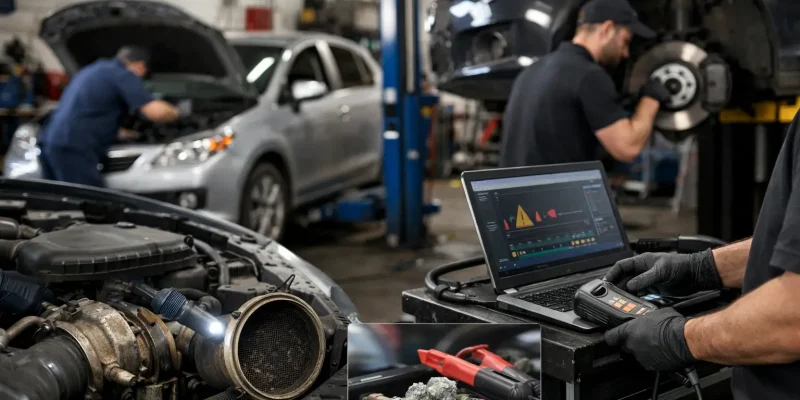
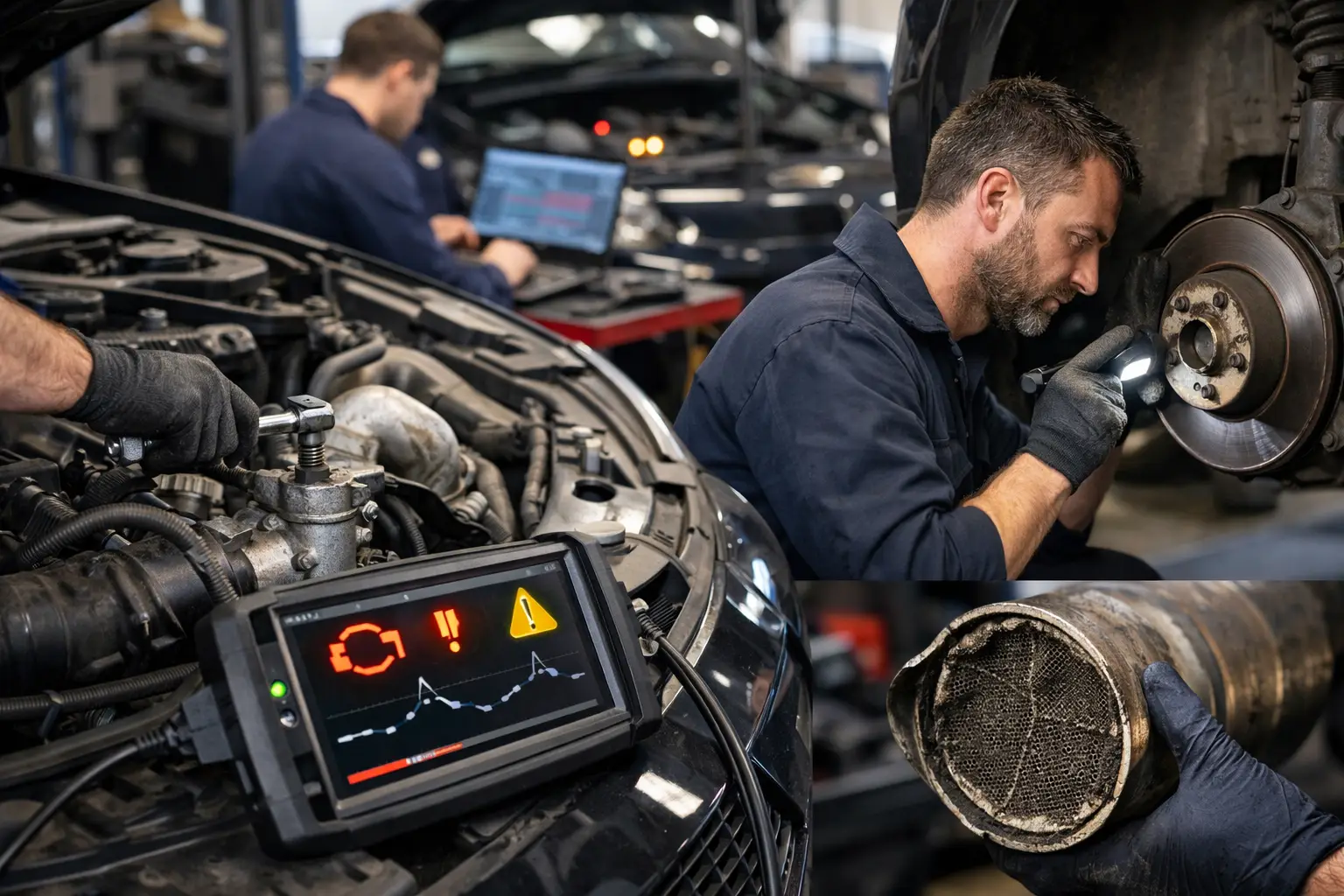
Need a Reliable Garage in Beccles? Start Here
A warning light on the way to work, a car that will not start outside the school gates, or brakes that suddenly feel wrong can turn an ordinary day into a problem. When you need a reliable garage Beccles drivers can use without second-guessing the work, the priority is simple: find out what has failed, what it will take to fix it, and whether the repair is genuinely needed.
A good local garage does not make a difficult situation more confusing. It gives you a straight answer, checks the fault properly and keeps you updated before work goes ahead. That matters when your car is the one you rely on for commuting, family trips and everyday errands.
What a reliable garage in Beccles should do differently
The difference is usually not the size of the workshop or the number of signs outside. It is how the garage handles the fault from the first conversation.
Some problems are obvious. A worn tyre, a flat battery or brake pads close to the limit can often be identified quickly. Others need proper testing. An engine warning light could relate to an emissions issue, a sensor, an air leak, ignition trouble or several other causes. Replacing parts based on a code alone can cost more and still leave the original problem behind.
In most cases, reliable repairs start with diagnostics. The garage should read the fault information, test the relevant system and use the symptoms you have noticed to narrow it down. If your car loses power only after a long run, for example, that detail can point the technician in a very different direction from a car that struggles as soon as the engine starts.
Once the cause is clear, you should get a plain-English explanation. You do not need a lesson in engine management systems. You do need to know what is wrong, what work is recommended, whether it is safe to keep driving and what the likely cost will be before the repair begins.
Do not ignore the signs your car is giving you
Drivers often put off booking a garage because the car is still moving. That is understandable, especially when life is busy. But many faults become more expensive when they are left to develop.
A flashing engine warning light needs prompt attention, particularly if the engine is misfiring or running roughly. Continuing to drive can damage other components. A steady warning light is not always an emergency, but it still needs checking. Clearing the light without fixing the reason it came on is not a repair.
Loss of power is another common call-out. The vehicle may feel flat when accelerating, struggle up hills or go into limp mode, where it limits performance to protect the engine. We often see this issue when there is a DPF problem, a boost leak, a sensor fault or an issue with the fuel or air system. The right fix depends on the test results. A forced regeneration may help in some DPF cases, but it will not solve a filter blockage caused by an underlying engine fault.
Brakes deserve even less delay. Squealing, grinding, pulling to one side, a soft brake pedal or a warning light can all indicate a problem. It may be worn pads and discs, but it could also be a sticking caliper, a fluid issue or a fault with the braking system. A garage should inspect the full system rather than assume the visible part is the only problem.
How clear diagnostics prevent wasted money
There is a common misunderstanding that diagnostic work is simply plugging a machine into the car. Modern diagnostic equipment is useful, but it is only the starting point. It tells the technician where to investigate, not always which component to replace.
Take an engine warning light with an oxygen sensor fault code. The sensor may have failed, but the code can also appear because the engine is running incorrectly for another reason. Fitting a new sensor without checking the surrounding system may only mask the issue for a short time.
The same applies to electrical faults. A battery light, intermittent starting problem or random dashboard warning can be caused by the battery, alternator, wiring, connections or a control unit. Proper testing takes a little longer than guessing, but it reduces the chance of paying for parts that did not need replacing.
At AutoFix4u, the focus is on identifying the root cause before recommending a repair. That means you can make a decision with the facts in front of you, rather than being handed a vague list of possible jobs.
Questions worth asking before you book
You do not need to interrogate a garage, but a few direct questions will tell you a lot about the service you can expect. Ask whether they will diagnose the fault before replacing parts, whether they will contact you if extra work is found, and whether the repair is covered by a workmanship guarantee.
It is also reasonable to ask about timing. Same-day repairs are possible for many jobs when parts are available and the fault is straightforward. A battery, brake repair, tyre fitting, air conditioning regas or certain sensor faults may be dealt with quickly. More involved work, such as a clutch, cambelt, gearbox issue or a fault that needs extended testing, can take longer. A trustworthy garage will be honest about that rather than promise a finish time it cannot meet.
Clear pricing matters too. You should know the diagnostic charge or inspection cost, what has been found and the price of the recommended repair. If further faults appear once work has started, the garage should explain the options and get your approval. No surprise extras, no pressure to approve work you do not understand.
MOT failures need an explanation, not just a list
An MOT failure sheet can look more serious than it is. It may show worn tyres, brake issues, suspension play, damaged lights, emissions problems or several advisories. Some are urgent safety items. Others need planning before the next test date.
A reliable garage will explain what caused the failure and what needs doing to put it right. For example, uneven tyre wear is not always just a tyre problem. It can happen because tracking is out, suspension parts are worn or a wheel has suffered damage. Changing the tyres without looking at the reason for the wear risks the same issue returning.
If your car has failed its MOT in Beccles, bring the failure information with you. It gives the technician a useful starting point, but the vehicle still needs inspecting. The aim is to repair what is necessary, keep you safe and avoid adding work that does not solve a genuine problem.
Local help when your car cannot wait
A vehicle fault rarely happens at a convenient time. If the car will not start, breaks down nearby or feels unsafe to drive, get advice before attempting a long journey. Continuing with a serious overheating issue, brake problem or loss of power can turn a manageable repair into a bigger one.
For drivers in Beccles and the surrounding area, a local independent workshop in Lowestoft can be a practical option. It is close enough for planned repairs and accessible when you need fast diagnostics, recovery support or help arranging transport after an unexpected fault.
When you call, give the garage the useful details: the make and model, registration, warning lights, noises, when the issue began and whether the car is safe to move. This does not replace an inspection, but it helps the team prepare and advise you properly.
The right next step for your car
The best time to book diagnostics is when the fault first appears, not after several weeks of hoping it will go away. Early checks can protect your safety, reduce the risk of further damage and give you a clearer idea of what needs doing.
If your car has a warning light, poor performance, braking concern, starting fault or MOT failure, contact a local garage and ask for a clear assessment. Get the fault checked properly, agree the repair plan before work starts, and get back on the road with confidence.