Warning Light Diagnosis Example Explained
You are driving to work, the dashboard lights up, and suddenly you are left guessing whether it is safe to carry on or whether the car is about to let you down. A warning light diagnosis example helps make sense of that moment. It shows how a proper garage works through the fault, finds the real cause, and fixes it properly rather than just clearing the light and sending you away.
We see this most often with the engine warning light, ABS light, battery light, DPF light, and tyre pressure warning. In most cases, the light itself is not the fault. It is the car telling you that a system has picked up a problem. The key is finding out why that warning came on in the first place.
A real warning light diagnosis example
A common example is a driver coming in with the engine warning light on and the car feeling sluggish. Sometimes it still drives normally. Other times it has reduced power or goes into limp mode. From the customer side, it looks like one problem. From the garage side, there can be several possible causes.
We often see this issue when a sensor has failed, the DPF is getting blocked, there is an air leak in the intake system, or the EGR valve is sticking. You cannot tell which one it is by looking at the dashboard alone. That is why proper diagnostics matter.
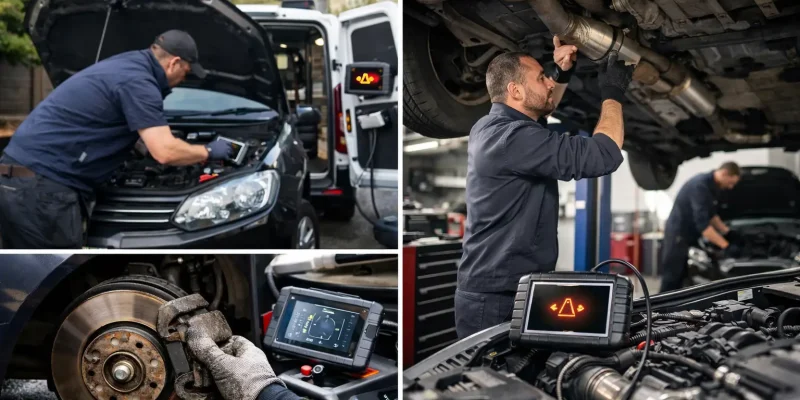
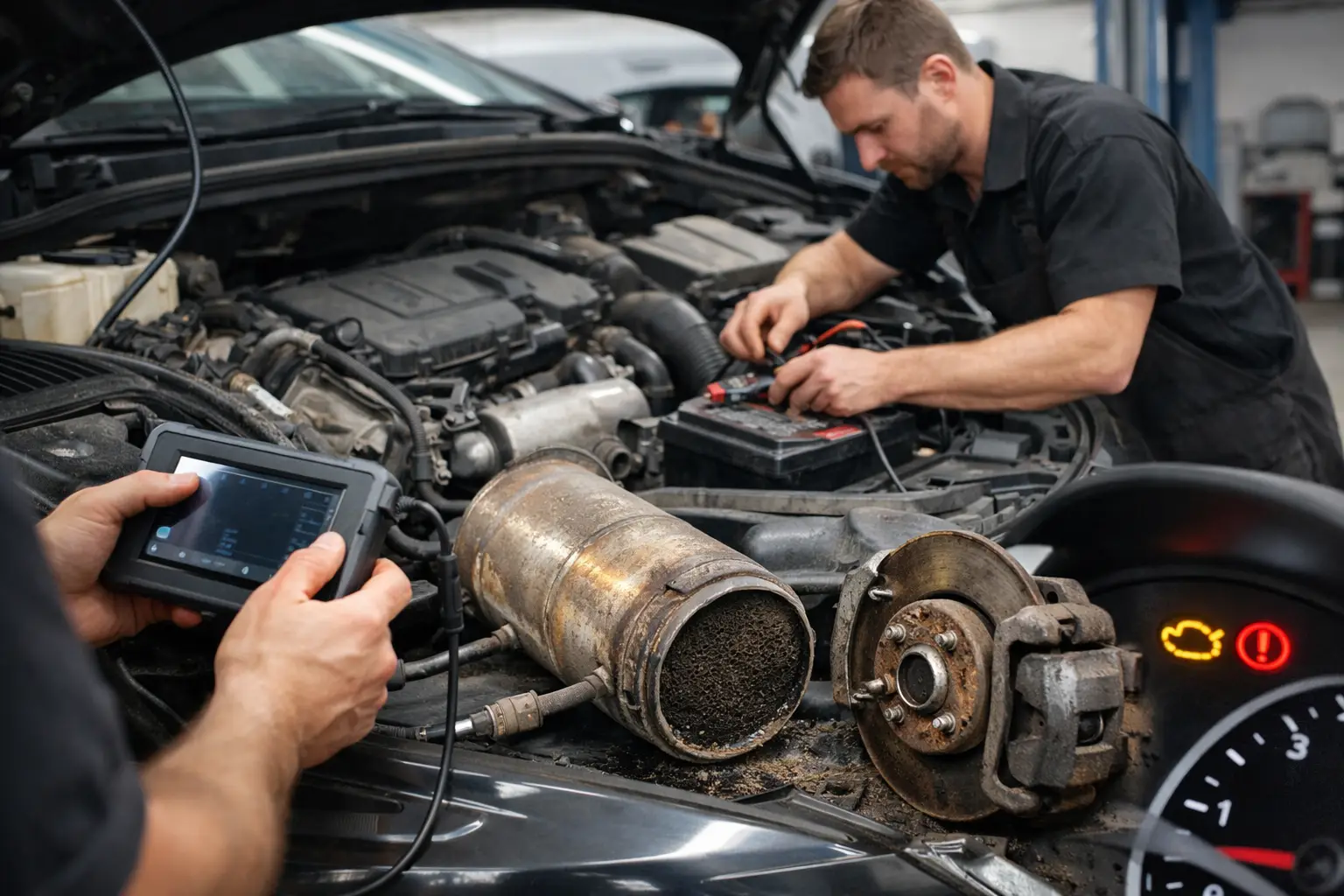
The first step is to connect the car to diagnostic equipment and read the stored fault codes. That gives a starting point, not a final answer. If the system shows a fault code related to boost pressure, for example, that does not automatically mean the turbocharger needs replacing. It could be a split hose, a sensor reading incorrectly, or carbon build-up affecting airflow.
The next step is checking live data and inspecting the vehicle properly. This is where experience makes a difference. A code reader can point you in a direction, but it cannot replace hands-on fault finding. If the airflow readings are wrong, the mechanic still needs to work out whether that is due to the sensor, wiring, vacuum problem, or a mechanical issue.
In one typical case, the engine warning light was on, the car had poor acceleration, and the owner feared a major engine problem. The fault code suggested low turbo pressure. After testing, the actual cause was a split intercooler hose. The repair was far simpler and cheaper than replacing turbo parts that were not faulty. That is exactly why diagnosis should come before repair.
What this warning light diagnosis example tells you
The main lesson is simple. A warning light is a symptom, not a diagnosis. If someone plugs in a scanner, reads one code, and jumps straight to replacing parts, there is a good chance money gets wasted.
This usually happens because modern cars are built with linked systems. One fault can trigger another reading elsewhere. A blocked DPF can affect engine performance. A weak battery can cause multiple warning lights. An ABS sensor fault might turn on traction control warnings as well. If you focus on the light and not the cause, the problem often comes back.
That is why a proper process matters. The fault is identified, the cause is explained in plain English, and then a clear repair plan follows. That saves time in the long run and gives the driver a better idea of what they are actually paying for.
Common warning lights and what they usually mean
The engine warning light is one of the most common. It can relate to emissions, sensors, fuel system faults, ignition faults, turbo issues, or DPF problems. Sometimes the car still feels fine. Sometimes it loses power straight away. It depends on how serious the fault is and whether the car has put itself into a protective mode.
The battery light is another one that catches people out. Many assume it means they only need a new battery, but that is not always true. In some cases the battery is fine and the real issue is the alternator, poor charging, or wiring faults. If that light stays on while driving, the car may stop once the battery charge runs out.
The ABS warning light usually points to a fault in the anti-lock braking system. The brakes may still work in a normal sense, but the ABS safety function may not. We often see this issue when a wheel speed sensor has failed, the sensor ring is damaged, or there is wiring corrosion.
The DPF light often appears after repeated short trips where the car has not had the chance to complete regeneration properly. If caught early, the issue may be solved with a forced regeneration and checks on the underlying cause. If ignored too long, the filter may block more heavily and lead to bigger repair work.
Tyre pressure warnings can be as simple as a low tyre, but they can also point to a puncture or sensor issue. It is best not to assume. A quick check can stop a tyre problem becoming a breakdown.
Why warning lights should not be ignored
Not every warning light means stop immediately, but very few should be left for weeks. The longer a fault is ignored, the more chance there is of extra damage or a roadside failure.
A small air leak can turn into major running issues. A DPF fault can lead to limp mode. A charging fault can leave you stranded. Even when the car still starts and drives, that does not mean the problem is harmless.
There is also the safety side. ABS, brake, steering, and airbag warnings need attention quickly. Even if the vehicle seems usable, those systems are there for a reason. If a light relates to safety, getting it checked sooner is always the sensible move.
What a proper garage should do
If you book in with a garage for diagnostics, you should expect more than a code printout. A proper garage should explain what the warning light relates to, what checks have been carried out, and what the likely next step is.
In most cases, that means confirming whether the issue is electrical, mechanical, sensor-related, or caused by another system. It also means being honest about what is known and what still needs testing. Some faults are straightforward. Others take more time because the symptoms overlap.
Good diagnosis is about avoiding guesswork. It is better to spend time proving the fault than replacing parts in hope. That is how repeat problems happen, and it is how repair bills climb unnecessarily.
When you should stop driving
There are times when a warning light means you should not carry on as normal. If the red oil pressure light comes on, stop the engine as soon as it is safe. If the coolant temperature warning appears and the car is overheating, keep driving and you risk serious engine damage.
If the battery light comes on together with power loss, dim lights, or warning messages, the car may not keep running for long. If the brake warning light appears and the brakes feel different, do not ignore it.
Amber lights are often less urgent than red ones, but they still need checking. If the car has gone into limp mode, is smoking, misfiring, struggling to start, or making unusual noises, it is best to stop using it until it has been assessed.
Local drivers usually want one thing – a clear answer
Most people are not asking for a technical breakdown of every sensor and circuit. They just want to know what is wrong, whether it is safe, and what it will take to fix it. That is fair enough.
For drivers around Lowestoft, that usually means needing the car back on the road without delay, especially when it is the main family vehicle or needed for work. A clear diagnosis saves wasted time and gives you a proper plan. If the issue is minor, you know where you stand. If it is more serious, you can deal with it before it turns into a breakdown.
At AutoFix4u, the focus is always on finding the real cause, explaining it properly, and carrying out the right repair with clear pricing and no surprise extras. Same-day slots may be available depending on the fault and workshop space.
If a warning light has come on and you are not sure what it means, the best next step is simple. Get it checked before the problem gets worse. A proper diagnosis now is usually quicker, cheaper, and less stressful than waiting for the car to force the issue.