
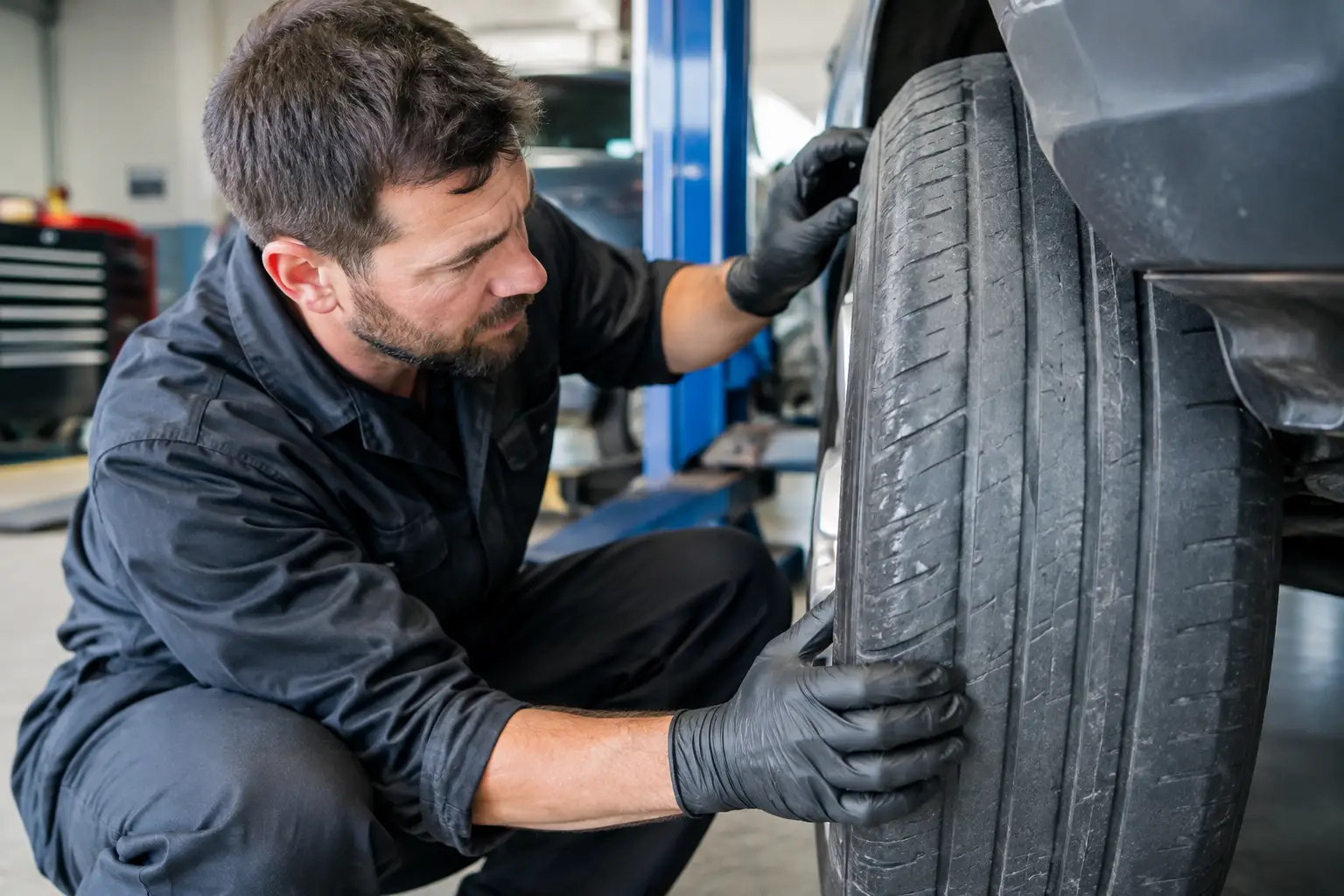
Uneven Tyre Wear Causes You Should Check
Uneven tyre wear often starts before drivers notice any change in how their car handles. One edge of a tyre may lose tread while the centre still looks healthy. You might discover the problem during a routine check, after an MOT advisory or while washing your car.
However, uneven tyre wear rarely happens without a reason. Incorrect tyre pressure, wheel alignment and worn suspension components can all affect how tyres contact the road.
At AutoFix4u Garage Lowestoft, we help drivers identify tyre problems before they lead to further damage. Our approach focuses on finding the cause rather than simply replacing worn tyres.
This guide explains common wear patterns, warning signs and the checks that help keep your vehicle safe.
Why uneven tyre wear matters
Your tyres provide the contact between your vehicle and the road. Therefore, their condition affects steering, braking and grip.
Uneven wear can reduce tyre performance, particularly on wet roads. It may also cause vibrations, steering problems and increased road noise.
For example, severe inner-edge wear can remain difficult to see during a quick inspection. The outside of the tyre may look fine while the inside has very little tread left.
In the UK, car tyres must have at least 1.6mm of tread across the central three-quarters of their width and around the entire circumference.
However, legal tread depth does not guarantee that a tyre is safe. Bulges, exposed cords and serious structural damage also require attention.
If you notice these problems, avoid driving and arrange professional advice.
Common causes of uneven tyre wear
Several mechanical and maintenance issues can create uneven tread patterns.
The location of the wear often provides useful clues. However, a mechanic must examine the tyre and related components to confirm the cause.
1. Incorrect wheel alignment
Wheel alignment affects the direction and angle of your wheels.
When the alignment changes, tyres may scrub against the road instead of rolling evenly. As a result, one shoulder can wear faster than the rest.
Potholes, kerb impacts and worn suspension parts can disturb alignment.
You might notice these warning signs:
- The car pulls towards one side.
- The steering wheel sits off-centre.
- One tyre edge wears faster than the other.
- The vehicle feels less stable on straight roads.
However, adjusting alignment alone may not solve the problem.
For example, a worn ball joint can allow the wheel to move beyond its correct position. The garage must repair that fault before completing a reliable alignment adjustment.
2. Incorrect tyre pressure
Tyre pressure changes how the tread contacts the road.
If pressure stays too low, both shoulders may wear faster. Low pressure also creates additional heat and increases tyre stress.
In contrast, excessive pressure can contribute to faster wear through the centre of the tread.
Therefore, regular pressure checks help prevent premature tyre replacement.
Always use the manufacturer’s recommended pressure. You can usually find this information inside the driver’s door, near the fuel flap or in the vehicle handbook.
Check tyres when they are cold. Also remember that pressures can vary according to passenger numbers and vehicle load.
Do not use the maximum pressure printed on the tyre sidewall as your routine inflation target.
3. Worn suspension components
Your suspension helps maintain tyre contact with the road.
Over time, bushes, ball joints, shock absorbers and other components can develop wear.
Consequently, the wheels may move outside their intended positions.
This movement can cause uneven tyre wear and reduce steering stability.
You may also hear knocking noises over bumps or notice excessive bouncing.
For example, worn shock absorbers can contribute to cupped or scalloped tyre wear. Instead of wearing smoothly, the tread develops a series of uneven patches.
However, wheel imbalance and other faults can create similar symptoms.
A proper inspection helps identify the actual problem.
4. Wheel imbalance
Wheel imbalance can cause vibrations, especially at certain driving speeds.
For example, you may feel shaking through the steering wheel while travelling on a dual carriageway.
Over time, vibration can contribute to irregular tyre wear.
A technician can check wheel balance and identify whether the wheel and tyre rotate smoothly.
However, balancing does not correct suspension faults or incorrect wheel alignment.
The mechanic should investigate any additional symptoms before recommending repairs.
5. Damaged wheels and pothole impacts
Potholes can damage tyres, wheels and suspension components.
A hard impact may bend a wheel rim or disturb the suspension geometry.
Sometimes, drivers notice immediate vibration. In other cases, uneven tyre wear develops gradually.
Therefore, inspect your tyres after hitting a significant pothole or kerb.
Look for sidewall bulges, cuts and visible wheel damage.
If you notice a bulge or other serious tyre damage, stop using the vehicle and arrange a professional inspection.
6. Mismatched tyres or incorrect fitting
Tyres must meet your vehicle’s requirements.
Incorrect sizes, unsuitable combinations and fitting errors can affect handling.
For example, directional tyres must rotate in the direction indicated by their sidewall markings.
Some tyres also have specific inside and outside mounting positions.
Furthermore, major differences in tread depth or tyre construction may affect handling, particularly on certain four-wheel-drive vehicles.
Always follow the vehicle manufacturer’s tyre requirements.
What different tyre wear patterns mean
Tyre wear patterns can help identify possible faults. However, they do not provide a complete diagnosis on their own.
Inner-edge tyre wear
Excessive inner-edge wear often suggests a wheel alignment or suspension problem.
For example, incorrect toe or camber settings can increase pressure and scrubbing along the inner shoulder.
Worn suspension bushes may also contribute.
Because this wear can remain hidden, inspect the inside edges regularly.
Outer-edge tyre wear
Outer-edge wear can result from alignment problems, low pressure or driving conditions.
For example, frequent cornering places extra load on the tyre shoulders.
However, significant wear on one side still deserves an inspection.
Centre tyre wear
Excessive centre wear can indicate over-inflation.
High pressure may cause the central tread area to carry more load.
Therefore, check and correct the pressure according to the vehicle manufacturer’s specifications.
Wear on both tyre shoulders
Both shoulders may wear faster when the tyre runs under-inflated for extended periods.
Low pressure causes increased flexing and heat.
As a result, the tyre can deteriorate more quickly.
Check for slow punctures or leaking valves if pressure repeatedly drops.
Cupped or scalloped wear
Cupped wear creates uneven patches around the tyre.
Possible causes include worn shock absorbers, wheel imbalance or suspension problems.
Drivers may also notice humming noises or vibration.
A mechanic should inspect the tyre, wheel and suspension before recommending the next repair.
How to check uneven tyre wear at home
Regular inspections help you notice problems early.
Start by parking on level ground and securing the vehicle.
Then examine all four tyres.
Look across the tread width and check both shoulders where you can see them safely.
Check the tread depth
Use a tyre tread-depth gauge for an accurate measurement.
Measure several points around each tyre. Also check multiple grooves across the tread.
This approach helps identify localised wear.
If you need more guidance, read our tyre tread inspection guide.
Look for visible tyre damage
Check the tread and sidewalls for cuts, cracks and bulges.
Also look for nails, screws or other objects.
Do not remove an embedded screw yourself if the tyre still holds pressure. Removing it may cause rapid air loss.
Instead, ask a tyre specialist to assess whether a safe repair is possible.
Check your tyre pressures
Measure pressures when the tyres are cold.
Use the recommended values for your vehicle and load.
If one tyre repeatedly loses pressure, arrange an inspection.
A slow puncture, leaking valve or wheel-rim problem may be responsible.
How a garage diagnoses uneven tyre wear
Professional diagnosis starts with a careful tyre inspection.
At AutoFix4u Garage Lowestoft, we look at tread depth, tyre condition and pressure.
Next, we assess the wear pattern and consider any driving symptoms.
For example, a car that pulls to one side may need steering and suspension checks.
A technician may inspect:
- Tyre pressures and tread condition
- Steering joints and track rod ends
- Suspension bushes and ball joints
- Shock absorbers and springs
- Wheel condition and balance
- Wheel alignment, where appropriate
The inspection helps identify problems that could damage replacement tyres.
For example, fitting a new tyre without repairing a worn suspension component may allow the same wear pattern to return.
Therefore, correcting the underlying cause matters as much as replacing the tyre.
Can you drive with uneven tyre wear?
The answer depends on the tyre’s condition and the vehicle’s handling.
Minor wear may allow you to travel carefully to a garage for an inspection.
However, severe wear can make driving unsafe.
Do not continue driving if you notice exposed cords, a sidewall bulge or serious structural damage.
Likewise, stop using the vehicle if steering becomes difficult to control.
A sudden strong pull, heavy vibration or unusual knocking noise may indicate an additional mechanical fault.
Seek professional advice and arrange recovery when necessary.
Ignoring these warning signs can increase the risk of tyre failure or loss of control.
How to prevent uneven tyre wear
Regular maintenance helps your tyres last longer.
First, check tyre pressures at least once a month and before longer journeys.
Next, inspect the tread for unusual patterns.
Pay attention to changes in how your vehicle drives.
For example, a new steering vibration or pulling sensation may indicate a developing issue.
Also arrange an inspection after a significant pothole impact.
During routine servicing, ask your mechanic to check the tyres and accessible suspension components.
These checks can help identify problems before they cause expensive tyre damage.
However, routine maintenance cannot prevent every fault. Therefore, investigate any new symptoms as soon as possible.
When should you replace an unevenly worn tyre?
A tyre needs replacement when it no longer meets legal or safety requirements.
For example, tread below the legal limit requires attention regardless of how much tread remains elsewhere.
Likewise, exposed cords, significant cuts or sidewall bulges can make replacement necessary.
A tyre with minor uneven wear may still have useful life if it remains safe and legal.
However, a technician should confirm its condition and investigate the reason for the wear.
Replacing the tyre without correcting the cause can lead to the same problem again.
If you need new tyres, explore our Tyre Fitting Lowestoft service.
Book a tyre inspection at AutoFix4u Garage Lowestoft
Uneven tyre wear often points to a problem with pressure, alignment or suspension.
However, the wear pattern alone does not always identify the cause.
At AutoFix4u Garage Lowestoft, we help drivers understand tyre damage and related mechanical problems.
Our team can inspect tyre condition, investigate unusual wear and explain the recommended next steps.
We focus on clear advice, appropriate repairs and transparent pricing.
Whether your tyres show inner-edge wear, vibration or unusual tread patterns, contact us before the problem becomes more serious.
Call: 07778 979802
WhatsApp: Message AutoFix4u Garage Lowestoft
Get a quote: Request a Free Estimate
Visit us: Unit 4, 10 Battery Green Road, Lowestoft, NR32 1DE.
Regular tyre inspections can protect your vehicle, reduce unexpected replacement costs and improve confidence on the road.


