
Top Causes of Engine Overheating and What to Do
A temperature warning light, steam from under the bonnet, or a gauge climbing into the red is not something to drive through. The top causes of engine overheating usually start with a fault in the cooling system, but the damage can become expensive if the engine is kept running. Pull over safely, switch the engine off and let it cool before deciding what to do next.
Overheating does not always mean the engine has failed. In many cases, a hose, sensor, fan or coolant leak is the real problem. The key is finding the cause properly rather than simply topping up the coolant and hoping it does not happen again.
What to do when your engine overheats
If the temperature warning light comes on, reduce the load on the engine straight away. Turn off the air conditioning, find a safe place to stop and switch the engine off. Do not remove the coolant cap while the engine is hot. The system is pressurised and hot coolant can spray out.
Wait until the engine has cooled fully before checking the coolant level. If there is a puddle underneath the car, visible steam, a strong sweet smell, or the level is very low, do not continue driving. Recovery is usually the safer and less costly choice.
A one-off rise in temperature in heavy traffic can still need investigation. If it happens again, the fault is there for a reason. Continuing to use the car risks a blown head gasket, warped cylinder head or internal engine damage.
Top causes of engine overheating
Low coolant or a coolant leak
This is one of the most common faults we see. Coolant carries heat away from the engine and releases it through the radiator. When the level drops, there is not enough fluid moving around the system to control the temperature.
Leaks can come from a split hose, loose clip, cracked expansion tank, radiator, water pump or thermostat housing. Some leaks are obvious, leaving coloured fluid or white staining under the bonnet. Others only appear when the system gets hot and pressurised.
Topping up the coolant may get you home, but it is not a repair. The level will drop again unless the leak is found and fixed. A pressure test helps identify where the system is losing coolant, including leaks that are difficult to spot during a quick visual check.
A thermostat stuck closed
The thermostat controls when coolant flows from the engine to the radiator. When the engine is cold, it stays shut to help the engine warm up. Once the engine reaches operating temperature, it opens so heat can be released.
If the thermostat sticks closed, hot coolant cannot reach the radiator properly. The temperature can rise quickly, sometimes within a few miles. You may notice the heater blowing cold even though the temperature gauge is high, as coolant is not circulating as it should.
Replacing a thermostat is often a straightforward repair, but it needs diagnosing first. A similar symptom can also be caused by low coolant, trapped air or a water pump problem.
Cooling fan failure
Your radiator needs airflow to remove heat. At speed, air passes through the grille naturally. In slow traffic, while idling, or after a long queue, the electric cooling fan does the work.
A failed fan motor, fuse, relay, wiring fault or temperature sensor can stop the fan cutting in. This usually shows up as overheating in town traffic, then a temperature that settles back down when the car is moving faster.
You might hear the fan running loudly after parking on a warm day. That can be normal. But if the gauge is rising and the fan never comes on, it needs checking. Electrical diagnostics can confirm whether the fan is receiving the right command and power supply.
Blocked or damaged radiator
A radiator can be blocked internally by old coolant, corrosion or debris in the cooling system. It can also be restricted externally by leaves, dirt or damaged fins. Either way, it cannot get rid of heat as effectively as it should.
This problem often develops gradually. The car may cope with short local journeys but run hot on longer drives, hills, warm days or when carrying passengers and luggage. A radiator that is cold in some areas and unusually hot in others can point to an internal blockage.
A cooling-system flush may help in limited cases, but not every radiator can be saved. If it is badly corroded, leaking or restricted, replacement is normally the reliable fix. The rest of the system should be checked too, because contaminated coolant can affect other parts.
Failed water pump
The water pump keeps coolant circulating through the engine, radiator and heater system. If its internal impeller wears, breaks or slips, the pump may no longer move enough coolant. A leaking pump can also cause the coolant level to fall.
Some water pumps are driven by the cambelt, while others use an auxiliary belt or electric motor. The repair needed depends on the vehicle and how the pump is fitted. If a cambelt-driven water pump fails, it is often sensible to inspect the belt and related components at the same time.
Signs can include coolant loss, a whining noise from the belt area, poor cabin heating and repeated overheating. There is no benefit in guessing with a water pump fault. Proper testing can prevent unnecessary parts being fitted.
Head gasket problems
A head gasket seals the joint between the engine block and cylinder head. When it fails, combustion gases can enter the cooling system, pressurising it and forcing coolant out. Coolant may also enter the engine, although the symptoms vary between vehicles.
Common warning signs include repeated overheating, coolant disappearing with no clear external leak, white exhaust smoke, bubbling in the expansion tank, rough running or a creamy deposit under the oil cap. The oil cap alone is not proof of a failed head gasket, especially on cars used for short journeys, so testing matters.
Head gasket repairs are more involved than replacing a hose or thermostat. The cylinder head may need checking for distortion or damage before the repair can be quoted accurately. Acting early gives you the best chance of avoiding further engine damage.
Air trapped in the cooling system
Air pockets can stop coolant circulating properly, often after a coolant change or repair. Some engines need a specific bleeding procedure to remove air from high points in the system. Simply filling the expansion tank is not always enough.
The symptoms can be confusing: fluctuating temperature readings, gurgling noises, low heat from the heater or overheating that comes and goes. A garage can vacuum-fill or bleed the system correctly, then confirm that the fan operates and the coolant level remains stable.
Why overheating should not be ignored
Modern engines are designed to run at a controlled temperature. When that temperature rises too far, metal components expand. The cylinder head can warp, seals can fail and the head gasket can lose its seal. What began as a minor coolant leak can turn into a major repair.
Do not rely on the gauge dropping back down as proof the fault has gone away. A thermostat may open temporarily, the fan may start late, or coolant may move around enough to lower the reading for a short time. The underlying issue can still be present.
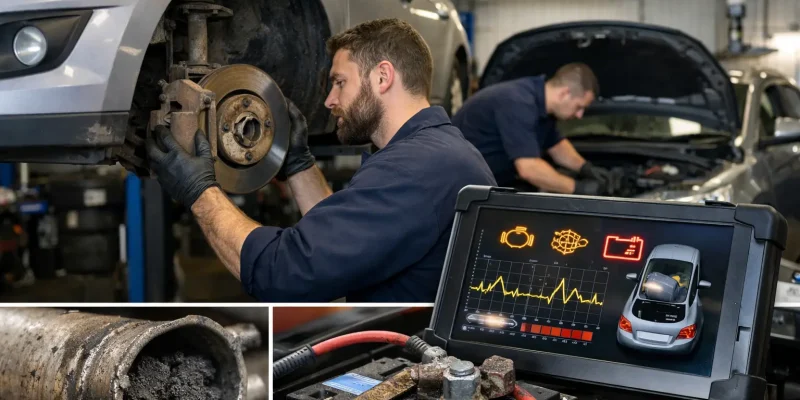
The same applies if the engine warning light appears alongside a temperature warning. Modern vehicles monitor several sensors, and a stored fault code can help narrow down whether the issue is a temperature reading, fan control problem or something affecting engine performance.
Getting the right diagnosis
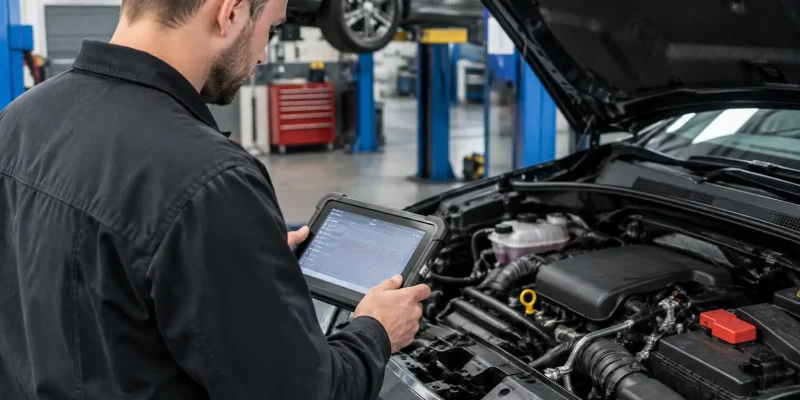
An overheating fault needs more than a quick coolant top-up. At AutoFix4u, the sensible starting point is to check the coolant level and condition, inspect for leaks, test the cooling-system pressure and confirm the thermostat, fan and water pump are doing their job. If needed, we can also scan for stored fault codes and test for combustion gases in the coolant.
That approach avoids replacing parts on guesswork. You get a clear explanation of what has failed, what needs doing now and whether there are any related issues worth dealing with at the same time. Clear pricing and no surprise extras make it easier to decide how to proceed.
If your car has overheated in Lowestoft or nearby, stop driving it if the warning returns or coolant is escaping. Arrange diagnostics or recovery support before a small cooling-system fault has the chance to damage the engine.