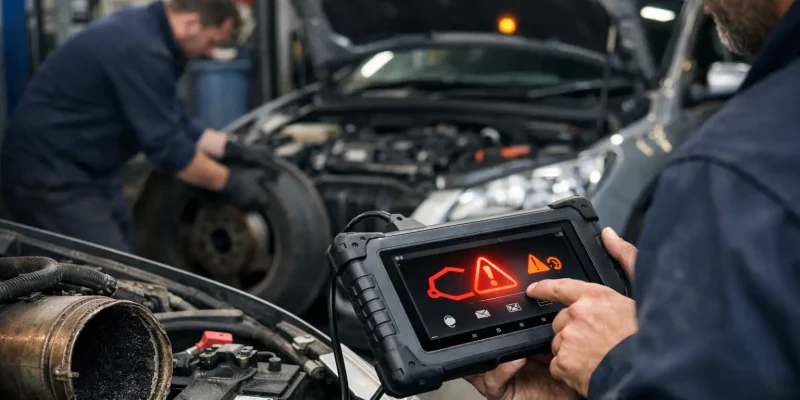

Vehicle Health Check Review – What It Should Find
A vehicle health check review helps you understand your car’s condition before a small problem becomes expensive. Even when your vehicle drives normally, worn components or minor leaks can develop without obvious warning signs.
For example, worn brake pads can damage the discs. A weak battery may leave you stranded. Similarly, a small coolant leak can eventually cause engine overheating.
At AutoFix4u Garage Lowestoft, we help drivers identify these problems early. Our approach focuses on practical inspections, clear explanations and sensible repair recommendations.
This guide explains what a vehicle health check should cover, when to arrange one and what to expect afterwards.
What a Proper Vehicle Health Check Should Include
A useful vehicle health check examines the components that affect safety, performance and reliability.
However, it should not become an excuse to recommend unnecessary repairs.
Instead, the technician should inspect the vehicle, explain any concerns and identify which issues need attention first.
The checks will depend on your vehicle and the inspection you book.
Brake system inspection
Brakes play a major role in vehicle safety. Therefore, their condition deserves careful attention.
During an inspection, a technician may check:
- Brake pad thickness and condition
- Brake disc wear and corrosion
- Brake fluid level
- Visible brake hoses and pipes
- Signs of sticking or binding components
- Unusual braking noises or vibrations
For example, worn brake pads can produce squealing or grinding noises. A sticking calliper may also cause the vehicle to pull when braking.
However, these symptoms can have different causes.
A mechanic should inspect the components before recommending replacement parts.
If your car makes unusual braking noises, read our guide to brake warning signs.
Tyre condition and pressure
Tyres affect braking, steering and road grip.
Therefore, a vehicle health check should include tyre tread depth, pressure and visible damage.
The technician should also look for uneven wear.
For example, excessive wear on one edge may indicate poor wheel alignment or suspension problems.
Meanwhile, incorrect tyre pressure can cause premature wear and reduce handling performance.
In the UK, most passenger cars must have at least 1.6mm of tread across the central three-quarters of the tyre. This requirement applies around the entire circumference.
However, a tyre may need replacement before reaching the legal limit if it has serious damage.
A bulge, exposed cords or a deep sidewall cut requires prompt attention.
Steering and suspension checks
Your suspension helps keep the tyres in contact with the road. Meanwhile, the steering system allows you to control the vehicle.
Both systems contain components that wear over time.
A technician may inspect:
- Suspension springs
- Shock absorbers
- Ball joints
- Steering joints
- Suspension bushes
- Visible mounting components
For example, a worn suspension bush can cause knocking over bumps.
Likewise, a damaged spring may affect ride height and vehicle handling.
If your car pulls sideways or feels unstable, arrange an inspection.
These problems can affect safety and cause further tyre wear.
Engine, Fluids and Cooling System Checks
Your engine depends on clean oil, suitable coolant and correctly functioning components.
Consequently, a vehicle health check should include a visual inspection of accessible engine parts and fluid levels.
Engine oil and visible leaks
Engine oil protects moving components against friction and excessive wear.
Low oil levels can increase the risk of engine damage.
During a check, the technician may inspect the oil level and look for visible leaks.
However, a low level does not always indicate an external leak. Some engines also consume oil during normal operation.
Therefore, the mechanic should consider the vehicle’s history and the amount of oil it has lost.
A health check can identify a concern, but finding the exact cause may require further testing.
Coolant level and overheating risks
Coolant helps control engine temperature.
If the level falls repeatedly, the cooling system may have a leak or another fault.
Common causes include damaged hoses, radiator leaks and faulty expansion tanks.
In addition, thermostat housings and water pumps can develop problems.
A technician can inspect the accessible components for leaks or damage.
However, some leaks only appear when the engine reaches operating temperature.
In those cases, a pressure test may help identify the source.
If your temperature warning light appears, do not ignore it.
Stop safely if the engine overheats, and never open the coolant cap while the system is hot.
Hoses, belts and visible components
A visual inspection may reveal cracked hoses, loose connections or fluid staining.
The technician may also check accessible auxiliary belts for wear.
However, a visual health check cannot confirm the remaining life of every component.
For example, many cambelts sit behind protective covers.
Their replacement intervals depend on the manufacturer’s service schedule.
Therefore, always check the vehicle’s cambelt history separately.
Battery and Charging System Health Check
A weak battery can cause slow starting and unexpected breakdowns.
Cold weather can make the problem more noticeable.
For example, you may hear the engine crank slowly on a winter morning.
Alternatively, the dashboard lights may dim during starting.
However, these symptoms do not automatically mean the battery needs replacing.
The charging system or electrical connections may also cause trouble.
What a technician can test
Depending on the symptoms, a mechanic may check battery condition, charging voltage and cable connections.
These tests help distinguish a weak battery from other electrical faults.
For example, a faulty alternator may fail to recharge the battery properly.
As a result, the vehicle may start after a jump-start but develop the same problem later.
You can learn more in our guide to alternator fault symptoms.
If the battery repeatedly goes flat, further electrical diagnosis may be necessary.
Warning Lights and Electronic Diagnostics
Modern vehicles use electronic systems to monitor engine performance, braking and emissions.
When a problem occurs, the vehicle may store a fault code.
However, a fault code does not always identify the failed component.
For example, an engine warning light may relate to a sensor, damaged wiring or an air intake problem.
A mechanic must compare the code with the vehicle’s symptoms and test results.
Therefore, proper diagnostics go beyond simply connecting a scanner.
Why a diagnostic scan may help
A diagnostic tool can read stored fault codes and relevant live data.
This information helps a technician investigate specific problems.
However, a routine vehicle health check may not include a full electronic diagnostic scan.
The exact checks depend on the service you book.
If you have an illuminated warning light, explain this when arranging the appointment.
The garage can then advise whether you need a separate diagnostic inspection.
For further information, read our guide to engine warning lights.
Exhaust, DPF and Emissions Checks
Your exhaust system affects emissions, noise and vehicle performance.
Consequently, visible exhaust damage or unusual smoke deserves attention.
During a health check, a mechanic may inspect accessible exhaust components.
The technician may also look for corrosion, loose mountings or obvious leaks.
However, diagnosing emissions faults often requires additional equipment.
Diesel particulate filter concerns
Modern diesel vehicles use a diesel particulate filter, or DPF, to capture soot.
The vehicle normally removes collected soot through regeneration.
However, repeated short journeys can interrupt this process.
As a result, the DPF may become increasingly restricted.
Common symptoms include:
- DPF warning lights
- Reduced engine power
- Increased fuel consumption
- Repeated regeneration attempts
- Limp mode
Nevertheless, these symptoms do not always mean the DPF itself has failed.
A sensor fault or another engine problem may prevent successful regeneration.
Therefore, a mechanic should investigate the underlying cause before recommending cleaning or replacement.
Read our guide to DPF regeneration problems for more information.
When Should You Book a Vehicle Health Check?
You do not need to wait for a breakdown before arranging an inspection.
In fact, regular checks can help identify concerns before they become more serious.
A vehicle health check may be useful before an MOT, a long journey or a period of heavy vehicle use.
It can also help after purchasing a used car.
Before a long journey
Long journeys place extra demands on tyres, brakes and cooling systems.
Therefore, checking the vehicle beforehand can reduce the chance of avoidable problems.
For example, a tyre with a slow puncture may lose pressure during a long trip.
Likewise, a small coolant leak can worsen when the engine stays hot for longer.
An inspection gives you an opportunity to address these concerns before travelling.
Before an MOT
A vehicle health check may identify issues that could lead to an MOT failure.
For example, the technician may find worn tyres, damaged suspension components or faulty lights.
However, a health check does not guarantee an MOT pass.
The MOT tester must assess the vehicle against the applicable testing standards.
Therefore, treat the health check as a useful preparation step rather than a replacement for the test.
When your car feels different
Changes in vehicle behaviour can indicate developing faults.
For example, you may notice new vibrations, unusual noises or difficulty starting.
Other warning signs include fluid leaks, steering problems and poor braking performance.
If the vehicle becomes difficult to control, overheats or develops a serious brake fault, stop driving when safe.
Arrange professional advice or recovery rather than risking further damage.
What Happens After a Vehicle Health Check?
A useful inspection should give you a clear understanding of your vehicle’s condition.
The mechanic should explain any concerns and recommend suitable next steps.
Some garages use red, amber and green categories to describe inspection results.
These can help customers understand the urgency of different problems.
However, a colour-coded report alone should not replace a proper explanation.
Urgent repairs
Some faults require immediate attention.
Examples include severely damaged tyres, serious braking problems and dangerous steering defects.
In these situations, the garage should explain the safety risk.
Repairs to plan
Other concerns may not require immediate replacement.
For example, a component may show early wear while remaining serviceable.
The mechanic can explain what to monitor and when to arrange another inspection.
Components in good condition
A vehicle health check should also identify parts that currently appear serviceable.
This information matters because it helps you avoid unnecessary spending.
However, no inspection can guarantee that every component will remain fault-free.
Vehicle Health Checks, Servicing and MOTs Are Different
A vehicle health check provides an assessment of the car’s current condition.
By contrast, routine servicing focuses on scheduled maintenance.
For example, a service may include engine oil and filter replacement.
An MOT follows a separate legal testing procedure.
Therefore, these services serve different purposes.
A health check can help identify developing concerns between scheduled services.
However, it does not replace maintenance tasks or a required MOT.
If a warning light or mechanical fault appears, the vehicle may also need targeted diagnostics.
Book a Vehicle Health Check in Lowestoft
At AutoFix4u Garage Lowestoft, we focus on understanding the condition of your vehicle and explaining the next steps.
Whether you have noticed unusual noises, fluid leaks or changes in handling, an inspection can help identify potential problems.
Our aim is to provide practical advice and clear repair recommendations based on the checks performed.
We support drivers in Lowestoft, Oulton Broad, Carlton Colville, Beccles and surrounding areas.
If your car needs attention, contact us to discuss the symptoms and arrange a suitable inspection.
Call AutoFix4u Garage Lowestoft: 07778 979802
Alternatively, contact us online.
A timely inspection can help you plan maintenance, address safety concerns and reduce the risk of an unexpected breakdown.