Diagnostics or Parts Swapping: Know the Difference
A warning light comes on, the car loses power, and someone says, “It’s probably the sensor.” That is how expensive guesswork starts. When choosing between diagnostics or parts swapping, the difference is simple: one finds the cause before repairs begin; the other replaces likely parts and hopes the fault goes away.
For drivers who need their car for work, school runs or getting around Lowestoft, that distinction matters. A part may be faulty, but it may also be reacting to another problem. Replacing it without testing can leave you with the same warning light, the same breakdown risk and a bigger bill.
What parts swapping looks like in a real repair
Parts swapping means replacing a component because it is commonly linked to a symptom, rather than proving it has failed. For example, an engine warning light may lead to a new sensor, ignition coil or EGR valve. A DPF warning might lead straight to a forced regeneration. A starting problem might result in a new battery.
Sometimes that part does fix the car. If the fault is obvious, such as a visibly split hose or a battery that fails a proper test, there is no need to overcomplicate it. The problem is when a repair is based on a fault code alone, or on what happened to another vehicle with similar symptoms.
Fault codes are useful, but they are not a repair instruction. They point us towards the system that has noticed a problem. The code may say there is an air-flow reading out of range, for instance. That does not automatically mean the air-flow sensor is faulty. It could be a wiring issue, an air leak, a blocked intake, a sticking valve or a problem elsewhere affecting the reading.
This is why we often see cars arrive after one or two parts have already been fitted, but the original fault remains.
Why proper diagnostics save money
Vehicle diagnostics start with the customer’s symptoms, not a guess at the replacement part. When did the warning light appear? Does the fault happen only when the engine is cold? Has the car gone into limp mode while accelerating? Is there smoke, a misfire, a poor start or reduced fuel economy?
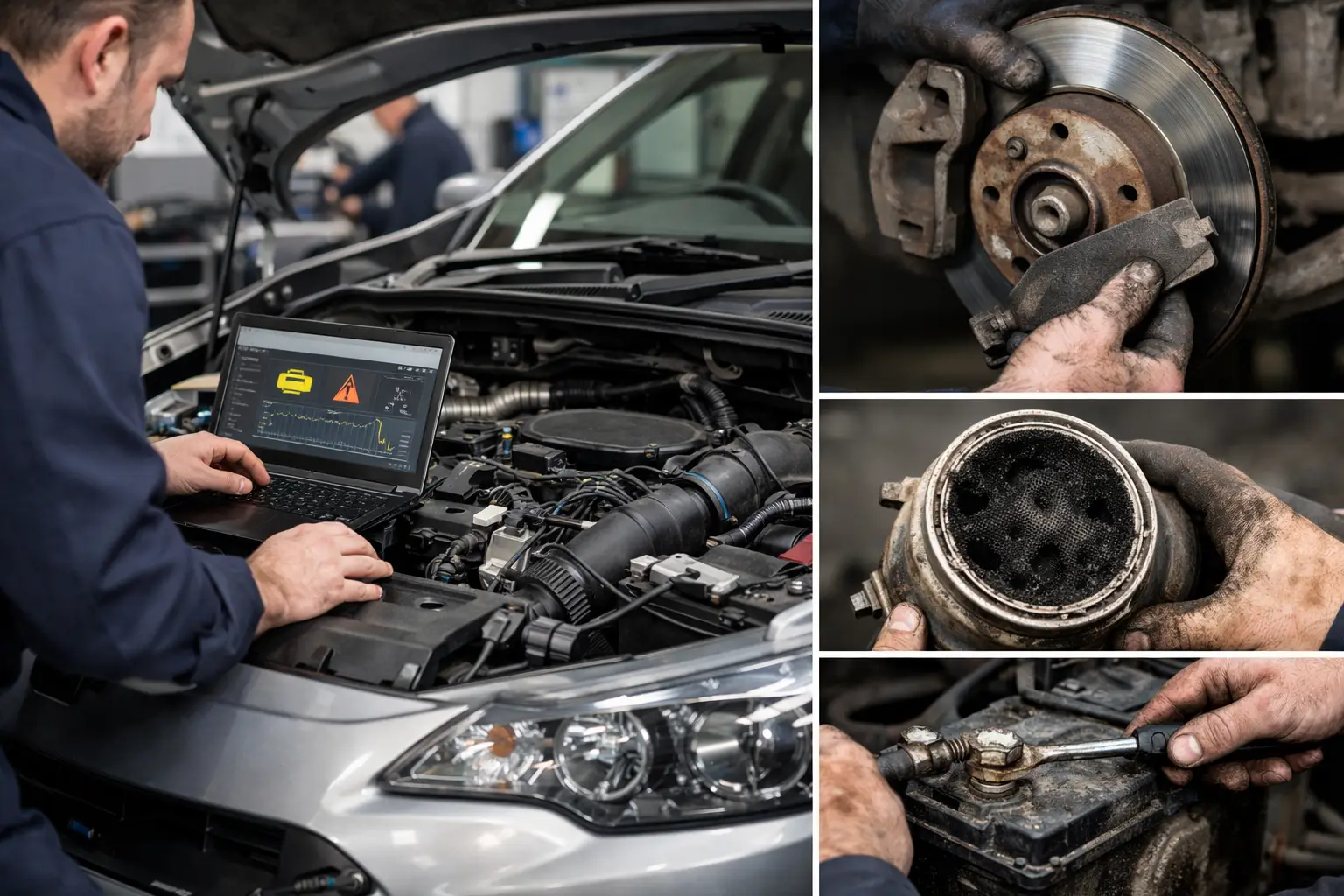
Those details help narrow down the cause. We then read fault codes, but also look at live data from the vehicle, carry out checks on relevant components and inspect the basics that can create bigger problems. Depending on the fault, that may include electrical testing, battery and charging checks, wiring inspections, pressure tests or checking for leaks and blocked pipes.
In most cases, this is faster than changing parts one by one. It also gives you a clear explanation of what has been found and what needs doing next. You can decide on the repair with the facts in front of you, rather than paying for a list of possible fixes.
There is a trade-off. Proper fault-finding can take time, especially with intermittent electrical faults that only show themselves under certain conditions. But spending time testing at the start is usually better value than fitting several parts that did not need replacing.
Diagnostics or parts swapping for common car faults
Engine warning light
An engine warning light can be caused by anything from a loose connection to an emissions fault, a misfire or a sensor giving an incorrect reading. The car may still drive normally, but leaving it can lead to poor performance, higher fuel use or further damage.
A code reader may identify the area of concern. Proper diagnostics establish why the code appeared. If the light is flashing, the engine is running rough, or the car has lost power, stop using it where safe and arrange for it to be checked promptly.
Loss of power and limp mode
Limp mode is the car protecting itself because the engine control unit has detected a fault. You may notice weak acceleration, a limited top speed or a message on the dashboard. Turbo control faults, boost leaks, DPF problems, fuel delivery issues and sensor readings can all produce similar symptoms.
Fitting a turbocharger or a sensor without checks can be a costly mistake. A split boost hose or a blocked DPF can make the car feel much the same as a more serious failure. The right test identifies whether the problem is mechanical, electrical or related to the emissions system.
DPF warning lights
A DPF needs the right driving conditions for regeneration. Short journeys can contribute to a blockage, but that is not the full story every time. A DPF may struggle to regenerate because of another fault, such as an incorrect pressure sensor reading, an EGR issue, a thermostat problem or an engine fault producing excess soot.
A forced regeneration can help where it is suitable, but it should not be used as a quick fix without assessing the cause. If the reason for the blockage is still there, the warning light is likely to return. We check the condition of the system and explain whether cleaning, regeneration or another repair is the sensible next step.
Car will not start
A flat battery is common, particularly after short trips, cold weather or a car standing unused. But a new battery will not fix a charging fault, a parasitic drain or a poor connection at the terminals. Equally, a starter motor may be blamed when the battery is simply not delivering enough power.
Testing the battery, alternator and starting circuit avoids replacing the wrong item. If you are stranded, recovery support or a jump start can get you moving, but the underlying reason still needs checking.
MOT failures
An MOT failure report tells you what needs attention, but it does not always explain the root cause. Uneven tyre wear may be linked to worn suspension components or incorrect alignment. A brake imbalance could involve seized parts, contaminated components or a hydraulic issue. An emissions failure may need diagnosis, not just an additive or a replacement part.
A clear inspection means you know what has failed, why it failed and which repairs are necessary for safe, reliable motoring.
What a good diagnostic process should give you
You should not be left with a vague answer or a long list of “maybes”. A proper diagnostic visit should result in a plain-English explanation of the fault found, the tests carried out and the recommended repair.
There are occasions where further investigation is needed. Some faults are intermittent, and some vehicles have more than one issue. If that happens, you should be told before extra work starts. Clear pricing and honest recommendations matter just as much as the test equipment.
At AutoFix4u, the aim is to identify the root cause first, then give you a practical repair plan using quality parts. That helps avoid repeat visits and gets your vehicle back to dependable use as quickly as possible.
When a straightforward repair is enough
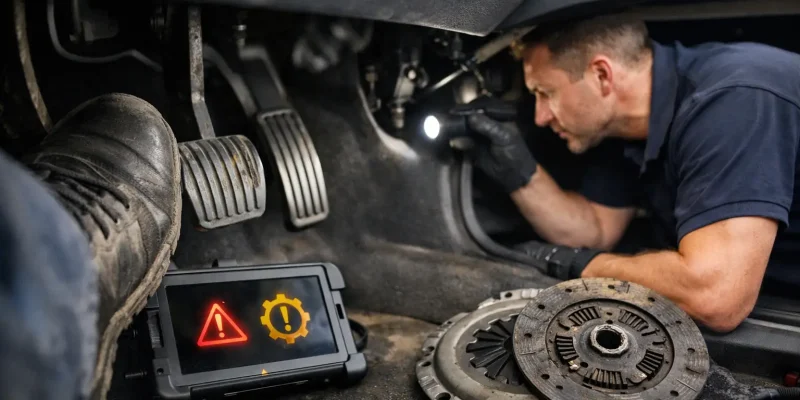
Not every job needs extended diagnostic time. If a brake pad is worn below its safe limit, a tyre is damaged or a clutch is clearly slipping, the repair is usually evident after inspection. The same applies to some battery, exhaust and suspension faults.
The key is proof. A good garage will explain what it has found and show you where possible. That is different from replacing parts based only on an assumption.
If your engine warning light is on, your car has gone into limp mode or it is not starting reliably, do not keep spending money on possibilities. Book diagnostics with a local garage, get a clear answer and repair the fault that is actually there. Same-day slots may be available, so call now for a quote and straightforward advice.


One thought on “Diagnostics or Parts Swapping: Know the Difference”