Why a Stiff Clutch Pedal Needs Checking
A stiff clutch pedal is more than an annoyance in traffic. If you have to push much harder than usual to change gear, or the pedal feels heavy, notchy or slow to return, something in the clutch system needs checking. We often see this issue develop gradually, then become impossible to ignore on the school run, commute or a journey out of town.
In most cases, the cause can be identified with a proper inspection. The key is not to keep forcing the pedal and hoping it will improve. A clutch that is becoming difficult to operate can leave you struggling to select gears or unable to drive the car safely.
What does a stiff clutch pedal usually mean?
Your clutch pedal operates a system that separates the engine from the gearbox so you can select a gear. Depending on the vehicle, that system may use a cable or hydraulic fluid. It also relies on moving parts inside the bell housing, including the release bearing, clutch fork and pressure plate.
A heavier pedal can come from a fault at the pedal itself, in the cable or hydraulic system, or inside the clutch assembly. The exact cause matters because the repair can range from freeing off or replacing an external component to fitting a full clutch kit.
A pedal that has always been slightly firm is not always a problem. Some vehicles simply have a heavier clutch than others. What matters is a change. If it was comfortable last month and now takes real effort, especially in stop-start traffic, it is worth getting it looked at.
Common causes of a stiff clutch pedal
A worn or binding clutch cable
Older cars and some smaller vehicles use a cable between the clutch pedal and the clutch mechanism. Over time, the cable can dry out internally, fray or start binding in its outer sleeve. This makes the pedal feel heavy, rough or uneven through its travel.
You may notice it feels worse in cold or wet weather, or that the biting point changes. A cable can eventually snap without much warning, leaving the pedal on the floor and the car unable to select gears properly. If a cable is the cause, replacement is normally far better than trying to lubricate a worn one and carrying on.
A hydraulic clutch fault
Many modern cars use hydraulic fluid rather than a cable. The clutch master cylinder sits near the pedal, while the slave cylinder operates the clutch at the gearbox. Problems here more often cause a soft pedal, but a sticking cylinder or contaminated fluid can also make the pedal feel unusually firm or inconsistent.
Look for changes in pedal travel, difficulty selecting first or reverse, or fluid around the pedal area or gearbox. In some cars, the clutch shares a fluid reservoir with the brakes, so a low level needs taking seriously. Do not top it up and assume the problem is solved. Fluid only disappears because there is a leak or another fault that needs finding.
A worn release bearing or clutch fork
The release bearing presses against the pressure plate when you depress the clutch. If that bearing wears, sticks or begins to break down, the pedal can become heavy or feel rough. You may also hear a whirring, squealing or rumbling noise when the clutch pedal is pressed.
The clutch fork is another moving part that can wear or bind. These faults usually require the gearbox to be removed for a proper repair, as the parts sit inside the bell housing. Where labour is needed to reach the clutch, it often makes sense to assess the condition of the full clutch kit at the same time. That is not upselling – it avoids paying for the same major labour twice if the friction plate or pressure plate is close to worn out.
A failing pressure plate
The pressure plate provides the clamping force that transfers drive from the engine to the gearbox. Its diaphragm spring is also what you are working against with your foot. If it becomes damaged or worn, the pedal may become noticeably heavier.
This can happen alongside clutch slip, a high biting point, judder when moving away, or gears that are difficult to engage. However, not every heavy pedal means the clutch has worn out. A proper diagnosis should confirm the fault before any parts are quoted for.
Pedal pivot or floor mat obstruction
Sometimes the problem is simpler. A worn pedal pivot, damaged spring or debris around the pedal can make it feel stiff. A loose floor mat can also get trapped behind or under the pedal, stopping it from travelling freely.
Check that the mat is correctly secured and nothing is obstructing the pedals. If the pedal still feels wrong, do not spray lubricants around blindly. Modern pedal assemblies can include switches and sensors, and excess lubricant can create another problem.
Signs that you should stop driving and arrange help
A heavy pedal does not always mean you need to stop immediately, but it should not be ignored. The risk increases if the stiffness comes with trouble changing gear, noises, a burning smell or a pedal that does not return normally.
Arrange an inspection promptly if first gear or reverse is difficult to select, the car creeps forward with the clutch fully pressed, the pedal sticks part-way down, or you hear a noise every time you press it. These are signs that the clutch may not be disengaging fully.
If you cannot press the pedal enough to select a gear safely, or it stays on the floor, do not try to force the car home. Continuing can damage the gearbox or leave you stranded at a junction. Recovery or transport assistance is the safer option in that situation.
Why forcing a stiff clutch pedal can make matters worse
Drivers often adapt without realising it. They press harder, change gear more slowly or keep trying until a reluctant gear engages. That can put extra strain on the clutch linkage and gearbox synchronisers, the components that help gears engage smoothly.
Forcing reverse or first gear is particularly common when a clutch is dragging. You may hear a crunch as the gear engages. One occasional crunch does not automatically mean serious gearbox damage, but repeated grinding is not something to live with.
Avoid resting your foot on the clutch pedal too. Even light pressure can keep the release bearing under load and add wear over time. Use the footrest once you are moving, then fully press the clutch only when changing gear.
How we diagnose a heavy clutch pedal
The right repair starts with working out whether the fault is external or inside the clutch. At AutoFix4u, we begin by asking what has changed: when the pedal became stiff, whether gears are difficult to select, and whether there are any noises or warning signs.
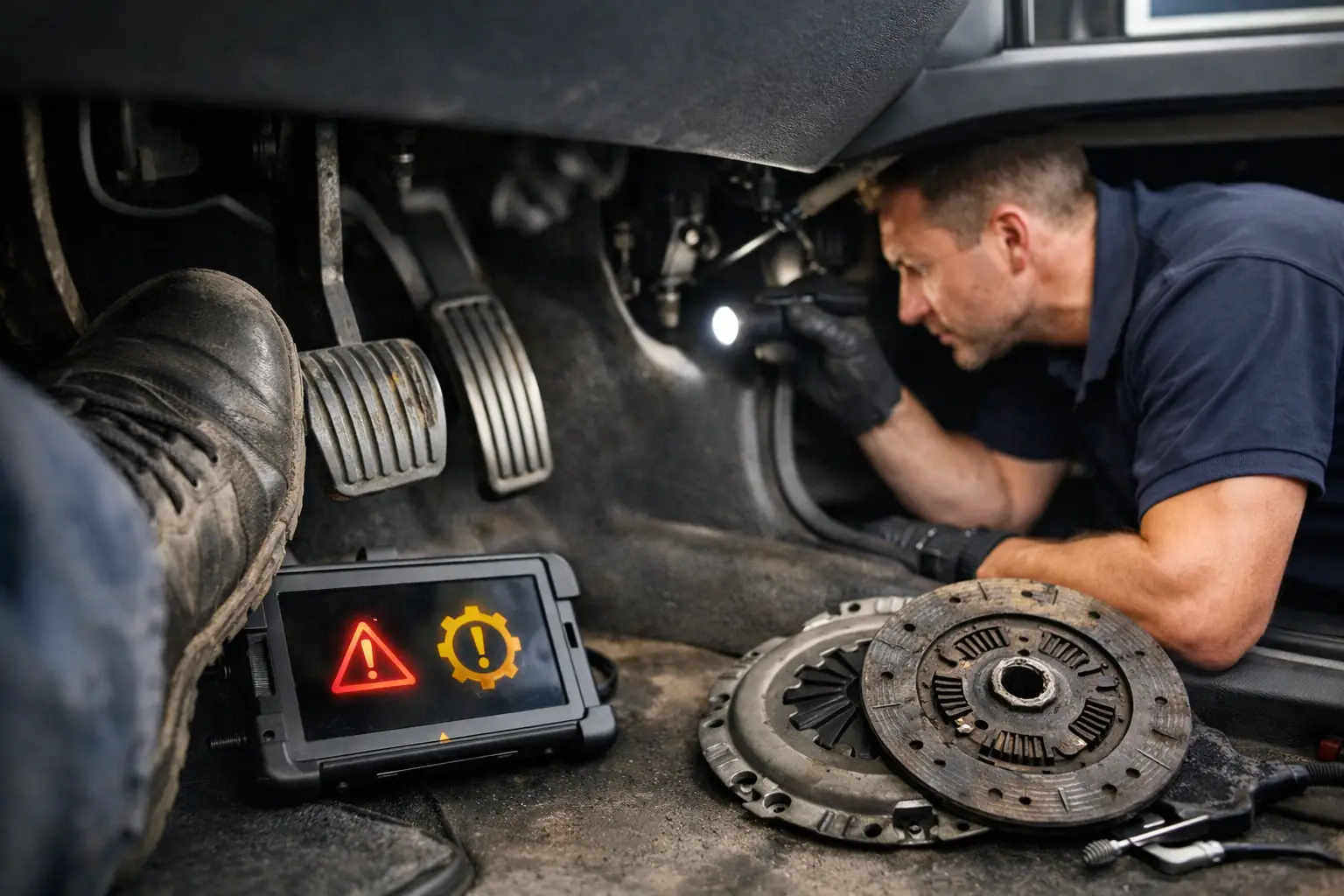
We then inspect the pedal movement, pivot area, fluid level and visible hydraulic components. On cable-operated systems, we check the cable condition and operation. A road test may help us assess the biting point, clutch slip and how the gears select, provided the car is safe to drive.
If the signs point to an internal clutch fault, we will explain why gearbox removal may be needed and what parts should be inspected once access is gained. You should receive a clear repair plan before work goes ahead, with no surprise extras added halfway through.
Can a stiff clutch pedal be repaired without replacing the clutch?
Sometimes, yes. A worn cable, sticking pedal mechanism, faulty master cylinder or slave cylinder can often be repaired without a complete clutch replacement. This is why diagnosis first is so important.
If the pressure plate, release bearing or clutch fork is at fault, the gearbox usually has to come out. In that case, fitting a quality clutch kit can be the sensible long-term repair. It depends on the vehicle, mileage, the condition of the existing parts and what we find during inspection.
The cheapest-looking option is not always the best value if it leaves an old, worn component behind that fails soon after. We will explain the options in plain English so you can make a decision based on the actual condition of your car.
Book a clutch check before it leaves you stuck
A clutch pedal should feel predictable every time you drive. If yours has become stiff, heavy or difficult to use, book a clutch inspection before a routine journey turns into a breakdown. Drivers in Lowestoft and the surrounding area can contact AutoFix4u for clear advice, transparent pricing and a practical repair plan. Same-day slots may be available, so call now or get a quote and let us find the cause properly.