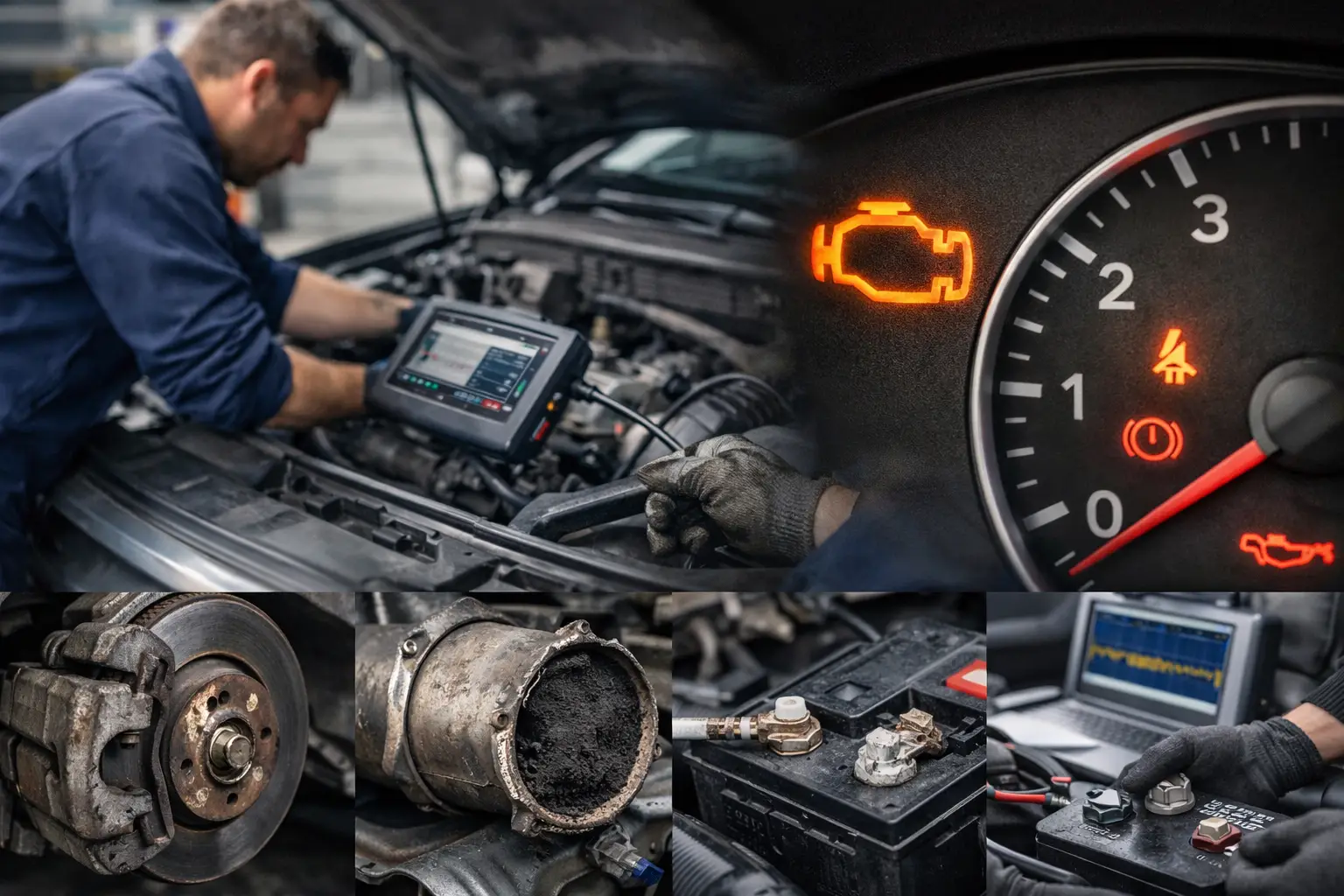
Engine Management Light Guide for Drivers
One of the most common calls we get is from drivers who have started the car, seen a warning light stay on, and are not sure whether they can keep driving. This engine management light guide is here to give you a straight answer. In most cases, the light means the car has detected a fault in the engine, emissions system or related electronics. Sometimes it is minor. Sometimes it is the first sign of a bigger problem.
The first thing to look at is how the light is behaving. If it is on steadily and the car still feels normal, you can usually drive carefully for a short time and get it checked as soon as possible. If it is flashing, that is more urgent. A flashing engine warning light often means a misfire serious enough to damage the catalytic converter, so it is best to stop driving and arrange help.
What the engine management light usually means
The engine management light comes on when the car’s control unit picks up a fault outside its normal operating range. That fault could be with fuel delivery, ignition, airflow, exhaust emissions or one of the sensors that monitor the system.
We often see this issue when a sensor starts giving the wrong reading, a coil pack fails, or the engine is not burning fuel properly. You might also notice the car feels sluggish, idles unevenly, uses more fuel than normal or drops into limp mode. In some cases, the light comes on before the driver notices any change at all.
That is why guessing rarely helps. The warning light only tells you that a fault has been stored. It does not tell you which part needs replacing. Proper diagnostics are what turn that warning into a real answer.
Engine management light guide – steady light or flashing light?
A steady light and a flashing light are not the same thing.
A steady light usually means the car has detected a fault that still needs attention, but it may not be critical at that exact moment. Common causes include a faulty oxygen sensor, airflow issue, EGR problem, weak ignition component or a developing emissions fault. The car may still drive, but leaving it too long can turn a smaller repair into a larger one.
A flashing light usually means the engine is misfiring badly enough to risk further damage. Unburnt fuel can overheat and damage the catalytic converter, which is a much more expensive repair than dealing with the original fault early. If the light is flashing and the car is shaking, struggling or lacking power, stop using it and get it inspected.
It also matters what other symptoms come with the light. If you have loss of power, smoke, rough running, stalling or difficulty starting, that points to a fault that should be checked quickly. If the vehicle has gone into limp mode, the system is trying to protect itself.
Common causes we see in the workshop
There is no single cause behind an engine warning light. Some faults are simple. Others need more time to trace properly.
Misfires are one of the most common. This usually happens because of worn spark plugs, failed ignition coils, injector problems or poor fuel combustion. The driver often notices a shaking engine, hesitation or poor acceleration.
Sensor faults are also common. Modern cars rely on sensors to control fuel mixture, emissions and performance. If one starts reading incorrectly, the car can run badly even if the actual mechanical parts are still sound. Airflow sensors, oxygen sensors and coolant temperature sensors are regular offenders.
We also often see DPF and EGR related faults on diesel vehicles, especially if the car mainly does short journeys. The filter may not get hot enough to regenerate properly, and soot builds up over time. That can trigger the engine management light, reduced power and sometimes multiple warning lights together.
Vacuum leaks, split hoses and air intake issues can do the same. They are easy to overlook because they are not always obvious without testing. In other cases, the fault is electrical – damaged wiring, a poor connection or a failing component somewhere in the system.
What to do when the warning light comes on
Stay calm first. Panic leads to guesswork, and guesswork usually wastes time and money.
If the light appears and the car still feels normal, avoid hard acceleration, long trips and heavy loads until it is checked. Keep an eye on temperature, power and any unusual noises. If the light starts flashing, or the car begins running badly, stop driving when it is safe to do so.
A lot of drivers ask if disconnecting the battery or using a cheap scan tool will solve it. Usually, no. Clearing the code without fixing the cause often means the light comes back, sometimes the same day. Cheap code readers can also give a fault description that sounds definite when it is really only pointing to the affected system. For example, a sensor code does not always mean the sensor itself is faulty. It may be reacting to another problem.
That is why a proper diagnostic check matters. The stored fault codes are only the starting point. Live data, testing and experience are what tell you what has actually failed.
Can you keep driving with the engine warning light on?
It depends on how the car is behaving.
If the light is steady and the vehicle feels normal, you can usually drive it short distances with care until it is booked in. That said, putting it off is risky. A small misfire, fuelling issue or emissions fault can get worse quickly. It can also affect fuel economy and make the car harder to pass at MOT time.
If the light is flashing, if the car is juddering, or if there is clear loss of power, do not keep pushing on. The repair bill tends to rise when damaged components are ignored. We often see cars come in where the original fault would have been straightforward, but continued driving has led to a failed catalytic converter, blocked DPF or further ignition damage.
When in doubt, the safest option is to stop and ask for advice.
Why diagnostics matter more than replacing parts
This is where many people lose money. They replace the part named by an online forum, the warning light stays on, and the actual fault is still there.
A proper diagnostic process follows a simple path. Find the stored fault codes, check live readings, inspect the likely causes, confirm the fault, then repair it. That avoids replacing good parts and missing the real problem.
For example, a lean mixture code could be caused by an intake leak, weak fuel pressure, sensor issue or injector problem. Fitting a new sensor without testing first might do nothing at all. The same applies to EGR, DPF and turbo related faults. Several different issues can trigger similar symptoms.
At a working garage level, the job is not just to turn the warning light off. It is to fix the root cause so the problem stays fixed.
Engine management light guide for diesel and petrol cars
Diesel and petrol cars can both trigger the same warning light, but the causes are often a bit different.
On petrol cars, we commonly look at ignition faults, spark plugs, coil packs, fuelling and emissions sensors. Rough idle, hesitation and poor starting are typical signs.
On diesel cars, DPF issues, EGR faults, boost leaks, injector problems and regeneration failures are more common. This is especially true for drivers doing lots of short trips around town. The car may feel flat, go into limp mode or show extra warning messages alongside the engine light.
Hybrid systems can add another layer as well, depending on the make and model. That is another reason not to assume all warning lights mean the same thing across every vehicle.
When to book it in
If the engine management light has come on once and stayed on, book diagnostics soon. If it comes on and off, book it in anyway. Intermittent faults can be harder to catch later, and they still point to something that is not right.
If the car is losing power, running unevenly, struggling to start or using more fuel, do not wait for it to sort itself out. It usually will not. The sooner the fault is checked, the better the chance of a faster and simpler repair.
For drivers around Lowestoft, Oulton Broad, Carlton Colville, Beccles and nearby areas, this is the kind of problem best dealt with early. Same-day diagnostic slots are often the difference between a manageable repair and a breakdown at the side of the road.
If you are not sure whether it is safe to drive, call and ask. A clear answer is better than hoping for the best.
The engine warning light is not there to scare you. It is there to give you an early chance to fix something before it turns into a bigger job. If your car is showing the light, get it checked properly, get a clear repair plan, and get back on the road with confidence.


5 thoughts on “Engine Management Light Guide for Drivers”