
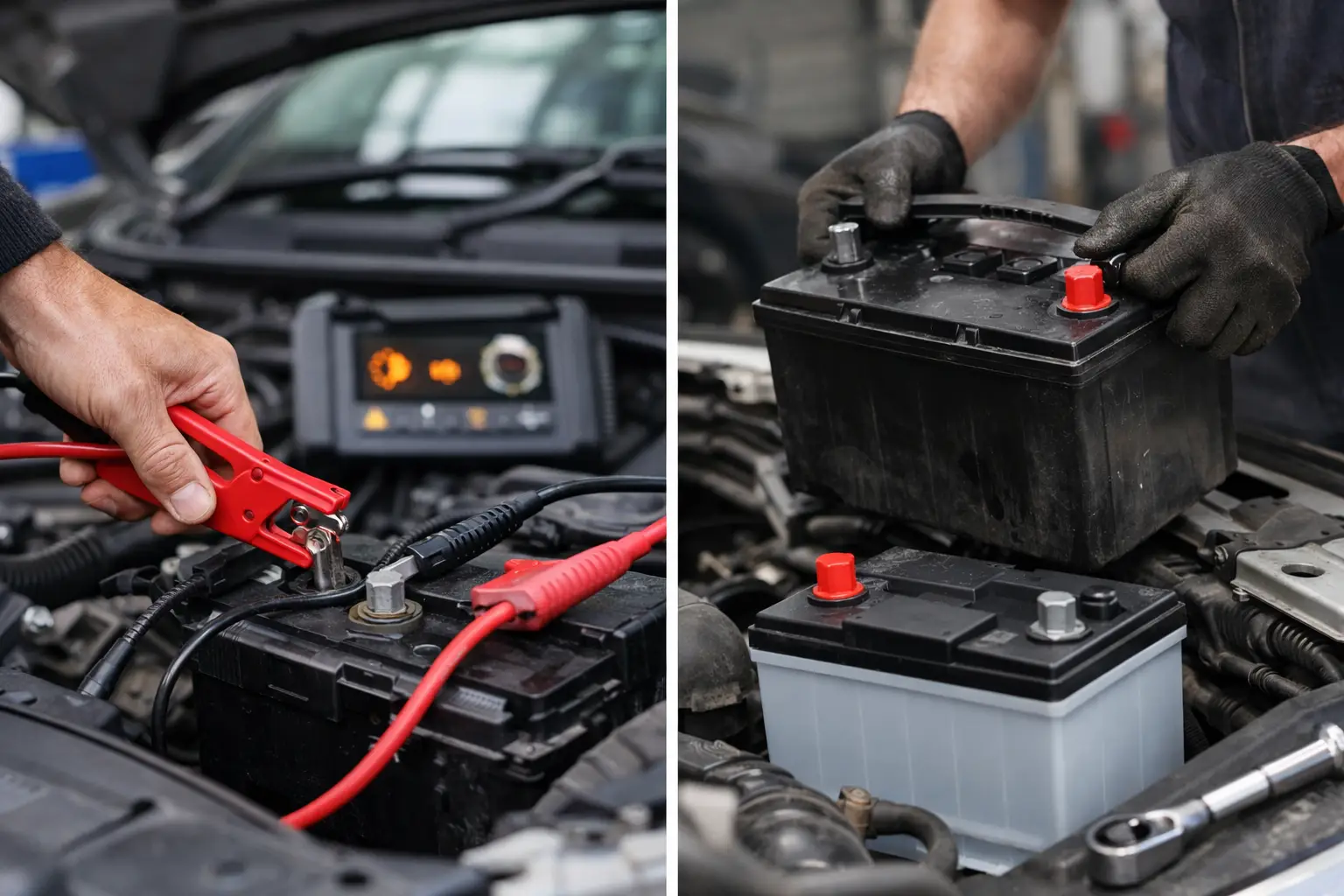
Battery Jump Start vs Replacement
You turn the key, press the start button, and get nothing but a slow crank or a clicking sound. That is usually the point where people ask the same question: battery jump start vs replacement – which one do I actually need?
In most cases, a jump start is a short-term fix. It gets the car running again, but it does not tell you why the battery went flat in the first place. Sometimes the battery is still serviceable and just needs charging properly. Other times, the battery has reached the end of its life and replacing it is the only reliable answer.
Battery jump start vs replacement – what is the difference?
A jump start gives the battery enough power to start the engine. It does not repair the battery. It simply helps the car start by using power from another source, such as a jump pack or another vehicle.
A replacement means the old battery is removed and a new one is fitted. That is the right fix when the battery can no longer hold charge properly, has an internal fault, or has deteriorated with age.
We often see this issue when a car has been left standing, the weather has turned cold, or there is an underlying electrical drain. The problem is that the symptoms can look very similar at first. A flat battery and a failed battery can both leave you stranded.
When a jump start is usually enough
A jump start can be enough if the battery has gone flat for a clear reason and the battery itself is still in decent condition. For example, you may have left the interior light on overnight, not shut a door fully, or not driven the car much over the last week or two.
If the battery was healthy before it went flat, a jump start may get you going without needing an immediate replacement. That said, it should still be checked. A battery that has gone fully flat can suffer damage, especially if it is not the first time.
Another common situation is cold weather. Batteries often struggle more in winter because low temperatures reduce their performance. A battery that starts the car fine in autumn may begin to fail on a frosty morning. In some cases, it only needs charging and testing. In others, the cold weather simply exposes that the battery was already weak.
A jump start is also useful in an urgent situation when you need to get home, get to work, or move the car safely. It solves the immediate problem. It should not be treated as proof that everything is fine.
When replacement is the better option
If the car keeps needing a jump start, the battery is telling you something. A healthy battery should hold charge and restart the vehicle without regular help.
This usually happens because the battery plates have worn out over time, the battery is no longer accepting charge properly, or there is an internal failure. In most cases, if the battery is several years old and repeatedly going flat, replacing it is the more sensible option.
There are a few signs that point towards replacement rather than another jump start. The engine may crank slowly even after a decent run. The battery warning light may appear. Electrical systems may behave oddly, with dim lights, weak blower motor performance, or dashboard messages appearing during start-up.
Sometimes the battery casing also gives clues. If it is swollen, leaking, or corroded heavily around the terminals, it needs attention straight away. At that point, fitting a new battery is not just about convenience. It is about safety and reliability.
The real problem might not be the battery
This is where proper diagnosis matters. Not every non-start issue is a bad battery.
We often see customers assume they need a new battery, when the real fault is elsewhere. The alternator may not be charging the battery correctly. There may be a parasitic drain, which means something is pulling power while the car is switched off. A starter motor fault can also sound like a battery problem at first.
This is why replacing the battery without checking the rest of the system can waste time and money. If the alternator is weak, a new battery will also go flat. If there is an electrical drain, the same thing happens again a day or two later.
A good garage should check battery condition, charging output, and whether there is any unusual battery drain before recommending parts. That is the difference between fixing the symptom and fixing the cause.
How long should a car battery last?
Most car batteries last somewhere around three to five years, but there is no exact rule. It depends on driving habits, weather, the type of vehicle, and how much electrical demand the car has.
Short trips are hard on batteries because the engine uses a lot of power to start, then the car may not run long enough to recharge it fully. Modern cars also place more demand on batteries because they have more electronics, stop-start systems, heated screens, and other features drawing power.
If your battery is already four or five years old and the car has started struggling, replacement is often the safer choice. You might get a bit more life out of it with a charge, but the question is whether you want to risk the next no-start happening at the school run, on the drive before work, or in a car park late at night.
What to do after a jump start
If your car starts after a jump start, do not assume the problem has gone away. The next step matters.
Drive the car for a reasonable period, not just a couple of minutes, and then have the battery and charging system tested. A short run around town is often not enough to restore a deeply discharged battery. If the battery went completely flat, it may need a proper recharge with the right equipment rather than relying on the alternator alone.
Also pay attention to what happens next. If it starts normally over the next few days, the battery may simply have been discharged accidentally. If it struggles again, there is probably an underlying issue that needs sorting before it leaves you stuck somewhere more inconvenient.
Battery jump start vs replacement for older cars and newer cars
Older cars are usually more straightforward. If the battery has failed, fitting a new one is often a simple job. Newer vehicles can be a bit more involved.
Many modern cars use battery management systems and stop-start technology. These systems monitor battery condition and charging behaviour. In some vehicles, the replacement battery needs to be matched correctly and, in certain cases, registered to the car. If that is missed, the new battery may not perform as it should.
That does not mean every newer car battery replacement is complicated, but it does mean guessing is not ideal. The right battery type matters, and so does fitting it properly.
How to decide what you need
If this has happened once after lights were left on, a jump start and battery test may be enough. If the battery is old, the car has needed more than one boost, or the starting problem keeps returning, replacement is usually the more dependable route.
The key thing is not to rely on guesswork. The same symptom can come from several different faults. A quick check can often tell whether the battery is weak, completely failed, or only gone flat because of another issue.
For drivers around Lowestoft, this is usually about keeping life moving. You need the car to start in the morning and get you where you need to be without hassle. That is why the best answer to battery jump start vs replacement is not just about getting the engine running once. It is about making sure it starts again tomorrow.
If your car will not start, keeps going flat, or you are not sure whether the battery is the real problem, get it checked properly. At AutoFix4u, we look at the cause first, explain it in plain English, and give you a clear next step with no surprise extras. Same-day slots may be available, and a quick call can save a lot of guesswork.
A flat battery is frustrating, but it is usually very fixable once the real cause is found.