Uneven Tyre Wear Causes You Should Check
You might first notice uneven tyre wear when checking pressures, washing the car or being told about it at an MOT. One edge of the tyre can look almost bald while the rest still has plenty of tread. That is rarely just bad luck. It usually means something needs attention before the tyre becomes unsafe, the car starts handling badly, or you end up replacing tyres sooner than expected.
A tyre wears evenly when it sits flat on the road, has the right pressure and the suspension keeps the wheel in the correct position. When one of those things changes, the wear pattern gives us useful clues. The key is to find and fix the cause, not simply fit another tyre and hope for the best.
Why uneven tyre wear needs dealing with
Tyres are your car’s only contact with the road. If the inner edge is worn down, for example, it can be difficult to spot until the tyre is removed or the steering is turned fully. By then, the tyre may be close to the legal limit even though it looks acceptable from the outside.
Uneven wear can affect grip in heavy rain, braking distance and steering stability. It may also cause a vibration through the steering wheel, a pulling sensation, or extra road noise. In some cases, it is an early warning that a suspension or steering component is worn.
If the tread is below the legal minimum of 1.6mm across the central three-quarters of the tyre, around its full circumference, the car can fail its MOT. A tyre with exposed cords, a deep cut or a bulge should not be driven on. That needs sorting straight away.
Common causes of uneven tyre wear
The shape and position of the wear matters. We often inspect all four tyres because comparing them helps narrow down the fault quickly.
Wheel alignment is out
Wheel alignment is one of the most common causes. The wheels may still look straight when you stand in front of the car, but small angle changes can make a big difference over time. A pothole strike, clipping a kerb or worn suspension parts can all knock alignment out.
Wear on the inner or outer shoulder is often linked to alignment. You may also find the vehicle drifts to one side on a level road, or the steering wheel sits off-centre when driving straight. Alignment adjustment can prevent a new tyre from wearing in exactly the same place, but it should only be done after any worn parts are identified.
Incorrect tyre pressures
Tyre pressure changes how the tread meets the road. An over-inflated tyre tends to wear more through the centre. An under-inflated tyre often wears the outer edges and can make the car feel less precise in corners.
Pressure can drop gradually, so a tyre does not have to look visibly flat to be running low. Cold weather, a slow puncture, a damaged valve or simply missing regular checks can all be behind it. Check pressures when the tyres are cold and use the figures on your car’s door sticker or handbook, not the maximum pressure printed on the tyre sidewall.
Worn suspension or steering components
A knock over bumps and tyre wear appearing together should never be ignored. Components such as shock absorbers, springs, suspension bushes, ball joints and track rod ends all help hold the wheels where they should be. Once a part develops play or loses control, the tyre can scrub against the road instead of rolling cleanly.
A worn shock absorber can create a patchy, cupped or scalloped wear pattern. You may feel the car bounce more after a speed hump or notice that it feels unsettled on rough roads. Worn joints or bushes can alter wheel angles as the car moves, so the problem may not be obvious during a quick visual check at home.
Damaged or distorted wheels
Potholes around Lowestoft and the surrounding area can cause more than a bang through the cabin. A hard impact can bend a wheel, damage a tyre internally or disturb the alignment. Sometimes the first sign is a vibration at certain speeds. Other times, the tyre begins wearing in patches.
Wheel balancing is worth checking if you feel a vibration through the steering wheel, particularly at motorway speeds. Balancing does not correct alignment or worn suspension, but it does ensure the wheel and tyre rotate smoothly. The correct repair depends on what the inspection finds.
Tyres that are mismatched or wrongly fitted
Different tyre types, sizes or tread depths across the same axle can affect how a car behaves and wears its tyres. Directional tyres must rotate in the right direction, while some tyres have an inside and outside face that must be fitted correctly.
Tyre rotation can help spread wear on some cars, but it is not a cure for a fault. It also depends on the tyre type and the vehicle manufacturer’s guidance. If a tyre has already worn heavily on one edge, moving it to another corner will not make it safe again.
What the wear pattern can tell you
There is no substitute for an inspection, but these common patterns are useful signs:
- Inner-edge wear often points to alignment settings or suspension wear.
- Outer-edge wear can be caused by low pressure, hard cornering or alignment issues.
- Centre wear is commonly linked to running the tyre over-inflated.
- Wear on both shoulders usually suggests persistent under-inflation.
- Cupped or scalloped patches can indicate weak shock absorbers, wheel imbalance or worn suspension parts.
The same pattern can have more than one cause. For example, outer-edge wear could be pressure-related, but it could also be made worse by the way the car is used. That is why a proper check is better than guessing and replacing parts unnecessarily.
How we find the root cause of uneven tyre wear
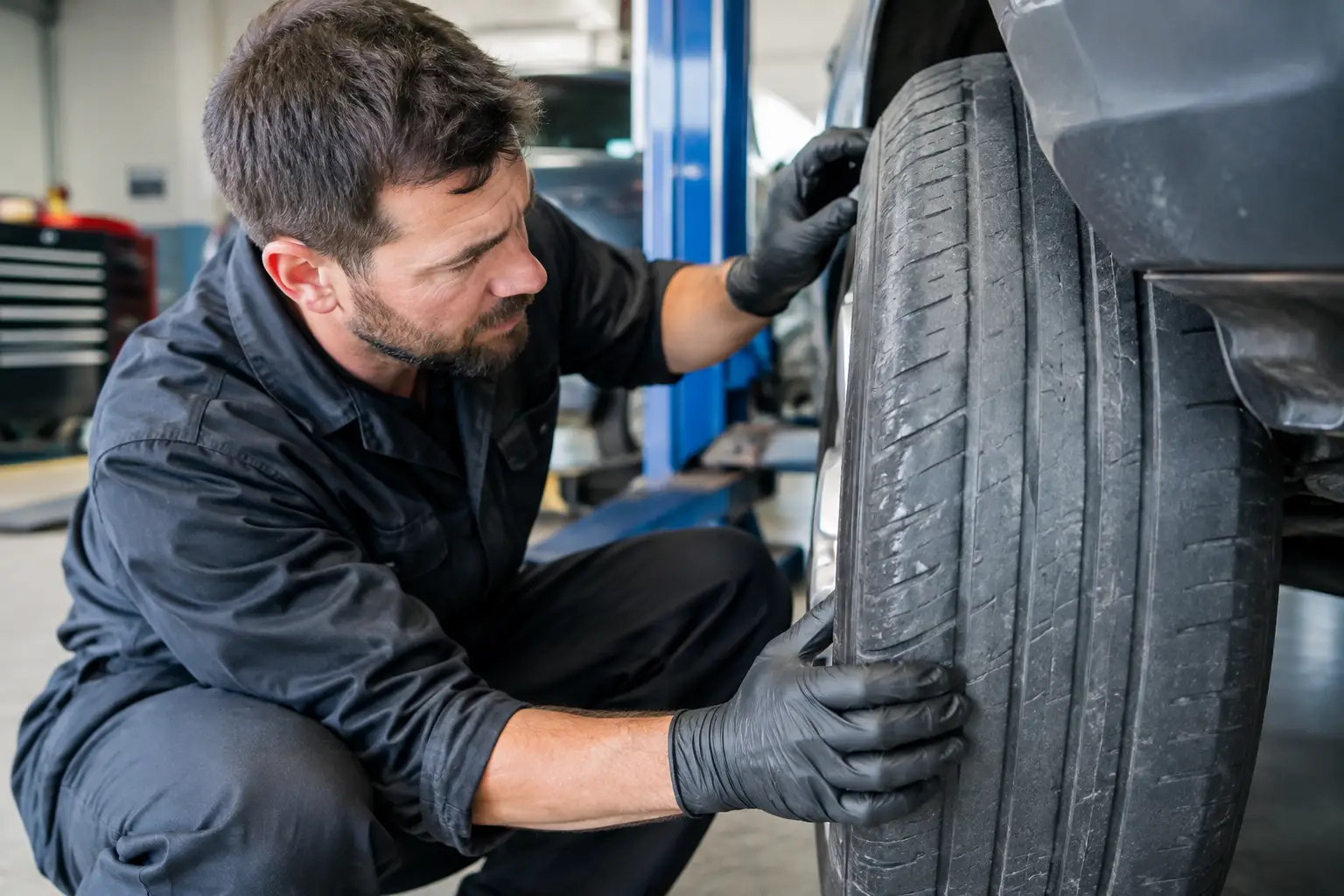
At AutoFix4u, we start by looking at the tyres themselves: tread depth across the full width, tyre pressures, sidewall condition and any signs of impact damage. We then check for play in the steering and suspension, including bushes, joints, springs and shock absorbers.
If the car pulls, the steering wheel is off-centre or the tyre pattern suggests it, alignment should be measured and adjusted. But if a worn ball joint or bush is causing the wheel to move, that part needs repairing first. Otherwise, an alignment setting may not hold and the replacement tyre will wear again.
You should get a clear explanation of what has been found, what needs doing now and what can be monitored. Some issues need urgent attention, such as a tyre worn through to the cords or excessive play in a steering joint. Others may allow time to plan the repair. The condition of the tyre and the fault will decide that.
Can you keep driving with uneven tyre wear?
It depends on how severe it is. Light, early wear with legal tread and no damage may allow you to drive to the garage for an inspection. Keep journeys sensible and avoid putting it off for weeks.
Do not rely on a tyre that has exposed cords, a bulge, deep cracking, very low tread on one edge or a suspected structural fault. If the car is pulling sharply, vibrating badly or making a new knocking noise, arrange a check before regular use. Continuing to drive can turn a straightforward alignment or suspension repair into a tyre replacement as well.
Prevent the problem coming back
A quick monthly tyre check is one of the simplest ways to save money. Check pressures, look across both edges of each tyre and pay attention to any new vibration, pulling or knocking. After a hard pothole impact or kerb strike, it is sensible to have the tyres and alignment checked even if the car still drives normally.
If you have spotted uneven tyre wear, do not wait for the next MOT to tell you how bad it has become. Book an inspection with a local garage, get the cause explained in plain English, and repair the fault before a safe tyre becomes an avoidable problem.