7 Best Reasons to Book Diagnostics
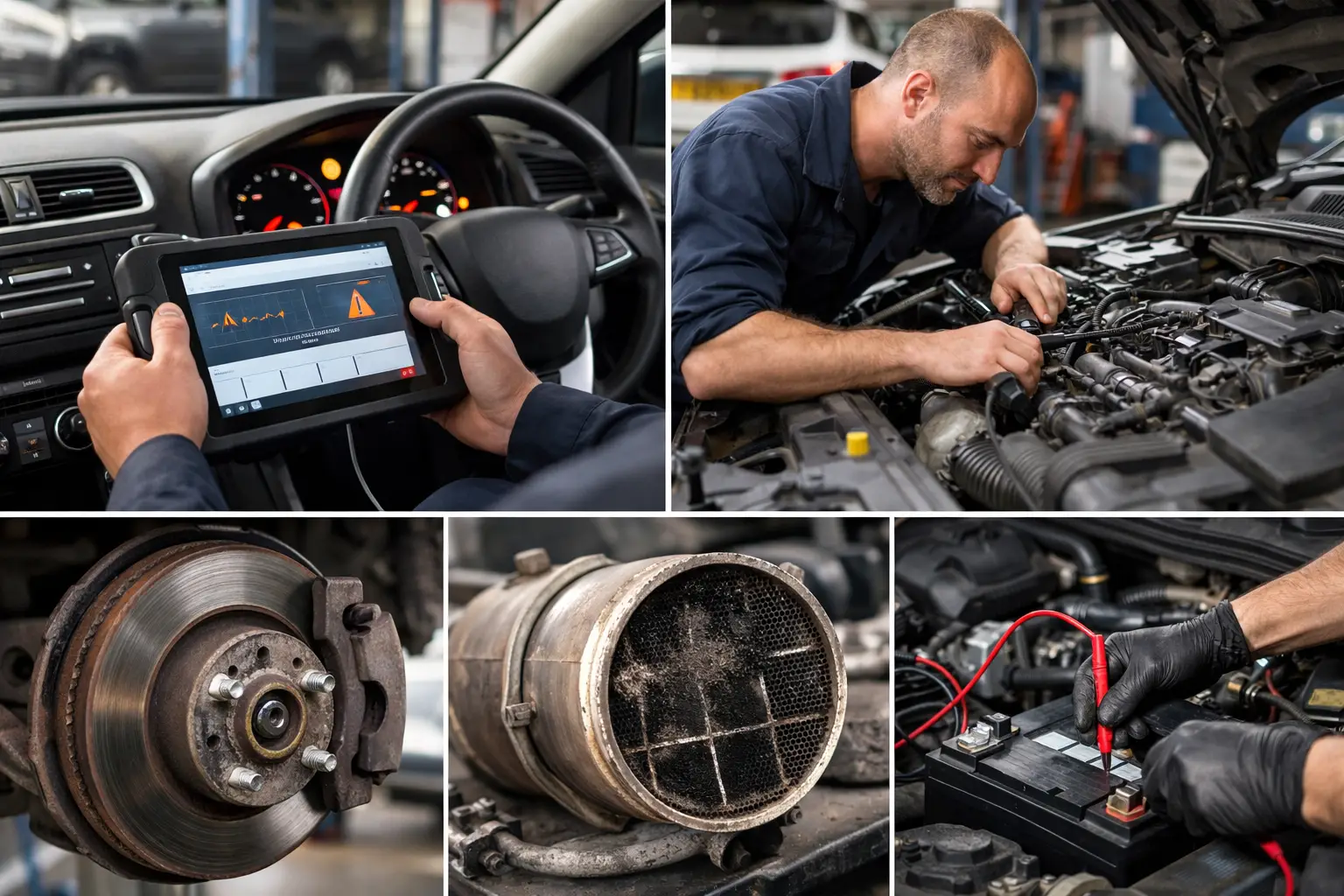
That dashboard light rarely comes on at a convenient time. It usually happens before work, on the school run, or just as you need the car most. One of the best reasons to book diagnostics straight away is simple – guessing costs time, and time usually turns into a bigger repair.
We see this every week with local drivers. A car starts running rough, loses power, struggles to start, or throws up an engine warning light. In most cases, the problem is not what the driver thinks it is. A proper diagnostic check points you to the actual fault, explains what is causing it, and gives you a clear next step instead of trial-and-error repairs.
Why the best reasons to book diagnostics come down to speed
Most people do not book diagnostics because they want a technical report. They book because something feels wrong and they need answers. That might be a warning light, poor fuel economy, a DPF problem, limp mode, or a car that simply does not feel safe to drive.
The main benefit is speed. If the fault is identified properly at the start, the repair can be planned properly too. That means less wasted time replacing the wrong part, fewer return visits, and a better chance of getting the car back on the road quickly.
This matters even more if you rely on one vehicle for work, school runs, caring responsibilities, or daily travel. When your car is your routine, delays are not just annoying. They affect everything else around you.
You stop paying for parts the car did not need
A lot of faults create the same symptoms. Loss of power could be linked to a sensor, a boost leak, a DPF issue, an air intake fault, or something electrical. Juddering could point to ignition, fuelling, clutch problems, or another engine issue. A warning light on its own does not tell the full story.
This is where proper diagnostics save money. Instead of changing parts and hoping for the best, the fault is traced properly. We often see this issue when someone has already spent money elsewhere on a battery, sensor, or valve, only to find the original problem is still there.
In most cases, diagnostics are not an extra cost for the sake of it. They help avoid unnecessary repair costs by narrowing the job down before any work starts.
Best reasons to book diagnostics when warning lights appear
Not every warning light means stop immediately, but none of them should be ignored for long. The engine warning light is a good example. The car may still drive, but that does not mean the issue is minor. Sometimes it is a sensor fault. Sometimes it is early signs of a bigger engine, emissions, or electrical problem.
The same goes for ABS, airbag, DPF, battery, and other system warnings. Modern vehicles rely on control units and sensors to manage how the car runs. When one part of that system starts giving bad information, the vehicle may protect itself by reducing power or changing how it operates.
Booking diagnostics early gives you a clearer picture. You find out whether the fault is urgent, whether it is safe to keep driving for a short time, and what needs doing next. That is far better than waiting for the car to decide for you.
It helps catch faults before a breakdown
A breakdown rarely comes out of nowhere. Usually, the signs were there first. Maybe the car was slower to start in the morning. Maybe it hesitated when accelerating. Maybe the cooling fan stayed on too long, or the fuel consumption got worse, or there was an odd electrical issue that came and went.
These smaller changes are easy to put off because the car is still moving. The problem is that many faults get worse under load, over time, or in bad weather. A weak battery becomes a non-start. A sensor fault becomes limp mode. A blocked DPF becomes a larger emissions issue.
Diagnostics help catch these problems while the repair is often simpler. That does not mean every small fault is urgent, but it does mean you can make a sensible decision before you are stuck at the roadside.
It explains the real cause in plain English
One thing drivers want most is clarity. Not fault codes on a screen. Not vague advice. Just a straight answer about what is wrong, why it has happened, and what it will take to sort it.
That is one of the most practical reasons to book diagnostics. A proper check should not leave you more confused than when you arrived. It should narrow the issue down and explain it in a way that makes sense.
For example, if your car has gone into limp mode, the useful answer is not just that a code has been stored. The useful answer is what caused the car to limit power, whether that points to airflow, turbo pressure, fuelling, emissions, or an electrical fault, and what repair is needed to stop it happening again.
That kind of clarity matters. It helps you decide whether to go ahead now, plan the work, or keep an eye on something minor. It also makes it easier to trust the repair, because you know what you are paying for.
MOT failures often start with unresolved faults
A failed MOT can feel sudden, but many failures build up over time. Warning lights, emissions issues, braking faults, suspension problems, and tyre wear often give clues before test day arrives. The problem is that drivers are busy, and a lot of these issues are easy to miss until the car is on the ramp.
Diagnostics can help before and after an MOT. Before the test, they can pick up issues linked to emissions systems, warning lights, engine management faults, and electrical problems. After a failure, they help identify the exact cause quickly so the repair can be planned without delay.
This is especially useful when the fault is not obvious. If a car fails on emissions, for example, the answer is not always as simple as replacing one part. It may involve a sensor issue, DPF trouble, poor combustion, or another underlying fault. Diagnostics help stop you treating the symptom and missing the real cause.
Modern cars need more than a quick look
Years ago, many faults were easier to spot from sound, feel, and basic inspection alone. That still matters, and hands-on checks are a big part of good workshop practice. But modern vehicles are more complex. Engine management, electrical systems, emissions controls, and safety systems all talk to each other.
That means even a simple symptom can have more than one possible cause. A flat battery might be the battery itself, but it could also be a charging issue, a drain, or another electrical fault. Air conditioning not working may be low gas, but it could also be a pressure sensor, leak, compressor issue, or control fault.
Diagnostics do not replace experience. They work alongside it. The machine gives data, but the real value comes from knowing how to interpret that data properly and match it to the symptoms the car is showing.
It is the right first step for recurring problems
Intermittent faults are some of the most frustrating. The warning light comes on, then disappears. The car cuts power once, then drives normally for days. The fault only shows when cold, in traffic, or on longer runs.
These issues are exactly why diagnostics matter. A recurring problem usually leaves a trail, even if the symptom is not present every minute. Stored fault codes, live readings, and system checks can point towards what is happening and when.
Without that process, recurring faults often lead to repeat visits and guesswork. With it, there is a far better chance of identifying the pattern and fixing the issue properly.
When should you book diagnostics?
If the car has a warning light, loss of power, starting trouble, rough running, poor fuel economy, DPF concerns, or an electrical fault, book it in. The same applies if the vehicle has failed its MOT and the reason is not fully clear, or if something simply feels off when driving.
You do not need to wait until the car stops completely. In most cases, earlier checks mean a clearer plan and fewer surprises. If the problem turns out to be minor, that is useful to know. If it is more serious, you have caught it before it turns into a bigger disruption.
For drivers around Lowestoft and the surrounding area, the aim is straightforward – get the fault identified properly, get a clear repair plan, and get back on the road with no guesswork and no surprise extras. Same-day slots may be available depending on the issue.
If your car is showing signs that something is wrong, the best next step is to get it checked before the fault gets a chance to grow into something more inconvenient.


