
Car Battery Replacement Lowestoft Guide
A flat battery rarely happens at a good time. It is usually first thing in the morning, when you are trying to get to work, do the school run or head out from Lowestoft in a rush. If you are searching for car battery replacement Lowestoft, you probably do not want a long lecture. You want to know why it has happened, whether it is just the battery, and how quickly you can get back on the road.
In most cases, a battery problem starts with small signs people put off for a week or two. The engine turns over more slowly than usual. The lights look dim before the engine starts. Stop-start stops working. You may need a jump start once, then again a few days later. That usually means the battery is weak, but not always. We often see this issue when the real fault is charging related, which is why a proper check matters before any part is fitted.
When you need car battery replacement in Lowestoft
The most obvious sign is simple. The car will not start. You turn the key or press the button and either nothing happens, or you get a slow crank and a clicking sound. That points to low battery power, but the cause can vary.
Sometimes the battery has simply reached the end of its life. Most car batteries last around three to five years, depending on use, weather and the type of driving you do. Short local trips are hard on batteries because the car uses power to start, but may not drive long enough to charge it properly again.
In other cases, the battery has gone flat because something else is wrong. An alternator fault can stop the battery charging while you drive. A parasitic drain can pull power overnight. We also see electrical faults where a light, module or accessory stays on in the background and drains the battery without the driver realising.
That is why replacing the battery without checking the system can be a false economy. If the charging fault is still there, the new battery can go flat as well.
Common battery problems we see
Battery trouble is rarely random. There is normally a reason behind it.
Cold weather is a common trigger. A battery that is already weak often fails as soon as temperatures drop. It may have been coping in mild weather, then one cold morning it no longer has enough power to crank the engine.
Age is another big factor. If the battery is several years old, it is more likely to fail without much warning. Internal wear builds up over time, and once that capacity drops far enough, reliability goes with it.
Driving pattern matters as well. Cars used mainly for short journeys around Lowestoft, Oulton Broad or Carlton Colville tend to suffer more battery issues than cars doing regular longer runs. Heated screens, blowers, lights and infotainment systems all add demand, especially in winter.
We also see battery warning lights caused by charging system faults, not the battery itself. If the warning light is on while driving, that needs checking properly. It may be the alternator, wiring or related components. In that case, fitting a new battery alone will not solve the problem.
Signs the issue might be more than just the battery
If the car needed a jump start and then cuts out again soon after, that can point to poor charging. If electrical systems behave oddly, warning lights appear, or the battery keeps going flat after being charged, there may be an underlying fault.
This is where diagnostics help. A quick battery test is useful, but the bigger picture matters. Voltage, charging rate and current draw all tell us more than guesswork ever will.
Why proper testing matters before battery replacement
A lot of drivers understandably want the quickest answer. If the car will not start, it feels obvious to fit a battery and move on. Sometimes that is exactly the right fix. Sometimes it is not.
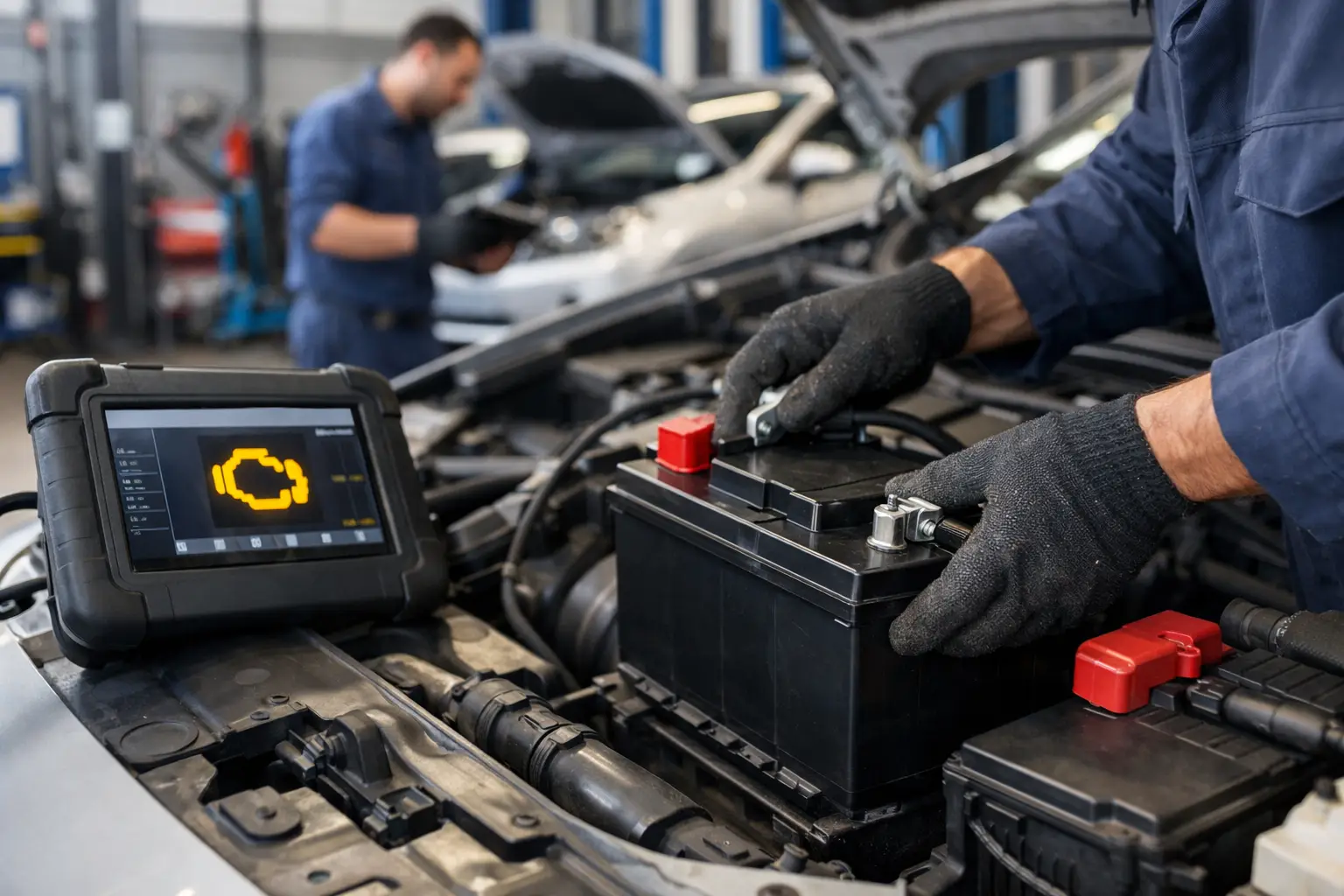
A proper diagnostic-first approach saves time and money in the long run. The battery should be tested for condition and output. The charging system should be checked to make sure the alternator is doing its job. If needed, the car should also be checked for an electrical drain.
This matters even more on modern vehicles. Many newer cars have battery monitoring systems, stop-start functions and sensitive electronics. Fitting the wrong battery type, or skipping battery registration where required, can cause further issues. In some cases, features may not work properly or warning lights may remain on.
That is why a real workshop check is better than guessing in a car park. You want to know the fault has been identified properly.
How car battery replacement Lowestoft drivers choose should work
The process should be straightforward. First, confirm whether the battery has failed or whether another fault is causing the problem. Next, check the correct battery specification for the vehicle. Not every battery suits every car, especially with stop-start systems.
Once the right battery is fitted, the electrical system should be checked again to make sure charging is normal and the car starts as it should. On some vehicles, battery coding or registration may also be needed. That step is often overlooked, but it matters on certain makes and models.
From a customer point of view, the important bit is clarity. You should know what failed, what is being fitted and whether anything else needs attention. No vague advice, no surprise extras.
Can a flat battery be recharged instead?
It depends on why it went flat.
If the battery is healthy and has only discharged because the car has been left standing, a recharge may be enough. That is common if a vehicle has not been used for a while. If the battery tests well afterwards and the charging system is fine, it may still have life left in it.
If the battery is old, weak or fails a load test, recharging it is usually only a short-term fix. It might start the car today and let you down again next week. For someone relying on one main vehicle, that is not worth the risk.
We often tell customers the same thing. If the battery has already started causing repeated trouble, replacement is usually the more reliable option.
What to do if your car will not start
If the car is stuck at home, at work or in a car park, start with the basics. Check whether the dashboard lights come on. Listen for clicking, slow cranking or complete silence. If you have recently had to jump start it, mention that when you call. It helps narrow the fault down faster.
Do not keep trying the ignition over and over. That can flatten the battery further and, in some cases, add stress to the starter motor. If the vehicle starts with a jump but you are unsure whether it will restart, it is better to get it checked properly rather than hope for the best.
For local drivers in and around Lowestoft, a quick response matters. If you need a jump start, recovery support or battery checks, say exactly what the car is doing. Clear symptoms usually lead to a quicker diagnosis.
Choosing a local garage for battery problems
Battery issues look simple from the outside, but they can be tied to wider electrical faults. That is why it helps to use a local garage that does more than just swap parts.
A proper workshop should be able to test the battery, check the alternator, look for drains and explain the result in plain English. You should not be left guessing whether the issue is fixed. You also want the right battery fitted for the car, especially if it has stop-start technology or higher electrical demand.
AutoFix4u handles battery faults the same way as any other repair – find the cause first, explain it clearly, then fix it properly using quality parts. That approach matters when your car is something you depend on every day.
Preventing the next battery failure
No battery lasts forever, but a few habits can help. If you mainly do short trips, try to give the car a longer run now and then. If the battery is already several years old and showing signs of weakness, deal with it before winter. If warning lights appear or the car starts unusually slowly, do not wait for a full breakdown.
Most battery failures give some warning. The problem is that people are busy and keep putting it off until the day the car will not start at all.
If your vehicle is struggling to start, keeps needing a jump start or has a battery warning light on, get it checked before it leaves you stranded. Call now, get a quote and book a proper inspection. A clear answer today is better than a non-start tomorrow.


One thought on “Car Battery Replacement Lowestoft Guide”