How to Check Coolant Level Safely in Your Car
A low coolant warning can turn an ordinary journey into an expensive engine problem. However, a quick check may help you spot trouble before your vehicle overheats.
Knowing how to check coolant level is an important part of vehicle maintenance. You can often inspect the level yourself, provided the engine is completely cold.
Never remove a coolant cap from a hot engine. The cooling system operates under pressure. Hot coolant can escape suddenly and cause serious burns.
At AutoFix4u Garage Lowestoft, we help drivers investigate coolant leaks, overheating and related engine faults. This guide explains the safe checks, warning signs and when to contact a garage.
How to check coolant level when the engine is cold
Checking your coolant level usually takes only a few minutes. However, you must follow the correct safety procedure.
Step 1: Park on level ground
First, park your vehicle on a flat surface.
Switch off the engine and allow it to cool completely.
Ideally, check the coolant before your first journey of the day.
If you have recently driven, the engine may remain hot for several hours. Therefore, never assume the cooling system is safe to open simply because the bonnet feels cool.
Step 2: Locate the coolant expansion tank
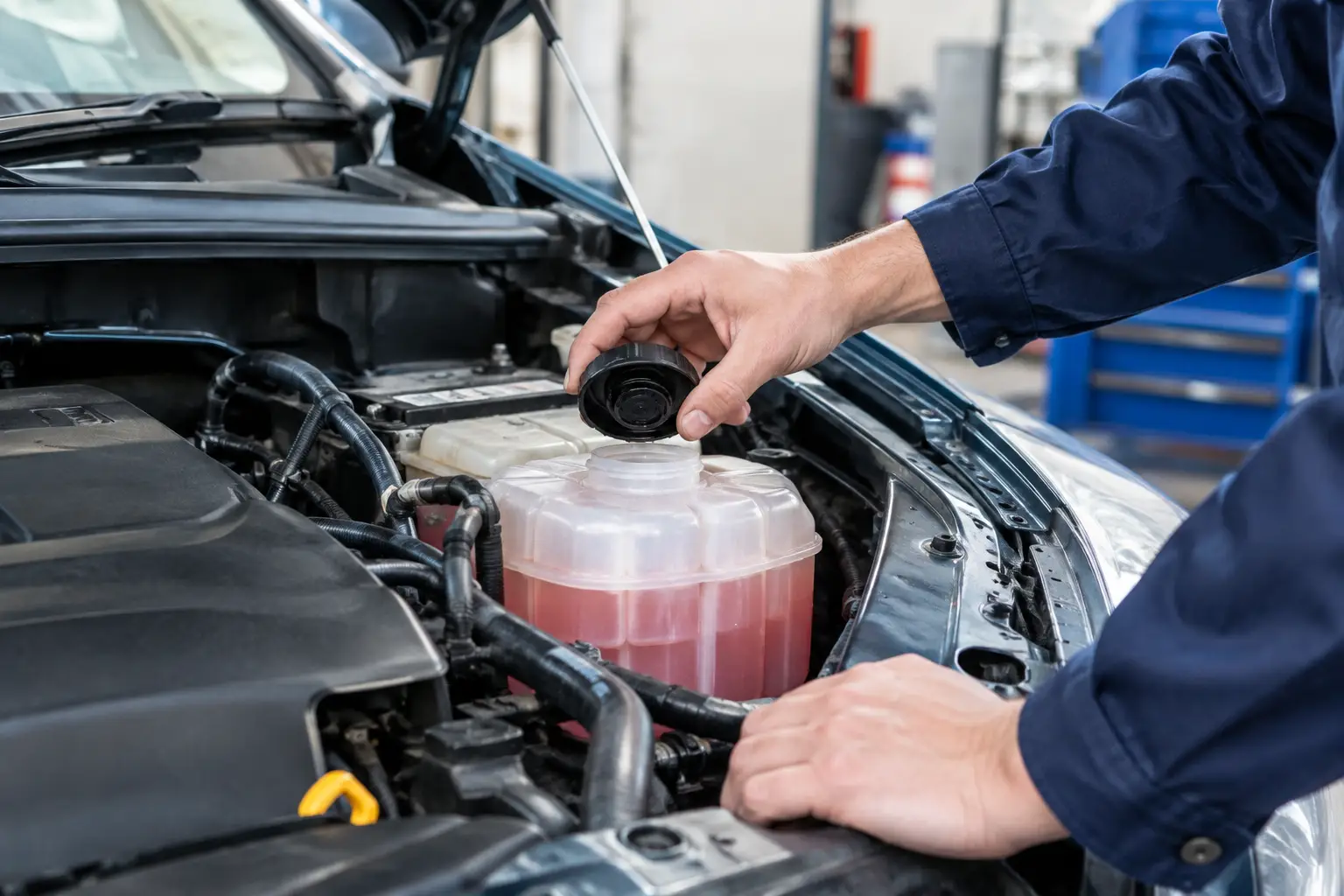
Next, open the bonnet and find the coolant expansion tank.
Most modern vehicles use a translucent plastic container. It may have a black, blue or yellow cap.
Look for coolant markings or a warning symbol.
However, do not confuse the coolant tank with the windscreen washer reservoir.
If you cannot identify the correct container, check your vehicle handbook.
Step 3: Find the MIN and MAX marks
Most expansion tanks have minimum and maximum level markings.
These indicate the recommended coolant range under the manufacturer’s specified checking conditions.
When the engine is completely cold, inspect the liquid level through the tank.
You should normally see the coolant between the marked limits.
However, always follow the specific instructions for your vehicle.
Step 4: Check the coolant level
Look carefully at the tank without removing the cap.
If the level sits within the recommended range, it usually needs no immediate adjustment.
However, a reading below MIN deserves attention.
Some tanks have unclear markings or darkened plastic. In that case, you may need a torch to see the level.
Do not guess if you cannot confirm the reading.
Step 5: Check for warning signs
While the engine remains cold, look for obvious signs of coolant loss.
For example:
- Damp areas around coolant hoses.
- Coloured residue near connections.
- Cracks in the expansion tank.
- Puddles beneath the vehicle.
- A coolant level that keeps falling.
However, do not touch moving engine components or place your hands near cooling fans.
Electric fans can operate unexpectedly.
What should the coolant level be?
The correct level depends on the vehicle’s cooling system.
Most cars use an expansion tank with MIN and MAX markings.
Under the correct checking conditions, the coolant should normally remain within this range.
Coolant level near MAX
A level near the maximum mark may be normal when the engine is cold.
However, do not add more coolant simply to fill the tank completely.
Coolant expands as the engine warms up.
Overfilling can cause problems.
Coolant level near MIN
A level near the minimum mark is not always an emergency.
However, check the manufacturer’s guidance.
Also, monitor the level for changes.
If the coolant continues dropping, arrange an inspection.
Coolant level below MIN
A low reading can indicate coolant loss.
Therefore, identify the correct procedure before adding fluid.
If the expansion tank appears empty, the vehicle has overheated or a warning remains active, do not rely on a simple top-up.
Seek professional advice before driving.
Why does your car need coolant?
Your engine produces heat while running.
The cooling system helps control that temperature.
Coolant moves through the engine and transfers heat towards the radiator.
The radiator then helps release heat into the surrounding air.
In addition, suitable coolant protects cooling system components against corrosion and freezing.
However, coolant cannot do its job properly if the system loses too much fluid.
As a result, the engine may overheat.
Why does the coolant level keep dropping?
A small change in the visible level can occur as coolant temperature changes.
However, repeated loss needs investigation.
A properly functioning cooling system should not require regular top-ups.
Leaking coolant hoses
Rubber hoses carry coolant between the engine, radiator and other components.
Over time, heat and vibration can affect them.
For example, an ageing hose may develop a small crack.
The leak may only appear once the system reaches operating pressure.
Damaged radiator
The radiator helps remove engine heat.
However, corrosion, age and road debris can damage it.
A small leak may leave coloured stains or damp areas near the front of the vehicle.
Faulty expansion tank or cap
The expansion tank helps manage coolant expansion.
Its plastic housing or connections can develop cracks.
In addition, a faulty pressure cap may allow coolant to escape.
A mechanic should check the relevant parts before recommending replacement.
Leaking water pump
The water pump circulates coolant around the system.
A damaged seal or pump housing can allow coolant to escape.
However, the pump’s location varies between vehicles.
Some engines require additional dismantling to inspect it properly.
Thermostat housing leaks
The thermostat helps regulate coolant circulation.
Its housing may contain plastic components and seals.
Over time, these can weaken or leak.
Consequently, the coolant level may fall without an obvious puddle beneath the car.
Internal engine problems
Sometimes, coolant disappears without a visible external leak.
An internal engine problem may be responsible.
For example, a failed head gasket or a leaking EGR cooler on some vehicles can cause coolant loss.
However, one symptom alone cannot confirm either fault.
Further testing is necessary.
Our Water Leak Diagnosis Guide explains these problems in more detail.
How to top up coolant safely
If your vehicle needs coolant, first confirm the correct product and procedure.
Only open the coolant system when the engine is completely cold.
Use the correct coolant specification
Different manufacturers require different coolant products.
Therefore, check your vehicle handbook before buying or adding coolant.
Do not choose coolant based on colour alone.
Two products with the same colour may have different chemical specifications.
Use the recommended mixture
Some coolant products come ready mixed.
Others require dilution with suitable water.
Follow the product instructions and manufacturer requirements.
Do not assume ordinary tap water provides adequate long-term protection.
Add coolant carefully
If the manufacturer permits a top-up, remove the cap only when the system is fully cold.
Then add the correct coolant slowly.
Stop at the recommended level.
Do not overfill the expansion tank.
Finally, refit the cap securely according to the manufacturer’s instructions.
Check the level again
After topping up, monitor the level according to your vehicle’s checking procedure.
However, repeated coolant loss means the problem remains.
A top-up does not repair a leaking hose, damaged radiator or another cooling system fault.
Why you must never open a hot coolant cap
The cooling system operates under pressure.
As coolant becomes hot, pressure builds inside the system.
Opening the cap can release hot liquid and steam suddenly.
Therefore, never remove it while the engine is hot.
Even if the temperature gauge has started dropping, the coolant may still be dangerous.
If the engine overheats, stop somewhere safe and switch it off.
Allow it to cool completely.
If the vehicle has lost significant coolant or overheated seriously, seek professional advice before restarting.
What are the warning signs of low coolant?
Some vehicles display a low coolant warning.
However, others may provide little warning before overheating.
Pay attention to the following symptoms.
Engine temperature rises
A rising temperature gauge can indicate a cooling problem.
If it enters the red zone, stop safely and switch off the engine.
Do not continue driving to the garage.
Coolant warning light appears
A coolant warning may indicate a low level or another system concern.
Check the meaning in your vehicle handbook.
However, a serious temperature warning needs immediate attention.
Our Warning Lights Check Lowestoft service can help investigate dashboard warnings.
Do not drive to an appointment if the vehicle is overheating.
Heater blows cold air
Your cabin heater normally uses engine coolant to produce warm air.
If the heater suddenly blows cold while the engine becomes hot, coolant circulation may be affected.
However, heater components can also develop separate faults.
Sweet smell or steam
A sweet smell near the engine may indicate escaping coolant.
Steam can also appear when coolant reaches hot components.
If you notice steam or overheating, stop safely and seek assistance.
Puddles beneath the vehicle
Coolant may leave coloured liquid beneath the car.
However, clear water after using the air conditioning can be normal condensation.
Therefore, look for other clues before deciding which system has a problem.
When does low coolant need a garage inspection?
A one-off low reading may have several explanations.
However, repeated coolant loss is a stronger warning.
Book an inspection if:
- The level falls after topping up.
- You notice coolant beneath the vehicle.
- The heater stops working normally alongside temperature concerns.
- The engine overheats.
- A coolant warning keeps returning.
- You notice visible damage around cooling components.
A mechanic can then investigate the likely cause.
Cooling system pressure testing
A pressure test may help identify leaks that do not appear during a quick visual check.
The mechanic uses suitable equipment and follows the correct vehicle procedure.
However, some internal faults require further tests.
Engine diagnostics
Certain cooling system problems trigger fault codes or dashboard warnings.
In these cases, Engine Diagnostics Lowestoft may provide useful information.
However, a scan alone cannot confirm every coolant leak.
Physical checks remain important.
General vehicle health checks
Routine checks can help identify visible leaks and maintenance concerns.
For example, a Vehicle Health Check Lowestoft can identify some fluid or safety issues.
However, repeated coolant loss often needs a more focused cooling system investigation.
Can you drive with low coolant?
The safest decision depends on the coolant level, warnings and vehicle condition.
However, a low level can become serious if the engine overheats.
Stop driving and seek help if:
- The temperature gauge enters the red zone.
- A serious overheating warning appears.
- Steam escapes from the engine compartment.
- Coolant pours out beneath the vehicle.
- The expansion tank appears empty.
- The engine makes unusual noises while overheating.
Do not continue driving simply because the vehicle still moves.
Overheating can damage important engine components.
If the vehicle is unsafe to drive, arrange recovery.
How often should you check your coolant level?
A monthly check is a useful routine for many drivers.
However, follow your manufacturer’s instructions.
Also, check before a long journey.
Older vehicles or cars with previous cooling system problems may need closer monitoring.
Combine coolant checks with routine maintenance
You can check other basic items at the same time.
For example, inspect tyre condition, engine oil level and windscreen washer fluid.
Regular servicing may also reveal developing concerns.
Our Car Servicing Lowestoft page explains the available maintenance options.
However, servicing does not replace professional diagnosis when the vehicle already has an overheating problem.
Get help with coolant problems in Lowestoft
Knowing how to check coolant level can help you spot a problem early.
However, checking and topping up the fluid does not repair a leak.
At AutoFix4u Garage Lowestoft, we help drivers investigate coolant loss, overheating and related engine concerns.
We can discuss your symptoms, explain the appropriate checks and recommend repairs when necessary.
If your coolant keeps disappearing, arrange an inspection before the problem causes further damage.
Call: 07778 979802
WhatsApp: Message AutoFix4u Garage Lowestoft
Request an estimate: Get a Free Estimate
Address: Unit 4, 10 Battery Green Road, Lowestoft, NR32 1DE.
A regular coolant check takes little time. However, finding the cause of repeated coolant loss can help protect your engine and prevent an unexpected breakdown.