Engine Fault Diagnosis Beccles Warning Light Help
A warning light on the way to work, a car that suddenly feels flat, or an engine that will not start properly can quickly disrupt your day. For engine fault diagnosis Beccles drivers can rely on, the first job is finding out what has actually failed – not replacing parts on a guess.
At AutoFix4u, we see plenty of cars brought in after the engine warning light has appeared and then disappeared, or after another garage has read a fault code without getting to the bottom of the problem. A diagnostic code is a useful clue. It is not always the failed part. Proper testing is what turns that clue into a clear repair plan.
When an engine fault needs checking
Some faults are obvious. The vehicle may struggle to start, stall at junctions, smoke more than usual or lose power when accelerating. Others are less clear. You might notice poorer fuel economy, an uneven idle, a hesitation when pulling away or a warning light that only comes on now and again.
In most cases, the car will still drive for a while. That does not mean the issue should be ignored. A small air leak, worn sensor or DPF problem can develop into reduced power, a failed MOT emissions test or a breakdown if it is left too long.
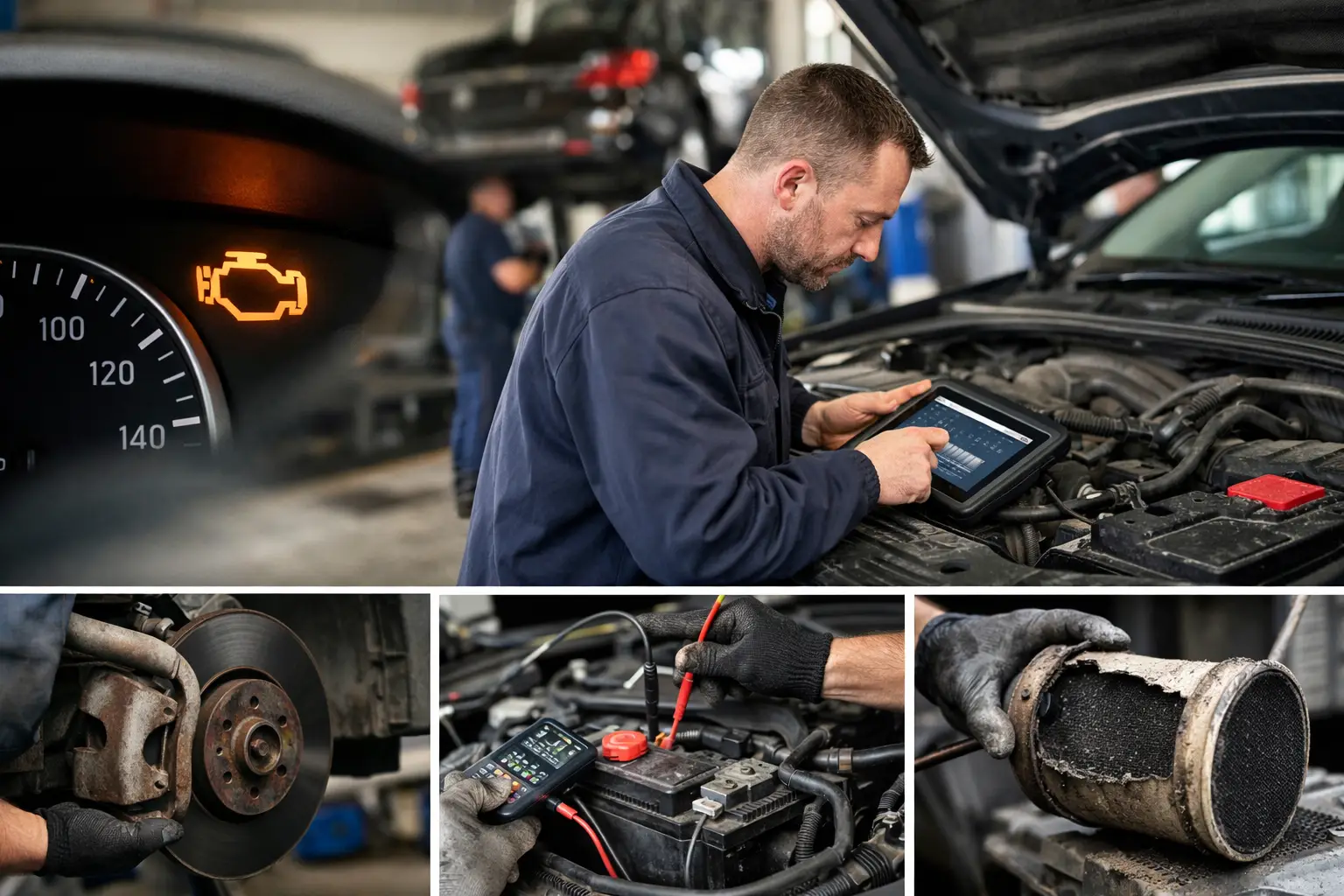
If the engine warning light is flashing, pull over safely as soon as you can and avoid driving further unless necessary. A flashing light can mean the engine is misfiring badly enough to damage the catalytic converter. If the light is steady and the car feels normal, arrange diagnostics soon rather than waiting for the next service.
What engine fault diagnosis in Beccles involves
A proper diagnosis starts with listening to what the vehicle has been doing. When did the light appear? Does it happen when cold, under hard acceleration, on a motorway run or only after short journeys? Those details often point us in the right direction before the diagnostic equipment is connected.
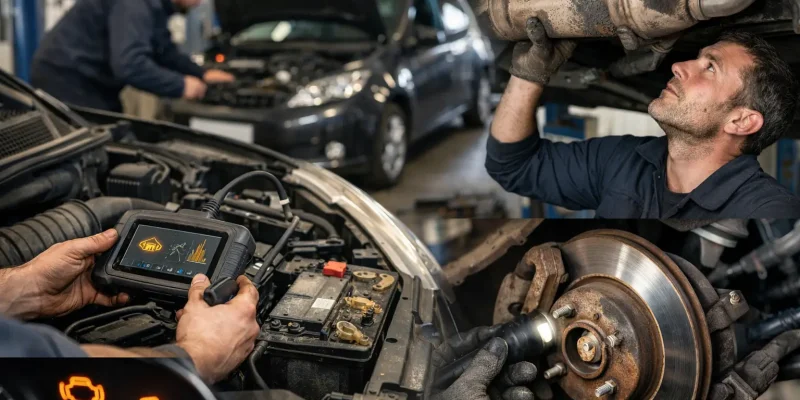
We then read the vehicle’s fault memory and check the live data from the engine control unit. This lets us see what the car is reporting at that moment, rather than just a stored code from last week. Depending on the symptoms, we may test wiring, battery voltage, sensors, air intake components, fuel pressure or exhaust system readings.
The aim is simple: identify the root cause, explain it in plain English and give you a clear repair recommendation. You should know what needs doing, why it needs doing and what can reasonably wait. There are no surprise extras and no pressure to approve work that does not solve the fault.
A fault code is not a parts list
A common example is a code relating to an oxygen sensor. That code does not automatically mean the sensor itself has failed. It could be caused by damaged wiring, an exhaust leak, an air intake fault or an engine running incorrectly for another reason.
The same applies to EGR, DPF and turbo-related codes. Replacing the part named in the code without testing first can cost more and leave the original problem behind. We often see this issue when a car has had a sensor replaced but the warning light returns a few days later.
Common causes of engine warning lights and power loss
The exact cause depends on the vehicle, engine and how it is used. Short local trips create different problems from long motorway driving. Diesel and petrol engines also have their own common faults.
On diesel vehicles, a blocked DPF is a frequent cause of warning lights and limp mode. The filter is designed to clear soot during the right type of journey. If the car mainly does short runs, it may not get hot enough to complete that process. However, a DPF fault can also be the result of another issue, such as a faulty pressure sensor, EGR problem or injector fault. Cleaning the filter only makes sense once the cause has been checked.
Loss of power may come from a split boost hose, vacuum leak, sticking turbo actuator or an air-flow sensor giving incorrect readings. The vehicle may feel fine around town but refuse to accelerate properly when joining the A146 or carrying passengers. It can be frustrating, but it is usually diagnosable with the right checks.
Petrol vehicles commonly suffer from ignition faults. Worn spark plugs, failing ignition coils or injector issues can cause a misfire, rough running and an engine warning light. These problems should be dealt with promptly, particularly if the engine is shaking or the warning light flashes.
Other regular causes include:
- weak batteries or charging faults affecting vehicle electronics
- damaged wiring or poor electrical connections
- air leaks between the filter, turbo and engine
- fuel system faults causing hard starting or uneven running
Each of these can create similar symptoms. That is why testing matters more than assumptions.
Do not ignore changes in how the car drives
Drivers often put up with a warning light because the car still gets them from A to B. We understand why. Your vehicle is needed for work, school runs, appointments and everyday life. But if it is losing power, using more fuel, cutting out or making a new noise, it is worth having it checked before it becomes urgent.
Pay attention to when the symptoms occur. Does it struggle only in the morning? Is there a whistle under acceleration? Has the stop-start system stopped working? Does the light return after being cleared? These are useful details for diagnosis and can help avoid wasted time.
It also depends on the fault. A minor sensor issue may allow careful driving until your booking. A serious misfire, overheating warning, oil pressure warning or major power loss needs immediate attention. If you are unsure whether it is safe to continue, contact the garage and explain exactly what the vehicle is doing.
Clear repairs after the diagnosis
Once the cause is confirmed, we will talk you through the practical options. Sometimes the answer is a straightforward repair such as replacing a sensor, repairing wiring or fitting new spark plugs and an ignition coil. Other faults need a little more work, especially where DPF, EGR, fuel or turbo systems are involved.
We keep the advice honest. If there is a repair that should be done now for safety or to prevent further damage, we will say so. If the issue can be monitored or planned for later, we will tell you that too. Quality parts and careful fitting matter because a quick fix is no good if the same fault returns.
Where possible, we aim for same-day diagnosis and repair, particularly for common faults where parts are available. Some issues require further testing or parts ordering, so we will be clear about timescales from the outset. You will not be left wondering what is happening with your car.
Engine diagnostics for Beccles drivers
Beccles is a short drive from our Lowestoft workshop, and we regularly help local drivers who need a dependable answer rather than confusing technical jargon. Whether your engine warning light has just appeared, the vehicle has gone into limp mode or it has failed an emissions-related MOT check, bringing it in early usually gives you more options.
Before you book, make a note of the registration, warning lights showing, any messages on the dashboard and when the fault first started. Do not clear the code yourself if you can avoid it. Keeping the fault information stored can make diagnosis quicker and more accurate.
A car does not need to be completely off the road before it deserves attention. If something feels wrong, arrange a diagnostic check, get clear pricing before repair work starts and make an informed decision. Call AutoFix4u to discuss the symptoms and book a suitable slot. A proper answer now can save a larger repair later.