DPF Cleaning Versus Replacement – What Works?
A DPF warning light rarely appears at a convenient time. One day the car is fine, then it loses power on the way to work, goes into limp mode, or refuses to clear the warning after a longer drive. When customers ask about DPF cleaning versus replacement, the honest answer is that the right fix depends on why the filter is blocked and whether it is still physically sound.
In most cases, a DPF does not need replacing straight away. But fitting a new filter without finding the cause of the blockage can leave you with the same fault again. The first job is proper diagnostics, not guessing.
What the DPF does and why it blocks
The diesel particulate filter, usually called the DPF, sits in the exhaust system. It traps soot produced by the engine so the vehicle meets emissions standards. Over time, the car is designed to burn that soot away through a process called regeneration.
Regeneration needs the right conditions. The engine must get hot enough, the exhaust temperature must rise, and the car normally needs a steady run rather than repeated short trips. If the vehicle is mainly used for school runs, local errands or stop-start traffic, the regeneration may keep getting interrupted. Soot then builds up until the dashboard warning light comes on.
That is only part of the picture. We often see DPF faults caused by another issue, such as a faulty temperature or pressure sensor, an EGR fault, a boost leak, a thermostat stuck open, or an injector problem. Excess oil use can also contaminate the filter. These faults make the engine produce more soot, or stop the car from carrying out regeneration properly.
DPF cleaning versus replacement: the key difference
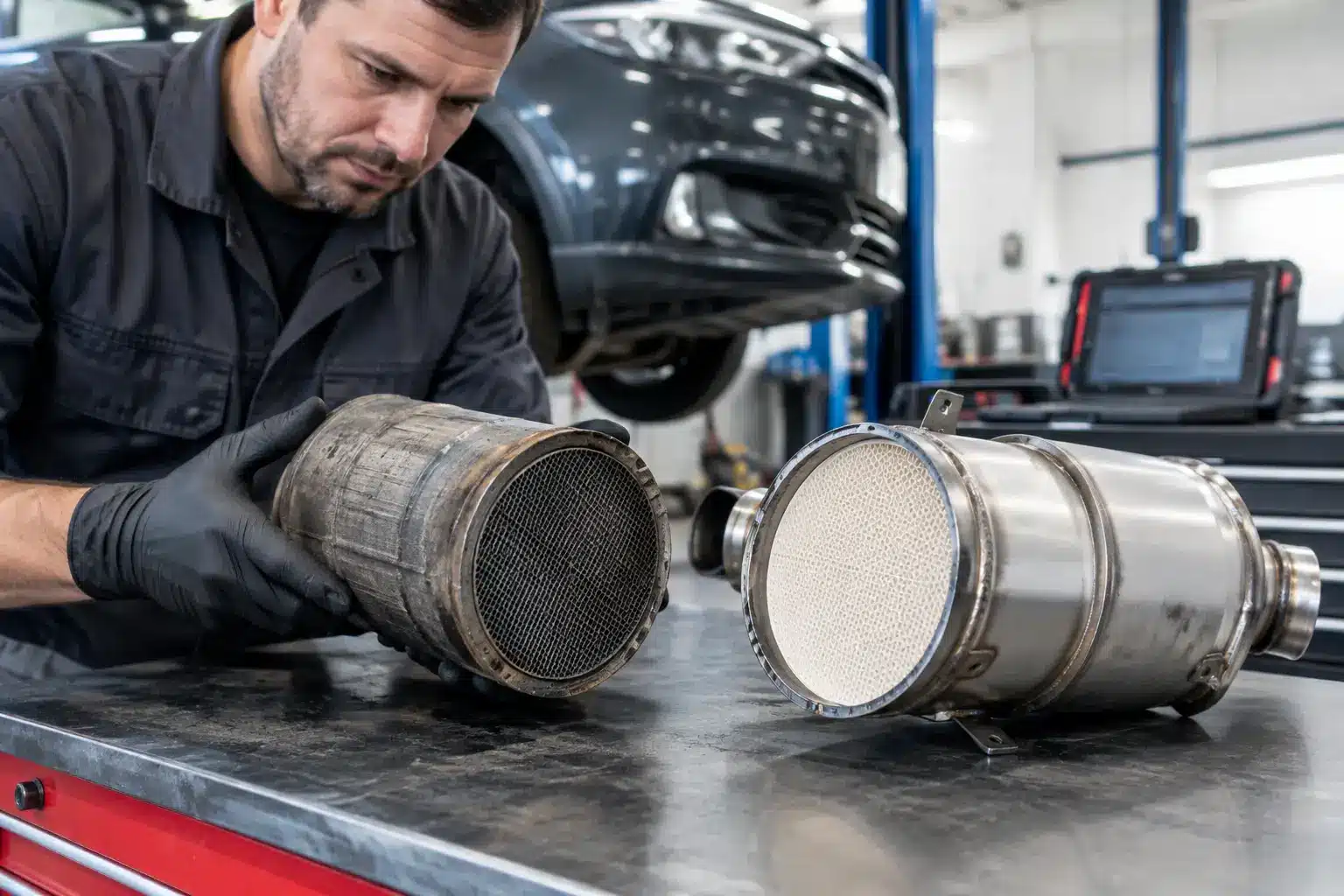
Cleaning removes the material restricting the filter. Replacement means fitting a new DPF assembly. Cleaning is usually the sensible first option when the internal filter structure is intact and the blockage is due to soot or ash.
Soot is the black carbon created during normal diesel running. A successful regeneration can burn soot away. Ash is different. It is the non-combustible residue left behind over the life of the vehicle, mainly from engine oil additives. Ash cannot be burned off by driving at speed or by a forced regeneration.
A professional DPF clean can remove built-up soot and, depending on the cleaning method and filter condition, a significant amount of ash. This can restore exhaust flow and bring pressure readings back to a healthy level. It costs less than a new unit and avoids replacing a part that may still have plenty of useful life left.
Replacement is needed when the filter has reached the end of its life or has been damaged. A clean will not repair a cracked, melted or collapsed DPF core. Nor will it solve a filter contaminated by excessive oil or coolant if the contamination has damaged the internal coating.
When DPF cleaning is likely to work
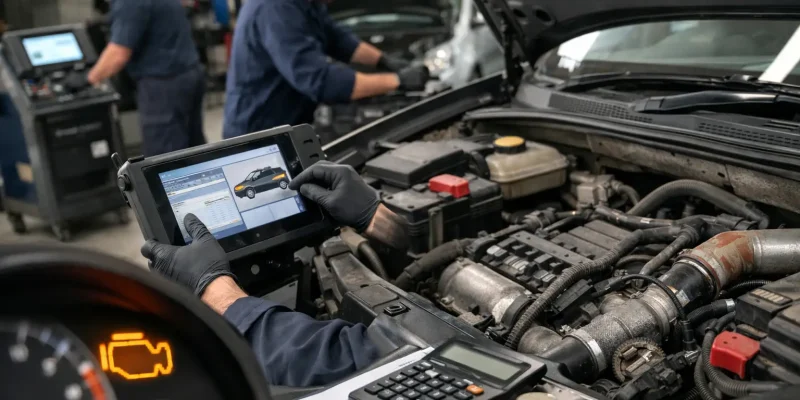
A diagnostic check gives the clearest answer. We look at fault codes, live sensor readings, calculated soot loading and differential pressure. Differential pressure simply means the difference in exhaust pressure before and after the DPF. A high reading can show that exhaust gases are struggling to pass through the filter.
Cleaning is commonly worth considering when the vehicle has a soot-related blockage, the pressure readings support it, and there is no evidence of internal damage. It can be a practical repair if the DPF warning has been ignored for a while but the car is otherwise running correctly.
There are different levels of cleaning. A forced regeneration uses diagnostic equipment to raise exhaust temperatures and burn off soot. This can help when the filter is not excessively blocked and the fault causing the failed regeneration has been dealt with.
If ash loading is high, or the DPF is too restricted for a safe forced regeneration, deeper cleaning may be needed. The correct method depends on the vehicle and the condition of the filter. The important point is not to force a regeneration through a seriously blocked system. That can create excessive heat and make an existing problem worse.
Signs the DPF may need replacing
A new DPF is not the easy answer, but it is sometimes the only reliable one. Replacement may be advised if inspection and test results show the filter matrix is damaged, the internal channels have melted, or the unit is cracked. A severely contaminated filter may also be beyond effective cleaning.
Repeated blockage shortly after cleaning is another warning sign, although it does not automatically mean the DPF itself has failed. It may point to the underlying engine fault being missed. For example, a split hose, faulty EGR valve or injector issue can quickly fill even a new DPF with soot.
Be wary of anyone who recommends replacement from a dashboard light alone. Equally, be wary of a quick clean offered without checking why the warning came on. Both can be wasted money.
The fault behind the blockage matters most
This is where a diagnostic-first approach saves trouble. Before deciding on DPF cleaning or replacement, the garage should check whether the engine is reaching operating temperature, whether the pressure sensor readings make sense, and whether there are related engine or emissions fault codes.
We also consider how the vehicle is used. A diesel that only does very short journeys may not be suitable for that pattern of driving without regular longer runs. That does not mean every short-trip diesel needs a new DPF. It means the driver needs clear advice on preventing the fault returning.
Common causes we check for include:
- interrupted regeneration from frequent short journeys
- failed DPF pressure, temperature or oxygen sensors
- EGR system faults and air leaks
- injector faults or poor combustion creating excess soot
- turbo or intake faults causing loss of air and poor engine performance
- oil or coolant contamination, and incorrect engine oil
Finding and fixing the cause protects the repair. It also reduces the chance of the engine warning light returning a few weeks later.
Can you keep driving with a DPF warning light?
If the light has just appeared and the car is driving normally, the handbook may advise a sustained drive to allow regeneration. This only applies where there are no other warning lights, no loss of power and no message telling you to stop. It is not a cure for every DPF fault.
If the car is in limp mode, has a flashing warning light, produces excessive smoke, struggles to accelerate or has several warning lights on, arrange diagnostics instead of trying to drive the problem away. Continuing to use it can increase soot loading and may lead to a more expensive repair.
Do not use off-the-shelf additives as a substitute for diagnosis. Some products can help in limited situations, but they cannot repair a failed sensor, remove heavy ash loading or fix a damaged filter.
How the repair decision is made
A proper assessment should leave you knowing what has been found, what repair is recommended and why. At AutoFix4u, we explain the readings in plain English and give you a clear repair plan before work starts.
If the DPF is serviceable, cleaning may be the best value and least wasteful option. If it is damaged or beyond recovery, replacement is the safer long-term repair. Where another fault has caused the blockage, that issue needs attention at the same time. There is little point cleaning a DPF while leaving an EGR, sensor or boost fault in place.
Cost will naturally play a part in the decision. Cleaning generally costs less than replacement, but the lowest initial bill is not always the best outcome. A repair that deals with the cause is better value than repeating the same job.
Avoiding another DPF problem
Once the fault is fixed, give the car the conditions it needs where possible. Regular longer journeys at a steady speed can help the vehicle complete normal regeneration. Use the correct low-ash engine oil at servicing intervals, and do not ignore an engine warning light or drop in performance.
If your driving is almost entirely short distance, mention it when booking. It helps us give practical advice based on how you actually use the car, rather than offering a one-size-fits-all answer.
A DPF fault does not always mean a replacement bill. If you have a DPF warning light, loss of power or limp mode in Lowestoft or nearby, book diagnostics before the blockage turns into a bigger job. Ask about same-day availability, get clear pricing, and let a local garage identify the real fault first.