Clutch Replacement Signs You Should Not Ignore
Your engine revs climb as you pull away, but your car struggles to gain speed. First gear feels stiff, the clutch pedal has changed, or you notice a burning smell after a hill start. These are common clutch replacement signs, but they do not always mean you need a new clutch.
A worn clutch can affect acceleration, gear changes and everyday driving. However, hydraulic faults and gearbox problems can cause similar symptoms. At AutoFix4u Garage Lowestoft, we focus on finding the cause before recommending repairs.
Knowing the warning signs can help you avoid a breakdown and make a better decision about your vehicle.
What are the main signs you need a clutch replacement?
Clutch problems often develop gradually. You might notice one symptom at first, followed by more obvious changes as the fault gets worse.
1. Engine revs rise without enough acceleration
A slipping clutch is one of the clearest warning signs.
You press the accelerator and the engine revs increase, but the vehicle gains speed slowly. The problem may become more noticeable when you drive uphill, accelerate in a higher gear or carry a heavy load.
A worn clutch may struggle to transfer engine power to the gearbox. Continued slipping can also create excess heat and damage other components.
If you notice these symptoms, arrange an inspection before the car loses drive completely.
2. First or reverse gear becomes difficult to select
Does your gearstick feel stiff or resistant? Do you hear a crunch when selecting a gear?
The clutch may not release fully when you press the pedal. However, worn gear linkages, hydraulic faults and gearbox problems can produce similar symptoms.
Our guide to signs of gearbox trouble explains other warning signs worth checking.
Avoid forcing the gearstick. You could damage related components or make an existing problem worse.
3. The clutch pedal feels different
Changes in pedal feel can help identify a developing fault.
You might notice:
- A biting point that feels higher than usual.
- A pedal that becomes unusually heavy or soft.
- A pedal that returns slowly or stays on the floor.
- Vibration when pressing or releasing the pedal.
- Squeaking, clicking or rumbling noises during operation.
A high biting point can suggest clutch wear, although pedal design varies between vehicles.
A soft pedal may indicate a hydraulic problem. A sudden loss of pedal pressure needs prompt attention.
4. You notice a burning smell
A hot, sharp smell after a hill start or heavy manoeuvring may come from overheating clutch friction material.
This can happen when the clutch slips for too long under load.
One brief smell does not always mean you need a replacement. However, repeated burning smells deserve attention, especially when the car also slips or struggles to accelerate.
5. Unusual noises or vibration appear
A failing clutch release bearing can cause noise when you press the clutch pedal.
You may also notice vibration when pulling away, rattling near the gearbox or a judder during acceleration.
These symptoms can have several causes. A worn flywheel, engine mount or clutch component may be responsible.
A proper inspection helps identify the problem before you pay for unnecessary parts.
Why clutch problems do not always mean clutch replacement
Many drivers assume that slipping, stiff gears or pedal problems always require a complete clutch kit.
That is not necessarily true.
A clutch system contains several components. They work together to connect and disconnect engine power during gear changes.
Common causes of clutch-related problems include:
- Worn clutch friction plate: May cause slipping and reduced power transfer.
- Faulty pressure plate: Can affect clutch engagement or release.
- Worn release bearing: May create noises or affect pedal operation.
- Hydraulic faults: A failing master or slave cylinder can prevent proper clutch release.
- Dual-mass flywheel wear: Can cause vibration, rattling or uneven operation on vehicles fitted with one.
- Gearbox or linkage faults: May make gear selection difficult without a worn clutch plate.
Some hydraulic components sit inside the gearbox bellhousing. Reaching them may require gearbox removal.
This is why a clear diagnosis matters.
For more information about repair options, read our guide to clutch repair in Lowestoft.
What causes a clutch to wear out?
Every manual clutch experiences wear during normal driving. However, several factors can shorten its working life.
Frequent stop-start driving
Town traffic involves repeated gear changes, stopping and pulling away.
Drivers travelling through Lowestoft, Oulton Broad and nearby areas may use the clutch frequently on short journeys.
Holding the car on the biting point
Keeping a vehicle stationary on a hill using clutch control creates unnecessary heat.
Use the parking brake when appropriate instead of holding the car on the clutch.
Towing and carrying heavy loads
Extra vehicle weight places more demand on the clutch during acceleration.
Regular towing or heavily loaded van use can increase wear.
Existing mechanical faults
Hydraulic problems, oil contamination and worn related components can affect clutch operation.
Even a relatively new clutch may develop problems if another fault remains unresolved.
There is no fixed mileage at which every clutch needs replacing. Driving conditions, vehicle design and maintenance all matter.
How does a mechanic diagnose clutch problems?
A good inspection starts with your description of the symptoms.
We need to know when the problem occurs. Does the clutch slip uphill? Are gears harder to select when the engine is warm? Has the pedal changed suddenly?
These details help narrow down the possible causes.
Checking clutch pedal operation
The mechanic checks pedal movement and how the clutch engages or releases.
Unusual resistance, travel or a slow return may point towards an operating fault.
Inspecting the hydraulic system
Where applicable, the mechanic checks for leaks, low fluid levels and problems with the master or slave cylinder.
Hydraulic faults can prevent the clutch from releasing correctly.
Checking gear selection and related parts
The mechanic may compare gear selection with the engine running and switched off.
They can also check accessible linkage components and mounts.
A controlled road test may help confirm slipping or vibration when the vehicle is safe to drive.
Using diagnostics when relevant
Electronic faults can sometimes affect vehicle operation. Where warning lights or control-system symptoms are present, engine diagnostics in Lowestoft may help identify a related issue.
However, a diagnostic scan cannot reliably measure wear inside a conventional manual clutch.
Mechanical inspection remains important.
What happens during a clutch replacement?
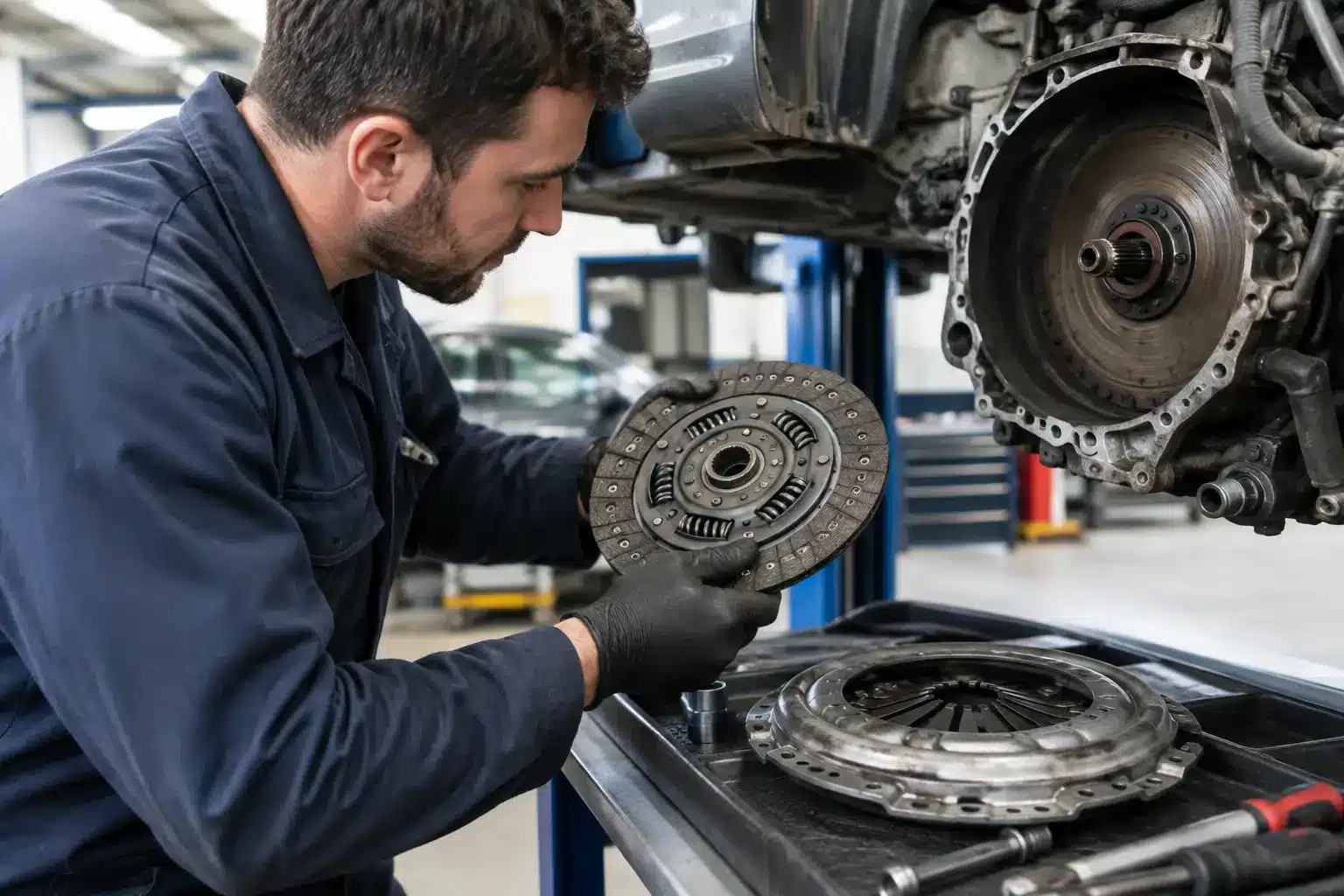
A clutch replacement usually requires gearbox removal.
The mechanic follows a repair procedure suited to the vehicle. Access and labour requirements vary between models.
The work typically involves several stages.
Removing the gearbox
The mechanic safely supports the vehicle and removes the components needed to access the clutch.
Inspecting the clutch assembly
Once the clutch is accessible, the mechanic checks the friction plate, pressure plate and release mechanism.
They also look for overheating, oil contamination and unusual wear.
Checking the flywheel
Vehicles with a dual-mass flywheel may need additional checks.
The mechanic assesses its condition and explains whether it needs attention.
A flywheel does not automatically require replacement during every clutch job.
Fitting the correct parts
The mechanic installs the suitable replacement components and checks the clutch operating mechanism.
They also address related faults where necessary and with your approval.
Testing the repair
After reassembly, the mechanic checks pedal operation and gear engagement.
A road test can confirm that the original symptoms have been resolved.
How much does clutch replacement cost?
The cost depends on the vehicle, parts and labour required.
Some cars allow relatively straightforward gearbox access. Others need considerably more work.
The final price may also change if inspection reveals a damaged flywheel or a faulty internal slave cylinder.
Before approving work, ask what the estimate includes.
Our article on clutch replacement time and cost explains why quotes differ between vehicles.
At AutoFix4u Garage Lowestoft, we aim to explain the recommended work and obtain approval before additional repairs.
Is it safe to keep driving with a slipping clutch?
That depends on the severity of the problem.
A vehicle with mild symptoms may still move normally for a while. However, clutch wear can become worse without much warning.
A badly slipping clutch may prevent you from accelerating safely when joining traffic or climbing a hill.
Stop driving and seek professional advice if:
- The clutch slips badly and the vehicle struggles to move.
- You cannot select gears safely.
- The pedal suddenly stays on the floor.
- You notice repeated strong burning smells.
- The car judders severely or loses drive.
Do not force gear changes or continue driving through severe slipping.
If the vehicle is unsafe to drive, arrange recovery rather than risking a breakdown on the road.
Clutch replacement or gearbox repair: which do you need?
Clutch and gearbox faults can feel similar from the driver’s seat.
For example, difficulty selecting first gear may result from a clutch that does not disengage. However, damaged linkage components or an internal gearbox fault can create the same complaint.
A mechanic should identify the likely cause before recommending expensive repairs.
This helps you avoid replacing a clutch when the real problem lies elsewhere.
Book a clutch inspection in Lowestoft
If your car slips under acceleration, struggles to select gears or develops unusual clutch pedal behaviour, arrange an inspection.
AutoFix4u Garage Lowestoft helps drivers in Lowestoft and nearby areas investigate clutch and gearbox problems. We explain the findings and discuss the repair options before carrying out additional work.
You can also explore our clutch replacement guide for Lowestoft drivers for more information about common symptoms and the repair process.
Need help with clutch trouble?
Call: 07778 979802
WhatsApp: Message AutoFix4u Garage Lowestoft
Request an estimate: Get a Free Estimate
Address: Unit 4, 10 Battery Green Road, Lowestoft, NR32 1DE.
A prompt inspection can help you understand the fault, plan the repair and reduce the risk of an unexpected breakdown.