
Clutch Replacement Time and Cost Explained
A clutch rarely fails at a convenient time. It usually starts with a small warning sign – difficult gear changes, a slipping feeling under load, or a biting point that suddenly feels wrong. If you are searching for clutch replacement time and cost, you probably need a straight answer quickly, because a worn clutch can go from annoying to unusable without much notice.
In most cases, clutch replacement is not a five-minute fix, but it is also not a mystery. The time and price depend on the vehicle, the parts needed, and whether there is anything else causing the problem. We often see drivers assume the clutch itself is the only issue, when in reality there may also be wear in the flywheel, slave cylinder, or gearbox components. That is why a proper check matters before anyone gives you a firm figure.
What affects clutch replacement time and cost?
The biggest factor is the vehicle itself. On some cars, the gearbox comes out fairly directly and the clutch can be replaced in a few hours. On others, access is tight, parts around the gearbox have to be removed first, and labour time goes up. Front-wheel drive cars, rear-wheel drive cars, vans, and performance models can all vary quite a bit.
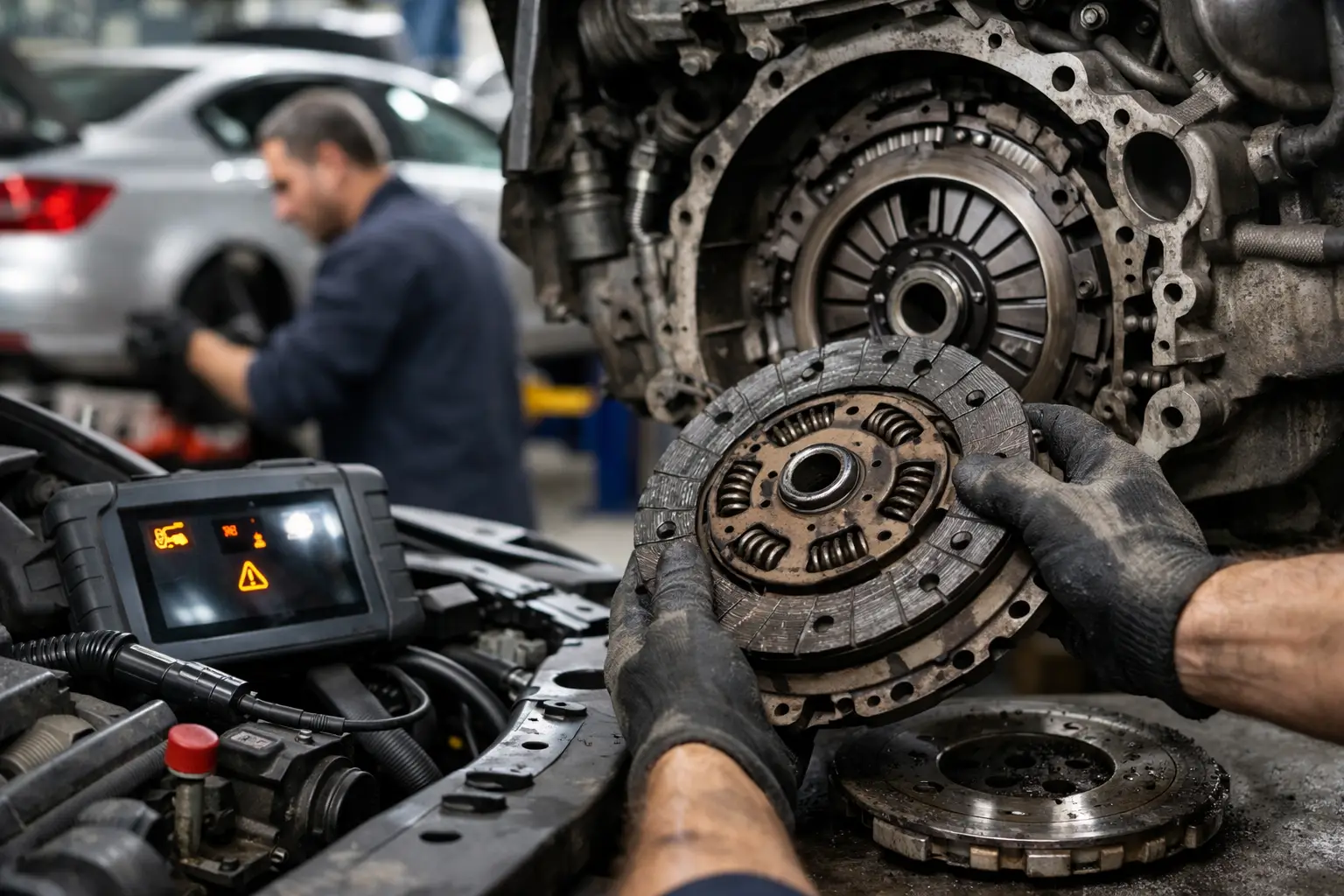
The second factor is what needs replacing once the gearbox is off. Sometimes the clutch kit alone solves the problem. That usually includes the friction plate, pressure plate, and release bearing. In other cases, the flywheel is worn or heat-damaged and needs changing at the same time. If the hydraulic slave cylinder is leaking or failing, that can also add to the job.
This usually happens because the clutch is a wear item, but it does not wear in isolation. If one part has been slipping or dragging for a while, it can put strain on the surrounding parts. That is why two cars with similar symptoms can end up with different repair costs.
How long does a clutch replacement take?
For many common cars, clutch replacement takes around 4 to 8 hours of labour. That means some vehicles can be turned around the same day if the parts are available and there are no hidden issues. Others may need to stay in for longer, especially if the job is more involved or extra parts are required.
A simple clutch job on a smaller hatchback is usually quicker than one on a larger diesel, SUV, or van. If the starter motor, driveshafts, subframe, battery tray, or other components have to come off first, the labour time rises. Some vehicles are simply more awkward to work on than others.
We often see customers ask whether the clutch itself takes all day to fit. The honest answer is that much of the time is in getting access and refitting everything properly. Removing the gearbox is the main part of the job. Once that is out, replacing the clutch parts is relatively straightforward. The care comes in checking for oil leaks, inspecting the flywheel, and making sure everything goes back together correctly.
If your car is already struggling to select gears or the clutch pedal has gone soft, it is best not to leave it too long. A car with a failing clutch can become immobile without much warning, and recovery is an extra cost most drivers would rather avoid.
Typical clutch replacement cost
Clutch replacement cost in the UK usually falls somewhere between a few hundred pounds and well over £1,000, depending on the vehicle and what parts are needed. For many everyday cars, a standard clutch replacement often sits in the middle of that range. If a dual mass flywheel is involved, the price can rise quite sharply.
That catches a lot of drivers out. They expect a clutch change to be one fixed price, but the parts bill alone can vary a lot from one model to another. A small petrol car will usually cost less than a larger diesel with a dual mass flywheel. Vans can also be more expensive because of heavier-duty parts and higher labour time.
The sensible way to look at it is this: labour is only one part of clutch replacement time and cost. The type and quality of parts matter too. Fitting poor-quality parts may save money at the start, but it often leads to repeat problems, noise, poor pedal feel, or shorter service life. For most drivers, it makes more sense to fit quality parts once and avoid doing the same job again.
Signs your clutch may need replacing
Most clutch problems start with symptoms rather than a sudden failure. You might notice the engine revs rise without the car pulling properly, especially in higher gears. You may also feel the clutch pedal bite very high, or struggle to select reverse and first gear cleanly.
A burning smell after pulling away uphill or in traffic can also point to clutch slip. Shuddering when moving off is another common complaint. In some cases, the pedal feels unusually heavy. In others, it drops low or feels soft because of a hydraulic issue rather than the clutch plate itself.
This is where diagnosis matters. Not every gear selection problem means the clutch is worn out. We often see faults caused by clutch hydraulics, gearbox linkage issues, or even low gearbox oil. Replacing the clutch without checking properly can waste time and money.
Why a proper diagnosis saves money
A lot of drivers search for a price before they know the exact fault. That is understandable, especially when the car is needed every day. But with clutch faults, guessing can get expensive.
For example, a clutch pedal that stays down could be a failed master cylinder or slave cylinder. Difficult gear changes with the engine running might be a dragging clutch, but it could also be an internal gearbox problem. A rattling noise could point to flywheel wear rather than the clutch plate alone.
The best approach is problem first, then cause, then solution. A proper inspection lets a garage confirm whether you need a full clutch kit, a flywheel, hydraulic parts, or a different repair altogether. It also means you get a clearer timescale and a more honest price from the start.
Can you keep driving with a worn clutch?
Sometimes, yes – for a short while. But it depends how bad it is. If the clutch is slipping badly, the car may lose drive under acceleration and eventually stop moving altogether. If it is dragging, gear changes can become difficult and put strain on the gearbox.
We often tell drivers not to gamble with a clutch once clear symptoms are there. What starts as a car that is awkward in traffic can end as a breakdown in a car park or at the roadside. If you rely on one vehicle for work, school runs, or day-to-day travel, that delay often causes more disruption than the repair itself.
There is also the risk of extra damage. A worn clutch that is left too long can overheat the flywheel or create more stress in the release mechanism. That can increase the final bill.
How to keep the cost under control
You cannot always avoid clutch wear, but you can avoid unnecessary cost. Booking the car in when the first symptoms show gives you more options. If the vehicle still drives, the repair can usually be planned rather than treated as an emergency. That helps with parts sourcing and workshop time.
Driving style matters as well. Riding the clutch, holding the car on the bite, and heavy stop-start use will shorten clutch life. That does not mean every worn clutch is caused by bad driving. Some fail earlier because of town driving, towing, poor-quality previous parts, or vehicle design. But smoother clutch use does help.
It is also worth asking what is included in the quote. A proper clutch quote should make clear whether it covers the clutch kit only or includes other likely items such as the flywheel or concentric slave cylinder if needed. Clear pricing matters because no driver wants surprise extras once the gearbox is already out.
Clutch replacement time and cost in real terms
If you want the simple version, most clutch replacements take half a day to a full day in the workshop, and cost varies based on labour time, parts quality, and whether extra components need replacing. That is why one driver gets a moderate bill and another gets a much larger one for what sounds like the same job.
For busy drivers around Lowestoft, the main thing is acting before the car becomes unusable. If your clutch is slipping, the pedal feels wrong, or gear changes are getting harder, get it checked properly. A clear diagnosis gives you a proper answer, a realistic repair plan, and no guessing.
If your car is showing signs of clutch trouble, call now or get a quote and have it looked at before it leaves you stranded. A good garage will tell you plainly what is worn, what can wait, and what needs doing now.


One thought on “Clutch Replacement Time and Cost Explained”