
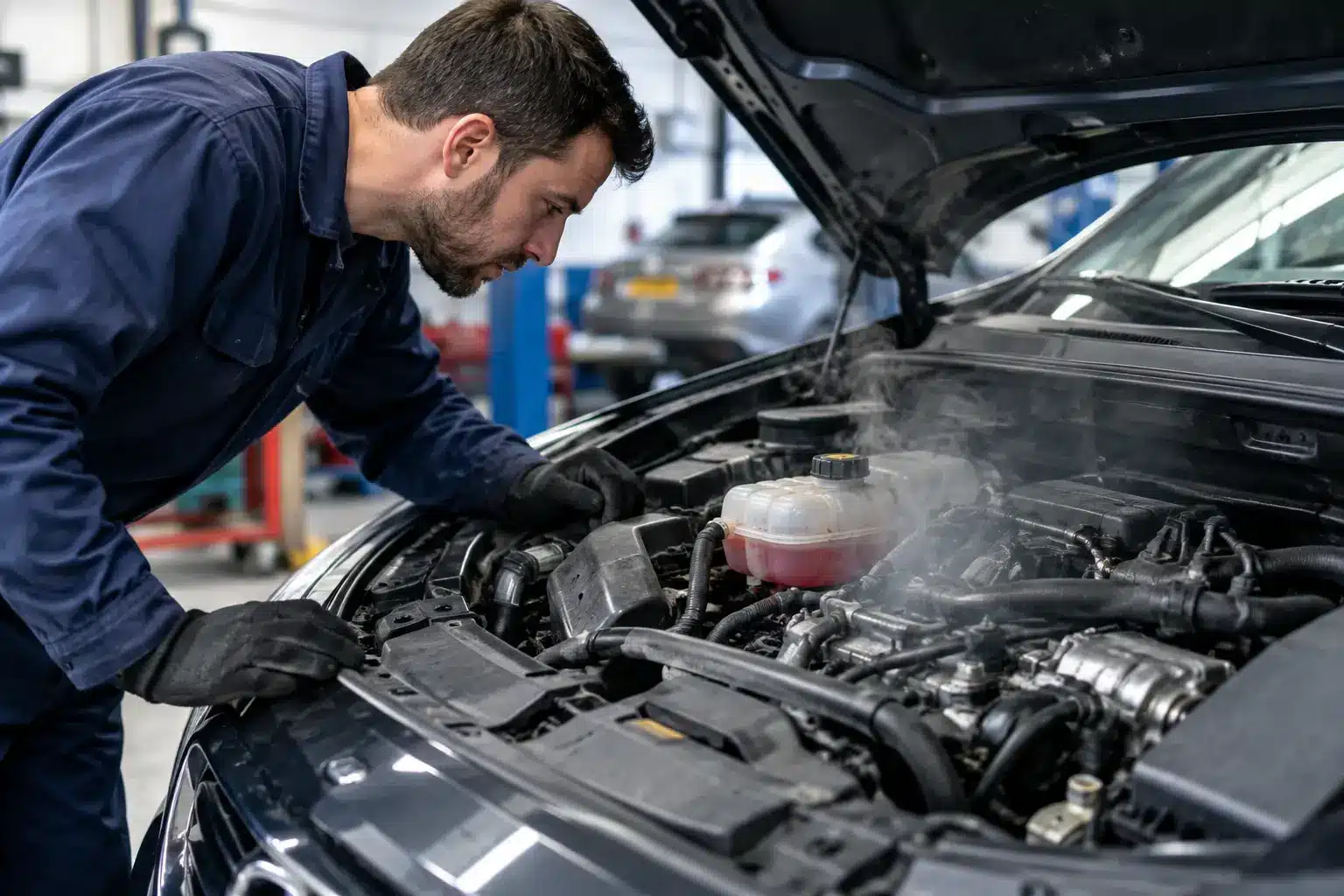
How to Fix Car Overheating Before Damage Spreads
A temperature gauge climbing into the red, steam from under the bonnet, or a coolant warning light can turn a normal school run or commute into a breakdown quickly. If you need to fix car overheating, the first job is to stop safely and avoid making the damage worse. Driving an overheated engine, even for a short distance, can turn a straightforward cooling-system repair into a damaged head gasket or engine problem.
In most cases, overheating happens because the engine cannot get rid of heat properly. The cause could be as simple as low coolant or a leaking hose, but it can also be a failed thermostat, water pump, radiator fan or an internal engine fault. A proper diagnosis matters because topping up coolant may get you moving temporarily, but it will not cure the reason it went low.
What to do when your car starts overheating
If the temperature warning appears, the gauge rises above normal, or you smell hot coolant, pull over as soon as it is safe. Switch the engine off and allow it to cool fully. Do not keep driving in the hope that the temperature will drop again.
There are a few things you should not do. Never remove the coolant expansion tank cap while the engine is hot. The cooling system is pressurised, and boiling coolant can cause serious burns. Do not pour cold water over a hot engine either. Sudden temperature changes can cause further damage.
Once the engine has cooled, look for obvious signs such as a puddle beneath the car, split hoses, coolant around the expansion tank, or steam from the radiator area. If the coolant level is low, that tells you there is likely a leak or another fault that needs investigating. It does not tell you where the coolant has gone.
If the car has overheated badly, the warning light stays on, coolant is pouring out, or the engine is running rough, arrange recovery rather than driving it to a garage. That is usually the cheaper decision in the long run.
Why cars overheat in real life
We often see this issue when a small cooling fault has been developing quietly for weeks. A driver may notice they have to top up coolant now and then, the heater is not as warm as usual, or the fan seems louder after a journey. Then one longer drive, slow traffic or warm weather pushes the system beyond its limit.
Coolant leaks
A coolant leak is one of the most common causes. Hoses, clips, radiators and expansion tanks can all develop leaks with age. Some are easy to spot, while others only leak when the system is hot and pressurised.
The water pump can also leak. On some vehicles, it is driven by the cambelt, so it needs checking carefully rather than guessed at. Coolant may leave a white, pink, blue or green crust around the fault, depending on the type used in the vehicle.
A thermostat that is stuck closed
The thermostat controls when coolant flows through the radiator. If it sticks closed, hot coolant stays around the engine instead of moving through the radiator to cool down. The temperature can rise quickly, particularly on a longer run.
This is a common repair, but the thermostat is not always easy to reach. The right fix depends on the vehicle and on confirming that the thermostat, rather than another part, is causing the restriction.
Cooling fan faults
Your radiator fan is most important at low speeds and when the car is stationary. If the temperature rises in traffic but settles once you are moving, a fan fault becomes more likely. The problem may be the fan motor itself, a fuse, relay, wiring issue, temperature sensor or control fault.
This is where diagnostics save time. Replacing a fan without checking the electrical side can mean paying for a part that was never the problem.
Blocked or damaged radiator
A radiator needs clear airflow and free-flowing coolant. Damage to the front of the radiator, blocked fins, internal corrosion or contaminated coolant can all reduce its ability to shed heat. This may cause gradual overheating, especially under load, towing, or during motorway driving.
A radiator flush can help in limited cases, but it is not a cure for every cooling problem. If the radiator is blocked internally or badly corroded, replacement is often the reliable option.
Water pump failure
The water pump circulates coolant around the engine. If its impeller is worn or damaged, or the pump is failing mechanically, coolant does not move as it should. Some pumps give warning signs such as a leak or bearing noise. Others can fail with very little warning.
Because water-pump work can involve removing major components on certain engines, it is worth getting the fault confirmed before approving repairs.
Head gasket or internal engine faults
A head gasket issue is less common than a hose, thermostat or fan fault, but it needs attention quickly. Possible signs include repeated coolant loss with no visible external leak, overheating returning after repairs, pressure building in the expansion tank, white exhaust smoke, or mayonnaise-like contamination under the oil cap.
One sign alone does not prove a head gasket has failed. For example, a little condensation under the oil cap can happen on cars used for short journeys. A garage should carry out proper tests before recommending expensive engine work.
How a garage should fix car overheating
The sensible approach is problem first, parts second. At AutoFix4u, that means checking the coolant level and condition, looking for external leaks, pressure-testing the cooling system where needed, and checking whether the fan, thermostat and water pump are doing their jobs.
We also look at the symptoms around the fault. Does it overheat only in traffic? Does the heater blow cold? Is coolant disappearing overnight? Has the engine warning light appeared? These details narrow down the cause and help avoid unnecessary repairs.
A diagnostic may include checking live temperature readings, fan commands and sensor signals. If there are signs of an internal leak, further cooling-system and combustion-gas tests may be needed. You should receive a clear explanation of what has been found, what repair is required and whether there are any sensible options before work starts.
After the repair, the system should be refilled with the correct coolant, bled properly to remove trapped air, and tested until the engine reaches normal operating temperature. Air locks can cause overheating too, so this final check is not a step to skip.
Can you drive a car after it has overheated?
It depends on why it overheated and how hot it became. If the temperature briefly rose because the coolant was low, then returned to normal after the engine cooled and the level was corrected, the car may still be driveable for a short journey to a garage. But it is a risk if the source of the coolant loss is unknown.
If the gauge reached the red, steam was coming out, the engine lost power, or the warning light remains on, do not drive it. Continuing can warp the cylinder head, damage the head gasket or cause more serious engine damage. Recovery support is the safer choice.
Do not rely on the temperature gauge alone, either. Some modern cars show only a warning once the engine is already too hot. Any sudden coolant warning, sweet smell from the vents, steam, or loss of cabin heat should be taken seriously.
Avoiding another overheating problem
The best prevention is simple maintenance and acting early. Check your coolant level when the engine is cold, especially before a long journey. If it needs regular topping up, book it in rather than treating coolant as something the car naturally uses. It should not disappear.
Use the correct coolant specification for your vehicle. Mixing random types can reduce protection and cause issues over time. If a hose looks swollen, the radiator is visibly damaged, or the car has a history of overheating, get it checked before it leaves you stranded.
If your car is overheating in Lowestoft, Oulton Broad, Beccles or the surrounding area, contact a local garage for a proper cooling-system diagnosis. Clear answers and the right repair now can protect the engine and get you back to normal daily driving with confidence.


