
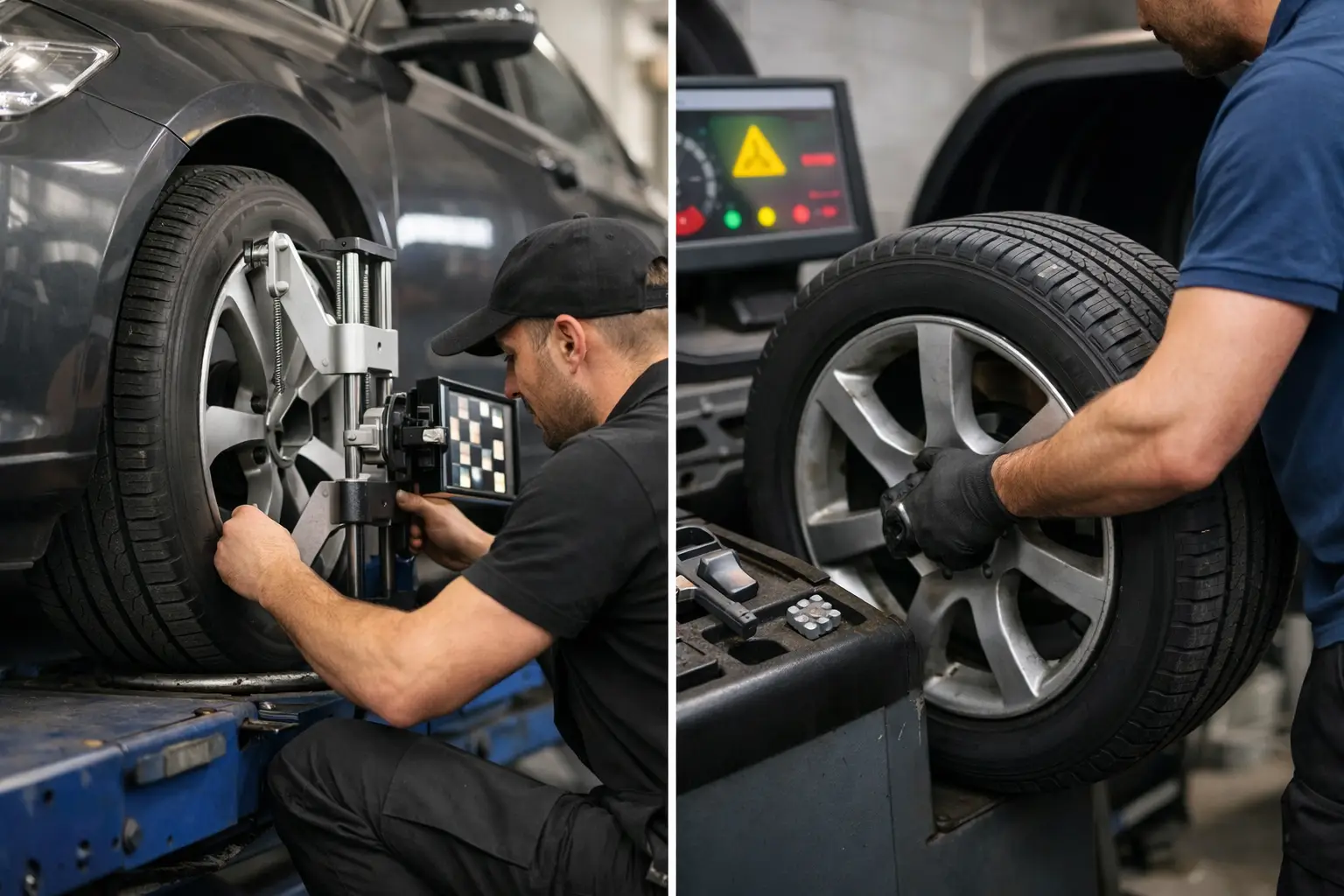
Wheel Alignment vs Balancing Explained
A car comes in with the same complaint most weeks – the steering wheel is off-centre, the tyres are wearing oddly, or there is a vibration on the dual carriageway. In many of those cases, the driver has been told they need tracking, balancing, or both, but they are not sure what any of it really means. If you are comparing wheel alignment vs balancing, the main thing to know is this: they fix different problems, even though the symptoms can overlap.
Getting the right one matters. If the wheels are out of line, the car can pull to one side and wear tyres quickly. If the wheels are out of balance, you will usually feel a shake through the steering wheel or the seat at certain speeds. In some cases, both jobs are needed together.
Wheel alignment vs balancing – what is the difference?
Wheel alignment is about angles. It means adjusting the position of the wheels so they sit correctly in relation to the road and to each other. When alignment is off, the car may not drive straight, the steering can feel wrong, and tyres can scrub away faster than they should.
Wheel balancing is about weight. A tyre and wheel assembly should spin evenly. If one part is heavier than another, it creates an imbalance. That imbalance often shows up as vibration, especially once you get above town speeds.
They are not the same service, and one does not replace the other. We often see people book tyre balancing because of uneven tyre wear, when the real issue is alignment. We also see the opposite – a driver is told the car needs alignment because it feels rough on the road, but the actual fault is an unbalanced wheel or a damaged tyre.
What wheel alignment problems usually feel like
In most cases, poor alignment shows up while you are driving in a straight line. The car may drift left or right even when the road is fairly level. The steering wheel might sit crooked even though you are going straight. Some drivers notice the car feels unsettled, especially after hitting a pothole or kerb.
The biggest clue is often tyre wear. If the inside or outside edge of a tyre is wearing much faster than the rest, alignment is high on the list of likely causes. Left long enough, that tyre can become noisy, lose grip in wet weather, and fail an MOT on wear.
This usually happens because something has knocked the geometry out. A pothole can do it. A worn suspension part can do it as well. That is why a proper check matters. If a track rod end, arm bush or suspension joint is loose, simply adjusting the alignment without fixing the worn part first will not solve much.
Common causes of poor alignment
The most common causes are pothole impacts, kerb strikes, worn steering or suspension parts, and previous repair work where the alignment was never reset properly. We also see it after tyre replacement if the original wear pattern was ignored.
That is where a diagnostic-first approach helps. The symptom might be tyre wear, but the root cause can sit elsewhere in the suspension or steering.
What wheel balancing problems usually feel like
Balancing issues normally feel different. Instead of the car pulling, you are more likely to feel a vibration. At around 50 to 70 mph is where it often becomes obvious. If the front wheels are out of balance, the steering wheel may shimmy. If the rear wheels are the issue, the vibration can come through the seat or the floor.
Sometimes it starts after a new tyre has been fitted. Sometimes a balance weight has come off. We also see cases where the tyre itself is damaged or not seated properly on the rim, which can feel very similar.
Balancing will not usually cause the steering wheel to sit off-centre. It also does not normally create the same kind of sharp edge tyre wear that poor alignment does. That said, if a wheel is badly out of balance for long enough, it can put extra strain on tyres and suspension parts.
Common causes of balancing issues
A lost wheel weight is a common one. So is mud or debris stuck inside the wheel, especially in winter or on rural roads. A buckled wheel, tyre damage, or poor-quality tyre fitting can also be behind it.
This is why we do not like guessing. A vibration is not always just balancing. It can also point to tyre defects, bent alloys, worn suspension components or even brake issues.
When you might need both
Quite a few cars need alignment and balancing at the same time. If you have fitted new tyres, hit a bad pothole, or noticed both vibration and uneven wear, it makes sense to check both.
For example, a driver might come in because the steering wheel shakes at 60 mph. During inspection, the front wheels need balancing, but we also find the front alignment is out and the inner edge of one tyre is wearing down. Fixing only one side of the problem would leave the other one behind.
That is why the best answer is not always the quickest guess. It depends on the symptoms, the tyre condition, and whether there is any wear in the steering or suspension.
How we tell the difference in the workshop
The first step is listening to what the car is doing. Pulling to one side, crooked steering and unusual tyre wear point more towards alignment. Speed-related vibration points more towards balancing. Then the tyres and wheels need a proper inspection.
We check tread wear across the tyre, look for damage, and inspect for any missing balance weights. If there is any sign of suspension or steering wear, that needs checking before alignment is carried out. There is no point setting alignment on a car with loose components because it will not hold correctly.
Once the cause is clear, the fix is straightforward. Align the wheels if the geometry is out. Balance the wheels if the issue is uneven weight. If both are needed, do both and then road test the car.
Why ignoring it costs more later
A lot of drivers put this off because the car still feels usable. The problem is that tyres are expensive, and poor alignment can wear them out far earlier than expected. Bad balancing can make longer trips uncomfortable and can add stress to suspension parts.
There is also the safety side. A car that pulls or has poor tyre contact on the road is not going to feel as stable in emergency braking or wet conditions. It may seem minor now, but it can turn into a bigger bill later.
We often see this before MOT time. The driver comes in for a test and finds one or more tyres worn on the edges, or there is play in a suspension component that has been taking extra strain. Sorting it earlier usually means a simpler repair.
When to book a check
If the steering wheel is no longer straight, the car drifts, or the tyres are wearing unevenly, book an alignment check. If you feel vibration through the steering wheel or seat, especially at higher speeds, book a balancing check. If you have hit a pothole or kerb hard, it is worth having both looked at.
For drivers around Lowestoft, Oulton Broad, Carlton Colville and nearby areas, this is the sort of issue that is better dealt with before it damages tyres or affects handling. At AutoFix4u, we check the fault properly, explain what is causing it in plain English, and only recommend the work the car actually needs. Same-day slots are available where possible. Call now or get a quote if your car is pulling, vibrating, or wearing tyres unevenly.
If your car does not feel right, trust that instinct. Small changes in steering or vibration are often the first warning that something needs attention, and catching it early usually keeps the fix simple.


2 thoughts on “Wheel Alignment vs Balancing Explained”