Suspension Repair Near Me in Lowestoft
That knocking sound over speed bumps usually starts small, then gets harder to ignore. If you are searching for suspension repair near me, chances are your car feels different to drive, the tyres are wearing oddly, or you have spotted a clunk, creak or bounce that was not there before. In most cases, the problem will not sort itself out. It usually gets worse, and it can start affecting tyres, steering and braking as well.
Suspension faults are common on everyday cars, especially if you do a lot of local driving on rough roads, hit potholes, or carry passengers and shopping most days. We often see this issue when a driver has put up with the noise for a few weeks, hoping it is minor, only to find the car then fails its MOT or starts pulling on the road. The good news is that most suspension problems can be found quickly with the right checks and repaired properly without guesswork.
What your suspension is trying to tell you
When suspension starts to wear, the car nearly always gives you signs. The most obvious one is a knock from the front or rear when going over bumps. Sometimes it is more of a dull thud. Sometimes it is a squeak when turning or driving slowly over uneven ground.
You may also notice the car feels less stable than it used to. It might dip more when braking, lean more in corners, or feel unsettled on faster roads. Uneven tyre wear is another common clue. If one edge of the tyre is wearing faster than the rest, or the car does not feel planted on the road, the suspension may be part of the problem.
In some cases, customers come in saying the steering feels off rather than mentioning suspension. That happens because the two systems work closely together. A worn suspension arm, damaged top mount or failed drop link can make the car feel vague, loose or noisy, even if the steering itself is fine.
Common causes behind suspension repair near me searches
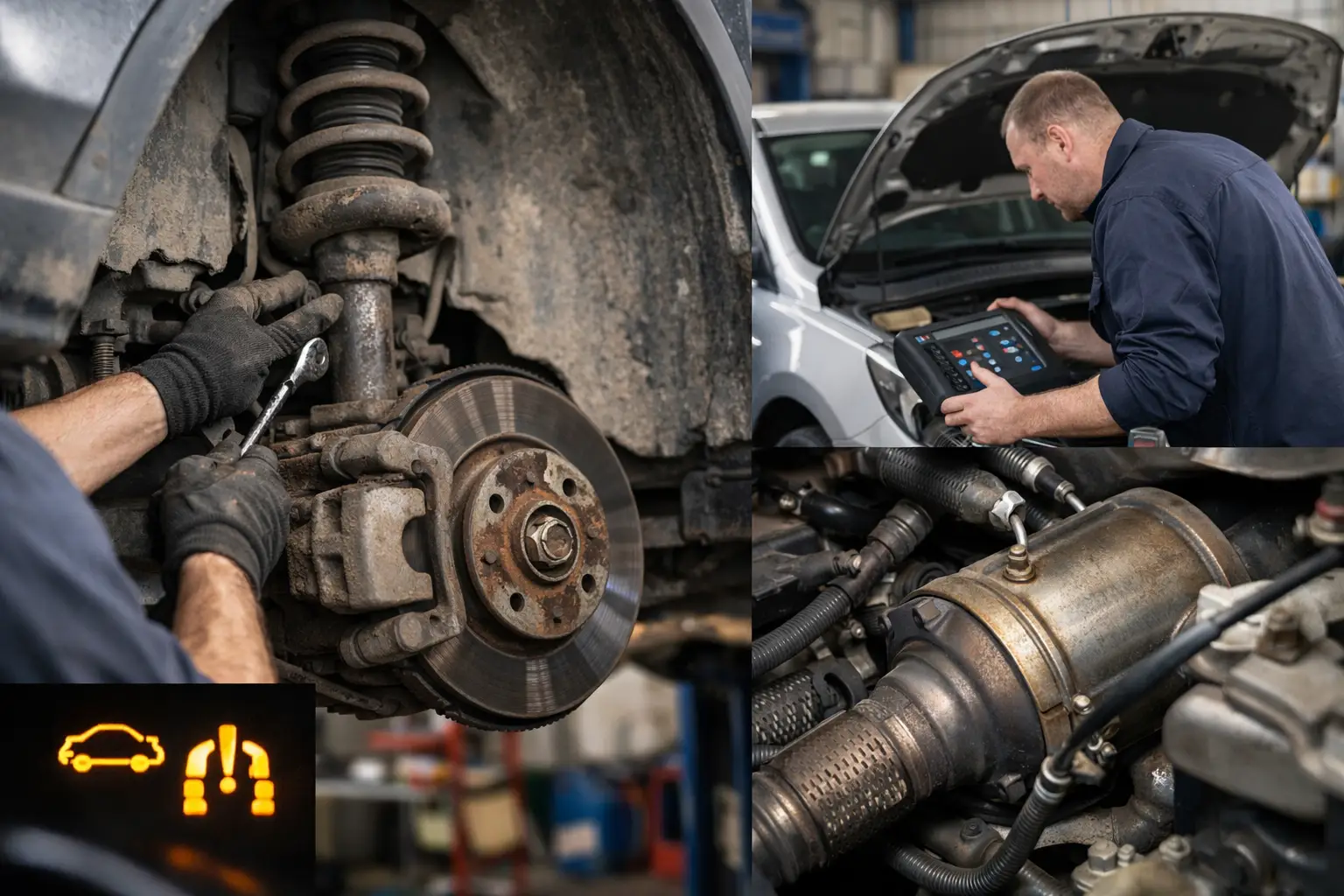
There is not one single suspension fault. That is why a proper inspection matters. We often see worn drop links, tired shock absorbers, broken coil springs, damaged suspension arms and worn bushes. Top mounts can also fail, especially on cars that have done plenty of town miles.
This usually happens because suspension parts are under constant load. Every pothole, kerb strike and rough patch of road adds wear over time. Rubber bushes dry out and crack. Springs can snap. Shock absorbers lose their damping, which means the car starts bouncing more than it should.
It depends on the age of the car and how it is used. A vehicle doing daily school runs, commuting and short local trips can still wear suspension components quickly if the roads are poor. On the other hand, motorway-only driving is often easier on these parts. That is why two similar cars can have very different repair needs.
The faults we see most often
Broken springs are one of the most common issues, particularly after winter. Road salt, corrosion and potholes all play a part. A spring can snap without much warning, and sometimes the driver only notices after hearing a sudden twang or feeling the car sit lower on one side.
Worn shock absorbers are another regular problem. These do not always make a loud noise, so they can be missed for longer. The car may just feel bouncy, unstable or slower to settle after bumps. That affects comfort, but more importantly it affects road holding.
Then there are bushes and joints. These are smaller parts, but when they wear out they can create a surprising amount of noise and movement. A clunk over bumps or when pulling away can easily come from a worn bush or anti-roll bar link.
Why driving with a suspension fault is risky
A lot of drivers keep using the car because it still starts, stops and gets them from A to B. That is understandable. But suspension faults are not just about comfort. They affect how the car handles, how the tyres wear and how safely the vehicle responds in an emergency.
If a shock absorber is weak, the tyre may not stay in proper contact with the road over bumps. If a spring is broken, the car can sit unevenly and place extra stress on other parts. If a bush or ball joint has excessive play, steering precision can suffer. None of that means every noise is dangerous straight away, but it does mean it is worth getting checked before a small repair turns into a larger one.
We also see cases where a suspension issue causes an MOT failure. Often the customer has already heard the noise but did not realise it would be picked up as a safety defect. Getting it looked at early usually gives you more control over timing and cost.
How a proper suspension check should work
If you are looking for suspension repair near me, the main thing is to find a garage that checks the cause properly rather than replacing parts based on guesswork. Suspension noises can travel. A knock that sounds like it is from the front left can turn out to be something nearby rather than the first part that gets blamed.
A proper check starts with listening to the symptoms. When does the noise happen? Is it over bumps, while turning, under braking, or all the time? From there, the car should be inspected for wear, damage, broken components and movement where there should not be any. If needed, a road test helps confirm what is happening under real driving conditions.
That matters because replacing the wrong part wastes time and money. A clear diagnosis means you know what has failed, what needs doing now, and what can be monitored if there is minor wear elsewhere.
Repair or replace – what is usually needed?
In most cases, the failed part will need replacing rather than repairing. Springs, shocks, arms, bushes and links are wear items. Once they are worn, split or broken, replacement is the sensible fix.
Sometimes parts are best changed in pairs, especially shock absorbers and springs on the same axle. That keeps the car balanced from side to side. It is not about upselling. It is about making sure the vehicle handles properly after the work is done.
There are trade-offs, though. Not every worn part means a full front or rear suspension overhaul. If one component has failed and the matching side is still sound, the right answer depends on wear level, mileage and budget. A good garage should explain that clearly in plain English.
Local drivers often notice these signs first
Around Lowestoft and the surrounding villages, we regularly hear the same descriptions. Customers mention a knocking noise on the school run, a rattle over rough roads, or the car feeling unsettled on the way to work. Some come in after an MOT advisory. Others notice one tyre is wearing much faster than expected.
Those are all sensible reasons to get the car checked. You do not need to wait for a complete failure. If the car feels wrong, sounds wrong or sits unevenly, there is usually a reason.
At AutoFix4u, the approach is simple. Find the fault properly, explain it clearly, and carry out the repair using quality parts. If a same-day solution is possible, that is always the aim. If extra parts or time are needed, you should know before the work goes ahead. No surprise extras, no vague advice.
When to book a suspension inspection
Book it sooner rather than later if you have a knock, visible sagging, poor handling, uneven tyre wear or a recent MOT advisory for suspension wear. The same applies if the steering suddenly feels different or the car bounces more than normal after bumps.
If the fault has come on suddenly after hitting a pothole, it is worth checking straight away. Impact damage can affect more than one part at once. Leaving it can lead to faster tyre wear or extra strain on nearby components.
For drivers in Lowestoft, Oulton Broad, Carlton Colville, Kessingland, Beccles and nearby areas, using a local garage makes the process easier. You want a workshop close enough to deal with the problem quickly and experienced enough to tell the difference between minor wear and a fault that needs urgent attention.
What to do next if your car is knocking or unstable
If your car is making suspension noise, feels loose on the road, or has started wearing tyres unevenly, get it checked before it develops into something bigger. In most cases, the fix is straightforward once the real cause is found.
Call now, describe the symptoms, and book an inspection. Same-day slots may be available depending on workload. A clear diagnosis gives you the next step, whether that is a single part replacement or a wider repair plan. Better to deal with it now than wait until every bump reminds you the problem is still there.


