Garage Diagnostics Versus Code Reader: What Helps?
Your engine warning light appears during the school run. You plug in a small code reader and find a fault code. Does that code tell you exactly what needs replacing?
Not always.
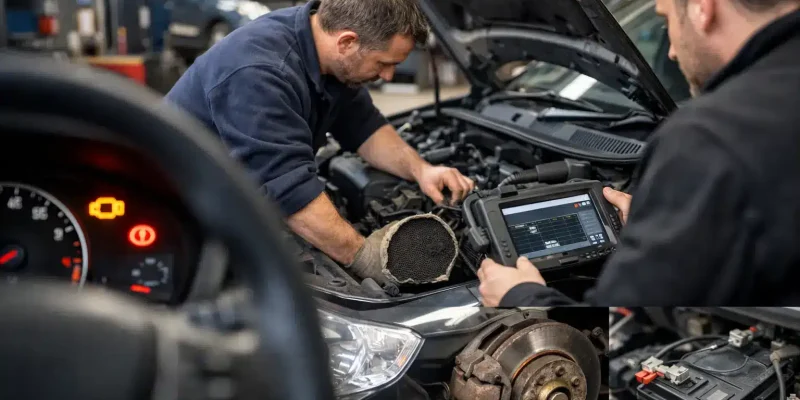
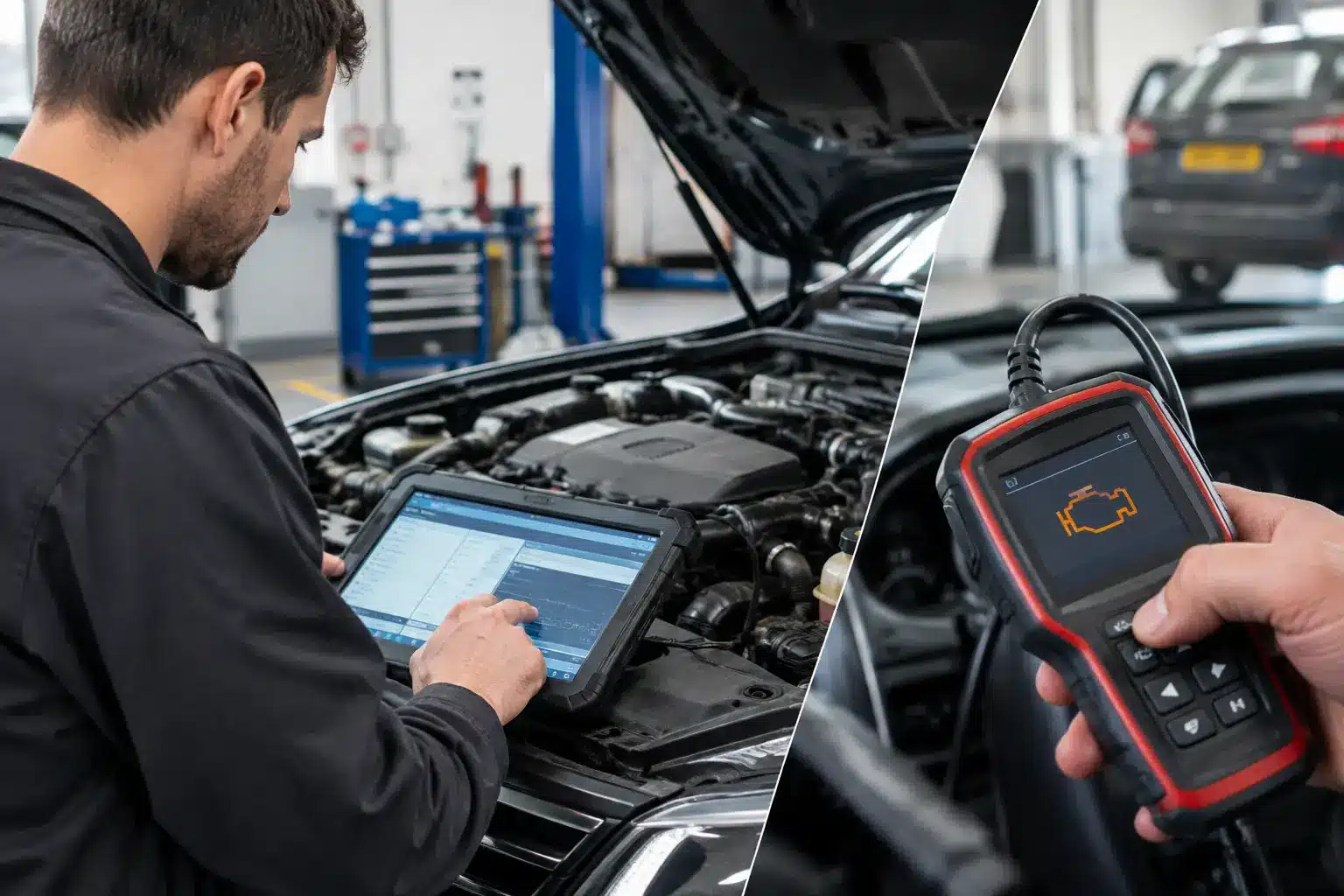
Understanding garage diagnostics versus code reader can help you avoid unnecessary repairs. A code reader identifies potential problems. Professional diagnostics go further by investigating why the fault appeared.
At AutoFix4u Garage Lowestoft, we focus on finding the actual cause before recommending repairs. This guide explains the difference and helps you decide when to book a professional diagnostic check.
Garage Diagnostics Versus Code Reader: The Main Difference
A code reader retrieves diagnostic trouble codes from a vehicle’s electronic systems.
These codes can identify areas where the vehicle has detected unusual readings.
For example, your code reader might show a problem involving an oxygen sensor, turbo boost pressure or engine misfire.
However, the code does not always identify the faulty component.
A professional diagnostic inspection combines fault codes with live data, physical checks and targeted testing.
This helps a technician determine what caused the warning.
What a basic code reader can do
Most basic OBD2 code readers can:
- Read standard engine fault codes.
- Display basic fault descriptions.
- Show some live engine readings.
- Clear stored codes.
- Check certain emissions-related information.
These features provide a useful starting point.
However, basic readers may not access every vehicle system.
They may also offer limited information about manufacturer-specific faults.
What professional garage diagnostics can do
Professional diagnostic equipment often provides more detailed access to vehicle systems.
Depending on the car, a technician may inspect:
- Engine management systems
- ABS and braking electronics
- Airbag and safety systems
- Transmission control modules
- Battery and charging systems
- DPF and emissions components
- Sensors and electrical circuits
Specialist equipment is only part of the process.
The technician must interpret the information and carry out appropriate tests.
For more information, visit our Engine Diagnostics Lowestoft service.
Why a Fault Code Does Not Always Identify the Problem
A diagnostic trouble code records a condition that the vehicle’s control system has detected.
It does not necessarily identify the component responsible.
For example, an oxygen sensor fault code could indicate a damaged sensor.
However, an exhaust leak, wiring problem or incorrect fuel mixture could also affect the reading.
Replacing the sensor without checking these possibilities may waste money.
The same applies to turbo faults.
A boost-pressure code could result from a split hose, faulty actuator, sensor issue or turbocharger problem.
Proper testing separates these possibilities.
This diagnostic-first approach helps prevent unnecessary replacement parts.
Why Clearing Fault Codes Is Not a Repair
Many code readers allow drivers to clear engine warning lights.
This can temporarily remove the warning from the dashboard.
However, clearing a code does not repair the underlying fault.
If the problem remains, the vehicle may detect it again.
The warning light could return during your next journey.
Clearing codes can also remove useful information. A technician may need this information to investigate an intermittent fault.
Therefore, record the code and symptoms before making changes.
If your warning light keeps returning, arrange a professional inspection.
Read our guide to warning lights and garage diagnostics for further advice.
Common Problems That Need Professional Diagnostics
Some vehicle faults require more than a basic fault-code scan.
Engine warning light and poor performance
An engine warning light may appear alongside reduced power, rough running or increased fuel consumption.
Possible causes include:
- Ignition problems
- Fuel delivery faults
- Air intake leaks
- Faulty sensors
- Emissions system problems
A technician can examine live engine readings and test the relevant components.
This helps identify the fault before replacing parts.
DPF warning lights and limp mode
Diesel vehicles often develop DPF-related problems after repeated short journeys.
However, a blocked filter is not always the original cause.
A failed pressure sensor, temperature sensor or engine-management fault can also interrupt regeneration.
A basic code reader may identify a DPF-related fault.
Professional testing helps determine why the system cannot operate correctly.
Our Blocked DPF Symptoms Guide explains the signs drivers should recognise.
Battery and alternator problems
A flat battery does not always mean the battery needs replacing.
The problem could involve the alternator, wiring or an electrical drain.
Low voltage can also trigger multiple electronic fault codes.
Replacing sensors without testing the charging system may lead to unnecessary costs.
A technician should check battery condition, charging performance and electrical connections.
Read our Alternator Fault Symptoms and Testing Guide.
Electrical faults
Modern cars rely on electronic control modules, sensors and wiring.
An intermittent electrical fault may only appear in certain conditions.
For example, a warning might appear during cold starts or wet weather.
Professional diagnostics can combine live data with electrical testing.
This helps technicians identify damaged wiring, faulty connections or component failures.
If your car has recurring electrical problems, explore our Auto Electrical Repairs Lowestoft service.
When Is a Basic Code Reader Enough?
A basic code reader can be useful if you want to understand a warning before contacting a garage.
It may help you identify the affected system.
For example, you can record the code and explain it when booking an appointment.
This gives the technician a starting point.
However, avoid replacing expensive components based solely on the code description.
You should seek professional advice when:
- The engine warning light keeps returning.
- The vehicle loses power.
- The engine misfires or runs roughly.
- Several warning lights appear together.
- The vehicle enters limp mode.
- The car struggles to start.
- The same fault remains after previous repairs.
These symptoms can involve several possible causes.
Professional testing helps determine the next step.
Can You Keep Driving With an Engine Warning Light?
The answer depends on the warning and the vehicle’s behaviour.
A steady amber engine warning light may allow you to reach a garage safely if the car runs normally.
However, you should arrange a check promptly.
Avoid unnecessary journeys and heavy acceleration until you understand the fault.
A flashing engine warning light requires more caution.
It may indicate a serious misfire that could damage the catalytic converter.
Stop safely and seek professional advice.
Also stop driving if you notice overheating, smoke, severe vibration or major power loss.
A red oil-pressure warning requires immediate attention.
If the car cannot travel safely, arrange recovery rather than risking further damage.
Our Car Recovery Lowestoft guide explains when vehicle recovery may be the better option.
What Happens During a Professional Diagnostic Appointment?
At AutoFix4u Garage Lowestoft, the process starts with your description of the problem.
We ask when the symptoms started and how the car behaves.
Next, we inspect the relevant systems.
Depending on the fault, the checks may include:
- Reading stored and active fault codes.
- Reviewing available live data.
- Inspecting relevant wiring and connectors.
- Testing sensors or mechanical components.
- Checking battery and charging performance where appropriate.
- Carrying out further tests when the findings require them.
We then explain the results.
If the vehicle needs repairs, we discuss the options and expected costs before starting work.
Some faults require additional testing before anyone can confirm a final repair estimate.
We explain this clearly so you understand the next step.
Garage Diagnostics Versus Code Reader: Which Saves Money?
A basic code reader can help you understand what the vehicle has detected.
However, it may not explain why the fault exists.
Replacing parts based on guesses can become expensive.
Imagine changing an oxygen sensor, only to discover that damaged wiring caused the original warning.
You would pay for a replacement part without solving the actual problem.
Professional diagnostics aim to reduce this risk.
The best approach is to identify the root cause and repair the faulty system.
Although diagnostic testing has a cost, it can help prevent repeated repairs and unnecessary parts.
Why Choose a Local Garage for Vehicle Diagnostics?
Drivers in Lowestoft, Oulton Broad, Carlton Colville, Kessingland and nearby areas need practical repair advice.
A local independent garage can provide direct communication about the vehicle’s condition.
At AutoFix4u Garage Lowestoft, we aim to explain problems without confusing technical language.
We focus on accurate inspections and sensible repair recommendations.
You should understand what the technician found, what needs attention and what the proposed repair involves.
We also discuss costs before starting additional work.
Our goal is to help you make an informed decision about your vehicle.
Book Professional Car Diagnostics in Lowestoft
A code reader provides useful information, but it cannot replace a thorough investigation.
If your car has warning lights, electrical faults, starting problems or reduced power, a professional diagnostic check can help identify the cause.
AutoFix4u Garage Lowestoft offers practical diagnostic and vehicle repair support.
Contact us to describe the problem and arrange the right inspection.
Call: 07778 979802
WhatsApp: Message AutoFix4u Garage Lowestoft
Get an estimate: Request a Free Estimate
A proper diagnosis can help you avoid unnecessary repairs and get your vehicle back on the road with confidence.