How to Know a Clutch Needs Replacing: 7 Signs
Your car may still get you to work, do the school run and drive normally around town, but a failing clutch often gives warning signs before it leaves you unable to select a gear. Knowing how to know clutch needs replacing can help you act before a manageable repair becomes a recovery call.
In most cases, clutch wear builds up over time. You might first notice it pulling away on a hill, joining a roundabout or changing gears in traffic. The key is not to ignore a new change in how the pedal feels, how the engine revs or how the gearbox responds.
7 signs your clutch may need replacing
1. The engine revs rise but the car does not pick up speed
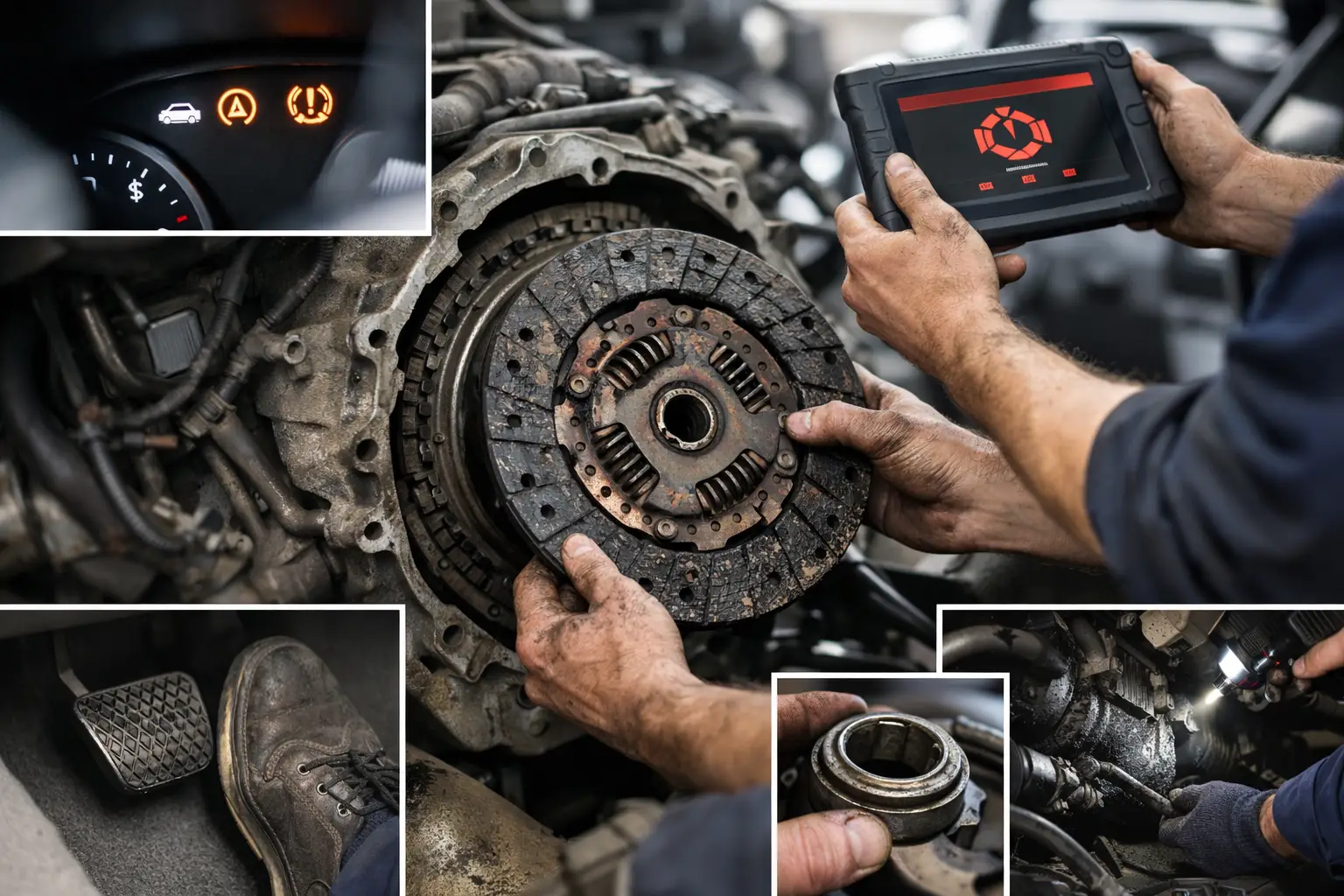
This is the most common sign of clutch slip. You press the accelerator, the rev counter climbs, but the car does not accelerate in line with the engine speed. It is often most obvious in a higher gear, when overtaking, or going uphill.
This usually happens because the clutch friction plate has worn thin and can no longer grip the flywheel properly. A slipping clutch will not repair itself. Continued driving creates more heat and can damage other parts of the clutch system, increasing the repair needed.
If the car is slipping badly, avoid hard acceleration and arrange an inspection promptly. It may still drive for a short period, but it can deteriorate quickly.
2. Changing gear feels difficult or crunchy
A healthy manual gearbox should select gears without a fight. If first gear or reverse is difficult to engage, or you hear a crunch as you change gear, the clutch may not be disengaging fully when you press the pedal.
The cause is not always a worn clutch. We often see this issue when there is a problem with the clutch hydraulic system, such as a weak master cylinder, slave cylinder or low fluid level. A gearbox linkage fault can also make gear selection feel stiff.
That is why a proper check matters. Replacing a clutch when the real fault is hydraulic would be an unnecessary expense. A diagnostic-first inspection identifies what has actually failed before any repair work is agreed.
3. The clutch pedal feels different
Drivers usually know their own car. If the clutch pedal suddenly feels unusually heavy, very light, spongy or reluctant to return, something needs checking.
A heavy pedal can point to wear in the clutch mechanism or pressure plate. A soft or spongy pedal can be caused by air or a leak in the hydraulic system. If the pedal stays close to the floor, or you need to pump it before selecting a gear, stop treating it as a minor annoyance. You could lose the ability to change gear altogether.
Check for any fluid under the car and do not keep forcing the gear lever. Contact a garage for advice and arrange recovery if the car cannot be driven safely.
4. The biting point has moved very high
The biting point is where the car begins to move as you lift the clutch pedal. With many worn clutches, this point moves higher and higher towards the top of the pedal travel.
A high biting point on its own does not prove the clutch is worn out. Some vehicles naturally have a higher bite than others, and pedal adjustment or hydraulic issues can affect the feel. But if it is a new change, especially alongside slipping or difficult gear changes, it is a strong reason to have it checked.
Try not to test it repeatedly by holding the car on the clutch on a hill. That adds heat and wear. Use the handbrake for hill starts instead.
5. You smell burning after pulling away or climbing a hill
A sharp burning smell, often compared with burnt paper or overheated brakes, can mean the clutch is overheating. It may happen after towing, heavy stop-start traffic, manoeuvring on a slope or pulling away quickly.
One brief smell after an awkward hill start does not automatically mean the clutch needs replacement. However, a repeated burning smell is different. It can mean the clutch is slipping under load, or that it has been overheated enough to glaze the friction material.
Let the vehicle cool down, avoid loading it heavily and book an inspection. If slipping is also present, do not delay.
6. The car judders as you pull away
Clutch judder feels like a vibration or shudder through the car as you move off from a standstill. It can make smooth starts difficult, particularly in first gear or reverse.
A worn or contaminated clutch can cause this, but there are other possibilities. Engine or gearbox mounts, a worn dual-mass flywheel, or oil leaking onto the clutch can all create similar symptoms. The correct solution depends on the cause. Fitting a new clutch without investigating an oil leak, for example, could lead to the same problem returning.
This is one of those faults where a garage needs to assess the whole area, not just assume the clutch plate is to blame.
7. There is a noise when you press the clutch pedal
A whirring, squealing, rumbling or scraping noise that appears when you press the clutch pedal can indicate a worn release bearing. Sometimes the noise is present with the pedal up and changes when you press it, which may point to another bearing or gearbox-related issue.
Noise alone does not tell the full story, but it should not be ignored. If it gets louder, is joined by vibration, or gear changes become difficult, arrange a check soon. In some cases, the clutch needs to come out to inspect and replace the failed component, so it makes sense to assess the full clutch assembly at the same time.
How long can you drive with a worn clutch?
It depends on the fault and how severe it is. A slightly high biting point may remain unchanged for some time. A clutch that is slipping during normal acceleration can worsen rapidly, particularly if you regularly drive in traffic, carry heavy loads or use hills around Lowestoft and the surrounding area.
The risk is not just being stranded. A slipping clutch makes overtaking and joining faster roads less predictable. A hydraulic fault can leave you unable to select a gear with little warning. If the pedal is stuck, gears will not engage, or the car loses drive, do not force it onwards. Arrange assistance instead.
What happens during a clutch inspection?
A sensible clutch diagnosis starts with the symptoms you have noticed. When did it begin? Does it happen when cold, after a longer journey, under acceleration, or only in reverse? These details help narrow down the fault.
A technician can then check pedal operation, clutch fluid and visible leaks, road-test the vehicle where safe, and assess whether the issue is likely to be the clutch, hydraulics, gear linkage, engine mounts or gearbox. If a clutch replacement is needed, the repair plan should explain which parts are being replaced and whether there is any sign of flywheel wear or an oil leak that needs dealing with at the same time.
Clutch work is labour-intensive because the gearbox normally has to be removed. That is why clear diagnosis before authorising the job is essential. You should receive a straightforward explanation, transparent pricing and no surprise extras.
Do not wait for complete clutch failure
If your car is revving without accelerating, struggling to select gears, smelling burnt, juddering or making a new noise around the clutch pedal, book it in before it disrupts your week. At AutoFix4u, we check the root cause, explain the repair in plain English and aim for a practical, reliable fix with clear pricing. Call now to discuss the symptoms or ask about available diagnostic slots – catching a clutch problem early is usually far less stressful than dealing with it at the roadside.


