Car Repair Lowestoft That Fixes the Cause
When your car starts playing up, the main question is usually simple – is it safe to drive, and how quickly can it be sorted? Most people looking for car repair Lowestoft services are not after a long explanation. They want the fault found properly, the repair explained clearly, and the car back on the road without wasted time or surprise costs.
That is exactly where a good local garage makes the difference. In most cases, the real issue is not the warning light itself, the strange noise, or the loss of power. Those are symptoms. The job is to find the cause behind them and fix that properly.
Why car repair in Lowestoft often starts with diagnostics
We often see cars come in after the owner has already tried to guess the problem. A warning light comes on, the car feels sluggish, or it struggles to start, and naturally people assume it is the battery, a sensor, or something minor. Sometimes they are right. Quite often, they are not.
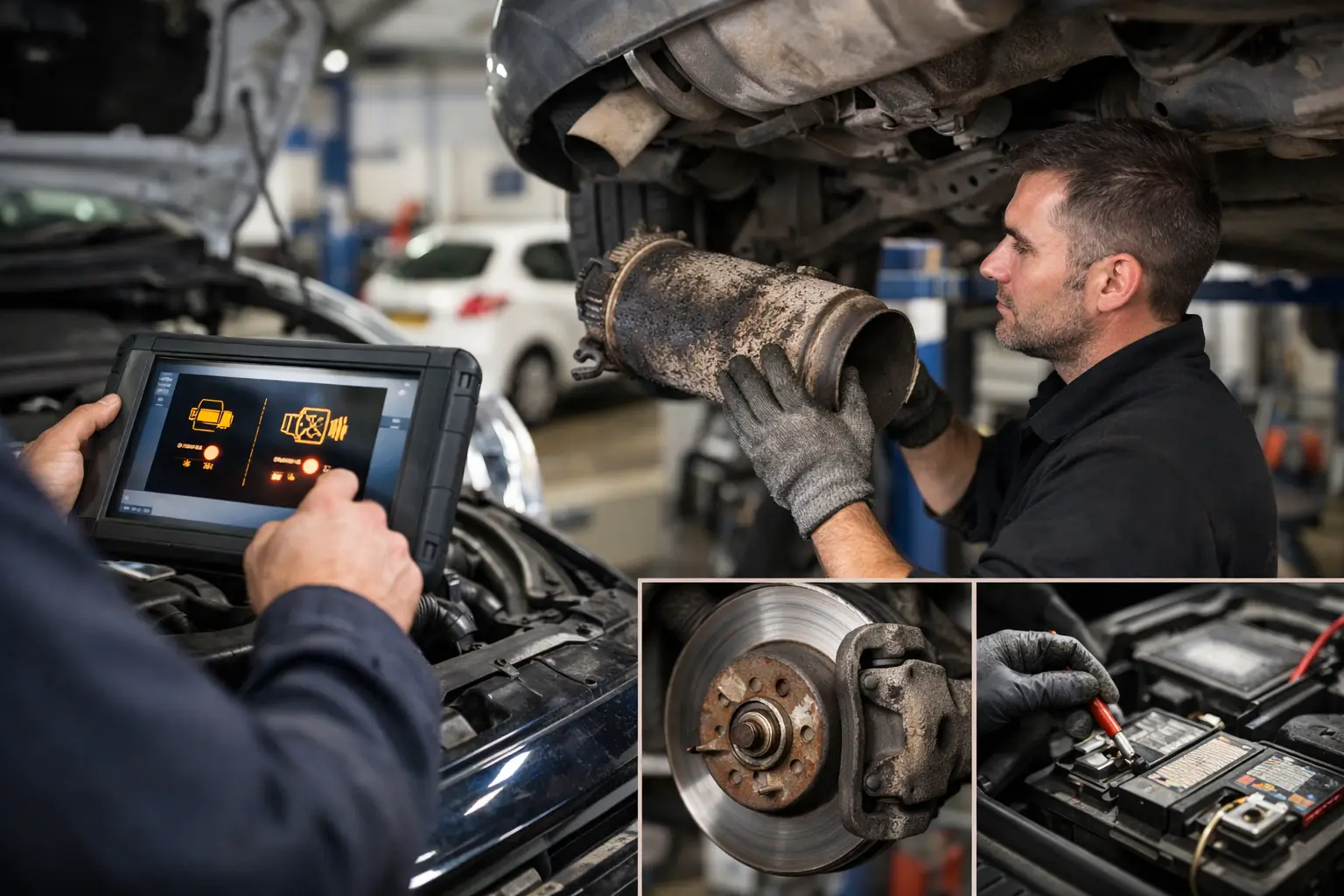
A proper diagnostic check saves time because it narrows the problem down before parts are fitted. That matters with modern vehicles. One fault can trigger several symptoms, and one symptom can have several possible causes. A car in limp mode, for example, might be linked to a DPF issue, an air flow fault, a turbo problem, or an electrical issue. Replacing parts based on guesswork usually costs more in the end.
The better approach is straightforward. Identify the fault, explain it in plain English, agree the repair plan, then carry out the work properly. That is how you avoid repeat visits for the same problem.
Common car problems we see in Lowestoft
Some faults come up again and again because they are tied to everyday driving. Short trips, stop-start traffic, missed servicing, and general wear all add up over time.
Warning lights on the dashboard
An engine warning light, ABS light, DPF light, or battery light should not be ignored. Sometimes the car still drives normally at first, which makes it easy to put off. The problem is that early faults are often cheaper and simpler to deal with than the damage caused by carrying on.
This usually happens because the car has detected a fault in one of its systems, but the light alone does not tell you the full story. A scan is the first step. From there, a garage can see what the vehicle is reporting and test the likely cause rather than making assumptions.
Loss of power or limp mode
Loss of power is one of the most common reasons people call for urgent help. The car may feel flat when accelerating, struggle uphill, or suddenly limit speed. In most cases, this happens because the engine management system has detected a fault and reduced performance to protect the engine.
The cause can vary. We often see this issue when a DPF is blocked, a sensor is reading incorrectly, or there is a problem with boost pressure or fuel delivery. The right fix depends on what testing shows. Sometimes it is a cleaning or regeneration issue. Sometimes a failing component needs replacing.
Brakes, clutch and safety repairs
If the brakes are grinding, pulling to one side, or feeling soft, it needs checking quickly. The same goes for a clutch that slips, bites high, or makes gear changes difficult. These are not faults to leave until next week.
Wear is the usual cause, but not always the only one. Uneven pad wear might point to a sticking caliper. A poor clutch feel might involve hydraulics rather than the clutch itself. That is why inspection matters before quoting for parts.
MOT failures that need clear answers
A failed MOT is frustrating enough without vague advice. Many drivers just want someone to tell them what has actually failed, what needs doing now, and what can wait.
That is where a practical repair approach helps. If the issue is suspension wear, brake imbalance, emissions, tyres, or lighting, the fix should be explained clearly. No padding, no scare tactics. Just what is wrong, why it failed, and what is needed to put it right.
Car repair Lowestoft drivers need when time matters
For most people, being without the car is not a minor inconvenience. It means missed work, school runs, cancelled plans, or a problem getting around at all. That is why speed matters, but it has to be the right kind of speed.
Fast repairs are useful only when the fault has been diagnosed properly first. Rushing into a repair without confirming the cause often leads to the same problem coming back. A good local garage aims for same-day solutions where possible, but not at the expense of doing the job properly.
That matters especially with electrical faults and drivability issues. A rushed battery replacement will not fix a charging problem. A quick sensor change will not solve a wiring fault. If the root cause is missed, you are back where you started.
Repairs that often need a proper root-cause check
Some jobs sound simple from the driver seat but can have more than one cause behind them.
Air conditioning is a good example. If the system is blowing warm, it may just need regassing, but not always. There could be a leak, a pressure issue, or a fault with the compressor or controls. Regassing a leaking system without checking it properly is only a short-term fix.
Battery trouble is similar. If the car will not start, the battery may be flat because it is old. It may also be draining because of an alternator fault, poor connection, or another electrical problem. Fitting a new battery without testing the charging system is not much use.
Suspension knocks and uneven tyre wear also need proper inspection. A noise over bumps might be a drop link, top mount, bush, or something else entirely. The tyre wear pattern often tells part of the story, but not all of it.
Choosing a local garage for car repair in Lowestoft
When you need a repair, trust usually comes down to a few practical things. Can they tell you what is actually wrong? Do they explain it clearly? Do they ring before extra work is done? Do they understand that you need the car back as soon as possible?
That is why many drivers prefer a local independent garage over a bigger chain setup. You are dealing with the people doing the work. There is more accountability, and usually a more direct conversation about what the car needs and what can realistically be done today.
For drivers around Lowestoft, Oulton Broad, Carlton Colville, Kessingland, Beccles and nearby areas, local access matters as much as the repair itself. If the car is struggling, making a long trip to a garage is not ideal. Using a workshop that knows the area and works with local drivers every day makes things simpler.
What to do when your car starts showing signs of trouble
If something has changed, do not wait for it to become a breakdown if you can avoid it. A warning light, rough running, poor braking feel, overheating, difficult starting, or new noise is usually the point to act.
In most cases, the best next step is to book diagnostics or an inspection rather than guessing. That gives you a clear answer and a proper repair plan. It also means you can make an informed decision about whether the car is safe to keep using.
If the problem feels urgent, say so when you call. A decent garage will tell you honestly whether it sounds like something that needs immediate attention, whether recovery support may be needed, or whether there may be a same-day slot available.
At https://autofix4u.co.uk/, the focus is on finding the fault properly, explaining it clearly, and getting drivers back on the road with no surprise extras. That is what most people need from a repair garage – not sales talk, just honest answers and dependable work.
If your car is warning you that something is wrong, it is usually worth listening early. The quicker the cause is identified, the better the chance of a simpler repair and less disruption to your day.