New Tyres Lowestoft: What Drivers Need to Know
A tyre problem rarely happens at a convenient time. It is usually spotted when you are already late, already stressed, or standing next to the car before the school run, work, or an MOT. If you are searching for new tyres Lowestoft drivers can rely on, the main thing you need is a clear answer fast – are your tyres still safe, or do they need replacing now?
In most cases, drivers come in with one of a few familiar problems. The tread looks low. A tyre keeps losing pressure. The steering feels slightly off. The car starts pulling to one side. Sometimes it is an MOT advisory that finally pushes it to the top of the list. Sometimes it is a puncture that cannot be repaired. Whatever the reason, replacing tyres is not just a routine job. It is a safety issue, and it can also point to other faults that need dealing with at the same time.
When new tyres are actually needed
We often see cars where the owner has been told they need tyres, but the real question is why. A worn tyre is the problem you can see. The cause behind it may be simple age and mileage, or it may be something else.
If the tread is close to the legal limit, the tyre needs replacing. The same applies if there are cracks in the sidewall, bulges, exposed cords, or damage from kerbing or potholes. A slow puncture can sometimes be repaired, but not always. If the damage is in the shoulder or sidewall, a new tyre is usually the only safe option.
There is also the issue of age. Even if the tread looks acceptable, older tyres can harden and lose grip. That matters most in heavy rain, on roundabouts, and in emergency braking. A tyre can look usable at a glance but still perform badly when you need it most.
Why tyres wear out unevenly
This is where many drivers get caught out. They replace one or two tyres, then a few months later the same issue comes back. That usually happens because the wear pattern was never explained properly.
Inner edge wear
If the inside edge is wearing faster than the rest of the tyre, wheel alignment is often the cause. We also see this with worn suspension parts. The tyre gets blamed, but the car itself is what is ruining it.
Centre wear
This usually happens because the tyre has been overinflated for too long. The middle section carries more of the load, so it wears down first. It is a simple issue, but if it is ignored it shortens tyre life.
Outer edge wear
This can come from underinflation or repeated cornering on low pressure. It can also point to steering or suspension issues depending on the vehicle and the wear pattern.
Patchy or feathered wear
If the tyre feels rough across the tread or wears in uneven patches, alignment and balancing should be checked. In some cases, a worn shock absorber is behind it.
That is why a proper tyre service should not stop at fitting rubber and sending you away. If there is a reason the old tyres failed early, it makes sense to catch it before the new set starts wearing the same way.
Choosing the right new tyres in Lowestoft
Not every driver needs the same tyre. A car used for short local trips has different demands from one doing motorway miles every week. A heavier vehicle, a van, or a family car carrying passengers regularly may also need a different tyre choice than a smaller hatchback.
The right option depends on how you use the car, your budget, and what matters most to you. Some tyres are built for longer life. Others focus more on wet weather grip, lower road noise, or better fuel economy. There is always a trade-off. A budget tyre may cost less upfront, but if it wears quickly or performs poorly in the wet, it may not be the best value.
That does not mean everyone needs the most expensive brand fitted. In most cases, what matters is choosing a quality tyre that suits the car properly and is fitted correctly. You want the correct size, load rating, and speed rating, along with honest advice on whether you need one tyre, a pair, or a full set.
New tyres Lowestoft drivers often ask about after an MOT
MOT season brings this up all the time. A car goes in for a test, then comes back with advisories for tyre wear, or a failure because one tyre has dropped below legal tread depth. What catches people out is that the other tyre on the same axle may not be far behind.
If one front tyre is clearly worn and the other is close, replacing both often makes more sense. The same applies at the rear. Matching tyres on the same axle helps with stability and predictable handling. Mixing tyre types is not always unsafe, but it can affect how the car feels on the road.
If your car has failed or picked up tyre advisories, the next step should be simple. Get them checked properly, make sure the cause of wear is understood, and have the replacements fitted without delay. Leaving it until next month often turns a straightforward job into a puncture, a blowout risk, or another failed test.
What happens during tyre fitting
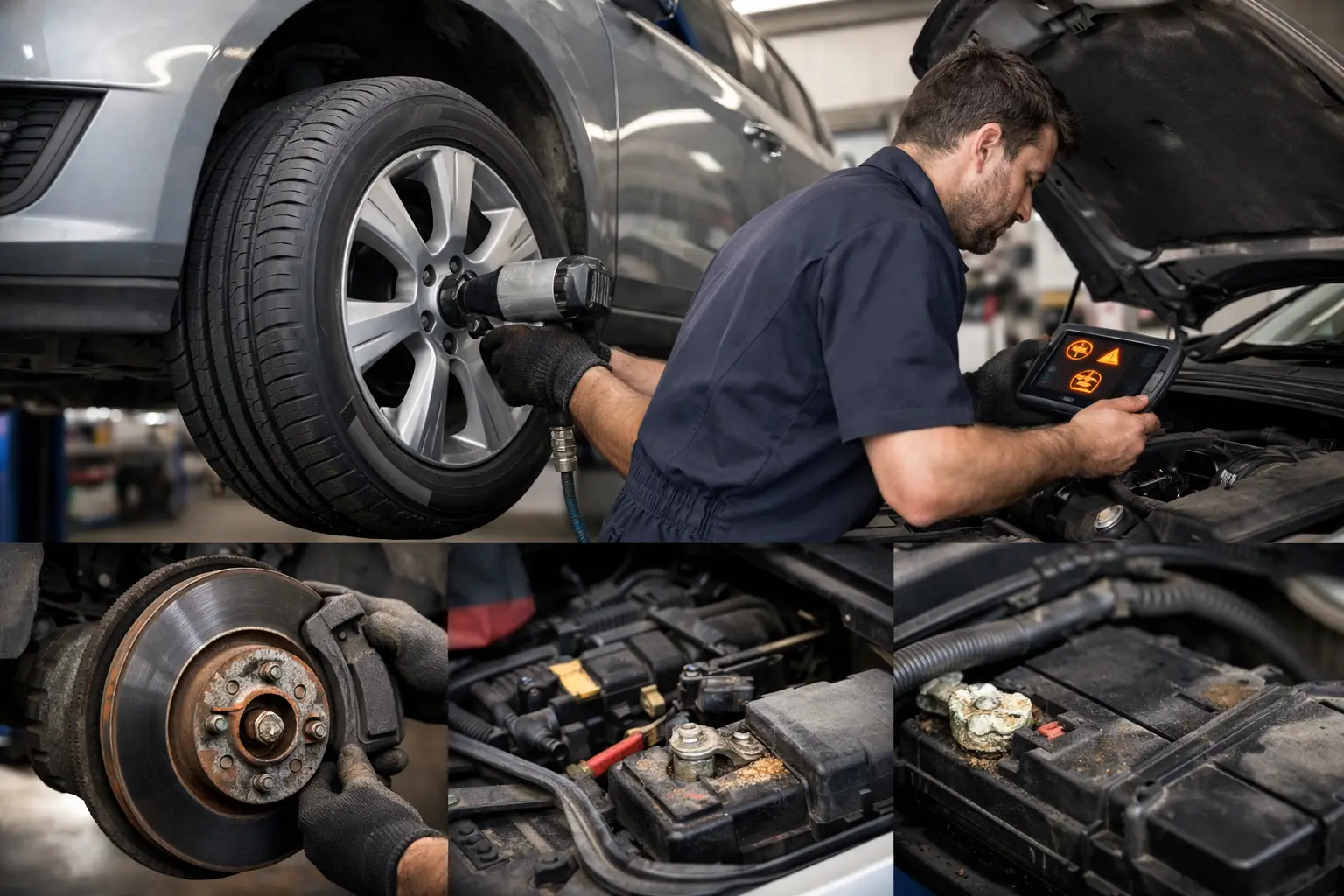
A proper fitting job is straightforward, but it should still be done carefully. The old tyre is removed, the wheel checked, the new tyre fitted, inflated to the correct pressure, and balanced. If needed, the valve is replaced and the wheel is torqued correctly when refitted to the vehicle.
If there has been uneven wear, this is the point where alignment or suspension checks should be raised. That is especially true if the steering has felt off, the car has been pulling, or the old tyres have worn out much sooner than expected.
For drivers in Lowestoft, Oulton Broad, Carlton Colville, Kessingland, Beccles and nearby areas, speed matters as much as quality. Most people are not shopping for tyres because they have a free afternoon. They need the car back on the road, and they need to know the job has been done properly.
Signs your tyres are affecting the way the car drives
Sometimes the tyre problem is obvious. Sometimes it shows up as a drivability issue first. We often see customers book in because the steering feels vague, braking distances feel longer, or the car does not feel as stable in the wet as it used to.
This usually happens because tyres lose performance gradually. You get used to the change without realising it. Then one day the car feels unsettled in standing water, slips slightly pulling away, or takes longer to stop at a junction. By that stage, the tyres may be legal on paper but no longer working as they should.
Low tread depth, incorrect pressure, ageing rubber and uneven wear all affect grip. On wet roads, that can make a real difference. It is one of those jobs people put off because the car still moves, but tyres are the only part of the vehicle actually touching the road.
When a puncture can be repaired and when it cannot
Not every puncture means buying a new tyre. If the damage is small and sits in the central tread area, a repair may be possible. But if the sidewall is damaged, the tyre has been driven on while flat, or the puncture is too close to the edge, replacement is usually the safer option.
This is where clear advice matters. You do not want to pay for a tyre if a repair is genuinely suitable. But you also do not want a quick fix on a tyre that is already unsafe or near the end of its life.
The next step if you need tyres soon
If you are unsure whether your tyres are still safe, get them checked before the problem becomes urgent. If the tread is low, the pressure keeps dropping, or the car has picked up an MOT advisory, it is worth dealing with it now while the fix is still simple.
A good local garage should be able to tell you exactly what is needed in plain English. If it is just tyres, they should say so. If the wear points to alignment, suspension, or steering problems, that should be explained clearly as well. That kind of honest approach saves time, saves money, and helps stop the same issue coming back.
If you need a fast answer, call now, get a quote, and have the tyres checked properly. Same-day slots may be available. Better to sort it before the next school run, commute, or MOT reminder turns a worn tyre into a bigger problem.