
How to Identify Clutch Slip Before It Leaves You Stuck
Your engine revs climb as you accelerate, but your car struggles to gain speed. Perhaps you notice the problem on a hill or when joining a busy road.
These symptoms may indicate clutch slip. However, a loss of acceleration does not always mean the clutch has failed.
Knowing how to identify clutch slip can help you recognise the warning signs before the vehicle loses drive.
At AutoFix4u Garage Lowestoft, we investigate clutch symptoms before recommending repairs. This approach helps us identify worn components, hydraulic faults and other problems that can affect vehicle performance.
What does clutch slip feel like?
A manual clutch connects the engine to the gearbox.
When you release the clutch pedal, the clutch transfers engine power through the gearbox to the wheels.
However, a worn or contaminated clutch may struggle to maintain its grip.
As a result, the engine can rev faster without producing the expected increase in road speed.
Engine revs rise without matching acceleration
This is one of the clearest warning signs.
For example, you may accelerate in fourth or fifth gear and notice the rev counter climbing quickly.
However, the vehicle gains speed much more slowly than expected.
The problem often becomes more noticeable when you accelerate uphill.
The car struggles under load
Clutch slip may first appear during demanding driving conditions.
For example, carrying passengers, climbing hills or towing can make the symptoms easier to notice.
The clutch must transfer more torque during these situations.
Consequently, a worn friction plate may struggle to maintain contact.
A burning smell after driving
A slipping clutch creates friction and heat.
As a result, you may notice a hot, acrid smell after hill starts or heavy acceleration.
However, one brief smell does not prove that the clutch needs replacement.
Repeated smells combined with slipping deserve prompt inspection.
The biting point feels unusually high
Some drivers notice that the clutch engages near the top of the pedal travel.
This can suggest wear, especially if the biting point has changed gradually.
However, different vehicles have different clutch characteristics.
A high biting point alone cannot confirm clutch failure.
How to identify clutch slip safely
You can recognise many symptoms during normal driving.
However, avoid deliberately forcing the clutch to slip.
Aggressive acceleration and repeated tests may cause further damage.
Instead, pay attention to how the vehicle responds during ordinary journeys.
Look for these common signs:
- Engine revs increase without matching road speed.
- Acceleration becomes weaker uphill.
- The vehicle struggles when carrying additional weight.
- A burning smell appears after pulling away.
- The clutch biting point changes noticeably.
- The problem becomes more frequent as the engine warms up.
Also, note when the symptoms first appeared.
For example, does the problem occur only in higher gears?
Does it happen after driving in traffic?
These details can help a mechanic identify the cause.
Avoid unsafe clutch tests
Some drivers attempt to test the clutch using the handbrake and accelerator.
However, deliberately loading the clutch can overheat or damage the components.
Therefore, do not attempt this type of test at home.
A professional inspection provides a safer way to assess the fault.
Clutch slip or engine power loss?
Not every vehicle that struggles to accelerate has a slipping clutch.
Engine faults can also cause hesitation, reduced performance and poor acceleration.
However, the symptoms often differ.
Signs that suggest clutch slip
A slipping clutch usually allows the engine revs to rise quickly.
Meanwhile, the vehicle speed increases more slowly.
This difference between engine speed and road speed is an important clue.
Signs that suggest an engine fault
An engine fault may prevent the vehicle from producing enough power.
For example, turbocharger problems, fuel delivery faults and DPF restrictions can reduce acceleration.
In these situations, the engine may struggle to gain revs.
The dashboard may also display a warning light.
For diesel vehicles, our Blocked DPF Symptoms Guide explains how emissions faults can affect performance.
If the symptoms remain unclear, professional Engine Diagnostics Lowestoft can help investigate engine-related causes.
What causes clutch slip?
Clutch wear is a common cause.
However, several mechanical problems can reduce the clutch’s ability to transfer power.
Worn clutch friction material
The clutch friction plate gradually wears during normal use.
Every pull-away and gear change places some demand on the system.
Over time, the friction material becomes thinner.
Eventually, the clutch may no longer grip firmly enough under load.
Frequent stop-start driving can increase wear.
In addition, regular hill starts and towing place greater demands on the clutch.
Oil contamination
The engine and gearbox contain seals that prevent oil from escaping.
However, a damaged seal may allow oil to reach the clutch assembly.
Oil can contaminate the friction material and reduce grip.
As a result, the clutch may slip even if the friction plate has not worn completely.
Replacing the clutch without addressing the leak could allow the problem to return.
Pressure plate problems
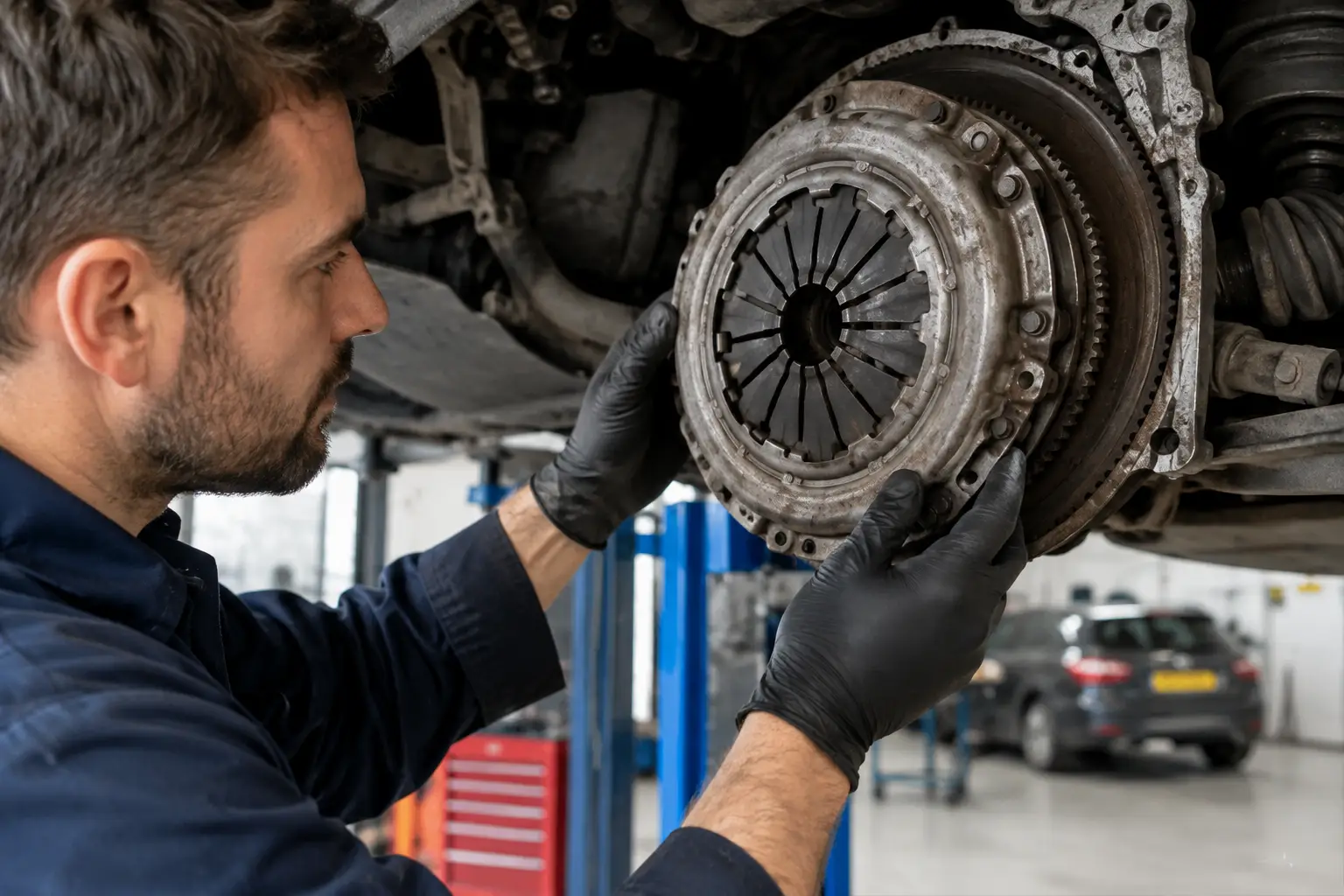
The pressure plate helps clamp the clutch friction plate against the flywheel.
If the pressure plate loses its clamping force, the clutch may start slipping.
However, the mechanic must assess the assembly before confirming the cause.
Flywheel damage
Some vehicles use a dual-mass flywheel to reduce drivetrain vibration.
A damaged flywheel may cause rattling, judder or other unusual symptoms.
However, flywheel problems do not always cause clutch slip.
The technician should assess its condition when carrying out relevant clutch repairs.
Can a clutch pedal problem cause similar symptoms?
Yes. Problems with the clutch release system can affect how the clutch operates.
For example, a hydraulic fault may prevent the clutch from engaging or disengaging correctly.
You might also notice a soft pedal, a sticking pedal or difficulty selecting gears.
However, these symptoms do not automatically mean the friction plate has worn out.
Our Clutch Pedal Sticking Guide explains common hydraulic and pedal-related faults.
If your main problem involves difficult gear selection rather than rising engine revs, the cause may be different.
Therefore, the inspection should focus on the symptoms rather than assuming the clutch needs replacement.
Can you drive with a slipping clutch?
A mildly slipping clutch may still allow the car to move.
However, the problem can worsen quickly.
As the clutch loses grip, the vehicle may struggle to accelerate or pull away.
This creates additional risk at junctions, on hills and when joining faster roads.
When should you stop driving?
Avoid further driving if:
- The car barely accelerates despite high engine revs.
- The clutch produces a strong burning smell.
- The vehicle struggles to pull away.
- The clutch pedal stays on the floor.
- You cannot select gears safely.
- The vehicle loses drive unexpectedly.
In these situations, arrange professional assistance.
If the car cannot move safely, use recovery rather than attempting a longer journey.
Our Recovery Support Lowestoft guide explains the next steps when a fault leaves a vehicle stranded.
Can continued driving make repairs more expensive?
Yes, severe clutch slip can create significant heat.
That heat may damage the pressure plate or flywheel.
Consequently, the repair may involve more than replacing the friction plate.
However, the extent of any damage depends on the vehicle and the condition of its components.
Early inspection helps identify the problem before further wear develops.
How does a mechanic diagnose clutch slip?
A professional clutch inspection starts with the symptoms.
First, the technician asks when the problem occurs.
Next, they assess pedal operation and the relevant clutch controls.
Check clutch pedal operation
The mechanic checks how the pedal moves and returns.
They also look for signs of hydraulic problems.
For example, low fluid or a leaking cylinder may affect clutch operation.
Assess vehicle behaviour
Where safe, a controlled road test can help confirm slipping.
The technician compares engine speed with vehicle acceleration.
They also checks whether the symptoms occur under load.
This helps distinguish genuine clutch slip from other performance problems.
Inspect related components
The mechanic checks accessible clutch components and looks for fluid leaks.
If the evidence points to an internal clutch problem, gearbox removal may be necessary.
However, the garage should explain the likely repair before starting major dismantling.
Confirm the recommended repair
Once the technician identifies the fault, they can explain the available options.
For example, the vehicle may need a clutch kit, hydraulic components or additional work on the flywheel.
The correct repair depends on the inspection findings.
Our Clutch Replacement Lowestoft page explains the service and common replacement requirements.
What happens during clutch replacement?
Most manual clutch replacements require access between the engine and gearbox.
The mechanic usually removes the gearbox to reach the clutch assembly.
Next, they inspect the friction plate, pressure plate and release components.
They also check for contamination, heat damage and related faults.
If the flywheel requires attention, the garage should explain why.
After fitting suitable replacement parts, the technician reassembles the vehicle.
They then check clutch operation and gear selection.
Finally, a road test helps confirm that the repair has addressed the original symptoms.
How can you reduce clutch wear?
Good driving habits can help protect the clutch.
However, clutch components will still wear over time.
Avoid resting your foot on the pedal
Keep your foot away from the clutch pedal when you are not changing gear.
Even light pressure can affect clutch engagement on some vehicles.
Over time, this may increase wear.
Use the handbrake on hills
Avoid holding the vehicle stationary using the clutch biting point.
Instead, use the handbrake or appropriate hill-hold system.
This reduces unnecessary clutch slipping.
Avoid excessive revs when moving away
Use enough engine power for a smooth pull-away.
However, avoid holding high revs while slipping the clutch.
This produces extra heat and wear.
Address unusual symptoms early
A change in pedal feel, burning smell or difficulty selecting gears deserves attention.
Even if the car still drives, a developing fault may become more serious.
Therefore, arrange an inspection before the symptoms affect everyday journeys.
How to identify clutch slip before a breakdown
The clearest clue is a rise in engine revs without matching acceleration.
However, burning smells, changing pedal feel and poor performance under load can provide additional warning signs.
The next step is to establish whether the clutch is worn or another fault is affecting the vehicle.
At AutoFix4u Garage Lowestoft, we investigate clutch symptoms and explain the findings before recommending repairs.
We aim to provide clear advice, suitable repair options and transparent estimates.
If your car slips under acceleration or struggles to pull away, contact us before the problem becomes a breakdown.
Clutch repairs: Clutch Replacement Lowestoft
Call: 07778 979802
WhatsApp: Message AutoFix4u Garage Lowestoft
Request an estimate: Get a Free Estimate
Address: Unit 4, 10 Battery Green Road, Lowestoft, NR32 1DE.
Book a clutch inspection before a developing fault leaves you without reliable transport.


