
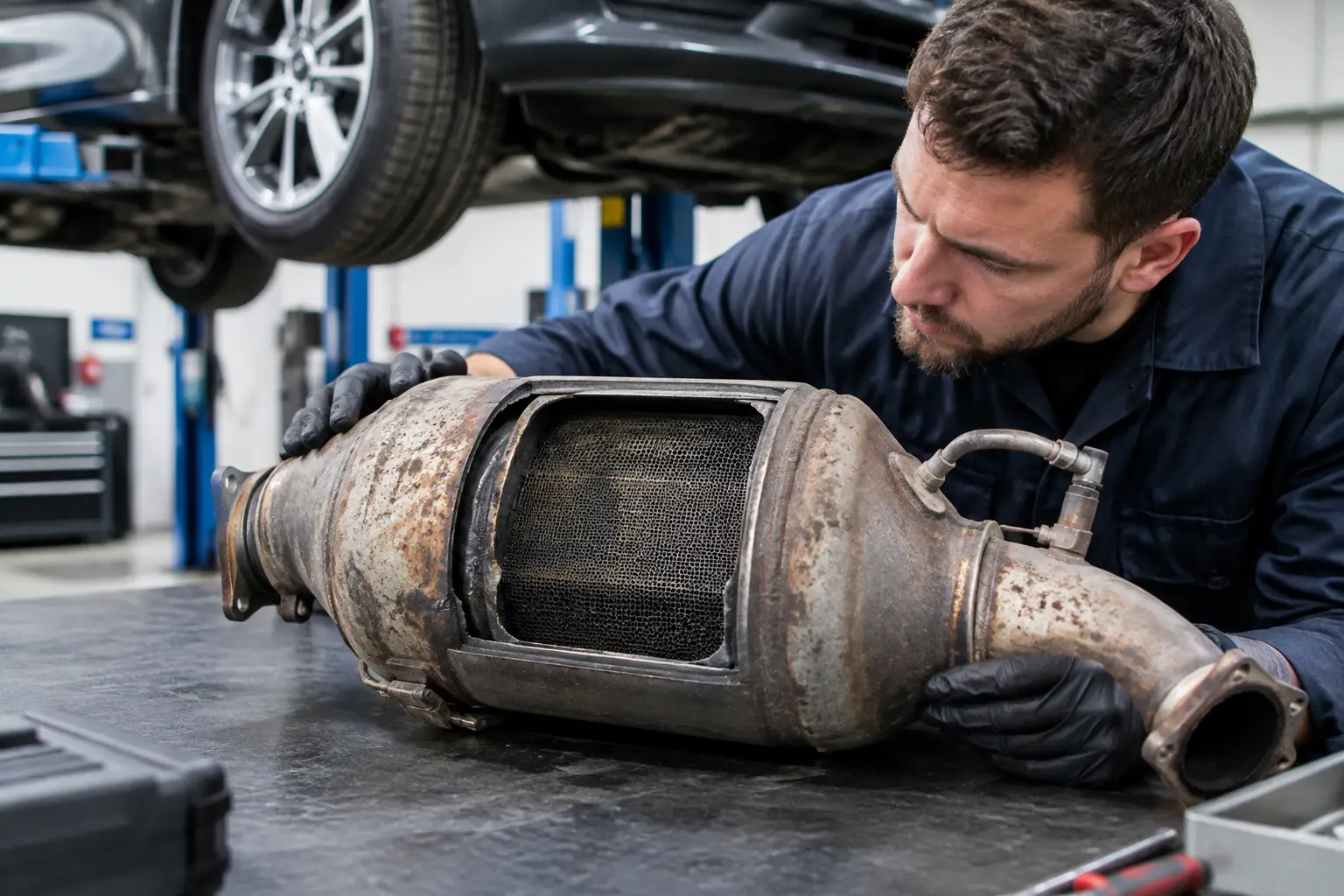
Diesel Particulate Filter Care Guide for Drivers
A DPF warning light can appear during a normal journey to work, school or the shops. Your diesel may also feel sluggish, use more fuel or struggle to accelerate.
This diesel particulate filter care guide explains what these warning signs mean. It also covers regeneration, maintenance and when to book a diagnostic inspection.
A blocked DPF can eventually cause reduced power or limp mode. However, the filter itself may not be the original problem.
At AutoFix4u Garage Lowestoft, we help drivers identify DPF faults before recommending repairs. Our approach focuses on finding the cause, not simply clearing warning lights.
What does a diesel particulate filter do?
Most modern diesel vehicles use a diesel particulate filter, usually called a DPF.
The filter sits within the exhaust system and traps harmful soot particles. This helps reduce particulate emissions from the vehicle.
However, soot gradually collects inside the filter.
To manage this build-up, the engine carries out a process called regeneration. During this process, high exhaust temperatures burn away suitable amounts of trapped soot.
As a result, the filter can continue working without needing frequent replacement.
How does DPF regeneration work?
The engine management system monitors conditions within the exhaust.
When the vehicle meets the necessary requirements, it can start a regeneration cycle.
This process raises exhaust temperatures and burns collected soot.
However, successful regeneration depends on several factors.
For example, engine temperature, driving conditions and sensor readings all matter.
If another fault prevents regeneration, the filter may continue collecting soot.
Our Blocked DPF Regeneration Explained article explains the process in more detail.
Why does a DPF become blocked?
A DPF can become restricted for several reasons.
However, frequent short journeys are a common contributing factor.
Short journeys and stop-start driving
Many drivers use diesel cars for short trips around Lowestoft.
For example, a vehicle may mainly cover school runs, shopping trips and short commutes.
During these journeys, the exhaust may not reach suitable regeneration conditions.
As a result, the vehicle may interrupt regeneration before it finishes.
Over time, soot can build up inside the filter.
Faulty sensors
Modern diesel vehicles rely on several sensors to manage emissions.
These can include pressure and exhaust temperature sensors.
However, a sensor may produce incorrect readings because of a fault or wiring problem.
Consequently, the engine management system may prevent regeneration.
Replacing the DPF would not solve that underlying problem.
EGR and engine performance faults
The exhaust gas recirculation system helps control emissions.
However, a sticking EGR valve or another engine fault can affect combustion.
Some faults may increase soot production or interfere with regeneration.
For example, boost leaks, injector problems and thermostat faults can contribute to DPF trouble.
Therefore, a mechanic should investigate the entire system when problems keep returning.
Diesel particulate filter care guide: warning signs
A blocked DPF does not always cause an immediate breakdown.
Instead, many drivers notice smaller changes first.
DPF warning light
A dashboard warning is often the first obvious sign.
Some vehicles display a dedicated DPF symbol.
Others show an engine management warning or an emissions message.
However, the light does not automatically mean the filter needs replacing.
A sensor fault or failed regeneration may trigger a similar warning.
Reduced engine power
Your diesel may feel slower than usual.
For example, acceleration may become weaker when joining a main road or climbing a hill.
A restricted exhaust can affect engine performance.
However, turbo, fuel and air intake faults can produce similar symptoms.
Therefore, diagnosis should come before replacement.
Limp mode
Limp mode limits engine performance when the vehicle detects certain faults.
You may notice poor acceleration or restricted engine speed.
However, limp mode can have several causes.
If your vehicle enters limp mode, avoid unnecessary driving and arrange professional advice.
Higher fuel consumption
Repeated regeneration attempts may increase fuel use.
In addition, engine faults can reduce efficiency.
If fuel consumption rises alongside DPF warnings, arrange an inspection.
Cooling fan running after switch-off
Sometimes, the cooling fan continues running after you park.
This can happen during normal thermal management or after a regeneration attempt.
However, repeated fan operation alongside warning lights deserves investigation.
Unusual exhaust smells or smoke
During some operating conditions, you may notice a stronger hot exhaust smell.
However, heavy smoke can indicate another engine or exhaust fault.
Do not assume the DPF alone causes every exhaust problem.
For more information, read our Blocked DPF Symptoms Guide.
Can a longer drive clear a DPF warning?
Sometimes, a suitable journey can help the vehicle complete regeneration.
However, it depends on the warning, filter condition and vehicle manufacturer.
If the car drives normally and only shows an early DPF warning, follow the handbook’s regeneration instructions.
Some manufacturers recommend a continuous journey at suitable engine speed and temperature.
However, there is no universal speed or journey duration for every diesel.
You do not need to drive aggressively or exceed speed limits.
When should you avoid attempting regeneration?
Do not attempt to clear a DPF warning through driving if:
- The vehicle has entered limp mode.
- Engine power has dropped significantly.
- The engine warning light flashes.
- The vehicle overheats.
- The engine oil level exceeds the maximum mark.
- The exhaust produces excessive smoke.
- The manufacturer instructs you to stop.
In these situations, arrange professional advice.
Repeatedly driving a faulty vehicle to clear the warning may cause further problems.
How to look after your diesel particulate filter
Good maintenance can reduce the risk of DPF trouble.
However, no driving routine can prevent every fault.
Follow your vehicle’s service schedule
Regular servicing supports engine performance.
For example, clean filters and suitable engine oil help the vehicle operate correctly.
However, always follow the manufacturer’s maintenance schedule.
Our Car Servicing Lowestoft service can help with scheduled maintenance.
Use the correct engine oil
Many DPF-equipped vehicles require low-ash engine oil.
The correct specification helps protect emissions equipment.
However, not every low-ash oil suits every diesel engine.
Therefore, check the manufacturer’s exact specification before adding or replacing oil.
Using an unsuitable oil can increase deposits and affect engine protection.
Monitor the engine oil level
Repeated interrupted regenerations can sometimes allow diesel fuel to enter the engine oil.
As a result, the oil level may rise.
If the level exceeds the maximum mark, avoid driving until a professional has assessed the cause.
Fuel-contaminated oil may not protect the engine properly.
Give the engine suitable operating conditions
If your driving mainly involves short journeys, regeneration may become more difficult.
However, do not leave the engine idling for long periods in an attempt to clean the DPF.
Instead, follow the vehicle handbook.
A suitable longer journey may help when the car is healthy and the manufacturer recommends it.
Investigate warning lights early
A DPF warning may indicate a developing problem.
Therefore, do not wait for severe power loss before arranging checks.
Early diagnosis can provide more repair options.
Why does the DPF warning keep coming back?
A warning that returns after regeneration needs further investigation.
Sometimes, the filter accumulates soot because another fault remains.
For example, a faulty temperature sensor may prevent successful regeneration.
Alternatively, an EGR or fuel system problem may increase soot production.
A thermostat problem
The engine must reach suitable operating temperatures.
However, a thermostat stuck open may prevent normal warm-up.
As a result, the vehicle may struggle to meet regeneration conditions.
Differential pressure sensor faults
The engine management system uses pressure information to assess exhaust restriction.
However, sensor faults or damaged pressure pipes can cause incorrect readings.
Therefore, a mechanic should check the readings before condemning the DPF.
Air intake and turbo problems
A boost leak or related engine fault can affect combustion.
Consequently, soot production may increase.
Repairing the underlying problem may be essential before regeneration can succeed.
How does a garage diagnose a DPF problem?
A proper DPF inspection involves more than connecting a scanner.
First, the mechanic listens to the symptoms.
Next, they assess fault codes and relevant live data.
Further checks depend on what the evidence shows.
Step 1: Review the warning lights
The technician identifies active warning lights and dashboard messages.
They also ask when the symptoms first appeared.
For example, the problem may occur only during short journeys or under acceleration.
Step 2: Read fault codes
Professional diagnostic equipment can retrieve relevant stored codes.
However, a code is only a starting point.
It does not always identify which component has failed.
Step 3: Check live readings
Depending on the vehicle, the technician may examine:
- DPF differential pressure.
- Calculated soot loading.
- Exhaust temperatures.
- Regeneration status.
- Relevant engine sensor values.
- Engine operating temperature.
These readings help narrow down the cause.
However, the mechanic must interpret them alongside the vehicle’s condition.
Step 4: Inspect related components
Further checks may reveal damaged hoses, faulty sensors or engine performance problems.
For example, a pressure pipe may split or become restricted.
The correct repair depends on the findings.
Step 5: Explain the options
Finally, the mechanic explains whether regeneration, cleaning or another repair is appropriate.
Some vehicles need further investigation before any DPF procedure can take place.
Our Engine Diagnostics Lowestoft service helps identify underlying faults.
Is forced DPF regeneration always suitable?
No. Forced regeneration is not appropriate for every vehicle or blockage.
A technician may use professional diagnostic equipment to start a controlled regeneration when conditions allow.
However, the process creates high exhaust temperatures.
Therefore, the technician must assess the vehicle before attempting it.
A severely restricted DPF, unsuitable oil condition or another engine fault may make regeneration unsafe or ineffective.
When can regeneration help?
Regeneration may help when soot loading remains within suitable limits.
The engine and related sensors must also operate correctly.
However, the mechanic needs to confirm those conditions first.
What if regeneration does not work?
The filter may need professional cleaning or replacement.
For example, an ageing DPF can accumulate ash that normal regeneration cannot burn away.
In addition, damaged filters may require replacement.
Our DPF Regeneration Lowestoft service includes DPF assessment and regeneration where suitable.
Does DPF cleaning fix every blockage?
No. DPF cleaning can help in suitable cases, but it cannot solve every fault.
For example, cleaning will not repair a failed pressure sensor.
It also cannot fix an EGR problem or damaged turbo system.
If the engine continues producing excessive soot, the filter may block again.
Therefore, identifying the cause remains essential.
A mechanic should explain the available options before proceeding.
Can you drive with a DPF warning light?
The answer depends on the warning and how the vehicle behaves.
A newly displayed warning may not require immediate recovery if the car drives normally.
However, follow the manufacturer’s instructions.
If the warning remains active, arrange an inspection promptly.
When should you stop driving?
Stop somewhere safe and seek help if:
- Engine power drops severely.
- The vehicle enters a serious limp mode condition.
- The engine overheats.
- Excessive smoke appears.
- A serious warning instructs you to stop.
- The engine produces unusual mechanical noises.
- The vehicle becomes unsafe to control.
Do not repeatedly attempt long journeys to clear a serious warning.
Instead, ask a garage whether the vehicle requires recovery.
Why should you avoid removing the DPF?
Some drivers consider removing the filter after repeated problems.
However, removing a manufacturer-fitted DPF creates legal and environmental concerns.
In the UK, a missing DPF can lead to an MOT failure.
Using a vehicle that no longer meets its required emissions standards can also break road-use rules.
Therefore, proper repair is the appropriate approach.
A DPF fault may also result from another engine problem.
Removing the filter would not necessarily solve that underlying fault.
When should you book DPF diagnostics in Lowestoft?
Do not wait until the car loses most of its power.
Instead, arrange checks when warning signs first appear.
For example, book an inspection if:
- The DPF light stays on.
- The engine warning light appears.
- Acceleration becomes weaker.
- Fuel consumption increases unexpectedly.
- Regeneration repeatedly fails.
- The car enters limp mode.
- The same warning returns after previous work.
At AutoFix4u Garage Lowestoft, we take a diagnosis-first approach.
We aim to identify the problem, explain the findings and recommend suitable work.
Book DPF diagnostics at AutoFix4u Garage Lowestoft
This diesel particulate filter care guide highlights the importance of early maintenance and proper diagnosis.
A DPF warning does not always mean the filter needs replacing.
However, ignoring the warning can allow the problem to worsen.
At AutoFix4u Garage Lowestoft, we help drivers investigate DPF warnings, reduced power and emissions-related faults.
We can assess the symptoms and explain whether regeneration or further repair is appropriate.
For more information, visit our DPF Regeneration Lowestoft service page.
Call: 07778 979802
WhatsApp: Message AutoFix4u Garage Lowestoft
Request an estimate: Get a Free Estimate
Address: Unit 4, 10 Battery Green Road, Lowestoft, NR32 1DE.
Early fault finding can help protect your diesel engine and prevent a manageable DPF issue from becoming a larger repair.


